Do You Need a Helmet for an E-Bike?
Two separate questions, and only one of them is about the law. At 20 mph a bicycle helmet is being asked to do a job it was not tested for.
Heads up: we earn a commission if you buy through the links on this page, at no extra cost to you. It never decides what makes the list — here’s how that works.
Legally: it depends on your state and on your e-bike’s class, and Class 3 riders are the ones most likely to be required to wear one. Practically: if your e-bike assists past about 20 mph, the honest answer is that a standard bicycle helmet is being asked to do a job no standard ever tested it for. The Bicycle Helmet Safety Institute’s position on helmets for e-bikes is blunt about it: “If you use a bicycle helmet for a powered vehicle traveling 20 mph (32 kph) or more, you are taking a greater risk than most unpowered bicyclists that the helmet will not be adequate for the type of crash you should expect.”
That is the whole page in two sentences, and we should say the commercially inconvenient part immediately: none of the six helmets on our own helmet roundup publishes certification to NTA 8776, the one helmet standard written specifically for e-bikes. Every one of them is a CPSC-certified bicycle helmet. If you ride a Class 1 e-bike that cuts out at 20 mph, that is the correct thing to be wearing. If you ride a Class 3 that assists to 28, read the rest of this before you buy.
Question one: what does the law require?
There is no federal e-bike helmet law in the United States. Requirements are set state-by-state, and they are usually written against the three-class system rather than against e-bikes generally — which is why knowing your class matters before you can answer the question at all. Our guide to the e-bike classes covers how the system works and where the cut-offs sit; the short version is that Class 1 and Class 2 assist to 20 mph and Class 3 assists to 28 mph.
The pattern across state codes is that Class 3 attracts requirements the other two classes do not: a minimum rider age, and a helmet requirement that often applies to adults as well as minors. Many states also require a helmet for riders under a certain age on any class of e-bike. We are not going to list fifty states’ rules here and we are certainly not going to guess yours — the completions on this query are dominated by state names (“in pa”, “in florida”, “in california”) precisely because the answer changes at the state line. Look up your own state’s vehicle code, and look up the class printed on your bike’s label while you are there.
One thing worth saying plainly: in most states, an adult on a Class 1 e-bike is not legally required to wear a helmet. That is a fact about legislation, not a safety recommendation, and this site is not going to pretend the two are the same thing.
Question two: does it need to be a different helmet?
This is the question the keyword data shows people actually asking — “what kind of helmet do I need for an electric bike” — and it has a more interesting answer.
A US bicycle helmet is certified to CPSC 16 CFR Part 1203, a mandatory federal standard whose drop tests were designed around the crash energies of an unpowered bicycle. Our helmet standards explainergoes through what that test actually involves — the drop velocities, the anvils, the 300 g acceleration limit — using the published standard rather than a summary of it. What matters here is the premise: the test energy corresponds to a fall, not to a 28 mph collision with a car door.
In 2016 the Netherlands published NTA 8776, the only helmet standard written for e-bikes. BHSI describes the difference in geometry and energy: the test line at the front is “only 2.5mm lower than the CPSC bicycle helmet standard, but on the sides and rear it is much lower”, the flat anvil drop is “just above the CPSC standard”, and on the curbstone anvil “the Dutch are tougher” — though NTA 8776 does not test with the hemispheric anvil at all. In other words: more coverage, a harder edge test, and roughly comparable flat-impact severity. BHSI’s read is that the two standards are “probably about equally stringent” on the flat anvil given the gentler European drop rig.
The coverage difference is the part to take seriously. A speed-pedelec helmet comes further down the sides and the back of the head because that is where a faster rider gets hit.
What to look for, then
Three things, in this order.
1. Your class, and therefore your real top speed. A Class 1 e-bike that cuts assist at 20 mph is inside the envelope a CPSC helmet was designed for. A Class 3 at 28 mph is not, and neither is a Class 2 ridden downhill. This is the only input that changes the answer.
2. Published certification, not marketing words.“E-bike helmet” and “urban helmet” are listing adjectives. NTA 8776 is a certification, and BHSI’s advice for finding one is specifically to search a retailer’s site for the string “NTA 8776” rather than to trust a category name. Their last check found at least one qualifying model from Abus, Agu, Giro, Limar, Ozmo and Polisport. We do not stock one, and we are not going to imply that we do.
3. Coverage and retention over everything on the box.If you cannot find an NTA 8776 helmet in your size, the next best thing is a CPSC helmet that comes lower at the rear and sides and that actually fits — a helmet sitting too far back protects the part of your head least likely to hit anything. Our fitting guide is the cheapest safety improvement on this page, because a correctly positioned mid-price helmet beats a badly positioned expensive one in every test geometry there is.
CPSC helmets we list, and what each one publishes
Not a ranking, and explicitly not an e-bike recommendation: these are three of the six helmets on our /kit roundup, all certified to the US bicycle standard and none to NTA 8776. If you ride Class 1 they are the right object. If you ride Class 3, read the paragraph above this block again first.
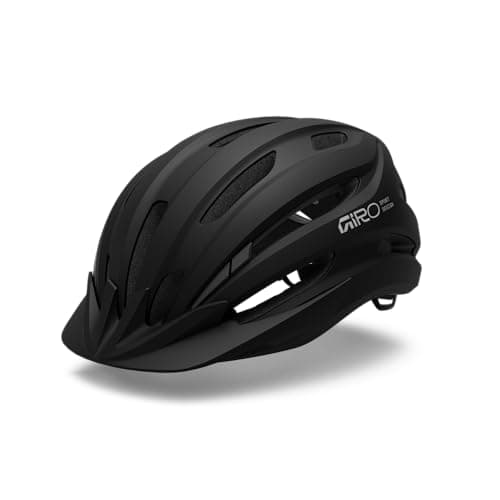
Giro Register MIPS II
A MIPS liner and a universal-adult fit, which is the one size question you can resolve without a tape measure. Our helmet roundup ranks it on published fit system.
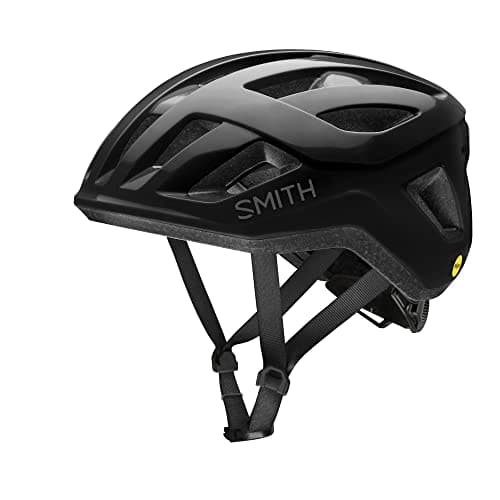
Smith Signal MIPS
Published in discrete sizes rather than universal, so it is the one to measure for. MIPS liner; sold as a road helmet rather than an urban one.
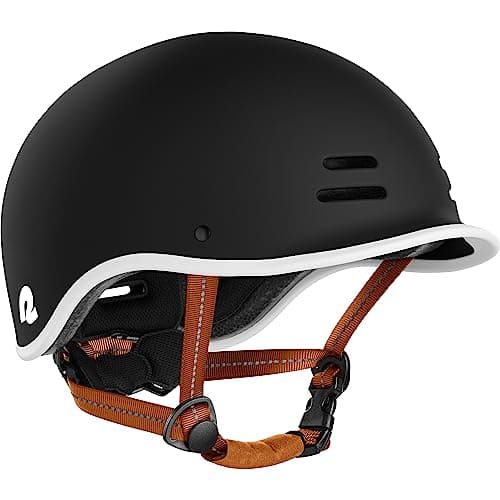
Retrospec Remi
The listing names commuting first and publishes an adjustable dial rather than a MIPS liner — the budget end of the same CPSC standard.
We haven’t tested any of these — they’re the parts the job above calls for, listed so you don’t have to go hunting. Prices are live from Amazon and we earn a commission if you buy. Prices as of October 17, 2026. #ad
What we could not check
We could not verify NTA 8776 certification for any product in our catalogue, because none of the six helmet listings mentions it. We did not attempt to retrieve the text of NTA 8776 itself — it is a paid Dutch national standard, and the figures above are BHSI’s published description of it, attributed as such. We have not tested any helmet and never will; our methodology page explains what we do instead.
We also have not quoted a Virginia Tech star rating for any helmet here. The lab’s methodology is public and we describe it on the standards page; the per-model rating rows could not be retrieved, so no number is repeated.
The honest summary
Wear a helmet on an e-bike whether or not your state says you have to; the medical literature BHSI collects on e-bike head injuries is not encouraging reading. If your bike is Class 1 or Class 2, a well-fitted CPSC helmet is a defensible choice and the one almost every e-bike rider actually makes. If your bike is Class 3 and you use the top of its assist range, the logically consistent options are an NTA 8776 helmet — which we do not sell — or, in BHSI’s words, “a light motorcycle helmet”. A site that told you otherwise in order to sell you a mid-price road helmet would be telling you what was convenient for it.
CPSC versus NTA 8776, as each is published
Built from the published standard and from BHSI’s comparison of the two, retrieved 17 October 2026. No helmet on this site carries the right-hand column.
| What differs | CPSC 16 CFR 1203 (every helmet we list) | NTA 8776 (no helmet we list) |
|---|---|---|
| Written for | An unpowered bicycle | Speed-pedelec / e-bike use |
| Front test line | The reference line the standard defines | 2.5 mm lower than CPSC |
| Side and rear test line | Higher — less of the head is tested | "Much lower" — more coverage is tested |
| Flat anvil drop | The CPSC drop height and rig | "Just above the CPSC standard", on the less severe European rig |
| Curbstone anvil | Tested | Tougher than CPSC |
| Hemispheric anvil | Tested | Not tested at all |
| Legal status in the US | Mandatory for helmets sold as bicycle helmets | A Dutch national standard; no US requirement |
The row that decides it is the second and third. The two standards are close on flat-impact severity; what NTA 8776 adds is coverage lower down the sides and rear of the head, which is the area a faster rider is more likely to land on.
Common questions
Do you legally need a helmet to ride an e-bike?
It depends on your state and on your e-bike’s class. There is no federal e-bike helmet law in the US. Requirements are written state-by-state and usually attach to Class 3 (28 mph assist) and to riders under a given age rather than to all e-bike riders. Check your own state’s vehicle code and the class label on your bike.
Can I use a normal bike helmet on an electric bike?
On a Class 1 or Class 2 e-bike that cuts assist at 20 mph, a CPSC-certified bicycle helmet is the standard answer and what nearly every rider uses. Above about 20 mph, BHSI’s published position is that you are “taking a greater risk than most unpowered bicyclists that the helmet will not be adequate for the type of crash you should expect”.
What is an NTA 8776 helmet?
A helmet certified to the Dutch standard published in 2016 specifically for e-bike and speed-pedelec use. Compared with CPSC it tests lower down the sides and rear of the head, drops just above the CPSC height on the flat anvil, is tougher on the curbstone anvil, and does not use the hemispheric anvil at all. BHSI reports at least one qualifying model from Abus, Agu, Giro, Limar, Ozmo and Polisport. None of the helmets in our catalogue carries it.
Do I need a motorcycle helmet for a Class 3 e-bike?
BHSI’s own bottom line for a 28 mph e-bike is that “it would probably make sense to consider a light motorcycle helmet”, and at a minimum a helmet certified to NTA 8776. That is their position, published, and we are passing it on rather than softening it. It is also more helmet than most Class 3 riders are willing to wear, which is the real reason the question keeps getting asked.
Does MIPS make a bike helmet safe enough for an e-bike?
MIPS addresses rotational motion, which is a different thing from impact energy and coverage area. It does not change which standard the helmet is certified to. MIPS publishes no effectiveness percentage, slide distance or test protocol of its own — a point our standards explainer makes at length.
Sources
- Bicycle Helmet Safety Institute — Helmets for E-bikes. Source for: the 20 mph / 32 kph adequacy statement, the 2016 publication of NTA 8776, the front test line 2.5 mm below CPSC, the lower side and rear test lines, the flat anvil drop just above CPSC on the less severe European rig, the tougher curbstone anvil, the absence of hemispheric anvil testing, the brands with qualifying models, and the light-motorcycle-helmet recommendation for a 28 mph e-bike — retrieved 2026-10-17
- Bicycle Helmet Safety Institute — the CPSC bicycle helmet standard. The published description of the mandatory US standard every helmet in our catalogue is certified to — retrieved 2026-10-17
- Amazon listings for the Giro Register MIPS II, Smith Signal MIPS and Retrospec Remi, retrieved for content/catalogue.json. Checked for any mention of NTA 8776 or a speed-pedelec certification; none appears in any of the six helmet listings on this site
Read next
- Helmet safety standards explained
What the CPSC test actually does, and what MIPS does not publish.
- The best cycling helmets
The six CPSC helmets this page is talking about.
- E-bike classes explained
The input that decides the whole question: your real top speed.
- How to fit a cycling helmet
The free safety improvement, and the one most riders skip.
We haven’t ridden or tested any of the products on this page, and we don’t pretend otherwise. Read how we research — or tell us we’re wrong and we’ll log the correction.