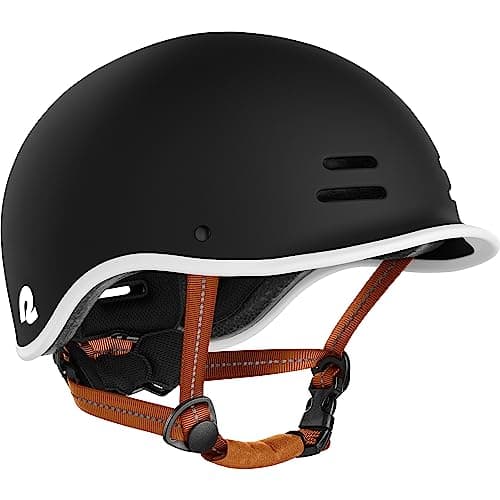
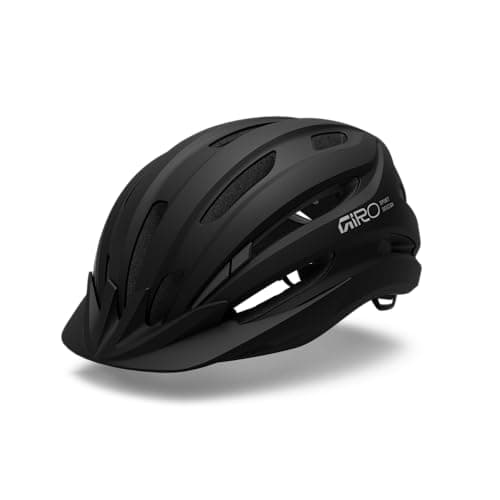
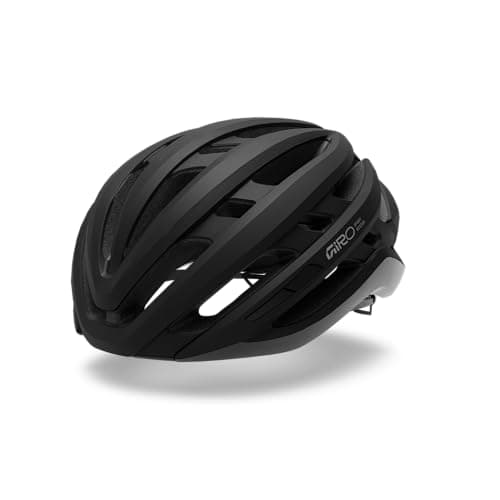
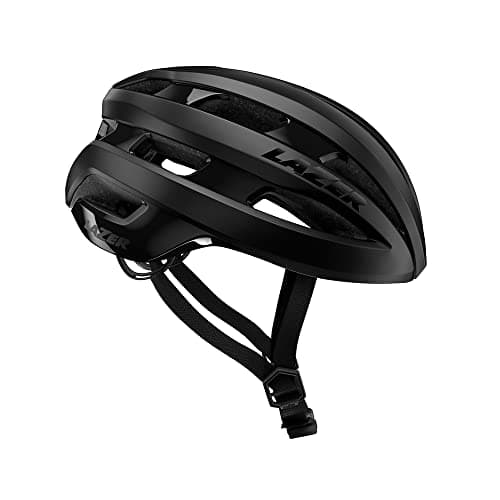
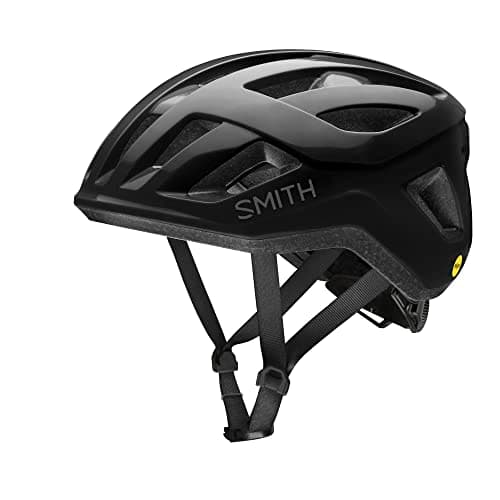
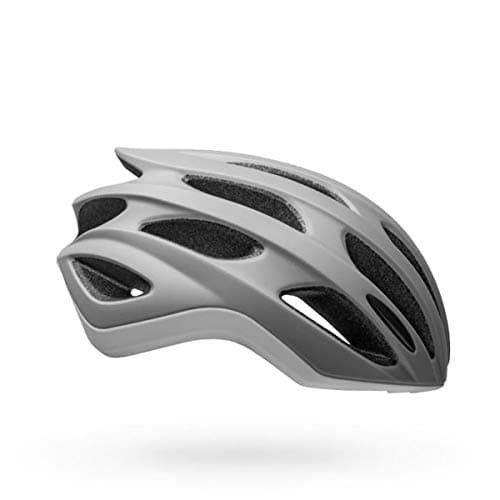
Here is the thing this category is built to stop you noticing: a helmet is a certified safety device, and in the United States the certification is a legal floor, not a ladder. Every bicycle helmet manufactured for sale in the US after 10 March 1999 has to comply with 16 CFR Part 1203, the Consumer Product Safety Commission’s mandatory standard. Not “should”. Not “the good ones do”. Has to, or it cannot legally be sold.
Which means the cheapest helmet on this page and the most expensive one — a gap of roughly four times — cleared the identical bar. Both were dropped onto a flat steel anvil at 6.2 m/s. Both had to keep peak acceleration at the headform under 300 g. Both did it hot, cold, wet and at room temperature. Both had to stay on the head in a roll-off test and keep 105 degrees of peripheral vision clear on each side.
So when you spend more on a helmet, you are not buying a higher safety floor. There isn’t one to buy. You are buying fit, weight, ventilation, retention adjustment, and — in five of these six — a rotational-impact system that the federal standard does not test for at all. Those are real things worth real money. They are just not the thing the price tag implies you’re getting.
What the federal standard actually does and doesn’t measure
The CPSC standard’s core criterion is peak linearacceleration. The test mounts a uniaxial accelerometer at the center of gravity of the headform — one axis — and the helmet fails if any impact exceeds 300 g. Flat anvil at 6.2 m/s; hemispherical and curbstone anvils at 4.8 m/s. Four conditioning environments: ambient, roughly −17 to −13 °C, 47–53 °C, and water immersion.
What that standard does not include is any criterion for rotational motion — the twisting your head does in an angled impact, which is not how a helmet meets a drop rig but is very much how a head meets a road. That gap is the entire commercial logic of MIPS, and it’s why “certified” and “protective” are not synonyms. We’ve pulled the standards apart properly in helmet safety standards explained — including where the European standard is tougher, where it isn’t, and why “250 is less than 300” is a worse argument than it looks.
MIPS: what the company claims, and what it doesn’t
Five of the six helmets here publish MIPS on the listing. MIPS itself describes a “low-friction layer that is mounted inside the helmet” and “designed to move slightly in the event of an impact” to “help redirect rotational motion away from the head”, addressing what it calls “a common cause of concussions and more severe brain injury in oblique hits to the head”.
Now the part nobody quotes. On the page we retrieved, MIPS publishes no reduction percentage, no millimeter figure for how far the layer slides, and no test protocol. It also carries its own flat disclaimer: “NO HELMET OR IMPACT PROTECTION SYSTEM CAN PROTECT A USER FROM ALL INJURIES.” We are not telling you MIPS doesn’t work — the mechanism is coherent and it targets a real gap in the federal test. We are telling you that the number you’d want in order to price it is not published, and every site that gives you one is getting it from somewhere it isn’t showing you.
The ratings we are not going to quote at you
The Virginia Tech Helmet Lab runs the one public dataset that measures what the federal standard skips. It rates helmets one to five stars from 24 impact tests per helmet across six locations at two energies, measuring both linear acceleration and rotational velocity, weighted by how often real cyclists take similar hits. It describes itself as “an independent and objective assessment of helmet performance for consumers, free from manufacturer influence”. It is the best tool a helmet buyer has.
We could not retrieve its per-model ratings table.The rating rows load dynamically and we did not get them. So we are not publishing a star rating for a single helmet on this page, including the ones we suspect are rated well. A wrong star rating on a head-injury page is the worst thing this site could print, and “probably five stars” is not a fact. Go and look your shortlist up yourself — that link is the most useful thing on this page, and it costs us nothing to say so.
If this is your first helmet rather than a replacement, the identical-certification point above is the whole reason not to start at the top of the price range. Cycling gear for beginners puts a helmet first in an explicit acquisition order and names the two purchases we think you should delay — because the money a new rider saves here is better spent on padded shorts than on vents.
One case these six do not cover, and we would rather say so than sell around it: an e-bike ridden at the top of a Class 3 assist range. None of the helmets here is certified to NTA 8776, the only helmet standard written for e-bikes — do you need a helmet for an e-bike explains what that standard tests that these do not.
Certification is a floor, and every helmet here stands on it. Stop shopping for safety — that decision was made for you by the CPSC in 1999 and it applies to the cheapest thing on this page as forcefully as the dearest. Once you accept that, the entire purchase changes shape: you are buying comfort, and comfort is what makes you actually wear the thing.
Fit is the whole purchase, and it’s the spec nobody publishes.A helmet that sits wrong gets worn wrong or gets left at home, and a helmet on a hook has a peak acceleration of nothing at all. One listing on this page gives you a head circumference in centimeters. Measure your head before you shop — around the widest part, just above the eyebrows — and treat any helmet that won’t tell you what it fits as a guess.
Rotational systems address a gap the law leaves open.The federal test measures linear acceleration on one axis. Angled impacts aren’t that. MIPS targets it, MIPS doesn’t publish a number for it, and the Virginia Tech ratings are the only public measurement of it. Look your model up there. That is a stronger basis than any sentence on this page.
Weight and ventilation are real, and unverifiable here.Two helmets on this page say “lightweight”. Neither says how many grams. If a manufacturer thought the number flattered it, the number would be on the listing — that inference is free and it’s usually right. If weight genuinely matters to you, go and hold them.
Replace it after an impact, and don’t buy it used. The foam works by crushing, once. A helmet that has taken a real hit has spent its protection even if it looks fine, and a second-hand helmet has an impact history you cannot audit. This is the one place where buying cheap and new beats buying good and used, every time.