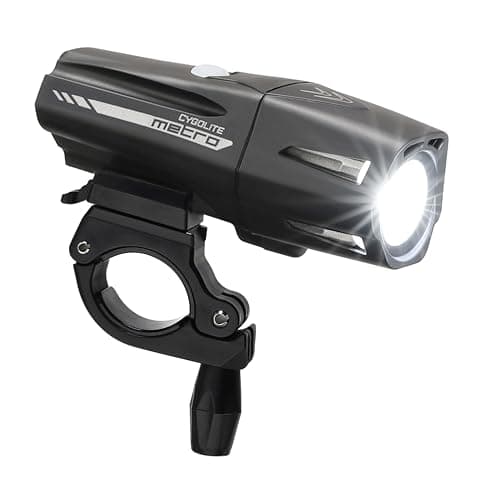
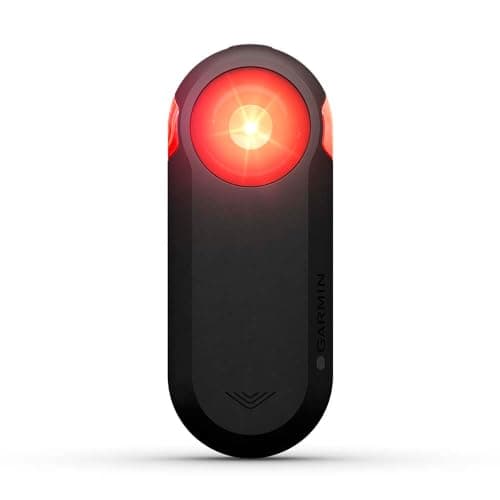
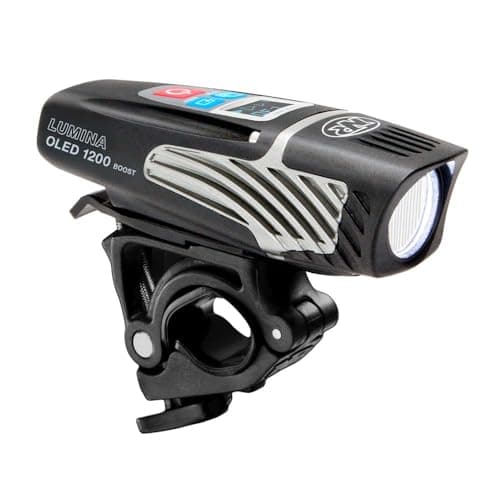
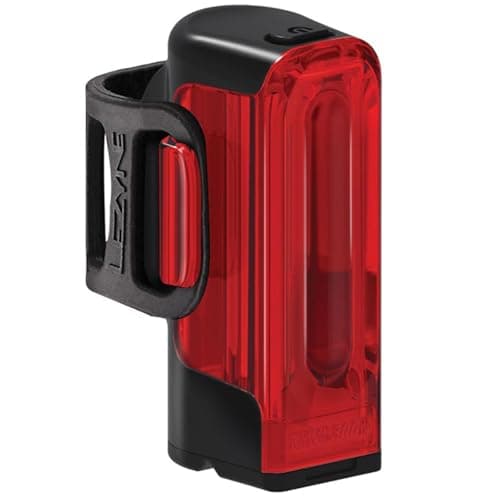
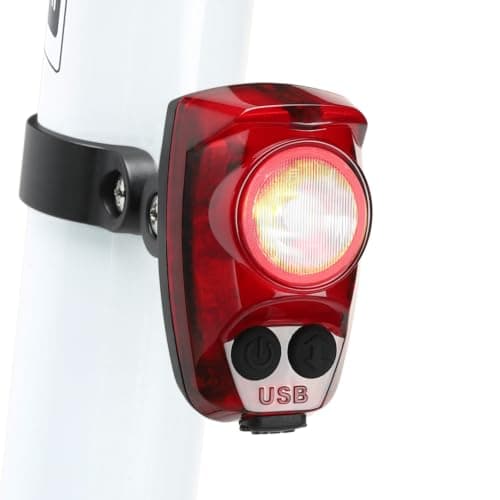
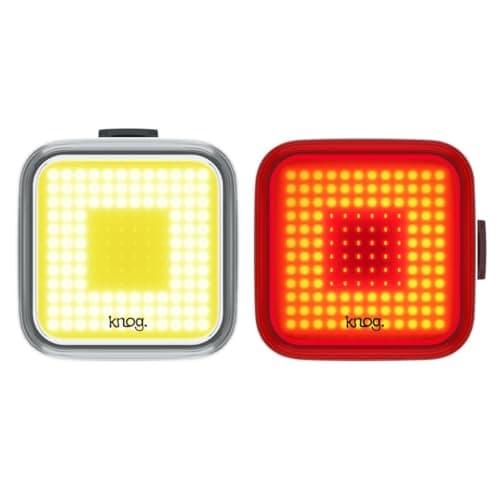
Six lights on this page. Between them they publish five lumen figures, four ingress ratings, one detection distance, one beam-angle claim — and zero runtimes. Not one seller here tells you how long their light lasts at the output they’re advertising.
That is the story of this category, and it’s why the normal way of writing this page is broken. Everyone ranks bike lights on lumens because lumens is the number the listings print. It is also the number that tells you least about whether the driver at the junction sees you, and — as we’ll get to — it is a number that no lighting regulator anywhere actually uses.
We have not switched any of these on
There is no beam shot on this page, and there never will be until we can take one honestly. We have not ridden behind any of these lights, we have not measured a lux figure at ten meters, and we have not run a battery flat with a stopwatch. Everything below is either the seller’s own published claim, quoted as theirs and dated, or arithmetic you can redo from the live prices in the table above.
The publishers who outrank us for this query mostly have ridden these lights, and where they publish a real beam comparison that is worth more than anything we can offer. What they generally don’t do is tell you that the spec they ranked on is the wrong spec. So that’s our half of the deal.
Lumens is the wrong number, and the regulators agree
A lumen measures total light emitted by the lamp, in every direction it happens to go. It says nothing about where that light lands. Lux measures how much light actually arrives on a surface — the road, or a driver’s retina. A light can throw a huge lumen figure into the sky, the hedge and the oncoming rider’s eyes and put very little on the tarmac in front of you, and its listing will still read 1200 lumens.
This is not our theory. Germany’s road traffic licensing regulation, StVZO § 67, requires a bicycle headlight to be a dippedbeam and states that it “must be adjusted so that it does not dazzle other road users”. It regulates the geometry of the light, not its total output. Lupine, which builds StVZO-approved lamps and therefore has to satisfy that rule, puts it bluntly in its own explainer: “While many lamps prioritize the lumen count, the lux count is crucial for StVZO-compliant lighting. Lux describes how much light actually reaches the road.”
Note who is saying that: a company that sells lights, telling you the number its competitors advertise is the wrong one. Lupine has an obvious commercial interest in a standard its own lamps are engineered to meet, and you should weigh it accordingly — but the underlying physics is checkable and the regulation is public. We pull the whole lumens-versus-lux question apart in bike light lumens explained.
Not one of the six lights on this page publishes a lux figure, a beam cut-off, or an approval mark.
What the law where you ride probably requires: reflectors
The US federal regulation that governs bicycles as consumer products, 16 CFR § 1512.16, mandates an “essentially colorless front-facing reflector”, a “red rear-facing reflector”, pedal reflectors, and side reflectors — so that a bike can be recognized “under illumination from motor vehicle headlamps”. It specifies no lamp at all. Every bike sold in the US ships to a standard about being lit up by someone else’s headlights.
Whether you are legally required to run an actual light after dark is state traffic law, not that federal standard, and we have not audited fifty states — so check yours rather than take our word for it. The point that matters for this page is that the American rule book has nothing to say about lumens either.
One thing a light cannot fix is what you can see through. Dawn, dusk and heavy cloud are exactly where a dark summer lens costs you more than it gives, and filter categories are a published specification — cycling sunglasses lens tints explained sets out the categories and VLT bands.
Decide whether you are being seen or seeing. These are two different purchases and the category deliberately blurs them. Being seen on lit streets is a job for a modest flashing light with good off-axis coverage, and 200 lumens is plenty. Seeing on an unlit lane at 25mph is a job for a genuinely bright, well-aimed beam. Buying a 1200-lumen lamp for a lit commute is the most common mistake in this category and it costs you money, weight and the goodwill of everyone coming the other way.
Daytime running lights are the cheap win.Two lights here publish an explicit daytime mode — the Metro 800 and the Hotshot Pro, both Cygolite — and the reason the industry pushed the idea is that most collisions happen in daylight, because that’s when most people ride. A flashing rear light in the afternoon is doing more work than a 1200-lumen headlight ever does at 2am.
Buy the mount, not the LED.Lights don’t usually fail by going dim; they fail by falling off, filling with water, or being left on the kitchen table. Cygolite is the only brand here that names a hard mount as a feature, and it’s the only brand here claiming IP67. Those two facts are more predictive of whether you own a working light in two winters than any lumen figure on this page.
Ignore the output number until you know the runtime.You can’t, on this page, because nobody publishes it — so treat the advertised lumens as the number the light produces for an unknown and probably short period. The NiteRider at least fits a screen that tells you the truth while you ride, which is a tacit admission from a manufacturer that the headline figure isn’t the whole story.
Radar is a separate budget line.The Varia is not competing with the other five and shouldn’t come out of the same money. If your riding is fast, rural and rear-loaded with risk, it’s the most interesting object on this page. If it’s not, it’s an expensive taillight that doesn’t publish a lumen figure.