Skip to content
ChainringClub

The Best Bike Computers

The cheapest thing on this page and the dearest are separated by a factor of sixteen. They both tell you how fast you're going. Here's what the other fifteen-sixteenths buys, and who actually needs it.

A GPS cycling computer mounted on a road bike handlebar stem.
By Stephen V.Published July 17, 2026How we research

Heads up: we earn a commission if you buy through the links on this page, at no extra cost to you. It never decides what makes the list — here’s how that works.

Quick picks

Tap any row for the full write-up. Specs are the manufacturer's own published claims, read on 17 July 2026.

#ProductBest forPrice
1
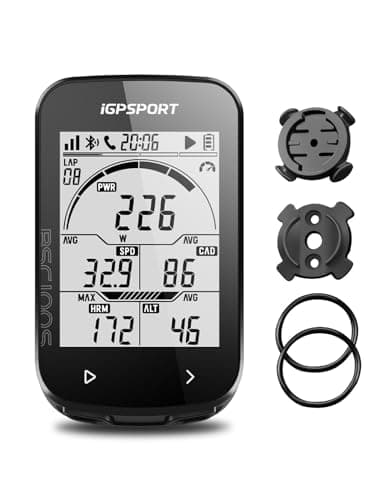
iGPSPORT BSC100S

iGPSPORT BSC100S

The only computer on this page whose listing publishes both a screen size and a battery figure — for a fraction of the money.

Top pick
Most riders, honestly
2
Garmin Edge 540

Garmin Edge 540

The Garmin most people who need a Garmin should buy, and the point where the price curve bends.

Training and navigation without the flagship tax
3
Garmin Edge 1040 Solar

Garmin Edge 1040 Solar

The flagship. Solar charging, the big screen, and a price that only makes sense for long days.

Ultra-distance, where charging is the actual problem
4
Wahoo Elemnt Bolt V3

Wahoo Elemnt Bolt V3

Wahoo's aero head unit — and a listing that publishes nothing whatsoever.

Riders who want setup to happen on their phone
5
Garmin Edge 130 Plus

Garmin Edge 130 Plus

The cheapest door into Garmin's ecosystem, for people who want the coaching and not the map.

A minimal head unit inside Garmin's world
6
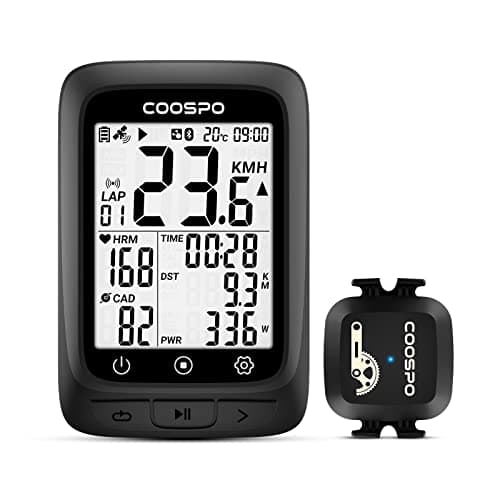
COOSPO BC107

COOSPO BC107

The one that comes with the sensor already in the box.

Getting cadence data without a second purchase
7
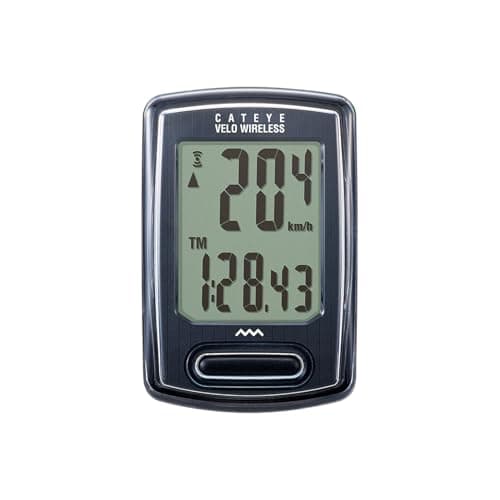
CatEye Velo Wireless

CatEye Velo Wireless

No GPS, no charging, no app, no account. It tells you how fast you are going.

Riders who want a number and nothing else

The cheapest computer on this page has no GPS, no battery to charge and no app. The dearest charges itself from sunlight. The price gap between them is a factor of about sixteen, and the honest headline of this page is that most riders buy far more computer than they will ever use.

That’s not a cheap-shot at Garmin. Garmin makes the best cycling head units in the world and the reasons to own one are real. It’s an observation about how this category is sold: every roundup is a ladder, the ladder implies more is better, and nobody stops to ask what the reader is actually going to do with the thing. So we’ll ask it first.

What a bike computer is really for

Strip out the marketing and there are four jobs, in descending order of how many people need them.

One: tell you the number while you ride. Speed, distance, time, maybe cadence or heart rate. Every device on this page does this, including the one without GPS. This is the job, for most people, most of the time.

Two: record the ride so it exists afterwards. A GPS track you can upload to Strava or anywhere else. Six of the seven do this. The CatEye doesn’t, which is the single line separating it from everything above it.

Three: tell you where to turn. Real map-based navigation. This is where the money actually goes, and it is the first genuinely hard thing on the list — it needs a screen, a processor, maps and a battery, and that combination is what a Garmin costs.

Four: coach you. Structured workouts pushed to the bars, adaptive training plans, recovery advice, ClimbPro. This is the top of the ladder and it is a minority sport within a minority sport.

Almost everybody buys for job three or four and then spends five years doing job one and two. If you know honestly which of the four you’ll use, this page ranks itself.

The thing we did not expect to find

We read all seven Amazon listings on 17 July 2026 to pull the published specifications for the table below, and the result inverted our assumptions.

The two cheapest brands on this page publish more specification than Garmin and Wahoo do. iGPSPORT publishes a screen size and a battery figure. COOSPO publishes a screen size, its wireless protocols and what’s in the box. The Garmin Edge 540, the Edge 130 Plus and the Edge 1040 Solar publish no screen size, no battery figure, no weight and no water rating between them — the 1040’s listing advertises “Long-Lasting Battery” and never says how long. And the Wahoo Elemnt Bolt V3 listing consists of the product’s name and the word “Black”.

We want to be careful about what that does and does not mean. It is not evidence that the cheap units are better — a listing is marketing copy, not a spec sheet, and Garmin publishes thorough figures on its own site where anyone spending this much should go and read them. What it does mean is that the premium brands have decided the listing is not where they compete, and that a reader comparing these seven products at the point of purchase is given least by the sellers asking most.

We have not used any of these

Not one. No screen has been read in sunlight by us, no battery run flat, no route followed. Everything on this page is the seller’s own published claim quoted as theirs and dated, the arithmetic on the live prices above, or a mechanism we can explain and you can check. Where the honest answer is “the listing doesn’t say”, that’s what the table says, and there are a lot of those cells.

And before you spend anything at all, there’s a prior question this page can’t dodge: you already own a device with GPS, a big screen and a data connection. We’ve written the honest version of that argument in bike computer vs phone, and it does not conclude what an affiliate site is supposed to conclude.

What each listing actually publishes

Read from each seller’s own Amazon listing on 17 July 2026. Sorted cheapest first. Note which brands fill the columns and which don’t — it is the reverse of what the prices would lead you to expect.

ComputerGPSPublished screenPublished batteryPublished water ratingNavigation claim
CatEye Velo WirelessNoNot publishedNot publishedNot publishedNone claimed
iGPSPORT BSC100SYes2.6 in40 h“Waterproof”, no ratingNone claimed
COOSPO BC107Yes2.4 inNot publishedNot publishedNone claimed
Garmin Edge 130 PlusYesNot publishedNot publishedNot publishedClimbPro pacing guidance
Wahoo Elemnt Bolt V3YesNot publishedNot publishedNot publishedNot published
Garmin Edge 540YesNot publishedNot publishedNot published“Advanced navigation”
Garmin Edge 1040 SolarYesNot published“Long-lasting”, no figureNot publishedOn and off-road

The only two published screen sizes and the only published battery figure on this page belong to the two cheapest brands. Every Garmin and the Wahoo leave both columns blank. This is a table about listings, not about hardware — Garmin publishes full figures on its own support site and you should read them there before spending flagship money. But at the point where you actually decide, the sellers asking the most tell you the least.

The picks, in detail

1

iGPSPORT BSC100S

Top pick
iGPSPORT BSC100S
$37.95 · View on Amazon

$39.99 5%

Price as of Jul 17, 2026. #ad

Best for: Most riders, honestly

The only computer on this page whose listing publishes both a screen size and a battery figure — for a fraction of the money.

  • 2.6 inch LCD display (seller's claim)
  • 40H rechargeable (seller's claim)
  • GPS
  • Waterproof (no IP rating published)
  • Wireless

This is a top pick made on documentation and arithmetic, not on a ride we didn’t take. Here is the whole case: iGPSPORT’s listing publishes a screen size and a battery life. Garmin’s and Wahoo’s don’t. The device records your speed, distance and a GPS track, which is what a bike computer is for and what nearly everyone uses one for. It is the cheapest thing here that does that job. If you want the reasons to spend eight times more, they are real and they’re listed below — but they are reasons that apply to a minority of riders, and the industry sells to that minority as if it were everyone.

Good

  • 40 hours claimed is the only battery number published by any listing on this page — Garmin and Wahoo print none
  • A 2.6-inch screen is larger than most of the field admits to, and screen size is the spec you live with every ride
  • It costs less than a tenth of the Edge 1040 Solar and records the same ride to the same satellites
  • Records a GPS track you can upload — which is what the overwhelming majority of computer owners actually do with one

Less good

  • No turn-by-turn navigation worth the name; this is a data screen, not a map
  • 'Waterproof' with no IP rating published, which on a device that lives in the rain is a real omission
  • No ecosystem — no coaching, no ClimbPro, no radar pairing, no structured workouts pushed to the head unit
  • iGPSPORT is not a brand your local shop will help you with

Skip it if: You navigate unfamiliar routes and want the bike to tell you where to turn, or you own a Varia radar and want the alerts on your head unit. Those are the two things a cheap computer genuinely cannot do, and they're the honest reason to spend Garmin money. Everything else on the Garmin spec sheet is a nice-to-have.

2

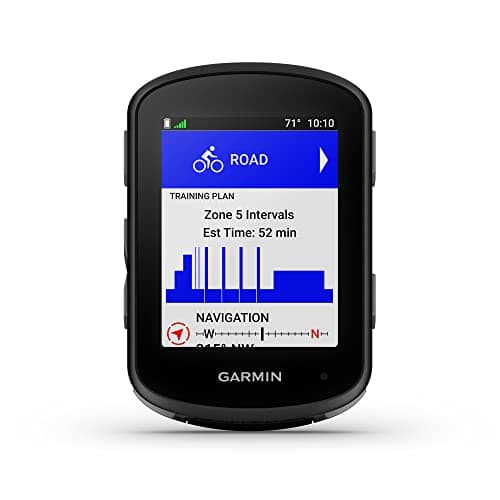
Garmin Edge 540

Garmin Edge 540
$324.49 · View on Amazon

$349.99 7%

Price as of Jul 17, 2026. #ad

Best for: Training and navigation without the flagship tax

The Garmin most people who need a Garmin should buy, and the point where the price curve bends.

  • GPS cycling computer
  • Button controls (seller's claim)
  • Targeted adaptive coaching (seller's claim)
  • Advanced navigation (seller's claim)
  • Compact (seller's claim)

Good

  • Buttons instead of a touchscreen — which in rain and full-finger gloves is a feature, not a compromise
  • It sits inside Garmin's ecosystem: radar pairing, sensors, structured workouts, routing
  • Roughly half the price of the 1040 Solar for the same core capabilities

Less good

  • The listing publishes no battery life, no screen size, no weight and no water rating — nothing numeric at all
  • 'Targeted adaptive coaching' is a marketing phrase and the listing doesn't define what it does
  • It's still around eight times the price of the top pick to do the same fundamental job

Skip it if: You want a map on a screen you can actually read while moving. The 540 is the compact one; if navigation is the whole reason you're buying, the bigger screen on the 1040 is the thing you're paying for and the 540 is a false economy.

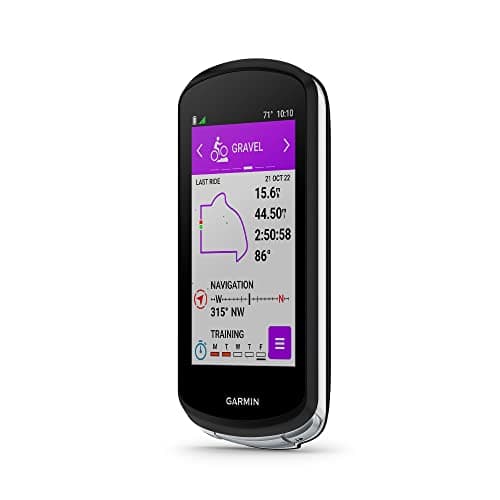
3

Garmin Edge 1040 Solar

Garmin Edge 1040 Solar
$699.99 · View on Amazon

Price as of Jul 17, 2026. #ad

Best for: Ultra-distance, where charging is the actual problem

The flagship. Solar charging, the big screen, and a price that only makes sense for long days.

  • Solar charging capabilities (seller's claim)
  • On and off-road
  • Spot-on accuracy (seller's claim)
  • Long-lasting battery (seller's claim — no figure published)
  • Device only

We want to be fair to this device: for ultra-distance riding it is genuinely the answer, and the solar lens is not a gimmick when you’re 300km from a plug. But note what the Amazon listing does nottell you. It advertises “Long-Lasting Battery” and never says how long. Garmin does publish battery-life figures — on its own support site, with the conditions attached — which is where you should read them before spending this much. We’re not going to reprint a number here that the listing we’re linking to doesn’t carry.

Good

  • Solar charging is a genuine answer to a genuine problem if your rides are measured in days rather than hours
  • The flagship of Garmin's range, with the full ecosystem: radar pairing, sensors, routing, structured workouts
  • The listing claims both on- and off-road capability, so it's one device across disciplines

Less good

  • The listing says 'Long-Lasting Battery' and publishes no number — on the device whose headline feature is battery, that is a remarkable omission
  • 'Spot-On Accuracy' is not a specification; it is an adjective
  • Sixteen times the price of the CatEye and roughly eighteen times the top pick, for a device that mostly does the same thing better
  • 'Device only' — mounts and sensors are extra

Skip it if: Your longest ride is a five-hour Sunday loop. Solar charging solves running out of battery on day three of a bikepacking trip. If you finish rides at your own kitchen table and own a USB cable, you are paying a large premium for a problem you do not have.

4

Wahoo Elemnt Bolt V3

Wahoo Elemnt Bolt V3
$315.00 · View on Amazon

$349.99 10%

Price as of Jul 17, 2026. #ad

Best for: Riders who want setup to happen on their phone

Wahoo's aero head unit — and a listing that publishes nothing whatsoever.

  • GPS cycling computer
  • Black

We looked at this listing three times to make sure we weren’t missing a specification block. “Wahoo ELEMNT Bolt V3 GPS Cycling/Bike Computer, Black” is the whole of it. Wahoo makes a well-liked head unit and the app-first setup is a real reason people choose it over Garmin — but on the evidence available on this page, a brand asking three hundred-odd dollars is publishing less than a brand asking under forty. That’s not a verdict on the hardware. It’s a verdict on what you’re given to decide with.

Good

  • Wahoo's phone-based configuration is the genuine differentiator — you set the device up in an app instead of on a two-inch screen
  • The Bolt's shape is designed around an aero mount rather than bolted on afterwards
  • A real alternative ecosystem to Garmin, with strong third-party integration

Less good

  • The Amazon listing title is the product's name and the colour. That is the entire published specification
  • No screen size, no battery figure, no weight, no water rating, no positioning detail — nothing
  • Priced within about ten dollars of the Edge 540, which at least publishes what its features are called

Skip it if: You want to compare it against the Garmins on paper before you buy. You can't — not from this listing. If a spec sheet is how you make decisions, the seller has declined to give you one, and that is a legitimate reason to walk.

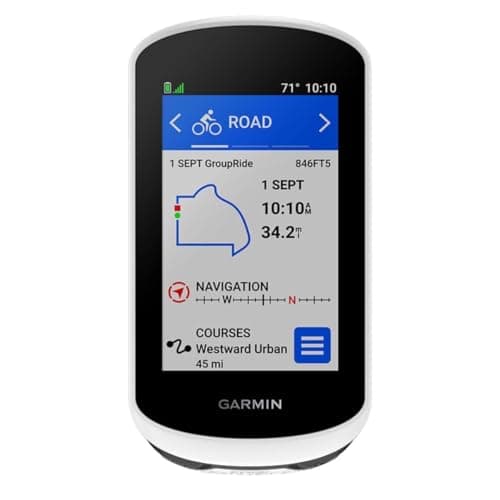
5

Garmin Edge 130 Plus

Garmin Edge 130 Plus
$274.81 · View on Amazon

Price as of Jul 17, 2026. #ad

Best for: A minimal head unit inside Garmin's world

The cheapest door into Garmin's ecosystem, for people who want the coaching and not the map.

  • GPS cycling/bike computer
  • Download structure workouts (seller's claim)
  • ClimbPro pacing guidance (seller's claim)
  • Model 010-02385-00

Good

  • ClimbPro is a legitimately clever idea: it tells you how much of the climb is left, which is the number you want on a climb
  • It downloads structured workouts, which is the training feature most riders would actually use
  • The cheapest way into Garmin's ecosystem with GPS — sensors, radar pairing and the rest

Less good

  • The listing publishes no battery life, no screen size and no weight — nothing numeric except a model number
  • It costs around seven times the top pick, which is the only computer here whose listing tells you how big its screen is
  • You are buying the ecosystem, not the hardware, and the listing rather gives that away

Skip it if: You want maps. The Edge 540's listing claims 'advanced navigation' and this one's claims ClimbPro and workouts — that difference is the whole story. If you're buying a Garmin specifically to be told where to turn, this is the wrong one and the 540 is the right one.

6

COOSPO BC107

COOSPO BC107
$59.99 · View on Amazon

Price as of Jul 17, 2026. #ad

Best for: Getting cadence data without a second purchase

The one that comes with the sensor already in the box.

  • 2.4 inch auto-backlight display (seller's claim)
  • Bundled cadence/speed sensor BK467
  • Bluetooth / ANT+ (seller's claim)
  • Syncs with Strava (seller's claim)
  • GPS

Good

  • It's a bundle — the computer and a cadence/speed sensor together, which is the second purchase most people make three weeks later
  • ANT+ and Bluetooth both published, so it talks to a heart rate strap or power meter you already own
  • Auto-backlight is a small thing that matters every time you ride into a tunnel

Less good

  • The listing publishes a screen size but no battery figure
  • It costs more than the top pick while claiming a smaller screen
  • 'Syncs with Strava' is doing a lot of work — it means the file uploads, not that it does anything clever

Skip it if: You don't care about cadence. The bundled sensor is the entire reason this costs more than the iGPSPORT, and if it ends up in a drawer you've bought a smaller screen for more money.

7

CatEye Velo Wireless

CatEye Velo Wireless
$43.50 · View on Amazon

Price as of Jul 17, 2026. #ad

Best for: Riders who want a number and nothing else

No GPS, no charging, no app, no account. It tells you how fast you are going.

  • Wireless bike computer
  • CatEye Velo Wireless
  • Black

We’ve put this last, and it is not the worst thing on the page — it’s the most honest one. It makes no claim to an ecosystem, no claim to coaching, no claim to accuracy. It is a magnet, a sensor and a screen, and the reason it’s still sold in 2026 is that for a large number of riders it is genuinely enough. If reading “16.4mph average” at the end of a ride is all you want from a computer, everything above this row is a solution to somebody else’s problem.

Good

  • No charging ritual and nothing to forget on a Friday night — though note the listing doesn't publish the battery type either
  • A wheel sensor measures distance directly rather than inferring it from satellites — which under trees or in a tunnel is arguably more reliable, not less
  • Nothing to pair, no firmware, no account, no subscription, no cloud
  • The cheapest thing on this page by a distance

Less good

  • No GPS means no track, no route, no upload — the ride exists only as numbers you read and forget
  • The listing publishes no specification at all beyond the name and the colour
  • A wheel magnet is a physical thing that gets knocked out of alignment
  • If you ever want to look at a ride afterwards, this is the wrong device and you'll buy twice

Skip it if: You have ever wanted to see a ride on a map, or you suspect you might. This is a deliberately terminal purchase — it does one thing and it will never do another. That's a virtue right up until the day it isn't.

What actually decides this purchase

Answer the navigation question first, because it’s the only one that costs real money.Recording a ride is cheap — a sub-forty-dollar device does it. Being told where to turn on a road you’ve never seen needs a map, a screen and a battery, and that trio is essentially the entire price difference between the top pick and an Edge 540. If you ride the same six routes forever, you are being sold a map you will never open.

Screen size is the spec you live with, and almost nobody publishes it. You look at this thing a few hundred times a ride, in glare, wet, and at speed. It is the single most consequential physical property of a head unit — and of the seven listings here, two publish a figure. Both are cheap Chinese brands. If screen size decides your purchase, you will have to leave the listing to find out.

Buttons versus touchscreen is not a spec, it’s a climate decision. Touchscreens are better in a shop and worse in February. Both Garmin units here that name their controls name buttons. In rain and full-finger gloves that is a meaningful advantage, and it is one of the few areas where the more expensive device is deliberately choosing the less flashy option because it works.

Ecosystem lock-in is the real purchase. If you own or want a Garmin Varia radar, that pushes you towards a Garmin head unit, and that is a legitimate, concrete reason to spend more — the alert has to land somewhere you’re looking. Sensors, power meters and heart-rate straps mostly speak ANT+ and Bluetooth and work with everything, so they are not the lock-in they used to be.

Solar solves exactly one problem. Being far from a plug for longer than a battery lasts. That is a real problem for bikepackers and audax riders and a fictional one for everyone else. If you finish your rides at home, the solar lens is a premium you are paying for a story about yourself.

Common questions

Do I actually need a bike computer at all?

Probably not, and we’re not going to pretend otherwise on a page that earns money when you buy one. You already own a phone with GPS, a bigger and better screen, and a data connection. For a large number of riders that genuinely is enough — the reasons to buy a dedicated unit are battery, sunlight readability, weather, and not mounting a very expensive phone to the front of a bicycle. We put the whole argument, including the parts that don’t suit us, in bike computer vs phone.

Why is the CatEye Velo Wireless on a list of the best bike computers when it has no GPS?

Because for some riders it is the correct answer and every other roundup pretends those riders don’t exist. It never needs charging, pairing or an account, and a wheel sensor measures distance directly rather than inferring it from satellites — which under heavy tree cover is arguably more reliable, not less. If you want a speed and a distance and nothing else, the entire rest of this page is a solution to a problem you don’t have. What we can’t tell you is how long its battery lasts or what type it is: like every Garmin here, the listing doesn’t say.

Is the Edge 1040 Solar worth double the Edge 540?

For most riders, no — and the honest test is a single question: have you ever run a head unit flat mid-ride? If the answer is no, you are buying solar charging to solve a problem you have never had. The 1040 also has the bigger screen, which is a real everyday advantage if you navigate. But the listing for it publishes no battery figure at all, so you cannot even do the comparison from the page you’re buying on. Garmin’s own support site is where those numbers live.

Will a cheap bike computer work with my heart rate strap and power meter?

Often yes, and that’s the thing that has quietly changed this category. ANT+ and Bluetooth are open enough that sensors are largely brand-agnostic now — the COOSPO listing publishes both protocols explicitly. The one place lock-in still genuinely bites is proprietary features like Garmin’s radar integration, which needs a Garmin head unit. Check the specific sensor before you buy, because we can’t test the pairing for you.

Which bike computer do you use?

We haven’t used any of the seven on this page, and telling you how a screen reads in low sun would be a claim about a device we’ve never held. What this page is built from is what each seller published on 17 July 2026 — including, prominently, what they didn’t — and the live prices, which do the ratio arithmetic for you. Here’s how we research, and why there are no screenshots.

Sources

We haven’t ridden or tested any of the products on this page, and we don’t pretend otherwise. Read how we research — or tell us we’re wrong and we’ll log the correction.