Skip to content
ChainringClub

The Best Bike Chains

Six chains, ranked. We haven't ridden any of them — we've read what Shimano, KMC and SRAM actually publish, and found that two of these chains weigh exactly the same.

Close crop of a bicycle chain running over a cassette sprocket in hard light.
By Stephen V.Published July 17, 2026How we research

Heads up: we earn a commission if you buy through the links on this page, at no extra cost to you. It never decides what makes the list — here’s how that works.

Quick picks

Tap any row for the full write-up. Specs are the manufacturer's own published claims, read on 17 July 2026.

#ProductBest forPrice
1
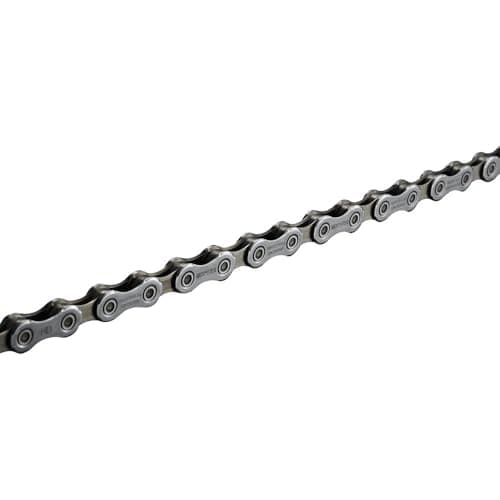
Shimano CN-HG601 105 11-Speed Chain

Shimano CN-HG601 105 11-Speed Chain

Shimano's own spec sheet says it weighs the same as the Ultegra chain. It costs less. That's the whole argument.

Top pick
11-speed Shimano drivetrains
2
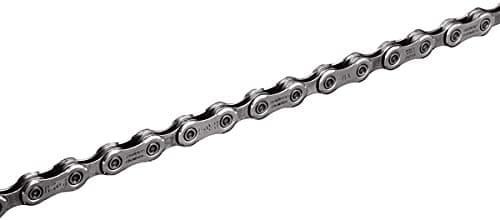
Shimano CN-M8100 XT 12-Speed Chain

Shimano CN-M8100 XT 12-Speed Chain

The 12-speed Shimano chain, and the lightest thing on this page by Shimano's own numbers.

12-speed Shimano drivetrains
3
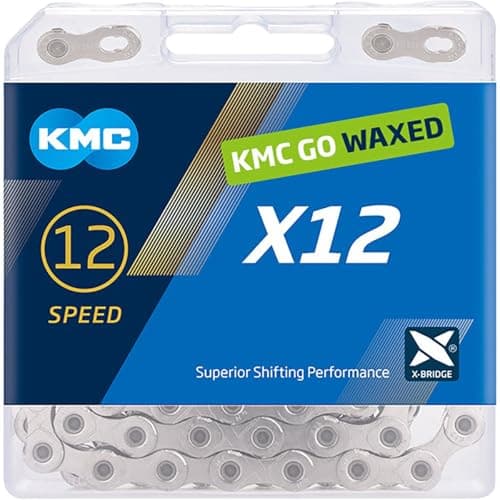
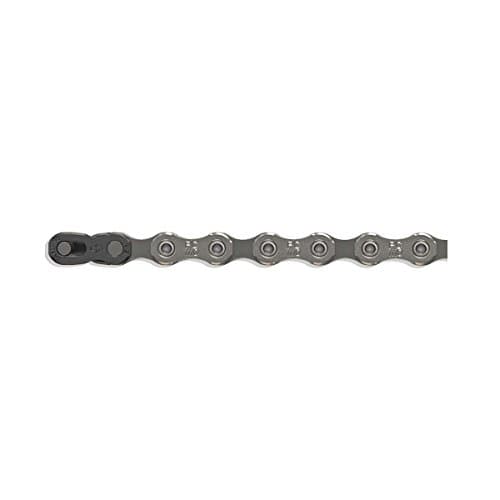
KMC X12 (Wax)

KMC X12 (Wax)

Factory-waxed, Campagnolo-compatible, and the priciest chain here — you're paying for the wax.

12-speed riders who want wax without the prep
4
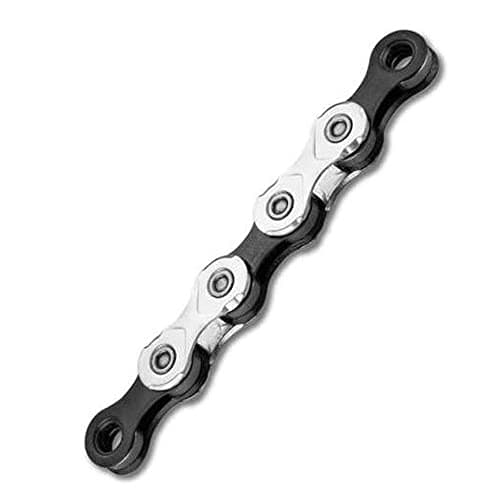
KMC X11 11-Speed Chain

KMC X11 11-Speed Chain

The 11-speed chain that fits everything — and whose weight nobody will tell you.

Mixed and Campagnolo 11-speed drivetrains
5
SRAM PC-1110 11-Speed Chain

SRAM PC-1110 11-Speed Chain

The cheapest chain here, and the one whose maker has moved on from it.

Keeping an older 11-speed drivetrain running for the least money
6
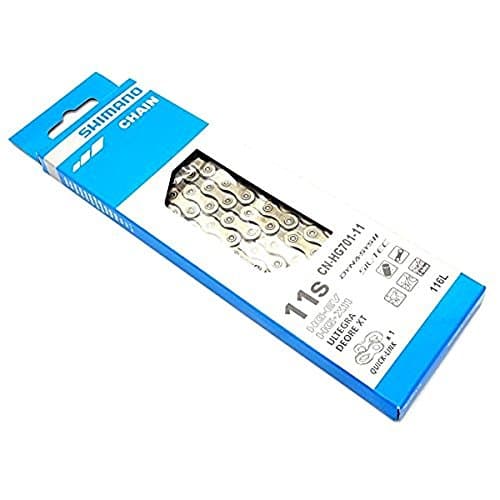
Shimano CN-HG701 Ultegra 11-Speed Chain

Shimano CN-HG701 Ultegra 11-Speed Chain

The one to skip — it's the 105 chain with a coating on the outer plate and the same published weight.

Nothing the 105 chain doesn't already do

Here is the thing nobody selling you a chain wants to lead with: your drivetrain has already chosen your chain.An 11-speed bike takes an 11-speed chain. A 12-speed bike takes a 12-speed chain. Get that wrong and nothing else on this page matters — the chain will shift badly, wear fast, or simply not fit between the sprockets. Get it right and you have narrowed six options down to two or three before brand has entered the conversation at all.

That constraint is unfashionable to write about because it makes the roundup shorter. It is also true, and it is the single most useful thing on this page. So: count the sprockets on your cassette. That number is your filter. Everything below is what’s left after it.

The number Shimano publishes and nobody quotes

Shimano runs a public product information database, and in it every chain carries a figure called average weight (g) at 114 links. It is a genuinely comparable number — same link count, same measurement basis, published by the manufacturer, updated with a version and a date. We read it directly, and it produces a result that the rest of this category has apparently never gone looking for.

The Ultegra chain (CN-HG701-11) and the 105 chain (CN-HG601-11) both weigh 257 g at 114 links. Identical, to the gram, in Shimano’s own table. One of them costs meaningfully more than the other. The published difference is a SIL-TEC coating on the pin link plate, and Shimano prints no wear figure, no durability figure and no efficiency figure that would let you decide whether that coating is worth the money. That is not us being cynical about Ultegra; it is us reading the spec sheet and reporting what is and isn’t on it.

For contrast, the 12-speed XT chain (CN-M8100) is published at 252 g, and the top-tier CN-HG901-11 at 247 g with hollow pins and SIL-TEC on the plates and the rollers. So the entire published weight spread across Shimano’s road-relevant chain range is about ten grams. Ten grams. If you are choosing a chain to save weight, you have chosen the wrong component to think about.

What the manufacturers refuse to publish

Shimano publishes weights. KMCdoes not — neither the X11 nor the X12 page carries a weight or a link count, though both publish pitch and compatibility. SRAM publishes no weight for the PC-1110 that we could retrieve. So three of the six chains here cannot be compared on weight at all, and we are not going to fabricate the missing cells to make a tidier table. The What the makers publish table below shows the gaps as gaps.

Nobody — not Shimano, not KMC, not SRAM — publishes a wear rate, a service life, or a friction figure for any chain on this page. That is the number you actually want, and the entire industry declines to print it.

The wear data that exists, and who owns it

There is one substantial public dataset on chain wear: Zero Friction Cycling, which publishes chain efficiency and wear-life testing and states it has run over 300,000 km of controlled testing. Zero Friction Cycling also sells chains and lubricants. Its own site says the core products that reach its store “will have undergone the world’s most exhaustive controlled testing”, and its chain-testing page states the programme exists in part to assist “ZFC in what products to stock / avoid”. A testing operation that retails the winners has a commercial interest in its own results. That is not an accusation — a shop that only stocks what it rates is a defensible way to run a shop — but you are entitled to know it before you weigh the data.

Competitors in this category describe ZFC’s work as independenttesting. It is rigorous, it is public, and it is far more than we could do. It is not independent. We will keep citing it, we will keep linking its own pages so you can read the raw material yourself, and we will keep saying this every single time. There is also a public methodological critique of ZFC’s testing published by Hambini Engineering; we could not retrieve that page, so we neither characterise nor adjudicate it — we note only that the dispute exists.

For this page specifically: ZFC does not publish retrievable figures for these six exact models, so no pick above is driven by a ZFC result. The ranking rests on published specs, published compatibility, and live price.

The chain is the cheap part

A chain is a wear item that protects two expensive things. Let it stretch past its limit and it starts reshaping your cassette teeth, and then you are buying a cassette as well. When to replace a bike chain covers the 0.5% and 0.75% thresholds and what ignoring them costs. Whatever you buy here, the habit beats the badge: a mid-range chain measured monthly and replaced on time will save you more money than the best chain on this page ridden until it grinds.

The same logic applies to what you put on it — see the best bike chain lube, and how to clean a bike chain, because every wax product assumes a chain that is genuinely clean.

What the makers actually publish

Every figure below is the manufacturer’s or the seller’s own published claim, read on 17 July 2026. Shimano publishes a comparable weight at a fixed 114 links; KMC and SRAM publish no weight at all for these models. Blank cells are blanks in the source, not estimates we declined to make.

ChainSpeedsLinks (listing)Weight @ 114 linksConnecting link
Shimano CN-HG601 (105)11126257 gQuick Link SM-CN900-11
Shimano CN-HG701 (Ultegra/XT)11Not stated257 gQuick Link
Shimano CN-M8100 (XT)12126252 gQuick Link
KMC Wax X1212126Not publishedMissing Link
KMC X1111118Not publishedNot stated
SRAM PC-111011114Not publishedNot stated

Weights are Shimano’s published “average weight (g) (114 links)” from its own product information database. Link counts and connecting links are quoted from each product’s live Amazon listing. What this table deliberately does not show is wear rate or service life — the number that would actually decide this purchase. No manufacturer here publishes it, and we will not invent a column to fill the gap.

The picks, in detail

1

Shimano CN-HG601 105 11-Speed Chain

Top pick
Shimano CN-HG601 105 11-Speed Chain
$36.95 · View on Amazon

Price as of Jul 17, 2026. #ad

Best for: 11-speed Shimano drivetrains

Shimano's own spec sheet says it weighs the same as the Ultegra chain. It costs less. That's the whole argument.

  • 11-speed (listing)
  • 126 links (listing)
  • Quick Link SM-CN900-11 included (listing)
  • Road / MTB / E-Bike compatible (listing)
  • 257 g at 114 links (Shimano's published spec)

The case for this chain is arithmetic, not enthusiasm. Shimano’s own product information database lists CN-HG601-11 at 257 g per 114 links and CN-HG701-11 — the Ultegra-branded chain, further up the range and dearer — at 257 g per 114 links. Same number. The published difference between them is that the Ultegra chain adds SIL-TEC to the pin link plate (the outer plate); the 105 chain has SIL-TEC on the roller link plate only. Shimano does not publish what that coating buys you in wear life, so we can’t tell you, and neither can anyone else.

Good

  • Shimano publishes 257 g at 114 links — identical to the dearer Ultegra chain
  • 126 links is long enough for any road double and most 1x setups without a second chain
  • Ships with the SM-CN900-11 quick link, so no chain tool needed to close it
  • SIL-TEC on the roller link plate, per Shimano's own spec table

Less good

  • Shimano publishes no durability or wear figure — for any of its chains
  • 11-speed only; it will not run on a 12-speed drivetrain
  • The 126-link length means most riders cut and discard links they paid for

Skip it if: You run 12-speed, or anything other than 11. This is the single hard constraint in this category and no amount of quality makes a chain fit a drivetrain it wasn't cut for. Check your speed count before you check anything else on this page.

2

Shimano CN-M8100 XT 12-Speed Chain

Shimano CN-M8100 XT 12-Speed Chain
$49.77 · View on Amazon

Price as of Jul 17, 2026. #ad

Best for: 12-speed Shimano drivetrains

The 12-speed Shimano chain, and the lightest thing on this page by Shimano's own numbers.

  • 12-speed (listing)
  • 126 links / 126L (listing)
  • Quick Link included (listing)
  • 252 g at 114 links (Shimano's published spec)
  • HG 12-speed type, chromizing roller link plate (Shimano)

Good

  • 252 g at 114 links published by Shimano — lighter than every 11-speed chain here
  • Quick link in the box, which is not a given on 12-speed chains
  • Shimano lists it as e-bike rear derailleur system compatible
  • 126 links covers wide-range 12-speed cassettes without stretching for length

Less good

  • Deore XT is an MTB group — the branding will bother people it shouldn't
  • 12-speed only, and 12-speed chains are dearer per chain than 11
  • No published wear figure from Shimano, same as everything else in the range

Skip it if: You ride 12-speed SRAM road. SRAM's 12-speed road drivetrains use its Flattop chain, and SRAM's own documentation lists only road Flattop chains as compatible with Force and Rival AXS. A Shimano 12-speed chain is the wrong shape for that drivetrain.

3

KMC X12 (Wax)

KMC X12 (Wax)
$45.92 · View on Amazon

$49.50 7%

Price as of Jul 17, 2026. #ad

Best for: 12-speed riders who want wax without the prep

Factory-waxed, Campagnolo-compatible, and the priciest chain here — you're paying for the wax.

  • Wax X12 — the factory-waxed variant (listing)
  • 12-speed (listing)
  • 126 links (listing)
  • Missing Link included (listing)
  • Shimano & Campagnolo compatible (listing)

Be clear about what this is: the catalogue entry is the Wax X12, not the plain X12. That matters because the wax is the reason for the price. It is worth knowing that KMC’s own X12 product page publishes the pitch (1/2″ × 11/128″) and the compatibility (“SHIMANO, SRAM and all other 12 speed drivetrains”) but no weight and no link count. The 126 links and the Missing Link come from the seller’s listing. Note also that the listing claims Shimano and Campagnolo compatibility and does not mention SRAM — which is consistent with SRAM 12-speed road being Flattop, but we’re flagging the discrepancy rather than resolving it, because the two pages genuinely say different things.

Good

  • Arrives waxed, which skips the degrease-and-wax ritual a new chain normally needs
  • The listing claims Campagnolo compatibility — the only chain here that does
  • Missing Link included, so it closes without a chain tool
  • Wax carries no oil, so it collects less grit than a factory-greased chain

Less good

  • KMC publishes neither a weight nor a link count for the X12 on its own product page
  • The factory wax is a starting condition, not a permanent one — you still have to re-wax
  • The dearest chain on this page

Skip it if: You were going to wax the chain yourself anyway. You'd be paying a premium for a first application you're equipped to do, and the wax wears off on the same schedule either way. Buy the cheaper 12-speed chain and put the difference toward lube.

4

KMC X11 11-Speed Chain

KMC X11 11-Speed Chain
$33.00 · View on Amazon

$39.00 15%

Price as of Jul 17, 2026. #ad

Best for: Mixed and Campagnolo 11-speed drivetrains

The 11-speed chain that fits everything — and whose weight nobody will tell you.

  • 11-speed (listing)
  • 118 links (listing)
  • Silver/Black (listing)
  • 1/2" x 11/128" pitch (KMC's published spec)
  • Shimano, Campagnolo and SRAM 11-speed compatible (KMC's published spec)

Good

  • KMC publishes compatibility with all three 11-speed systems — Shimano, Campagnolo and SRAM
  • Covers 1x11, 2x11 and 3x11 per KMC's own page
  • Cheaper than the Shimano 11-speed chains
  • The obvious answer if your drivetrain is a mix of brands

Less good

  • KMC publishes no weight for the X11 on its own product page — so we cannot compare it
  • 118 links is shorter than the Shimano chains' 126; fine for most, tight for big 1x or triples
  • No connecting link mentioned on the listing, unlike the Shimano and Wax X12 chains

Skip it if: You want to compare it on weight before you buy. You can't — the number isn't published, and we're not going to invent one to fill the column. If the spec sheet matters to you, the Shimano chains are the ones that have one.

5

SRAM PC-1110 11-Speed Chain

SRAM PC-1110 11-Speed Chain
$21.40 · View on Amazon

Price as of Jul 17, 2026. #ad

Best for: Keeping an older 11-speed drivetrain running for the least money

The cheapest chain here, and the one whose maker has moved on from it.

  • 11-speed (listing)
  • 114 links (listing)
  • Silver (listing)

There is an argument that gets made against cheap chains, and it deserves a hearing: Zero Friction Cycling’s chain testing pages state that “cheap chains can have such a fast wear rate that they will often rip past 0.5% wear in a blink and result in needing to buy new cassette”. ZFC runs the most extensive public chain-wear testing programme in cycling — and it also sells chains and lubricants, and says its testing exists partly to assist “ZFC in what products to stock / avoid”. That is a structural commercial interest in its own results, and you should weigh the claim knowing it. We link its data so you can judge. What we will say plainly: ZFC does not publish a figure for this specific chain that we could retrieve, so the general warning is not a verdict on this model.

Good

  • By a distance the cheapest way to put a new chain on an 11-speed bike
  • 114 links is the standard reference length, so nothing is wasted on a road double
  • A new cheap chain protects a cassette far better than an old good one

Less good

  • SRAM publishes no weight for it that we could retrieve
  • SRAM's current road groupsets are 12-speed Flattop — this serves a previous generation
  • No connecting link listed

Skip it if: You have a 12-speed SRAM AXS drivetrain. This is an 11-speed chain and SRAM's own support documentation says Rival and Force AXS take road Flattop chains. Buying this for an AXS bike is the most expensive mistake on this page.

6

Shimano CN-HG701 Ultegra 11-Speed Chain

Shimano CN-HG701 Ultegra 11-Speed Chain
$40.42 · View on Amazon

$46.00 12%

Price as of Jul 17, 2026. #ad

Best for: Nothing the 105 chain doesn't already do

The one to skip — it's the 105 chain with a coating on the outer plate and the same published weight.

  • 11-speed (listing)
  • Quick Link included (listing)
  • 257 g at 114 links (Shimano's published spec)
  • SIL-TEC pin link plate and roller link plate (Shimano's published spec)

Good

  • Genuinely a good chain — SIL-TEC on both plates, per Shimano's own spec table
  • Quick link included
  • Ultegra/XT branding, if the groupset matching matters to you

Less good

  • 257 g at 114 links — exactly the same as the cheaper 105 chain, by Shimano's own numbers
  • Shimano publishes no wear or durability figure to justify the extra outlay
  • Costs more than the 105 chain for a difference nobody quantifies

Skip it if: Honestly: buy the 105 chain instead. This is our skip-this pick, and not because it's a bad chain — it plainly isn't. It's because the only published difference between it and the CN-HG601 is SIL-TEC on the outer plate, the published weight is identical to the gram, and Shimano prints no durability number that would let you value the coating. If someone publishes evidence that the coating lasts longer, we'll change this pick and say so. Nobody has.

What actually decides this purchase

Speed count first, and it is not negotiable. Count the sprockets on your cassette. Eleven means an 11-speed chain; twelve means a 12-speed chain. Chains get narrower as the count goes up, and a chain that is wrong by one speed is wrong permanently. This one constraint eliminates more than half this page for you, and it does so before you have thought about brand at all.

Then check whose 12-speed you have.Shimano 12-speed and SRAM 12-speed road are not interchangeable: SRAM’s own support documentation lists road Flattop chains for Force and Rival AXS. If you have SRAM AXS, none of the 12-speed chains on this page is the chain you need, and we would rather tell you that than sell you one.

Link count is a length, not a quality.The listings publish 114, 118 and 126 links. You cut a chain to your bike — longer chainstays, bigger sprockets and big chainrings all need more. More links than you need costs you nothing but the offcut; fewer links than you need makes the chain unusable. If you run a large cassette or a long frame, favour 126.

Weight is the wrong reason to choose.Shimano’s published range across these chains spans about ten grams. Ten grams is a mouthful of water. If a shop is selling you up the range on weight, they are selling you the least significant published difference on the spec sheet.

A quick link is worth more than a coating.Three of these chains ship with a connecting link and three don’t mention one. A quick link is the difference between a roadside repair you can do and one you can’t. That is a real, usable feature with a published presence — unlike the durability claims nobody prints.

Buy the chain checker before the chain.The chain is cheap; the cassette and chainrings it destroys are not. Measuring wear on a schedule is worth more than any difference between the six chains here — when to replace a bike chain explains the thresholds and how to read them.

Common questions

Can I use a 12-speed chain on an 11-speed bike?

No, and the reason is physical rather than a compatibility policy. Chains get narrower as the speed count rises so the sprockets can sit closer together. A 12-speed chain on an 11-speed cassette shifts poorly and wears both parts unevenly; an 11-speed chain on a 12-speed cassette is too wide to sit properly between the sprockets. Count your sprockets and buy that number. It is the one rule in this category with no exceptions worth chasing.

Is the Ultegra chain actually better than the 105 chain?

Shimano publishes both at 257 g per 114 links — identical. The published difference is that the Ultegra chain (CN-HG701-11) has SIL-TEC on the pin link plate as well as the roller link plate, where the 105 chain (CN-HG601-11) has it on the roller link plate only. Shimano does not publish a wear figure, a durability figure, or an efficiency figure for either. So the honest answer is: it has more coating, it weighs the same, and nobody publishes evidence of what the coating is worth. We rank the 105 chain first for that reason, and we’d revise it the day someone publishes a number.

Do I need a quick link, or should I use a chain tool?

A connecting link is easier, faster, and repeatable without a workshop — it is also the thing that gets you home when a chain breaks on a ride. Shimano’s chains here ship with a quick link and the KMC Wax X12 ships with a Missing Link. You still need a chain tool to cut a new chain to length in the first place; the connecting link only saves you the joining step. If you carry one spare link in your saddle bag, carry the one that matches your speed count — they are not interchangeable either.

How many links do I actually need?

It depends on your frame and your gearing, which is why chains ship long. Shimano’s own dealer documentation for road rear derailleurs gives the method rather than a number: run the chain onto the largest sprocket and the largest chainring, then add one to three links depending on how the inner and outer links meet. That is a measurement you take on your bike, not a figure anyone can publish for you. If you’re between listings, more links is the safer error — you can remove them, you can’t add them.

Which chain lasts longest?

Nobody publishes the answer. Not Shimano, not KMC, not SRAM — none of them prints a wear rate or a service life for any chain on this page. The most extensive public chain-wear dataset belongs to Zero Friction Cycling, which has run over 300,000 km of controlled testing — and which also sells chains and lubricants, and states its testing helps decide what it stocks. We link its data rather than repeat it as gospel, and we’ll say the unglamorous part plainly: what your chain lasts depends far more on whether you clean and lube it than on which of these six you bought.

Sources

We haven’t ridden or tested any of the products on this page, and we don’t pretend otherwise. Read how we research — or tell us we’re wrong and we’ll log the correction.