Skip to content
ChainringClub

The Best Bike Chain Lube

Seven lubes, ranked. We haven't tested any of them — instead we've read the published wear data, disclosed who paid for it, and worked out what a millilitre actually costs.

Chain lube being applied to a bicycle chain over a cassette in hard light.
By Stephen V.Published July 17, 2026How we research

Heads up: we earn a commission if you buy through the links on this page, at no extra cost to you. It never decides what makes the list — here’s how that works.

Quick picks

Tap any row for the full write-up. Specs are the manufacturer's own published claims, read on 17 July 2026.

#ProductBest forPrice
1
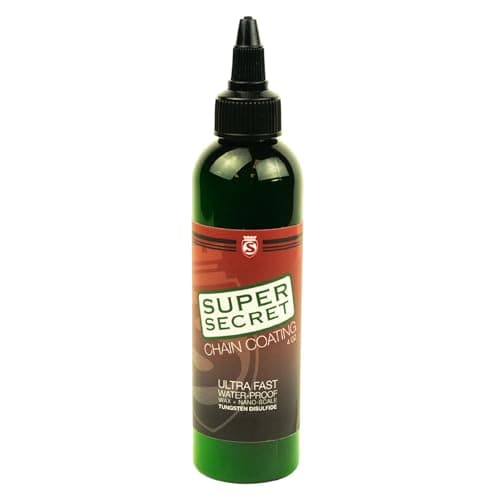
Silca Super Secret Chain Lube

Silca Super Secret Chain Lube

The drip-on wax that keeps showing up at the top of the published wear tables.

Top pick
Lowest drivetrain wear
2
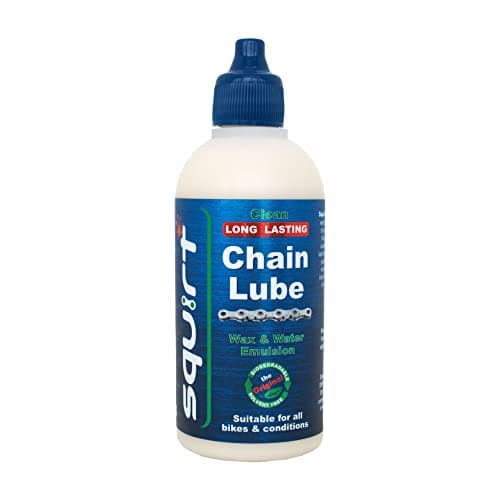
Squirt Chain Lube

Squirt Chain Lube

The wax emulsion that made this category normal, at a third of Silca's cost per ml.

Wax on a budget
3
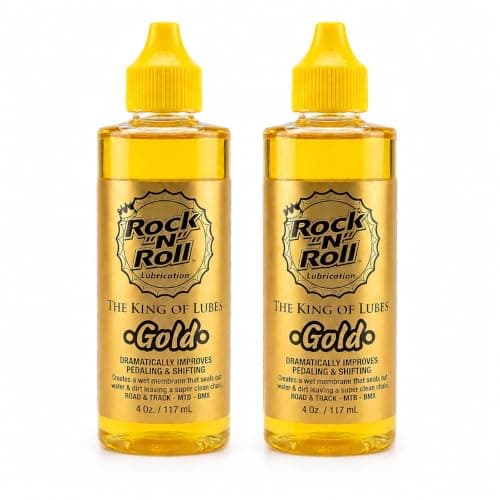
Rock N Roll Gold Chain Lube

Rock N Roll Gold Chain Lube

A cleaner-lubricant hybrid — and the listing is a two-pack, which changes the maths.

People who never degrease
4
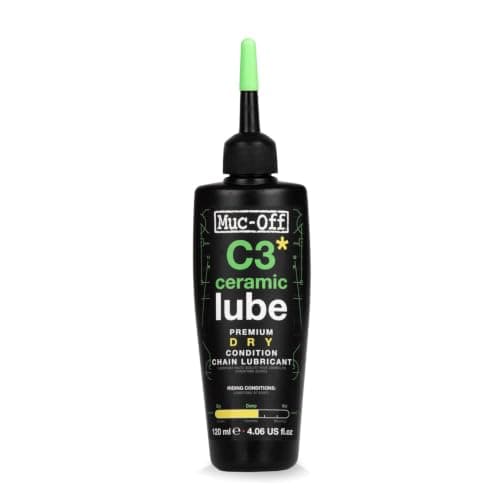
Muc-Off C3 Dry Ceramic Lube

Muc-Off C3 Dry Ceramic Lube

A ceramic dry lube with a UV dye so you can see where it went.

Dry and dusty conditions
5
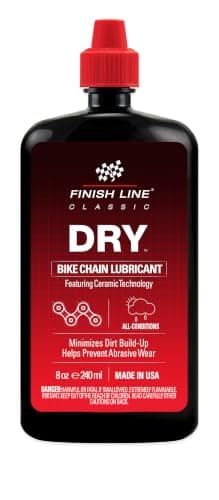
Finish Line Dry Teflon Lube

Finish Line Dry Teflon Lube

The 8 oz bottle that will outlast your interest in chain lube.

Buying once and forgetting
6
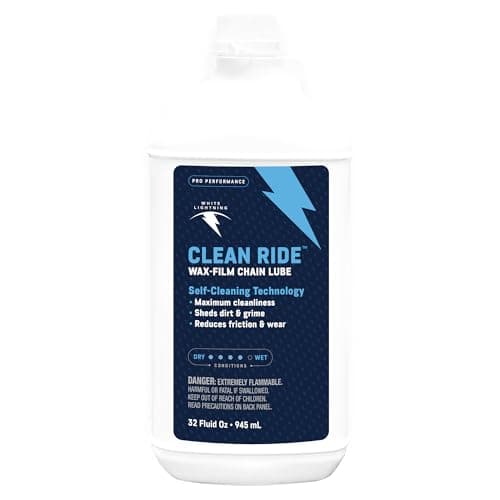
White Lightning Clean Ride

White Lightning Clean Ride

Self-cleaning wax in a 32 oz jug — by far the cheapest per millilitre here.

Households with several bikes
7
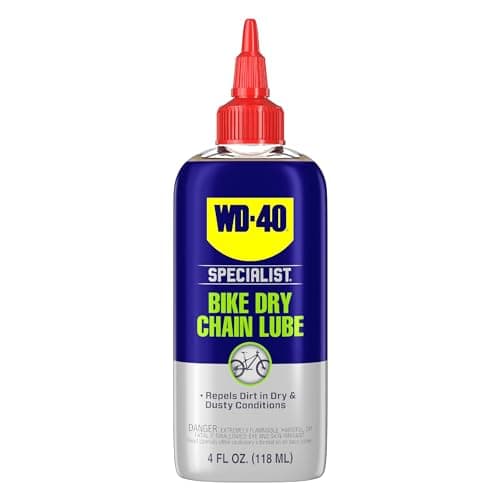
WD-40 Specialist Bike Dry Chain Lube

WD-40 Specialist Bike Dry Chain Lube

The one to skip — it's a competent lube attached to a brand that causes accidents.

Nothing on this list

Chain lube is the most over-argued purchase in cycling and one of the cheapest. The difference between the best bottle here and the worst is a few tens of dollars a year. The difference between lubing your chain and not is a drivetrain that lasts three times longer. If you take one thing from this page, take that one: the brand matters much less than the habit.

With that said, the bottles are not equivalent, and the way this category is normally written about hides the two things that actually decide your choice. So here they are up front.

The lab data everyone cites has a conflict, and nobody mentions it

Almost every chain lube recommendation you will read online traces back to one source: Zero Friction Cycling, an Australian operation that has run over 300,000km of controlled chain and lubricant wear testing and publishes the results as downloadable reports and a lubricant choice matrix. It is genuinely the most extensive public dataset in the category. It is the reason we can write this page without a lab, and we cite it below.

Zero Friction Cycling also sells chains and lubricants, including products that test well in its own results. We checked this directly rather than taking anyone’s word for it: the site runs an online store and states that it stocks “only genuinely proven top products”. That is not an accusation of dishonesty — a shop that only sells what it rates is a defensible way to run a shop. But a testing operation that retails the winners has a structural commercial interest in its own results, and you are entitled to know that before you weigh the data.

The publishers who rank above us for this query describe ZFC’s work as independent lab testing. It is rigorous, it is public, and it is far more than we could do ourselves. It is not independent. We will keep citing it, we will keep linking its raw matrix so you can read it yourself, and we will keep saying this every time. There is also a public methodological critique of ZFC’s testing published by Hambini Engineering; we could not retrieve that page to verify its specific claims, so we are not going to characterise or adjudicate it — only note that the dispute exists and is public.

Wax, dry, wet: the only distinction that matters

Strip the marketing and there are two families. Oil-based lubes(wet lubes, and most “dry” lubes, which are thin oils) leave an oily film on the outside of the chain. That film is sticky, so it collects road grit, and grit suspended in oil is grinding paste sitting exactly where you least want it — between your rollers and pins. Wax-based lubesdry to a solid film that isn’t tacky, so far less grit sticks, and what does stick tends to flake off with the wax rather than get milled into the chain.

That mechanism — not any brand’s formulation secret — is why wax dominates the published wear tables and why five of the seven bottles on this page are some form of wax. The trade-off is real, though: wax needs a properly degreased chain to bond to, and it needs reapplying more often. A wet lube on a filthy chain still beats a wax lube you never applied because you couldn’t face the prep.

If you’re deciding between the two, we’ve pulled that apart in wet vs dry chain lube. And whichever you pick, it only works on a clean chain — see how to clean a bike chain.

What a millilitre actually costs

Bottle sizes in this category run from 4 oz to 32 oz, and one of these is a two-pack, so the shelf price tells you almost nothing about what you’re paying for the stuff inside. Here is the live price divided by the volume printed on the listing. Cheapest per millilitre first.

LubeVolume (published)Live priceCost per ml
White Lightning Clean Ride32 fl oz$44.994.8¢/ml
Rock N Roll Gold Chain Lube2 × 4 fl oz = 8 fl oz total — the listing is a two-pack$17.107.2¢/ml
Finish Line Dry Teflon Lube8 fl oz$18.757.9¢/ml
WD-40 Specialist Bike Dry Chain Lube4 fl oz$11.159.4¢/ml
Squirt Chain Lube120 ml$15.3012.8¢/ml
Muc-Off C3 Dry Ceramic Lube120 ml$20.0016.7¢/ml
Silca Super Secret Chain Lube4 fl oz$24.9921.1¢/ml

Prices are live from Amazon as of Jul 17, 2026and move constantly; the arithmetic re-runs every time this page rebuilds. Volumes are quoted from each product’s own listing. What this table deliberately does not show is cost per application — that is the number you actually want, but no manufacturer here publishes how many applications a bottle contains, and we’re not going to invent the denominator to fill a column.

The picks, in detail

1

Silca Super Secret Chain Lube

Top pick
Silca Super Secret Chain Lube
$24.99 · View on Amazon

Price as of Jul 17, 2026. #ad

Best for: Lowest drivetrain wear

The drip-on wax that keeps showing up at the top of the published wear tables.

  • 4 fl oz
  • Liquid chain wax
  • Manufacturer: all weather

Silca’s pitch is that you get most of the benefit of immersion waxing without the saucepan. The reason it leads this list is not that we’ve ridden it — we haven’t — but that it performs strongly in the most extensive public chain-wear dataset in cycling, and the mechanism behind that result is well understood: no oil on the outside of the chain means no grinding paste forming on the outside of the chain.

Good

  • Wax carries no oil, so it picks up far less grit than a wet lube
  • A clean drivetrain is the cheapest drivetrain — chains and cassettes last longer
  • Applies from a bottle, so no slow-cooker and no melted-wax ritual

Less good

  • The most expensive thing here per millilitre, by a distance
  • Wax needs a genuinely clean chain to bond to — a wipe-down won't do
  • Reapplication is more frequent than a wet lube in bad weather

Skip it if: You want to squirt something on a filthy chain and ride. Wax rewards preparation and punishes shortcuts — if you won't degrease first, a wet lube will serve you better and cost less.

2

Squirt Chain Lube

Squirt Chain Lube
$15.30 · View on Amazon

Price as of Jul 17, 2026. #ad

Best for: Wax on a budget

The wax emulsion that made this category normal, at a third of Silca's cost per ml.

  • 120 ml
  • Wax emulsion
  • Manufacturer: all-weather dry

Good

  • Same basic idea as the top pick — wax, not oil — for far less per millilitre
  • Long-established and easy to find, which matters when you need a top-up
  • Goes on wet, dries to a wax film, so application is genuinely simple

Less good

  • Needs to dry before you ride, which catches people out
  • Builds up a visible wax layer that eventually wants stripping off
  • Less impressive than the top pick in the published wear data

Skip it if: You ride in persistent wet. This is a dry-conditions wax and a British winter will strip it faster than you want to reapply.

3

Rock N Roll Gold Chain Lube

Rock N Roll Gold Chain Lube
$17.10 · View on Amazon

$18.59 8%

Price as of Jul 17, 2026. #ad

Best for: People who never degrease

A cleaner-lubricant hybrid — and the listing is a two-pack, which changes the maths.

  • 2 × 4 fl oz (8 fl oz total)
  • Cleaner + lubricant
  • Manufacturer: all conditions

Good

  • Designed to flush grime out as you apply it, which suits riders who won't strip a chain
  • The two-pack makes it much cheaper per ml than the headline price suggests
  • Forgiving — it does not demand a surgically clean chain first

Less good

  • You apply a lot of it and wipe a lot of it off, so consumption is high
  • Runs off onto the floor during application more than a wax does
  • The hybrid approach is a compromise: it neither cleans like a degreaser nor lasts like a wax

Skip it if: You already keep a clean drivetrain. You'd be paying for a cleaning function you don't need and getting a lube that doesn't last as long as a dedicated wax.

4

Muc-Off C3 Dry Ceramic Lube

Muc-Off C3 Dry Ceramic Lube
$20.00 · View on Amazon

Price as of Jul 17, 2026. #ad

Best for: Dry and dusty conditions

A ceramic dry lube with a UV dye so you can see where it went.

  • 120 ml
  • Ceramic dry
  • UV tracer dye
  • Manufacturer: dry/dusty weather

Good

  • The UV tracer is a genuinely useful idea — under-application is the most common mistake
  • Formulated specifically for dry and dusty riding rather than as an all-rounder
  • Widely stocked

Less good

  • "Ceramic" is doing marketing work here; the manufacturer doesn't publish what it changes
  • Mid-pack on cost per ml — neither the cheap option nor the top performer
  • Dry-only, so it's a second bottle rather than your only bottle

Skip it if: You want one bottle for the whole year. This is explicitly a dry-conditions lube and the manufacturer says so.

5

Finish Line Dry Teflon Lube

Finish Line Dry Teflon Lube
$18.75 · View on Amazon

Price as of Jul 17, 2026. #ad

Best for: Buying once and forgetting

The 8 oz bottle that will outlast your interest in chain lube.

  • 8 fl oz squeeze bottle
  • Ceramic dry wax
  • Manufacturer: dirt/dust resistant

Good

  • 8 oz is a lot of lube — this is a multi-year bottle for most riders
  • Squeeze bottle applies precisely, with less waste than an aerosol
  • Cheap per millilitre

Less good

  • Unremarkable in every direction — nothing here is best in class
  • "Ceramic dry wax" blends three category words; the listing doesn't explain what it means
  • Dry-conditions bias, despite the all-round positioning

Skip it if: You're chasing the last watt or the longest chain life. This is the sensible default, not the optimum.

6

White Lightning Clean Ride

White Lightning Clean Ride
$44.99 · View on Amazon

Price as of Jul 17, 2026. #ad

Best for: Households with several bikes

Self-cleaning wax in a 32 oz jug — by far the cheapest per millilitre here.

  • 32 fl oz
  • Self-cleaning wax
  • 100% oil-free (manufacturer)

Good

  • Nothing else here is close on cost per millilitre
  • Oil-free wax, so it shares the low-contamination logic of the top pick
  • The self-cleaning claim is the point: old wax flakes off and takes grit with it

Less good

  • 32 oz is an absurd quantity for one bike — this only makes sense shared
  • Flaking wax makes a mess of the floor under your bike
  • Needs frequent reapplication compared with a wet lube

Skip it if: You own one bike and a small flat. You will not finish this bottle, and the per-ml win evaporates if half of it dries out in a cupboard.

7

WD-40 Specialist Bike Dry Chain Lube

WD-40 Specialist Bike Dry Chain Lube
$11.15 · View on Amazon

Price as of Jul 17, 2026. #ad

Best for: Nothing on this list

The one to skip — it's a competent lube attached to a brand that causes accidents.

  • 4 fl oz
  • Dry lube

Good

  • Genuinely a bicycle-specific dry lube, not the blue-and-yellow can
  • Cheap, and available in every hardware shop on earth

Less good

  • Constantly confused with original WD-40, which is a water-displacer and will strip a chain
  • The 4 oz bottle is small for the price relative to Finish Line's 8 oz
  • No published wear data we could find, from anyone

Skip it if: Honestly: buy something else. This is our skip-this pick. Not because it's bad — WD-40's bike range is a real product line — but because every other bottle on this page is either cheaper per ml, better documented, or both. The only thing it wins on is being on the shelf when you forgot.

What actually decides this purchase

Cost per millilitre, not cost per bottle. Bottles here run from 4 oz to 32 oz, and one of them is a two-pack disguised by its headline price. The table above does that division for you, live. It is the single most useful number on this page and no competitor publishes it.

Your conditions beat everyone’s test data.Half these bottles say “dry conditions” on the label. If you ride through winter, a lube optimised for dust is the wrong tool no matter how well it scores, and no amount of published data changes that.

The prep is the product. Wax on a dirty chain is worse than nothing — it seals the grit in. If you are not going to degrease properly the first time, buy the Rock N Roll and let the cleaner-lubricant do what it can. That is an honest recommendation for a real person, not a compromise.

Chain wear is the actual cost. Lube is cheap; the drivetrain it protects is not. A worn chain eats a cassette, and a cassette costs many bottles of lube. Check yours properly — when to replace a bike chain covers the 0.5% and 0.75% thresholds and what happens if you ignore them.

Common questions

Can I just use WD-40 on my bike chain?

Not the original blue-and-yellow can — that is a water-displacing solvent, and it will strip the lubricant out of your chain rather than add any. It is genuinely useful for driving water out of a chain after a soaking, immediately before you apply a real lube. WD-40 also sells an actual bicycle chain lube range, which is a different product in a different bottle; that one is on this list, and it works. The confusion between the two is exactly why we rank it last.

How often should I re-lube my chain?

Nobody publishes a number that survives contact with reality, because it depends on rain, dust and how far you ride. The honest test is your ears and your fingers: if the chain is audible, it is dry. If you run a finger along it and come back with black paste, it needs cleaning before it needs lube. Wax generally wants reapplying more often than a wet oil, and every one of these manufacturers would rather you applied it more often than less.

Is expensive chain lube actually worth it?

For most riders, the honest answer is that the habit is worth far more than the bottle. The gap between the cheapest and dearest lube here is a few tens of dollars a year; the gap between a lubed chain and a neglected one is a drivetrain. If you are racing and counting watts, the published friction data justifies the premium. If you are commuting, buy the cheap wax, apply it regularly, and spend the difference on something else.

Do I have to degrease a new chain before waxing it?

Manufacturers ship chains with a heavy factory grease that is a shipping preservative as much as a lubricant, and wax will not bond through it. Every wax product here assumes a clean chain. This is the step people skip and then conclude that wax “doesn’t work” — it is the most common failure in this category by a distance.

Which chain lube do you actually use?

We’re not going to answer that in a way that implies a test we didn’t run. What we can tell you is what this page is built from: the published wear data, disclosed conflicts and all; the volume printed on each bottle; and the live price. If a lube’s case rests on us saying “it felt fast”, it has no case.

Sources

We haven’t ridden or tested any of the products on this page, and we don’t pretend otherwise. Read how we research — or tell us we’re wrong and we’ll log the correction.