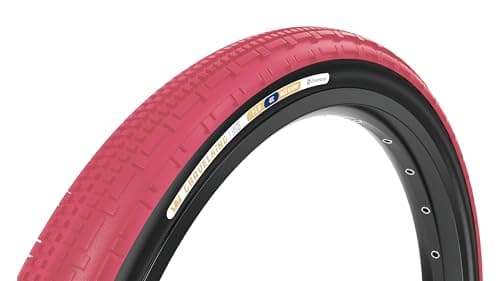
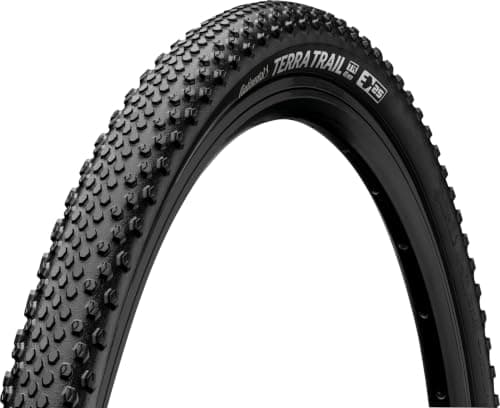
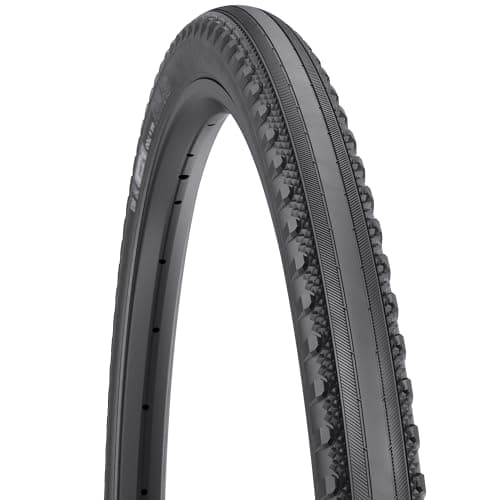
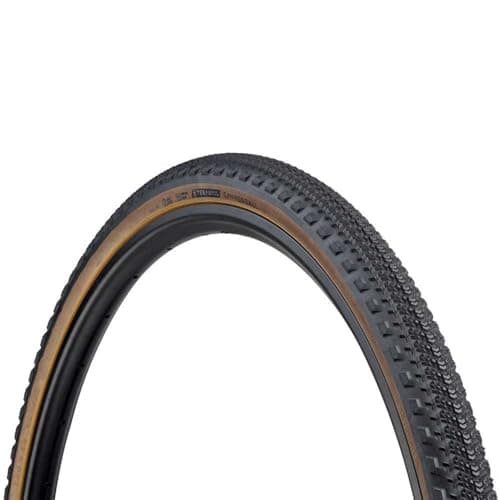
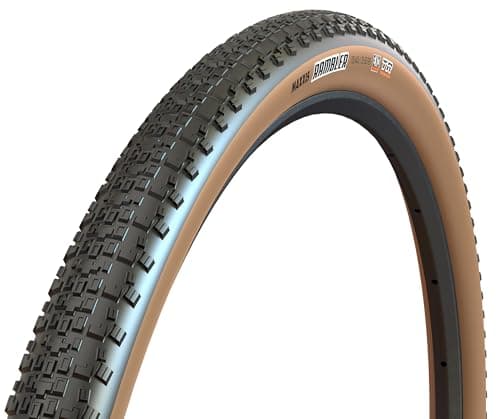
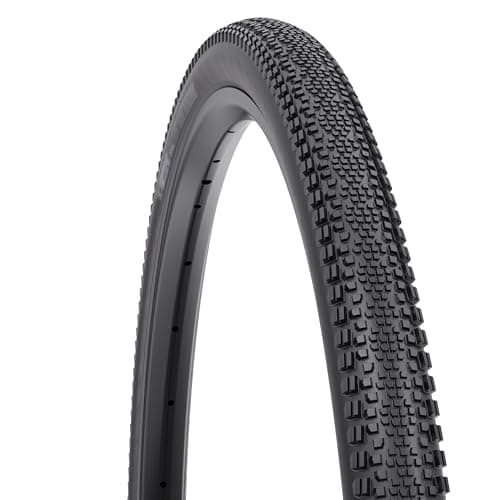
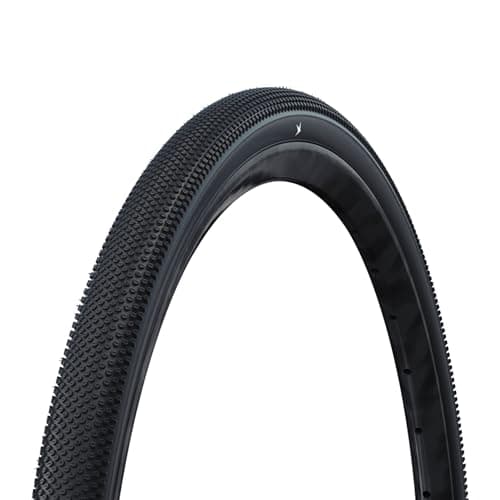
Three things decide a gravel tire: how much tread it has, how fast it rolls, and how hard it is to puncture. You cannot max all three. Tread costs watts, thin fast casings cost punctures, and puncture armor costs both watts and money. Every tire on this page is a different answer to the same three-way trade, and the marketing on all seven listings is written to make you forget that a trade is happening at all.
We have not ridden any of them. What follows is what the sellers publish, what one lab measured, and — the part nobody else does — where those two things are about different tires.
The lab data in this category is real, and it has a commercial relationship
Almost every rolling-resistance figure you will see quoted for a gravel tire traces back to Bicycle Rolling Resistance, which runs tires on a drum at a stated 29 km/h under a stated 42.5 kg load, punctures them on a purpose-built rig, and measures the mounted dimensions with micrometers. It is the only systematic public dataset in this category and this page leans on it heavily.
Bicycle Rolling Resistance also sells a confidential test service to tire manufacturers. We checked rather than assumed: its own About page states that it offers a confidential test service and has provided tire test data to tire manufacturers. That is not an accusation — selling lab time is a normal way to fund a lab, and it is arguably how the public results get paid for. But a lab with paying manufacturer clients is not a disinterested party, and you are entitled to know that before you weigh its numbers. The publishers who rank above us for this query cite BRR as independent. It is rigorous and it is public. It is not disinterested.
One more thing about BRR that matters more than the conflict: most of its per-pressure numbers are behind a paid tier.Of the six tires here it has tested, we could read a complete per-pressure breakdown for none of them. The figures in the table below are the ones BRR publishes free, and they were not all taken at the same pressure — the Riddler’s is at 40 psi, the Rambler’s at 50 psi, the GravelKing SK’s at 45. That makes the column indicative, not a clean like-for-like. We could have hidden that and printed a tidy ranking. It would have been a fake tidy ranking.
Every one of these tires is narrower than the number on the sidewall
This is the most useful thing on the page and it took a table to see. Across all six tires BRR measured, the measured casing width came in below the labeled width — every single time. The GravelKing SK labeled 40 measured 37. The G-One labeled 40 measured 36. The Cannonball labeled 42 measured 38. The Rambler labeled 40 measured 39 and was the closest to honest in the group.
That is not six manufacturers lying. It is ISO 5775 working as designed: the first number in 40-622 is a nominalsection width, and the standard explicitly ties realized width to the rim it’s mounted on — it specifies that rim inner width should be around 55% of nominal width for tires over 30mm. Mount the same tire on a wider rim and it measures wider. BRR’s bench uses one rim, so its deltas are BRR’s deltas, not universal law. The direction, though, is consistent, and the practical lesson survives: if you need 40mm of air, buying a tire labeled 40 is optimistic. We’ve pulled the whole mess apart in the gravel tire width guide.
Tread costs less speed than you think, and width costs almost none
The received wisdom is that knobs are slow and wide is slow. The published evidence is messier and more interesting than that.
On tread: the GravelKing SK has knobs and posted the fastest free BRR figure here. The Byway has a center slick and has never been measured. If knobs were straightforwardly slow, the rank order would not look like this.
On width: Rene Herse’s published roll-down testing compared 28, 32, 35 and 44mm tires in the same casing on a 132-meter hill and found the differences between them were not statistically significant — 44mm tires were not slower than 28s, even at 29 km/h. The mechanism is that a narrow tire at high pressure trades low hysteresis loss for high suspension loss, and a wide tire at low pressure does the reverse, and the two roughly cancel. Rene Herse manufactures and sells the tires in that test, which we mention for the same reason we mentioned it about BRR: they tested their own product and won. Read the method and decide for yourself — it’s published, which is more than most marketing claims manage.
Where width genuinely costs you is clearance and weight, not watts. Which is why the real constraint on this purchase is your frame, not your legs.
Your frame decides this, not your legs. Every tire here is between 37 and 45mm published, and the useful half of that range may be unavailable to you. A road frame that takes 32 makes this entire page academic. Measure the gap at your chainstays and fork crown before you read another word of tire marketing — gravel bike vs road bike covers what clearance actually differs by, and it is the real difference between the two categories.
Then buy 2 to 4mm wider than you think.Because of the ISO nominal-width business above, every tire BRR measured came in under its label on BRR’s rim. If you want 40mm of air and your frame takes exactly 40mm, you have no margin for the tire that arrives wider than BRR’s bench suggests — or for the mud that fills the gap. Buy the clearance, not the number.
Puncture protection is the spec nobody publishes and everybody needs.Not one listing here publishes a TPI count or a protection rating. The only public numbers are BRR’s puncture scores, and they range from 24 points to 35 — a spread of nearly 50% across tires that all look the same in a product photo. If you ride flint or thorns, that spread matters more than every watt on this page combined.
Tubeless is assumed, and it costs more than the tire. Five of these seven listings say tubeless. That is a system, not a feature: it needs sealant, a rim that takes it, and a way to seat a bead. Budget for that before you budget for the tire — tubeless vs tubes is the honest version of that math, and how to fix a flat covers what happens when the sealant loses.
Pressure will change the tire more than the tire will.BRR’s own free figures span 40 to 50 psi across these tests, and that alone is worth watts. Getting pressure right is free; buying a faster tire is not. Start with the tire pressure guide.