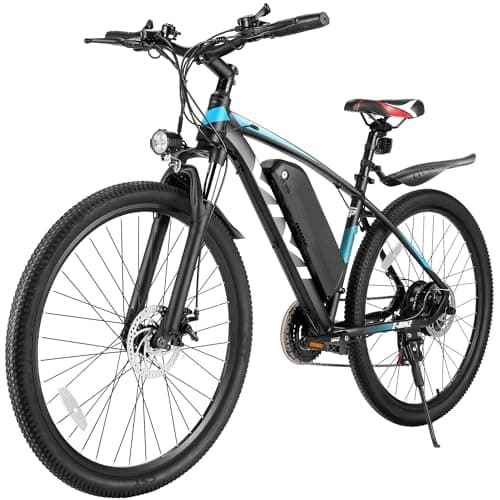
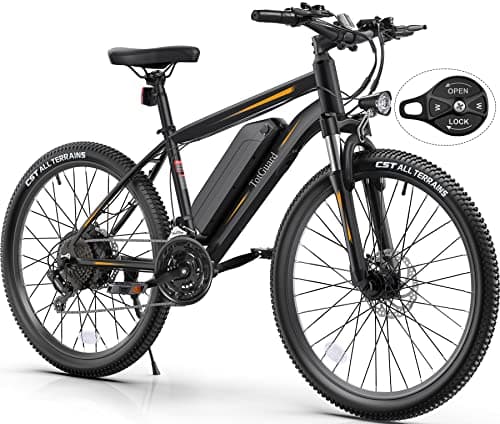
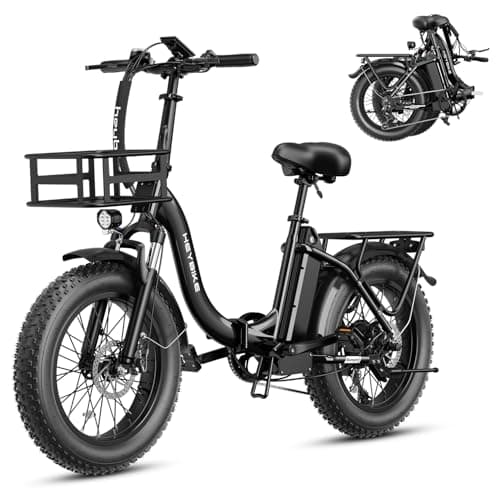
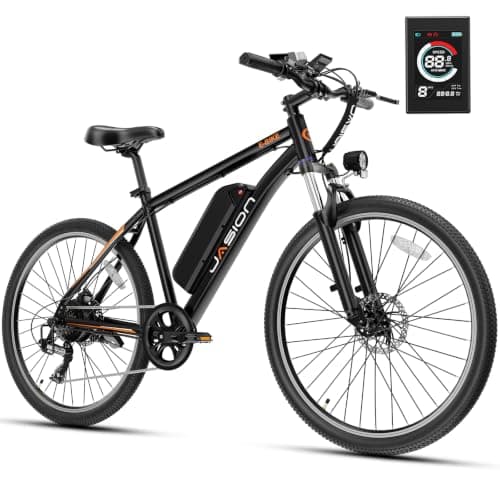
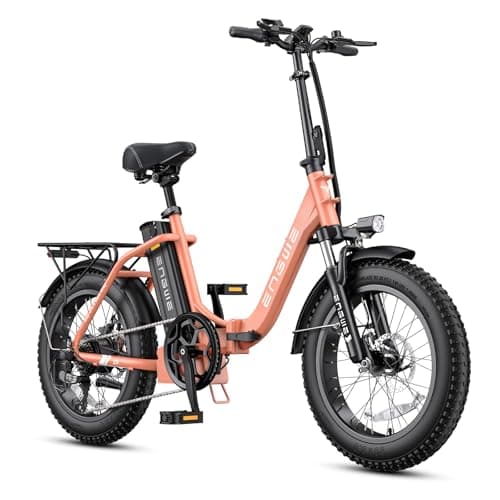
“Best value” in this category almost always means “cheapest bike we liked”. That’s not a value judgment, it’s a price sort with adjectives attached. So here’s a different approach, and as far as we can tell nobody else in this niche publishes it: divide the live price by the battery capacity the seller publishes.
Why the battery? Because it’s the most expensive component in an e-bike, it’s the one that wears out and needs replacing, and it’s the only spec that determines what the bike can genuinely do. Motors are cheap and the wattage figures are marketing (see below). Frames are frames. The pack is where the money is, and it’s the only cross-brand number with both inputs published: the price comes live from Amazon, the capacity comes off the seller’s own listing. Neither is our opinion.
The number that decides this page
The table below is the page. Ten e-bikes, sorted by what a watt-hour costs. It has one deliberately uncomfortable property: the winner is a bike we’re telling you not to buy.The Jasion EB5’s live price divided by its published 360Wh comes out at roughly half the cost per watt-hour of anything else in the catalog, which in our experience of markets means the listing isn’t selling what its title describes. We can’t prove that, so we haven’t deleted the row — we’ve published it, ranked it last, and told you exactly why. A table you can only trust when it agrees with the ranking isn’t a table.
Two bikes are missing from it entirely. Neither the Gotrax R7 nor the Schwinn Parkwood publishes a battery figure at all, so there is no honest way to compute value for either. We could have estimated. We’re not going to.
Why watts are not value
The listings here shout 1500W, 1400W peak, 1125W, 1000W peak. Those numbers do almost nothing for you. Watts describe how hard the motor can shove for an instant; watt-hours describe how much energy the bike carries. Buying an e-bike on peak wattage is like buying a car on how loud it is.
There’s a legal tell here too. Federal law defines a low-speed electric bicycle as having a motor of less than 750 watts. Notice that the Vivi and the Gotrax both land on 750W — both as a stated PEAK — while others advertise 1500W. Those cannot all be the same measurement, and a peak is not the measurement the statute uses at all. Nobody discloses which one they’re quoting — continuous, peak, input, output — so the wattage column of an e-bike listing is not a comparison, it’s a mood. Capacity, at least, is a unit.
What we haven’t done
We haven’t ridden any of these. We haven’t weighed them, charged them, or watched one fail. Every figure above comes from the sellers’ own live Amazon listings, read on 17 July 2026, and every derived figure is a multiplication you can check on a phone. What this page will not tell you is which of these bikes lasts three years — that’s the number that would actually settle “value”, and nobody publishes it, including us.
The battery is the most expensive component on an e-bike and the only one that decides what the bike can actually do. So here is the live price divided by the capacity the seller publishes. Cheapest per watt-hour first. Where the listing gives volts and amp-hours instead of watt-hours, we multiply them and mark the row — that is the seller’s own arithmetic, not our estimate.
† The seller published volts and amp-hours but not watt-hours, so we multiplied them. Prices are live from Amazon as of October 18, 2026 and move constantly; the arithmetic re-runs every time this page rebuilds. Two e-bikes in our catalog can’t appear in this table at all — neither the Gotrax R7 nor the Schwinn Parkwood publishes a battery figure of any kind. Neither omission is our choice; you simply cannot compute value from a spec sheet that doesn’t have the spec on it.
Cost per watt-hour beats price, but it isn’t the whole answer.A cheap watt-hour on a bike that’s the wrong shape is money you’ve wasted more efficiently. Use the table to see which listings are charging a premium that their published specs don’t support — then choose between the ones that fit your riding. The two most expensive rows on the table are also the two most expensive bikes; that is not a coincidence, and it’s worth knowing before you assume you get what you pay for.
Treat every range claim as a best case.“Up to 50 miles”, “60 miles”, “68 miles” — these are manufacturers’ numbers, produced in conditions the manufacturer picked and didn’t publish. No rider weight, no assist level, no gradient, no temperature. They are not a lie; they are the best case, and you will not ride in the best case. How far can an e-bike really go works through what the claims imply.
The battery is the depreciation. Lithium packs lose capacity with cycles and age, and a replacement is a significant fraction of what these bikes cost. Not one seller in this catalog publishes a cycle-life figure or a replacement pack price. That silence is the single biggest hole in any value calculation on this page, ours included, and you should price it in before you assume a cheap bike stays cheap.
The running cost is negligible and the arithmetic proves it.Whatever you pay for the bike, the electricity is nothing — fractions of a cent per mile. That’s worth knowing precisely rather than believing vaguely, so we’ve shown the full working on what an e-bike costs to run, including the same miles in a car.
Cheap e-bikes are all hub-drive, and that’s mostly fine. There is no mid-drive in this price band, on Amazon or anywhere else, because the motor alone costs more than several of these bikes. Hub vs mid-driveexplains what you give up and — more usefully — what you genuinely don’t.
One use case changes this order, and it has its own page: the best e-bikes for hills ranks on published rear gear count, which promotes the two 21-speed bikes here and demotes the fat-tire ones.