Skip to content
ChainringClub

The Best E-Bikes on Amazon

Seven e-bikes ranked on what their listings actually publish. We haven't ridden any of them — and the brands every other site recommends for this search aren't sold on Amazon at all.

An electric bike with fat tyres parked on a city street in hard morning light.
By Stephen V.Published July 17, 2026How we research

Heads up: we earn a commission if you buy through the links on this page, at no extra cost to you. It never decides what makes the list — here’s how that works.

Quick picks

Tap any row for the full write-up. Specs are the manufacturer's own published claims, read on 17 July 2026.

#ProductBest forPrice
1
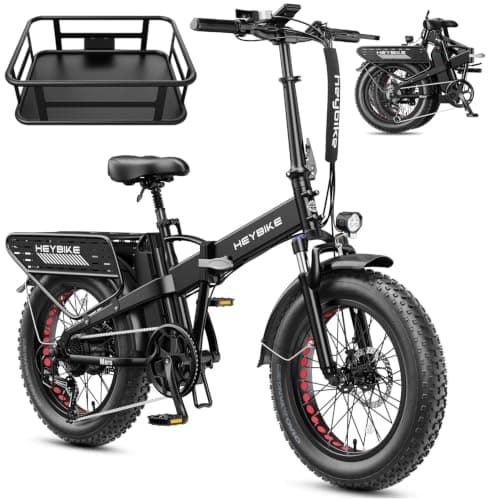
Heybike Mars 2.0

Heybike Mars 2.0

The listing that publishes the most numbers, and the biggest battery figure Amazon prints on a folding bike here.

Top pick
Riders who want the most published numbers
2
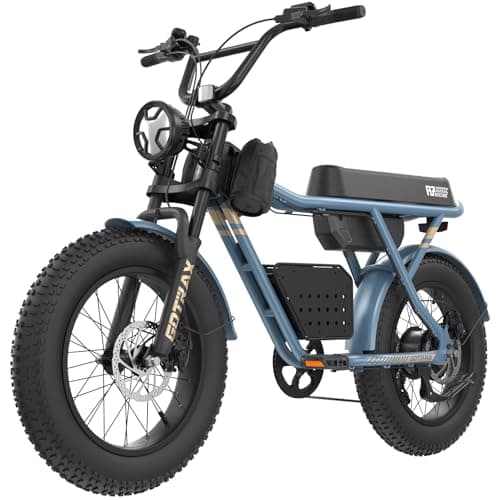
Gotrax R7

Gotrax R7

The one that arrives closest to usable — basket, bag, padded seat, and a safety certification stated up front.

A first e-bike that arrives ready to use
3
Heybike Cityscape 2.0

Heybike Cityscape 2.0

A plain 26in commuter with a modest battery and a stated UL certification — the least costume of anything here.

Plain city commuting on pavement
4
ENGWE L20

ENGWE L20

Dual suspension and a 52V pack — the most range Amazon claims per unit of published battery on this page.

Broken city surfaces and long claimed range
5
Cyrusher Kommoda

Cyrusher Kommoda

The biggest battery here by a distance, and the biggest price — the only one with hydraulic brakes and air suspension published.

Spending the most for the most battery
6
Vivi 27.5" Electric Mountain Bike

Vivi 27.5" Electric Mountain Bike

The cheapest listing here that still publishes a watt-hour figure and a named safety standard.

Spending the least without losing the spec sheet
7
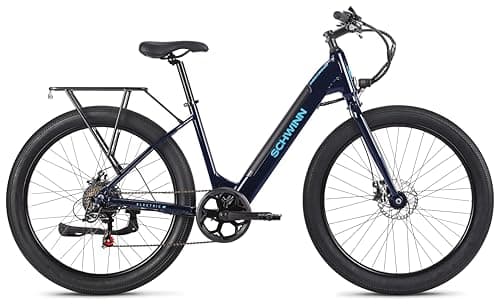
Schwinn Parkwood

Schwinn Parkwood

The one household name on this page, and the listing that publishes the least. Skip it.

Nothing we can justify on published data

Search “best e-bikes on Amazon” and almost every result answers a different question. They review the e-bikes they rate — Rad Power, Lectric, Aventon, Specialized — and then send you to those brands’ own websites. It’s a good list of e-bikes. It is not a list of e-bikes on Amazon, which is what you asked for.

So here is the thing nobody says out loud: Amazon sells a completely different set of e-bikes than the ones the review sites rank.Different brands, different price band, different spec sheets, and a very different amount of published information. That’s the page. Seven bikes Amazon will actually ship you, ranked by what their sellers are willing to put in writing.

The brands everyone recommends aren’t there

We built this shortlist from live Amazon catalogue lookups on 17 July 2026. Not one of the brands that dominates the “best e-bike” lists came back with a bike we could link to. Rad Power sells from its own site and its own RadRetail stores — its store locator names no marketplace. Lectric sells from lectricebikes.com. Specialized and Trek run dealer networks. That is a deliberate commercial choice on their part: a direct-to-consumer brand keeps Amazon’s cut, keeps the customer relationship, and keeps control of warranty and assembly on a product that weighs fifty-something pounds and has a lithium battery in it.

We’ll be careful about how strongly we put this, because Amazon has a very long tail and third-party sellers list all sorts of things: we can’t rule outthat a grey-market unit of some famous bike appears somewhere on the marketplace on any given day. What we can tell you is that Amazon’s e-bike catalogue, as it comes back from a live lookup, is a different world from the one the review sites cover — and that a bike listed by an unknown third-party seller is exactly the case where you want the warranty to come from the brand, not the marketplace.

Why that changes what you should look for

It matters more than it sounds. When you buy a Rad or a Lectric, you get a company that publishes a full spec sheet, a documented warranty, a support line and a network of shops that will at least look at it. When you buy an e-bike on Amazon, you get a listing title, a photo gallery, and whatever the seller chose to type into it. The spec sheet IS the product, because it’s all there is.

So that’s what we ranked. Not the ride — we have not ridden any of these bikes and we are not going to pretend we have. Not a score, because a score is a measurement and we measured nothing. We ranked them on how much the seller published, how internally consistent it is, and what the numbers imply once you do the arithmetic the listing skips.

The three things not one of these listings tells you

Across all twelve e-bikes in our catalogue — not just the seven here — there are three conspicuous silences.

Not one publishes a weight.Zero out of twelve. This is the single most practical number for anyone who will ever lift, carry, rack or stand a bike up, and it appears on none of them. For a category where the honest answer to “can I get this up my front steps?” is a number in pounds, that’s a remarkable gap, and we’re not going to fill it with a guess.

Not one states a class. Five of the twelve claim assisted speeds of 28 mph. California has required a permanent, visible label stating the class, the top assisted speed and the motor wattage on every electric bicycle sold there since 1 January 2017. None of these listings mentions one. We’ve pulled that apart in e-bike classes explained, because a 28 mph claim is not a neutral marketing flourish — it’s the difference between a bicycle and, in some states, something you can’t legally ride on the path you bought it for.

Only one says where the motor is.The Schwinn says “hub motor”. The rest publish a wattage and let you assume. They’re almost certainly all hub motors at these prices, but “almost certainly” is not a spec — hub vs mid-drive explains why the distinction changes how the bike rides, what it costs to service, and how much fun you have the first time you fix a rear flat.

What we left out, and why

Our catalogue holds twelve e-bikes; this page ranks seven. The Heybike Ranger 2.0 is a very close sibling of the top pick from the same brand, so it went to the step-through page where its frame is the point. The Hiboy and the isinwheel both make big claims we treat more carefully in how far can an e-bike really go. The TotGuard publishes a battery but no range at all, which makes it un-costable and lands it on the value pageinstead. And the Jasion EB5’s live price sits so far below every other complete e-bike here that we don’t believe the default listing variant is a whole bike — we say so plainly on the value page rather than rank something we can’t characterise.

The picks, in detail

1

Heybike Mars 2.0

Top pick
Heybike Mars 2.0
$999.00 · View on Amazon

Price as of Jul 17, 2026. #ad

Best for: Riders who want the most published numbers

The listing that publishes the most numbers, and the biggest battery figure Amazon prints on a folding bike here.

  • 624Wh removable battery (listing)
  • 1800W peak motor (listing)
  • 70+ miles claimed range (listing)
  • 100 N.m torque (listing)
  • 20 × 4in fat tyres, folding frame
  • Weight: not published

It is first because of what it tells you, not because of how it rides — we have never touched one. On a page where one listing publishes a wheel size and a motor wattage and nothing else, Heybike prints a watt-hour figure, a torque figure, a range claim and a peak output. That is a spec sheet you can argue with, and arguing with spec sheets is the only thing we can honestly do. It also feeds straight into the arithmetic on what an e-bike costs to run: 624Wh is a real input, and a bike that publishes one can be costed.

Good

  • 624Wh is the largest battery figure any listing here prints in watt-hours rather than leaving you to multiply volts by amp-hours
  • The only listing on this page that publishes a torque figure at all
  • Removable battery means you can charge it at a desk instead of carrying a bike up stairs

Less good

  • "1800W peak" is a peak, not a rating — the listing never says what the continuous rating is, and peak is the number marketing reaches for
  • "70+ miles" is a manufacturer's claim with no stated test conditions, no assist level and no rider weight
  • Fat tyres and a folding hinge are both weight, and the listing publishes no weight

Skip it if: You have to carry it. A folding fat-tyre e-bike with a 624Wh pack is heavy — how heavy, Heybike doesn't say — and "folding" describes the hinge, not the lifting. If it lives up a flight of stairs, this is the wrong shape of bike and the fold will not save you.

2

Gotrax R7

Gotrax R7
$764.99 · View on Amazon

$899.99 15%

Price as of Jul 17, 2026. #ad

Best for: A first e-bike that arrives ready to use

The one that arrives closest to usable — basket, bag, padded seat, and a safety certification stated up front.

  • 750W motor (listing)
  • 25 mph (listing)
  • Max 45-mile claimed range (listing)
  • 48V removable battery — amp-hours not published
  • 20in fat tyres, basket and frame bag included
  • UL Certified (listing)
  • Weight: not published

Good

  • Ships with a basket and a frame bag, which are the two things every new e-bike owner buys in week one
  • The listing states a UL certification rather than leaving battery safety unmentioned
  • 750W is exactly the federal ceiling for a low-speed electric bicycle, so the number is at least a deliberate one

Less good

  • 48V with no amp-hour figure means the listing publishes no usable battery capacity — you cannot compute range or cost per mile from it
  • 45 miles is the shortest range claim on this page, and it's a maximum
  • 25 mph puts it above the 20 mph Class 1/2 ceiling and below the Class 3 one, and the listing never mentions a class

Skip it if: You want to check the maths. This is the only bike here that names a voltage without an amp-hour figure, which is the one combination that leaves you unable to work out the battery's capacity. If you care about cost per mile — and this site thinks you should — the number you need isn't published.

3

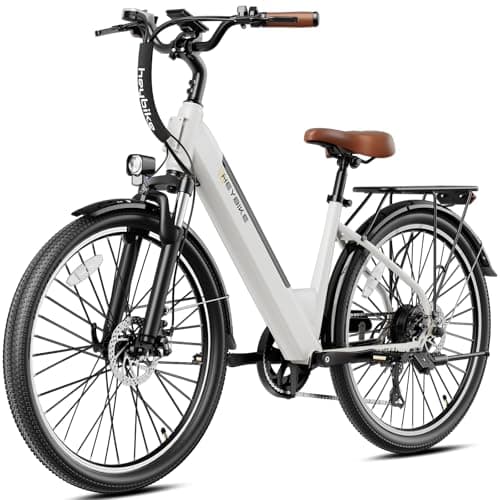
Heybike Cityscape 2.0

Heybike Cityscape 2.0
$595.00 · View on Amazon

$699.00 15%

Price as of Jul 17, 2026. #ad

Best for: Plain city commuting on pavement

A plain 26in commuter with a modest battery and a stated UL certification — the least costume of anything here.

  • 468Wh removable battery (listing)
  • 50-mile claimed range (listing)
  • 7-speed, 26in wheels
  • UL Certified (listing)
  • Motor output: not published
  • Weight: not published

Good

  • 26in wheels and a 7-speed drivetrain describe an ordinary bike, which for city riding is the right answer
  • Publishes its battery in watt-hours, so it can be costed and compared honestly
  • The smallest battery here is also the cheapest to fill and the lightest to lift, whatever it weighs

Less good

  • The listing does not publish a motor output at all — not a peak, not a rating
  • No assisted speed published either, so you cannot tell which class it belongs to
  • 468Wh is the smallest pack on this page and a 50-mile claim on it deserves particular scepticism

Skip it if: Your commute has real hills or you weigh more than the marketing department imagines. A 468Wh pack is the smallest here, the listing won't tell you what the motor does, and climbing is exactly where an under-specified motor and a small battery both run out at once.

4

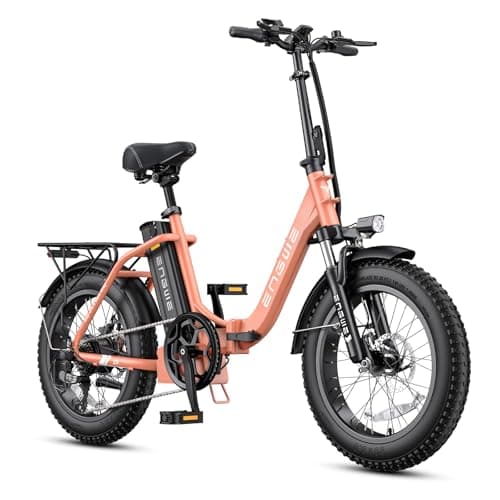
ENGWE L20

ENGWE L20
$669.00 · View on Amazon

Price as of Jul 17, 2026. #ad

Best for: Broken city surfaces and long claimed range

Dual suspension and a 52V pack — the most range Amazon claims per unit of published battery on this page.

  • 52V 13Ah removable battery (listing) — 676Wh if you multiply
  • 1125W motor (listing)
  • 28 mph (listing)
  • Max range 68 miles (listing)
  • 20 × 3.0in fat tyres, dual suspension
  • Weight: not published

Good

  • 52V × 13Ah works out at 676Wh, the second-largest capacity on this page once you do the multiplication
  • Dual suspension is genuinely useful on the kind of broken tarmac that most e-bike commuting happens on
  • A 68-mile claim from 676Wh is at least internally consistent with the others here, which is more than you can say for some

Less good

  • The listing gives volts and amp-hours but never the watt-hour figure, which is the number that matters — you have to do the sum yourself
  • 28 mph is Class 3 territory in the states that use the class system, and the listing says nothing about it
  • Dual suspension on a fat-tyre bike adds weight and pivots, and the listing publishes neither a weight nor a service interval

Skip it if: You want a bike you can hand to a local shop. Suspension pivots and a proprietary 52V pack are two service dependencies on a brand with no dealer network, and "52V 13AH" in the variant name means the replacement pack has to come from Engwe.

5

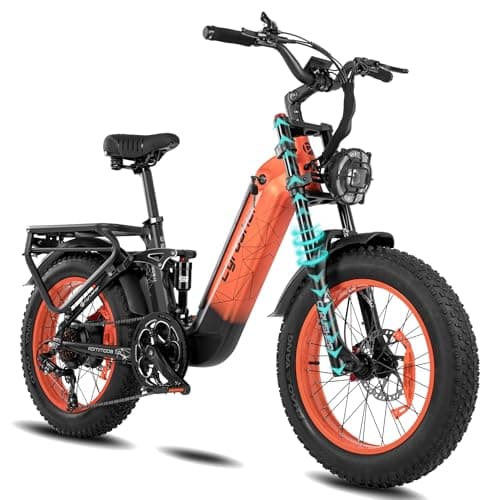
Cyrusher Kommoda

Cyrusher Kommoda
$1,599.00 · View on Amazon

Price as of Jul 17, 2026. #ad

Best for: Spending the most for the most battery

The biggest battery here by a distance, and the biggest price — the only one with hydraulic brakes and air suspension published.

  • 48V 20Ah battery (listing) — 960Wh if you multiply
  • 1500W motor (listing)
  • 28 mph (listing)
  • 75-mile claimed range (listing)
  • Air suspension, hydraulic disc brakes (listing)
  • 20in wheels, aluminium frame
  • Weight: not published

Good

  • 960Wh is roughly double the smallest pack on this page — capacity is the one e-bike spec that reliably buys you something
  • Hydraulic disc brakes are a real advantage on a heavy bike, and it's the only listing here that names them alongside air suspension
  • The 75-mile claim comes off the largest battery here, so it's the least implausible long-range number on the page

Less good

  • Costs roughly three times the cheapest bike here for about twice the battery — capacity per dollar goes the wrong way
  • Like Engwe, publishes volts and amp-hours but not watt-hours
  • Air suspension needs setting up and occasionally servicing, and no listing here comes with anyone to do that

Skip it if: You're buying your first e-bike to find out whether you'll use it. This is the most money on the page for a spec sheet you still can't fully audit, and if the bike ends up in the garage in November the extra 500 watt-hours will have bought you nothing.

6

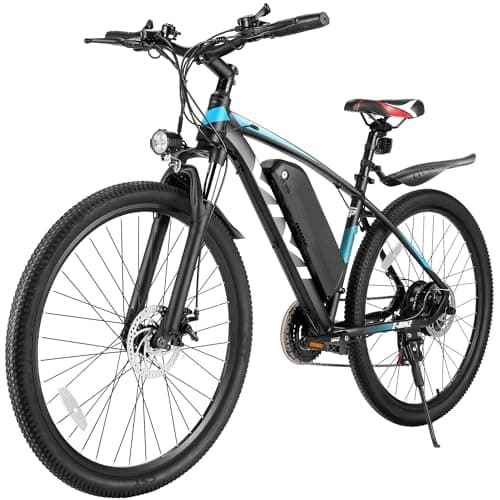
Vivi 27.5" Electric Mountain Bike

Vivi 27.5" Electric Mountain Bike
$499.99 · View on Amazon

Price as of Jul 17, 2026. #ad

Best for: Spending the least without losing the spec sheet

The cheapest listing here that still publishes a watt-hour figure and a named safety standard.

  • 48V 499.2Wh battery (listing)
  • Peak 749W (listing)
  • 19.8 mph (listing)
  • Up to 50-mile claimed range (listing)
  • 27.5in wheels, 21-speed
  • SGS Certified to UL2849 (listing)
  • Weight: not published

Good

  • Publishes both a watt-hour figure and the specific standard it's certified to — UL2849 is the e-bike electrical system standard, and naming it is more than most listings here manage
  • 749W peak and 19.8 mph are both a hair under the round numbers, which reads like someone actually checked the federal limits
  • Cheapest bike on this page, and it still gives you enough published data to compute a cost per mile

Less good

  • It's a hardtail mountain bike, which is the wrong shape for most people searching for an e-bike on Amazon
  • 21 speeds on an assisted bike is a drivetrain solving a problem the motor already solved
  • "Up to 50 miles" from 499.2Wh is a bigger claim per watt-hour than the top pick makes from 624Wh

Skip it if: You want to ride upright in normal clothes. A 27.5in hardtail with a suspension fork puts you in a forward position over a high standover, and no amount of motor fixes a riding position you don't want. A step-through frame is the fix, and it isn't this.

7

Schwinn Parkwood

Schwinn Parkwood
$999.99 · View on Amazon

Price as of Jul 17, 2026. #ad

Best for: Nothing we can justify on published data

The one household name on this page, and the listing that publishes the least. Skip it.

  • 350W hub motor (listing)
  • 27in wheels (listing)
  • Battery capacity: not published
  • Claimed range: not published
  • Assisted speed: not published
  • Weight: not published

We want to be precise about the criticism, because it isn’t “this is a bad bike” — we have no idea whether it’s a bad bike, and neither does anyone else writing about it from a desk. The criticism is that on a page ranked by what sellers publish, this seller publishes a wheel size and a wattage. Every other bike here at least tells you how much energy it carries. If Schwinn adds a watt-hour figure to the listing, this pick moves.

Good

  • Schwinn is a name your parents know, and for some buyers that genuinely lowers the barrier to trying an e-bike
  • It is the only listing here that says where the motor is — "350W Hub Motor" — which no other seller bothers to state

Less good

  • No published battery capacity, in any unit, in any form
  • No published range, no published assisted speed, no published weight
  • 350W is the lowest output figure on the page and the listing gives you nothing to contextualise it with

Skip it if: Honestly: buy something else, or buy this one from a shop that will tell you the battery size. This is our skip-this pick, and it's a genuinely uncomfortable one — Schwinn is the only brand on this page most people have heard of, and it's the brand publishing the least. The battery is the single most expensive component in an e-bike and the only one that determines what the bike can do. A listing that won't tell you its capacity is asking you to buy the name.

What actually decides this purchase

Watt-hours, not watts. Watts is how hard the motor can push; watt-hours is how much energy the bike carries — the number that decides how far you go and what a charge costs. Sellers lead with watts because 1800 is a bigger number than 624. If a listing gives you volts and amp-hours instead, multiply them: 52V × 13Ah = 676Wh. If it gives you volts alone, as the Gotrax does, you cannot compute capacity at all, and you should treat that as the missing spec it is. The full argument is in e-bike battery range explained.

Every range claim on this page is a marketing number.“70+ miles”, “up to 50 miles”, “max 45-mile range” — every one of them is a manufacturer’s figure produced under conditions the manufacturer chose and didn’t publish. No rider weight, no assist level, no gradient, no temperature, no wind. They are not lies; they’re best cases, and best cases are what a lab bench on the lowest assist setting produces. Assume meaningfully less and you will never be disappointed.

Peak is not continuous.“1800W peak” and “1500W” describe what the motor can do for a moment, not what it can hold. Federal law defines a low-speed electric bicycle as having a motor of less than 750W, which is why the Gotrax says 750W and the Vivi says 749W. When a listing advertises 1800W, it’s quoting a different measurement than the one the law uses — and it never says which.

Look for a named standard, not the word “certified”. Four of these listings mention UL. Only the Vivi names the actual standard — UL2849, the one that covers the whole electrical system rather than just the cells. This is a lithium battery that will live in your house and charge overnight. The specific standard is worth more than the badge, and the cost page assumes you plug the thing in somewhere you sleep.

Budget for the parts the listing doesn’t include. An e-bike on Amazon arrives in a box, part-assembled, with no shop attached. You will want a helmet and lights on day one, and you will eventually get a flat — which on a rear hub motor is a genuinely worse afternoon than on a normal bike, as how to fix a flat explains.

Common questions

Are the e-bikes sold on Amazon any good?

We can’t tell you how they ride, because we haven’t ridden them. What we can tell you is what separates them from the brands the review sites cover: less published data, no dealer network, and a warranty relationship with a company you’ve never heard of. The hardware itself — hub motor, lithium pack, controller — comes from the same general supply chain that feeds the whole category. The gap is in documentation and support, not necessarily in the parts. Whether that gap matters depends entirely on whether you’re willing to be your own bike shop.

Why can't I buy a Rad Power or Lectric e-bike on Amazon?

Because they’ve chosen not to sell there. Rad Power sells through its own website and its own retail stores; Lectric sells from its own site. For a direct-to-consumer brand that’s a rational choice — it keeps the marketplace commission, the customer data, and control over how a 60-pound machine with a lithium battery gets delivered, assembled and warrantied. It also means that if you see one of those brands on a marketplace listing from an unfamiliar seller, the warranty question is worth asking before you click.

How much does it cost to charge one of these?

Cents. At the US average residential electricity price the largest battery on this page holds well under a quarter’s worth of electricity, and a mile of riding costs a fraction of a cent. We’ve done the full arithmetic, with every input sourced and the working shown, on what an e-bike costs to run — including the comparison with the same miles in a car, which is the number most people are actually after.

None of these listings say how much the bike weighs. Why not?

We don’t know, and we’d rather say so than speculate about motive. What we can say is that it’s all twelve of them, not a few — so it isn’t an oversight by one seller. A fat-tyre e-bike with a 600-odd watt-hour battery is a heavy object, the fold on a folding one doesn’t make it lighter, and if you need to know the number before you buy, you’ll have to ask the seller directly. If you get an answer, tell us and we’ll publish it with the date.

Is a 28 mph e-bike legal where I live?

It depends on your state, and possibly your city, and possibly the specific path. Federal law defines a low-speed electric bicycle by a motor under 750W and a motor-only top speed under 20 mph. Most states then layer on the three-class system, where 28 mph pedal-assist is Class 3 and often comes with age limits, helmet rules and path restrictions that 20 mph bikes don’t have. Five of the twelve bikes in our catalogue claim 28 mph and not one of them mentions a class. E-bike classes explainedhas the statutes we read, and a link to the per-state rules — which you should check, because we have not read all fifty and won’t pretend to have.

Sources

We haven’t ridden or tested any of the products on this page, and we don’t pretend otherwise. Read how we research — or tell us we’re wrong and we’ll log the correction.