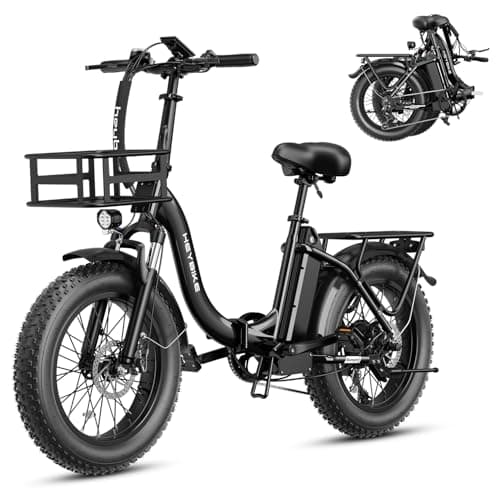
Let’s deal with the word first. “For seniors” is a search term, not a category of person, and the bike doesn’t know how old you are. What people typing it usually want is specific and reasonable: a frame you can get on and off without lifting your leg over a bar, an upright riding position, brakes that work, and a machine you can actually move around when the motor is off. Those are four requirements. Amazon publishes an answer to one of them.
Three numbers, and who publishes them
We read all twelve e-bike listings in our catalog on 17 July 2026 looking for the three specs that decide this purchase. Here’s the count.
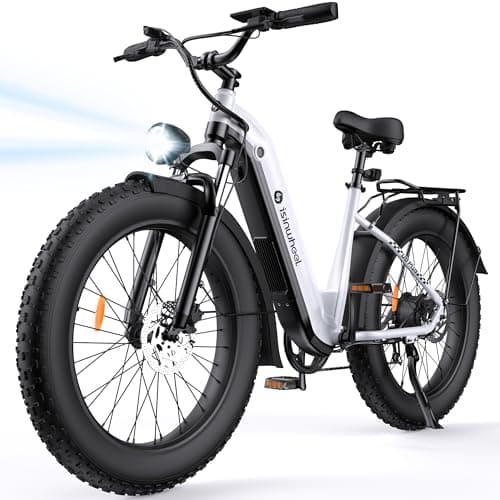
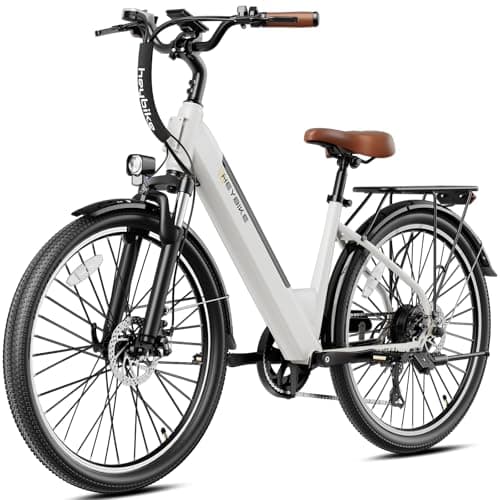
Step-through frame: two out of twelve.The Heybike Ranger 2.0 says “Step-Thru”. The isinwheel says “30″ Step-Thru”. That’s it. That’s the whole field. Several other bikes here might well have a low top tube — we can see photographs like anyone else — but a photograph is not a spec, and if we start telling you what a frame is from a marketing image we’ve stopped doing the one thing this site is for.
Standover height: zero out of twelve.This is the number that actually answers “can I get on it?” — the height of the frame at the point you swing your leg over. Not one seller publishes it. The isinwheel prints “30″” next to “Step-Thru” without ever saying what the 30 inches measures, which is not the same as publishing a standover.
Weight: zero out of twelve.None of them. Not one listing in the entire catalog states what the bike weighs, and this is the specification that decides whether you can get it up a curb, onto a rack, or back upright after it tips over in the garage. For a page aimed at riders who may not want to wrestle sixty-odd pounds of fat-tire e-bike, that’s the most important silence on the internet. We will not fill it with a guess. If you take one action from this page, make it this: email the seller and ask for the weight in pounds before you buy.If they answer, you’ve learned the most useful thing about the bike. If they don’t, you’ve also learned something.
So what did we rank on?
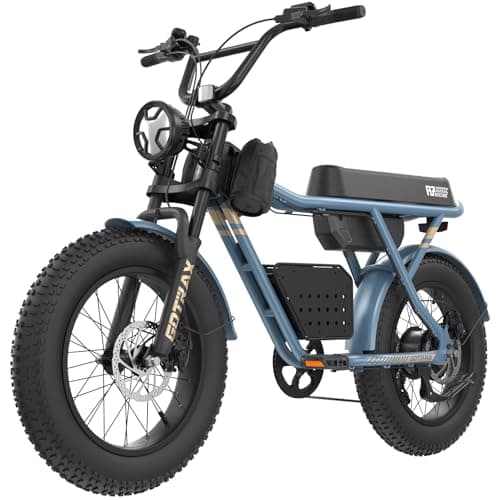
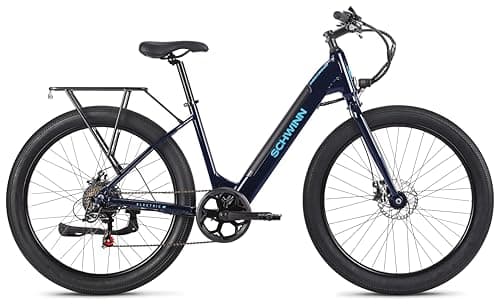
The one attribute that is published: the frame. The two bikes whose sellers state a step-through go first, in the order of how much else they publish. Then the bikes whose listings support parts of the case — an upright 26in commuter, a bike with a wide padded saddle and 20in wheels — with the gaps named. Then the skip.
What we haven’t done is tell you any of these bikes is comfortable, stable, easy to mount or reassuring. We haven’t ridden them. Those words are exactly what this category sells to this reader and exactly what nobody writing from a desk has any business saying.
The speed problem nobody mentions
Three of the five bikes here claim 25 or 28 mph. That is a strange thing to sell to a rider who wants confidence, and it has a legal edge: in most states that use the three-class system, 28 mph pedal-assist is Class 3, which routinely brings helmet mandates, minimum ages and — crucially for this page — exclusion from the shared-use paths that are the nicest place to ride. California has required a permanent label naming the class, top assisted speed and wattage on the frame since 1 January 2017. Not one of these listings mentions a class. Read e-bike classes explained before you buy speed that keeps you off the trail.
The good news is that speed is optional. Every one of these bikes has assist levels, and nobody is obliged to use the top one. But it’s worth knowing that a slower, lighter, smaller-battery bike is very often the better bike for this reader — and it’s the one the whole category is least interested in selling.
Ask for the weight. In writing. Before you buy.Nobody publishes it, and it’s the number that decides whether the bike gets ridden. A fat-tire e-bike with a 600Wh battery is not something you casually lift onto a car rack or carry up two steps. The removable battery helps — take it out and the bike loses several pounds — but a heavy bike is heavy. This is the single most important sentence on this page.
Step-through beats everything else on this list. If swinging a leg over a top tube is difficult, or if the thought of doing it while the bike is loaded worries you, nothing else on the spec sheet matters. Two listings here publish a step-through frame. That is a small field, and it is the honest size of the field — not a shortlist we curated down.
Smaller wheels, smaller battery, less bike.The instinct in this category is to buy the biggest battery and the most power “to be safe”. For an unhurried rider it’s usually backwards: 20in wheels sit lower, a 468Wh pack weighs less than a 960Wh one, and a bike you can move is a bike you use. The range you’re buying insurance against is mostly imaginary — see how far can an e-bike really go.
Add a mirror before you add anything else.An assisted bike travels faster than drivers expect a bicycle to travel, and a shoulder check costs more line on a heavy bike than on a light one. A mirror is the cheapest thing you can add that changes how a nervous rider feels in traffic — our mirror roundup sorts them by mount, which is what decides whether one fits an e-bike cockpit with a display already on the bar.
Brakes matter more as the bike gets heavier.Two listings here name their brakes; the rest are silent. On an assisted bike carrying an unpublished amount of mass at up to 28 mph, the stopping hardware is not a detail. If a listing won’t tell you what the brakes are, that’s worth as much weight in your decision as any range claim.
Assume you’re your own mechanic — or budget for one.None of these brands has a dealer network. The bike arrives in a box, part-built, and every adjustment after that is yours or a local shop’s (who may charge more for an e-bike, and are entitled to). A flat on a rear hub-motor wheel is a heavier, fiddlier job than on a normal bike — how to fix a flat covers it, and hub vs mid-driveexplains why that’s the deal every bike here has made.
Get a helmet, whatever the law says.An assisted bike carries speed you didn’t generate and arrives at junctions faster than drivers expect a bicycle to. See the best cycling helmets.