Skip to content
ChainringClub

The Best Commuter E-Bikes

Five e-bikes for the ride to work, ranked on published specs and the arithmetic. A commute is a known distance — which changes everything about what you should buy.

An electric commuter bike leaning against a wall on a city street.
By Stephen V.Published July 17, 2026How we research

Heads up: we earn a commission if you buy through the links on this page, at no extra cost to you. It never decides what makes the list — here’s how that works.

Quick picks

Tap any row for the full write-up. Specs are the manufacturer's own published claims, read on 17 July 2026.

#ProductBest forPrice
1
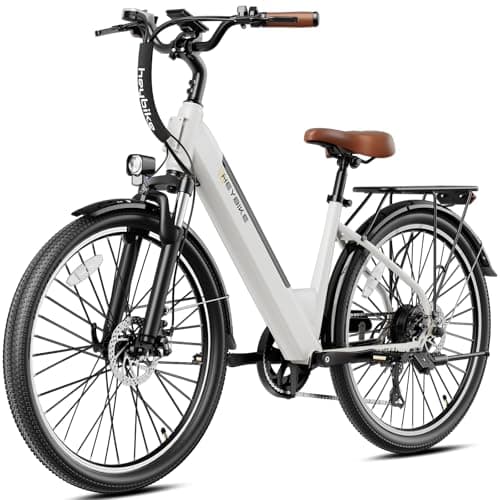
Heybike Cityscape 2.0

Heybike Cityscape 2.0

The only bike here that's sold as a commuter, publishes its battery honestly, and doesn't dress up as something else.

Top pick
The everyday pavement commute
2
Gotrax R7

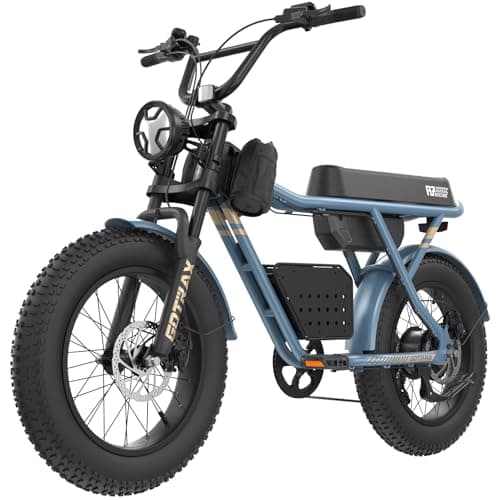
Gotrax R7

Arrives with the basket and bag you'd otherwise buy in week one.

Carrying things without buying accessories
3
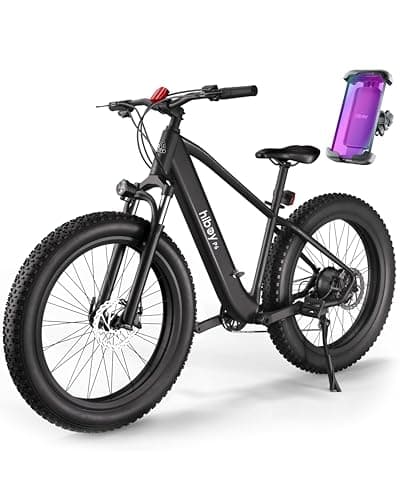
Hiboy Fat-Tire Electric Bike

Hiboy Fat-Tire Electric Bike

The long-commute option: the biggest published range here, and 28 mph if your state and your route allow it.

Long commutes where keeping traffic speed matters
4
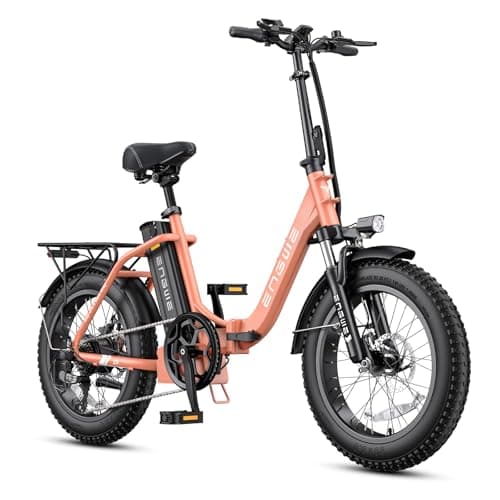
ENGWE L20

ENGWE L20

Dual suspension for cities that haven't repaved anything since the last mayor.

Broken tarmac and potholed routes
5
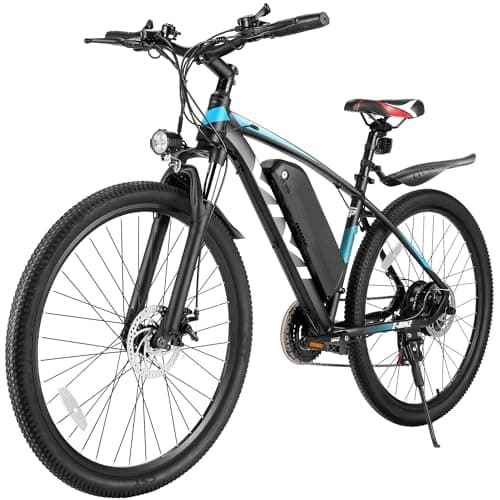
Vivi 27.5" Electric Mountain Bike

Vivi 27.5" Electric Mountain Bike

A cheap hardtail mountain bike with a motor. Good spec sheet, wrong bike for this page — skip it.

Nothing on a commuting shortlist

A commute is the easiest e-bike problem there is, and almost every list gets it wrong by ranking on battery size. Here’s why that’s backwards: you already know how far your commute is.It doesn’t change. It’s the same distance tomorrow, and it ends somewhere with a plug. That single fact makes range — the spec every seller shouts — the least interesting number on the page for you specifically, and makes four boring ones decisive instead.

What actually decides a commuter e-bike

Where the bike sleeps. If it lives in a hallway or goes up in a lift, weight and shape beat everything. This is the point at which we have to tell you that not one of the twelve e-bikes in our catalogue publishes a weight — zero out of twelve, on the number that decides whether you can carry it. We are not going to invent one. What we can tell you is the direction: fat tyres, folding hinges, suspension and big batteries all add mass, and three of the five bikes here have at least two of those.

Whether the battery comes off.Four of these five have removable packs. That turns “find an outlet near where I park a bicycle” into “put a brick on my desk”, and it’s the difference between charging every night and charging when you remember.

What class it is.Two of the bikes here claim 28 mph. In the states that use the three-class system that’s Class 3, which routinely brings helmet requirements, a minimum age, and exclusion from the shared-use paths that make commuting by bike pleasant in the first place. Neither listing mentions a class. Neither does any other listing in our catalogue. E-bike classes explainedis the page to read before you buy speed you can’t legally use on your route.

What it costs to run.Almost nothing, and that’s worth knowing precisely rather than vaguely. A 10-mile each-way commute, five days a week, is 100 miles. We’ve worked out what that costs in electricity — and what the same miles cost in a car — with every input sourced and the arithmetic shown on what an e-bike costs to run. It is the number that turns an e-bike from an expense into a decision.

The honest limits of this page

We have not ridden any of these bikes. We have not weighed them, timed them, or ridden one home in the rain. Everything above comes from the sellers’ own live Amazon listings, read on 17 July 2026, plus arithmetic you can check. Where a listing doesn’t publish something — motor output on the top pick, amp-hours on the Gotrax, weight on all of them — we’ve said so rather than filled the gap.

The ranking is therefore a ranking of fitness for a commute as described by the seller, which is a smaller claim than the rest of this category makes and the only one we can support. The whole field is drawn from what Amazon actually stocks; if you want to know why the famous commuter brands aren’t here at all, that’s the subject of the best e-bikes on Amazon.

The picks, in detail

1

Heybike Cityscape 2.0

Top pick
Heybike Cityscape 2.0
$595.00 · View on Amazon

$699.00 15%

Price as of Jul 17, 2026. #ad

Best for: The everyday pavement commute

The only bike here that's sold as a commuter, publishes its battery honestly, and doesn't dress up as something else.

  • 468Wh removable battery (listing)
  • 50-mile claimed range (listing)
  • 7-speed, 26in wheels
  • UL Certified (listing)
  • Motor output: not published
  • Weight: not published

It wins because a commute is the one riding situation where you know the distance in advance. Most American commutes are well under ten miles each way; even after you treat the 50-mile claim with the scepticism it deserves — and you should, it’s a manufacturer’s best case with no stated conditions — 468Wh is a lot of battery for a repeated short trip you charge every night. Everything you spend beyond that is capacity you carry up the stairs and never use.

Good

  • 26in wheels and a 7-speed drivetrain make an ordinary, upright, city-shaped bike — which is what a commute wants
  • The smallest battery here is also the fastest to charge and the least dead weight to carry on the days you don't need it
  • Removable pack means it charges at your desk rather than obliging you to park a whole bike near an outlet
  • The listing states a UL certification, which matters for a battery that sleeps in your building

Less good

  • The listing publishes no motor output whatsoever — not a peak, not a continuous rating, nothing
  • No published assisted speed, so you can't work out its class before you buy
  • 468Wh is genuinely small; the 50-mile claim on top of it is the most optimistic watt-hour-to-mile ratio on this page

Skip it if: Your commute is hilly or long. 468Wh is the smallest pack on this page and the listing won't tell you what the motor does — the two unknowns compound on exactly the terrain that exposes them. If your ride home ends with a climb, buy more battery than you think you need.

2

Gotrax R7

Gotrax R7
$764.99 · View on Amazon

$899.99 15%

Price as of Jul 17, 2026. #ad

Best for: Carrying things without buying accessories

Arrives with the basket and bag you'd otherwise buy in week one.

  • 750W motor (listing)
  • 25 mph (listing)
  • Max 45-mile claimed range (listing)
  • 48V removable battery — amp-hours not published
  • Basket and frame bag included, oversized padded seat (listing)
  • UL Certified (listing)
  • Weight: not published

Good

  • The basket and frame bag are the difference between a bike you commute on and a bike you meant to commute on
  • 20in wheels drop the whole bike lower, which makes the stop-start of city riding less of an event
  • 750W is the federal ceiling exactly, so the number was chosen rather than invented

Less good

  • 48V with no amp-hour figure is the one combination that makes battery capacity uncomputable — you cannot cost this bike per mile
  • 45 miles is the shortest range claim here, and it's a stated maximum
  • 25 mph sits above the 20 mph line and below the 28 mph one, which is an awkward place to be in a state that uses classes

Skip it if: You want to compare it like-for-like against anything else. Every other bike on this page either publishes watt-hours or publishes the volts and amp-hours you can multiply. This one publishes a voltage and stops. If the number that matters isn't there, you're buying the photographs.

3

Hiboy Fat-Tire Electric Bike

Hiboy Fat-Tire Electric Bike
$1,289.15 · View on Amazon

Price as of Jul 17, 2026. #ad

Best for: Long commutes where keeping traffic speed matters

The long-commute option: the biggest published range here, and 28 mph if your state and your route allow it.

  • 48V 13Ah removable battery (listing) — 624Wh if you multiply
  • 1000W peak motor (listing)
  • 28 mph (listing)
  • 62.1-mile claimed range (listing)
  • 26 × 4.0in fat tyres, hydraulic suspension, 7-speed
  • UL Certified (listing)
  • Weight: not published

Good

  • 624Wh once you multiply the volts by the amp-hours — a third more energy than the top pick
  • 62.1 miles is an oddly specific claim, which we mildly prefer to a round number, though the listing still doesn't say how it was measured
  • 28 mph means you're not the slowest thing on a 30 mph arterial, which is a real safety argument on the right road

Less good

  • 28 mph is Class 3 in most states that use the class system, which frequently means helmet mandates, minimum ages and no bike-path access — and the listing never mentions it
  • 26in fat tyres are a lot of rubber and rolling resistance for a bike that will mostly see tarmac
  • Costs roughly twice the top pick for a third more battery

Skip it if: Your commute is on a shared-use path or a bike trail. Class 3 e-bikes are the ones most often banned from exactly those, and a 28 mph bike on a mixed path is antisocial even where it's legal. Buy the speed only if you're commuting on roads.

4

ENGWE L20

ENGWE L20
$669.00 · View on Amazon

Price as of Jul 17, 2026. #ad

Best for: Broken tarmac and potholed routes

Dual suspension for cities that haven't repaved anything since the last mayor.

  • 52V 13Ah removable battery (listing) — 676Wh if you multiply
  • 1125W motor (listing)
  • 28 mph (listing)
  • Max range 68 miles (listing)
  • 20 × 3.0in fat tyres, dual suspension
  • Weight: not published

Good

  • 676Wh is the largest capacity on this page once you do the multiplication the listing won't do for you
  • Dual suspension is a real answer to a real problem — most e-bike commuting happens on surfaces nobody would choose
  • 20in wheels with 3.0in tyres is a more sensible commuting compromise than a 4.0in fat tyre

Less good

  • Publishes volts and amp-hours, never watt-hours — the number that decides everything is left as an exercise for the reader
  • 28 mph carries the same class problem as the Hiboy, unmentioned in the same way
  • Suspension pivots need servicing, and there is no dealer network behind this bike to service them

Skip it if: Your commute is smooth. Suspension you don't need is weight, cost, maintenance and lost efficiency — three things you carry and one you pay for. On decent tarmac a rigid frame and a fatter tyre at lower pressure does the same job for free.

5

Vivi 27.5" Electric Mountain Bike

Vivi 27.5" Electric Mountain Bike
$499.99 · View on Amazon

Price as of Jul 17, 2026. #ad

Best for: Nothing on a commuting shortlist

A cheap hardtail mountain bike with a motor. Good spec sheet, wrong bike for this page — skip it.

  • 48V 499.2Wh battery (listing)
  • Peak 749W (listing)
  • 19.8 mph (listing)
  • Up to 50-mile claimed range (listing)
  • 27.5in wheels, 21-speed, suspension fork
  • SGS Certified to UL2849 (listing)
  • Weight: not published

Good

  • Publishes a watt-hour figure AND names the exact standard it's certified to — UL2849 — which almost nothing here manages
  • 19.8 mph keeps it under the 20 mph line, so it's the least legally complicated bike on this page
  • By some distance the cheapest way onto this list

Less good

  • A 27.5in hardtail puts you forward, low and over a high standover — the opposite of what you want in traffic
  • 21 gears is a drivetrain answering a question the motor already answered, and it's 21 more things to adjust
  • A suspension fork on a commuter is dead weight that also bobs away some of your assist

Skip it if: You're commuting. This is our skip-this pick and it's a genuinely good listing — better documented than most of the field, cheaper than all of it, honestly certified. It's just a mountain bike. Riding position, standover, gearing and the fork all point at trails. Buy it if you want a cheap e-MTB with a real spec sheet; don't buy it to ride to work in trousers.

What actually decides this purchase

Buy for your actual commute, not your longest imagined ride.Take your one-way distance, double it, and ask whether you can charge at the other end. If you can, you need half the battery you think. If you can’t, you need a removable pack more than you need a bigger one. Nearly everyone buying an e-bike for a 6-mile commute buys for the 40-mile weekend ride they take twice a year, and then carries the weight of that decision every single day.

Speed is a legal decision before it’s a performance one.Federal law defines a low-speed electric bicycle as a motor under 750W that won’t push the bike past 20 mph on its own (15 U.S.C. § 2085). Above that, you’re into state class rules — and California, for one, has required a permanent label naming the class, the top assisted speed and the wattage on the frame since 1 January 2017 (Vehicle Code § 312.5). Check your own state and your own path rules before you buy 28 mph you can’t use.

Tyre width is the commuting spec nobody argues about and everybody should. A 4.0in fat tyre is a lot of rubber to drag along a road that doesn’t need it — it’s weight, it’s rolling resistance, and it’s the assist you paid for going into deforming a big soft tyre. Fat tyres exist for sand and snow. If your commute is tarmac and a few potholes, narrower is better and cheaper, and the potholes are a suspension problem, not a tyre problem.

Assume you’re your own bike shop.None of these brands has a dealer network. That’s survivable — a bicycle is a bicycle — but it means a puncture on a rear hub-motor wheel is your problem, and it’s a slower, heavier, more awkward job than on a normal bike because the wheel has a motor and a power cable attached to it. Read how to fix a flat before you need it, and hub vs mid-drivefor why that’s the trade every bike on this page has made.

Budget the day-one extras.Lights, a helmet and a lock aren’t optional on a commute, and none of these bikes includes all three. A bike that costs as much as these do and lives outside a building all day needs a lock proportionate to it. Start with bike lights and helmets.

Common questions

How much battery do I actually need for commuting?

Work from your real numbers, not the seller’s. Take your round-trip distance, and assume you’ll get meaningfully less than the claimed range — every claim on this page is a best case with unpublished test conditions. Even if you halve the smallest claim here, 468Wh still covers a typical American round-trip commute with room spare. The honest answer for most people is that the smallest battery on this page is enough, and that the money is better spent on brakes, lights and a lock.

Is a Class 3 (28 mph) e-bike better for commuting?

On roads, sometimes: keeping closer to traffic speed genuinely changes how drivers behave around you. On paths, no — Class 3 bikes are the ones most often banned from shared-use trails, which is exactly where a lot of commuting happens. And the rules aren’t national; they’re state and often municipal. Two bikes on this page claim 28 mph and neither listing says a word about what that makes it, so the checking is on you. E-bike classes explained covers the statutes we actually read.

Can I ride an e-bike in the rain?

Every one of these listings is silent on ingress protection ratings, so we’re not going to tell you a bike is waterproof. What we can say is what’s not in dispute: the bikes are sold as commuting and all-terrain machines, and none of the listings publishes an IP rating for the battery, controller or display. Standing water and pressure washers are where electric bikes die. If a seller doesn’t publish the rating, treat the bike as shower-resistant rather than weatherproof, and ask before you assume.

What does a commute cost to run on an e-bike?

A fraction of a cent per mile in electricity — a rounding error against the same trip in a car. The full working, with the electricity price sourced from the EIA and the arithmetic shown line by line, is on what an e-bike costs to run. The costs that actually matter over a commuting year are tyres, brake pads, and eventually the battery — none of which any of these sellers publishes a replacement price for.

Which of these have you ridden?

None. Not one. We have no test bikes, no lab and no loan units, and this page is built entirely from what the sellers publish on their own live listings plus arithmetic you can re-run yourself. If a recommendation here rested on us telling you how something felt, it would rest on nothing. See how we researchfor exactly what we do and don’t do.

Sources

We haven’t ridden or tested any of the products on this page, and we don’t pretend otherwise. Read how we research — or tell us we’re wrong and we’ll log the correction.