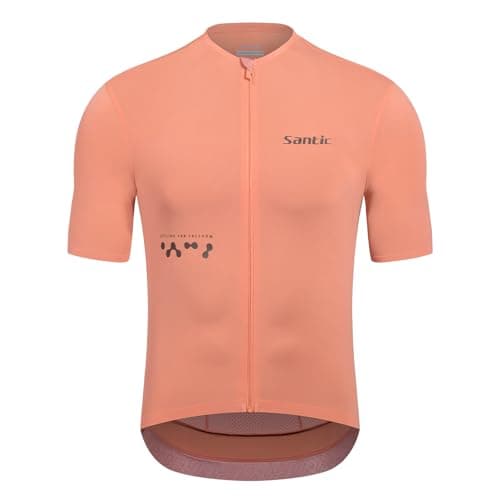
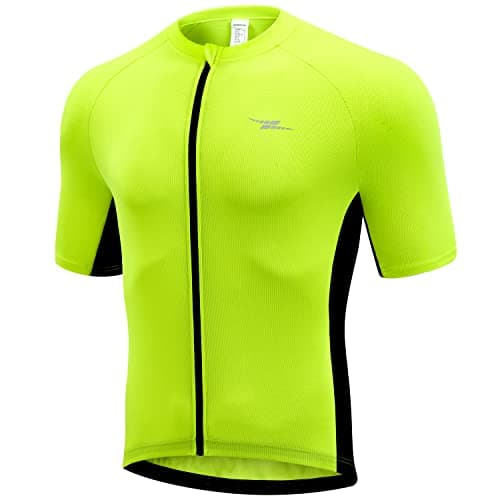
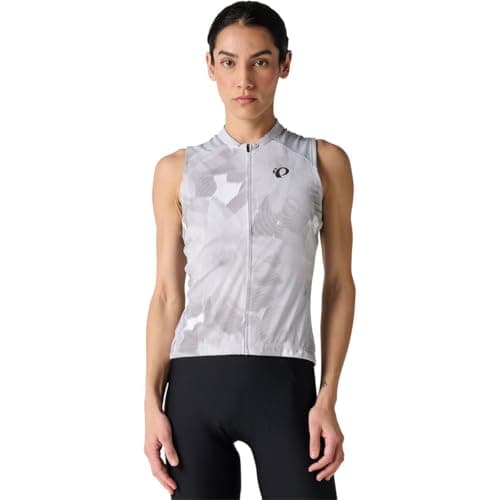
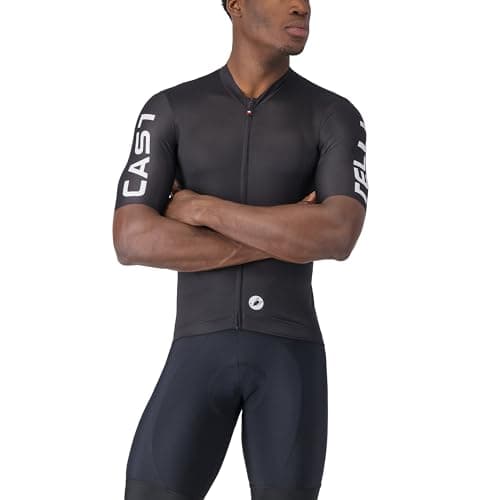
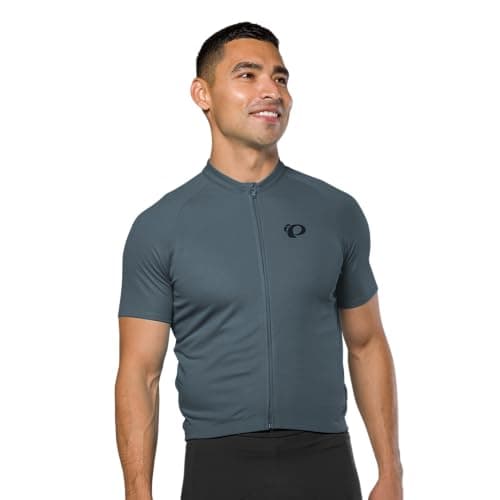
A cycling jersey is four decisions: how far the zip goes, how many pockets are on the back, how tight the cut is, and whether the fabric claims a sun-protection rating. Those are also, conveniently, the four things a listing will usually commit to in writing. Everything else in the category — “breathable”, “moisture-wicking”, “performance fabric” — is language, not specification, and it appears identically on the cheapest and the most expensive garment in this roundup.
The number that would actually settle an argument, fabric weight in grams per square meter, is published by none of the five. A 90 gsm summer jersey and a 160 gsm all-rounder feel entirely different in July, and you cannot tell them apart from a photograph. Since we cannot weigh fabric, this page ranks on what is knowable and marks every gap.
The zip decides your ventilation
Full-length zips are now standard on road jerseys for one reason: on a long climb at low speed, opening the front is the only ventilation you have. A quarter- or half-zip keeps its shape better and looks tidier, but you cannot dump heat with it. If you ride anywhere with sustained climbing in summer, the full zip is not a luxury feature.
The counterpoint is durability. A cheap full-length zip is the most likely component on a budget jersey to fail, usually by separating at the bottom under load. That is a real trade-off, not a reason to avoid full zips — it is a reason to expect a budget jersey to be a two-season garment.
Pockets: three is the standard, and the reason is load
The three-pocket back panel is a century-old convention that survives because it works: weight sits low across the lumbar region, spread wide enough that it does not swing. Two pockets concentrate the same load; one pocket in the middle turns a phone into a pendulum. Some jerseys add a fourth zipped valuables pocket, which is genuinely useful for a key and a card.
Pocket tension is what separates a good jersey from a cheap one, and no listing mentions it. A well-made pocket band holds its shape loaded; a poor one sags until your phone rests on your shorts. This is one of the few places where paying more reliably buys something, and one of the few you cannot verify before buying.
Cut: race, club, and why sizing does not carry between brands
Race cuts are short in the body at the front, long at the back, and close through the chest and arms — they look wrong standing up and correct in the riding position. Club or relaxed cuts add room through the waist and are more comfortable for anyone not spending the ride at 30 kph.
The practical warning: a Medium in an Italian race cut, a Medium from a US brand, and a Medium from an Asian-market seller are three different garments. Read the size chart on the listing you are buying, measure your chest, and treat “my usual size” as meaningless. This is the single most common cause of a returned jersey.
UPF: the one number with a definition behind it
Only one jersey here publishes a sun-protection rating, and it is worth understanding rather than dismissing. UPF measures how much ultraviolet a fabric lets through. The Skin Cancer Foundation states that a UPF 50 fabric blocks 98% of the sun’s rays and allows 1/50th to penetrate, and it sets UPF 50 as the minimum for its own Seal of Recommendation.
Two caveats we cannot resolve for you. We have not verified any seller’s UPF testing, and a listing claim is not a certification. And UPF is a property of the fabric as made — stretch it tight over a shoulder, or wear it soaked, and real-world protection drops. Treat a UPF 50+ claim as a reason to prefer one jersey over an equivalent one, not as a substitute for sunscreen on your arms.
What actually kills a jersey
Not riding. Washing. Every technical fabric in this roundup is polyester with a little elastane, and the two things that destroy it are heat and fabric softener — Castelli’s own care page is blunt that softener “can destroy wicking and water-repellent treatments”, and caps washing at 30°C. A jersey that has stopped wicking usually has not worn out; it has been coated. Our guide to washing cycling kit is the routine that prevents it, and it is the highest-value thing you can read after buying any of these.
The other half of a summer kit is the shorts, where the money genuinely should go — see the best cycling bib shorts, and bibs versus shorts if you have not settled that question.