Skip to content
ChainringClub

The Best Cycling Sunglasses

Six pairs, ranked on what the makers publish about the lens rather than what the frame looks like. Two of them publish a light-transmission number. The other four do not, and we say so.

A cyclist riding on an open road in bright daylight.
By Stephen V.Published August 18, 2026How we research

Heads up: we earn a commission if you buy through the links on this page, at no extra cost to you. It never decides what makes the list — here’s how that works.

Quick picks

Tap any row for the full write-up. Specs are the manufacturer's own published claims, read on 18 August 2026.

#ProductBest forPrice
1
Tifosi Sledge

Tifosi Sledge

Three lenses in the box, so one purchase covers bright sun, flat light and riding home in the dark.

Top pick
One pair that covers every light condition
2
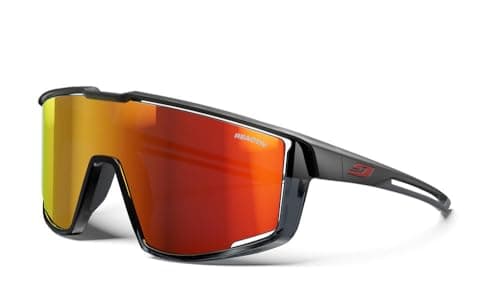
Julbo Fury

Julbo Fury

The only pair here that publishes exactly how dark it gets, how light it gets, and how long it takes.

Riders who start early and finish late
3
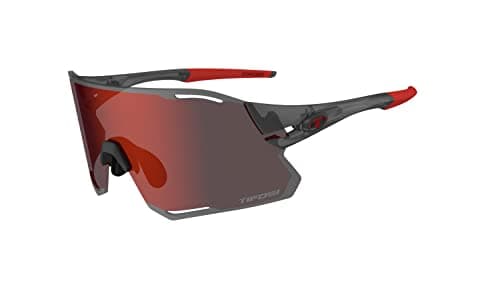
Tifosi Rail

Tifosi Rail

Maximum coverage for a fraction of the shield-lens money the pros pay.

Coverage against wind, grit and low sun
4
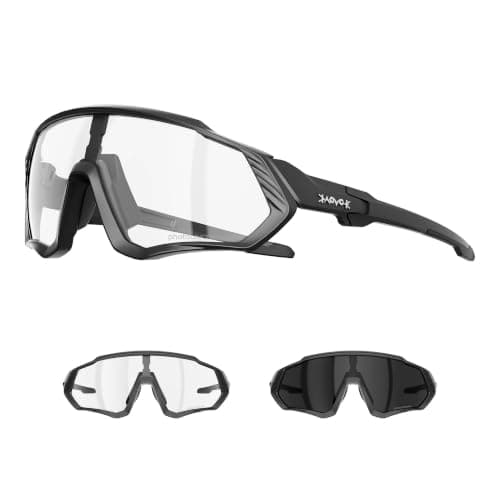
KAPVOE Photochromic Cycling Glasses

KAPVOE Photochromic Cycling Glasses

Photochromic behavior at a price that makes a spare pair reasonable.

A cheap second pair, or a first pair
5
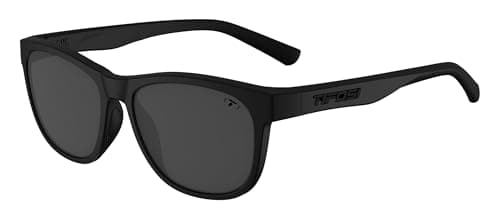
Tifosi Swank

Tifosi Swank

A smoke-lensed lifestyle frame that happens to be light enough to ride in.

Coffee rides and the commute
6
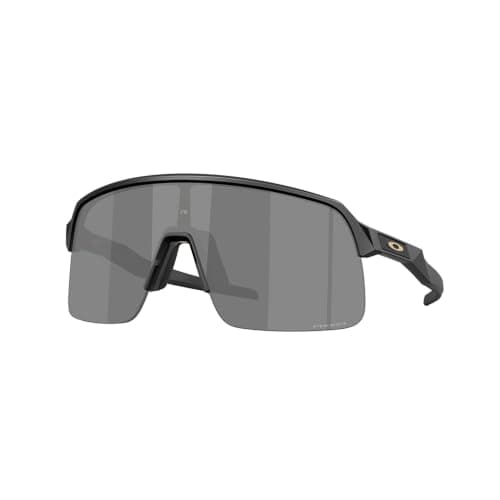
Oakley Sutro

Oakley Sutro

The skip. The most recognizable frame in cycling, sold here in its Lite version with a very dark lens.

Riders who want this specific frame and know why

Cycling sunglasses are sold on frames and used as lenses.The photographs are of shapes; the thing that decides whether you can see a pothole in a shaded lane is a single number — visible light transmission, the percentage of light that reaches your eye. Two of the six pairs below publish that number. Four do not, and we have marked each of them so you can see how the category behaves.

There is a standard for this. ISO 12312-3:2022 is titled “Sunglasses and related eyewear — Part 3: Sunglasses for running, cycling and similar active lifestyles” — a cycling-specific eyewear standard, published, current, and cited by not one listing in this roundup. Part of the reason is structural: like most ISO documents you cannot read it without buying it, so neither we nor you can audit a compliance claim even when a brand makes one. That is an honest limit on what this page can tell you, and it is why everything below leans on figures the makers publish themselves.

VLT is the specification; tint names are marketing

Visible light transmission is a percentage: a 6% lens passes 6% of the light hitting it, an 80% lens is nearly clear. Julbo publishes both ends of its photochromic range — category 1 to 3, VLT 80% down to 6%— which is enough to tell you the lens is usable at dawn and dark enough for high summer. Tifosi publishes ranges for some Fototec lenses (the Moab’s Clarion Red Fototec is listed at 14.5–65%, and Clarion Pink Fototec at 61% down to 16%) but not for the fixed tints in this roundup, noting only that “light transmission percentages may vary by +/- 2%”.

Everything else — Clarion, Prizm, Enliven, Smoke, AC Red — is a product name. Some of those names describe real optical engineering, particularly the contrast-tuned tints. None of them tells you how much light gets through, which is the question you are actually asking when you wonder whether a lens will work on an overcast January morning.

The three-lens box versus the photochromic lens

Once you accept that no single fixed tint covers a year of riding, there are exactly two solutions and they are both on this page. The interchangeable set gives you three lenses for one price and asks you to carry and swap them. The photochromic lensdoes the swapping chemically and asks you to pay more for one lens. Julbo’s stated transition is about 30 seconds in either direction and, in its words, “insensitive to temperature” — which is the specification to look for, because slow adaptation in the cold is the standard failure of cheap photochromic lenses.

The honest caveat on all photochromic lenses: they react to UV, and a car windscreen filters most UV out. If you drive to a ride wearing them, they will be lighter than the conditions outside suggest until a couple of minutes after you get out.

Coverage, fogging and the helmet interface

The reason cycling glasses look the way they do is that a rider is fast, tilted forward and looking up the road through the top edge of the lens. A big shield covers the eye socket against wind, grit and low sun; a casual frame leaves a gap exactly at the top where a road cyclist looks. That is the real functional difference between the Sledge or Rail and the Swank — not the tint.

Fogging is the price of coverage. A larger lens sitting closer to the face traps humid air the moment you stop climbing, which is why frames in this category run vents and why hydrophobic coatings exist. Two practical habits beat any coating: park the glasses on the front of your helmet rather than your face at the top of a climb, and do not push them tight to your brows when you know you will be stopping.

Fit around the helmet strap junction matters too, and it is worth trying glasses on with the helmet you actually own — see our helmet fitting guide for where those straps should sit, and the helmet roundup if the helmet is the next thing on the list.

What we could not check

We have not measured a lens, tested an impact rating or timed a photochromic transition; there is no lab here and there never has been. Everything above is a published claim, quoted with its source and its date, plus the specifications read off each live Amazon listing on 18 August 2026. Where a listing publishes nothing — and two of these six publish nothing about the lens at all — the pick says so rather than filling the gap with an adjective.

For the tint question specifically — which color, which VLT, what “category 3” on a box means — we have a separate explainer: cycling sunglasses lens tints explained.

What each maker publishes about the lens

Read off each brand’s own site and the live Amazon listing on 18 August 2026. Every “Not published” is a real gap on a real page — and the column with the most gaps is the one that decides whether you can see.

SunglassesLenses in the boxLight transmissionAdapts to light?Coverage
Tifosi SledgeThree (Clarion Blue, AC Red, Clear)Not publishedNo — you swapFull shield
Julbo Fury REACTIV 1-3One photochromic80% → 6% (Cat 1–3)Yes, ~30 secondsFull shield
Tifosi Rail RaceOne (Clarion Red)Not publishedNoFull shield
KAPVOE K9408One photochromicNot publishedYes — rate not publishedSport wrap
Tifosi SwankOne (Smoke)Not publishedNoCasual frame
Oakley Sutro LiteOne (Prizm Black)Not published on the listingNoFull shield, 39 mm lens

One brand out of four publishes the transmission figure for the lens it is selling you. That is the state of the category, not an accident of which products we picked — and it is why the top pick here is the one that hands you three lenses instead of asking you to guess about one.

The picks, in detail

1

Tifosi Sledge

Top pick
Tifosi Sledge
$49.95 · View on Amazon

Price as of Aug 31, 2026. #ad

Best for: One pair that covers every light condition

Three lenses in the box, so one purchase covers bright sun, flat light and riding home in the dark.

  • Listing: Clarion Blue, AC Red and Clear lenses
  • Listing: Crystal Orange frame
  • Maker: Clarion mirror is hydrophobic-coated
  • Shield lens, interchangeable

This wins on the same logic that decides most kit purchases: it removes a decision instead of adding one. Every fixed-tint pair on this page is right for a band of conditions and wrong outside it, and the cheapest way out of that is a box with three lenses in it. Tifosi describes its Clarion mirror as a hydrophobic coating that “repels water and sweat” — a genuine functional claim rather than a color name, which is more than most of this category offers.

Good

  • A three-lens set answers the light-condition problem instead of asking you to buy twice
  • The clear lens makes these usable for a dark commute home, which a fixed dark tint never is
  • Shield shape covers more of the eye socket than a conventional lens, which matters into headwind

Less good

  • Tifosi does not publish a VLT percentage for these tints on its lens page
  • Swapping lenses at the roadside is a two-handed, fingerprint-prone job
  • Big shield lenses fog faster at a standstill than smaller vented ones

Skip it if: You want to put them on and never think about them again. The whole value here is the swapping — if the spare lenses are going to live in a drawer, a photochromic pair does the same job automatically.

2

Julbo Fury

Julbo Fury
$239.95 · View on Amazon

Price as of Aug 31, 2026. #ad

Best for: Riders who start early and finish late

The only pair here that publishes exactly how dark it gets, how light it gets, and how long it takes.

  • Maker: REACTIV 1-3, VLT 80%–6%
  • Maker: adapts in about 30 seconds
  • Maker: 100% UVA, UVB and UVC
  • Listing: yellow lens, multilayer rose mirror

Julbo publishes what the rest of this category will not: REACTIV 1-3 covers categories 1 to 3, a VLT range of 80% down to 6%, and the lens “adapt[s] from light to dark and back in about 30 seconds, whether it’s hot or cold.” That last clause matters more than it sounds: cheap photochromics slow down in the cold, which is exactly when you need them to keep up.

Good

  • Published numbers: category 1 to 3 and 80% down to 6% light transmission, from Julbo's own lens page
  • Julbo states the transition takes about 30 seconds and is insensitive to temperature
  • One lens genuinely covers dawn, midday and dusk — no swapping, nothing to carry

Less good

  • By far the most expensive thing on this page
  • A category 1 lens at its lightest is still a tint — these are not clear-lens night glasses
  • Photochromic lenses do not darken properly behind a car windscreen, which surprises people

Skip it if: You only ride in bright, settled conditions. A photochromic lens is a premium you pay for variability; if every ride starts and ends in full sun, a fixed dark tint costs a fraction and is arguably better at that one job.

3

Tifosi Rail

Tifosi Rail
$79.95 · View on Amazon

Price as of Aug 31, 2026. #ad

Best for: Coverage against wind, grit and low sun

Maximum coverage for a fraction of the shield-lens money the pros pay.

  • Listing: Satin Vapor frame, Clarion Red lens
  • Maker: Clarion is a hydrophobic mirror coating
  • Large shield lens
  • Vented lens and frame

Good

  • The big-shield format keeps wind out of the eyes better than anything smaller here
  • A red-family mirror tint is the standard road-racing choice for contrast on tarmac
  • Sits well under a helmet's front vents, so airflow reaches the lens at speed

Less good

  • One lens only, at nearly twice the price of the three-lens top pick
  • No published VLT figure for this tint on Tifosi's own lens page
  • Shield lenses are the easiest to scratch when they go in a jersey pocket

Skip it if: You ride mostly in variable light. This is a bright-conditions lens sold on its own, so you would be buying a second pair for dawn rides — which is what the top pick avoids.

4

KAPVOE Photochromic Cycling Glasses

KAPVOE Photochromic Cycling Glasses
$18.99 · View on Amazon

$19.99 5%

Price as of Aug 31, 2026. #ad

Best for: A cheap second pair, or a first pair

Photochromic behavior at a price that makes a spare pair reasonable.

  • Listing: photochromic, clear base
  • Listing: model K9408
  • Listing: mountain bike / cycling use
  • No VLT range published

Good

  • The cheapest way to try a light-adjusting lens before spending premium money on one
  • Clear-base photochromics are the most useful kind for commuting — they go genuinely light
  • At this money, losing a pair in a hedge is annoying rather than expensive

Less good

  • Publishes no VLT range, no transition time and no category — you are buying an unspecified lens
  • No published impact standard on the listing either
  • Cheap photochromic chemistry is typically slower in cold weather, and nothing here says otherwise

Skip it if: You want to know what you are buying. There is no dishonesty in the listing — there is simply no data in it, and if the numbers matter to you, the Julbo publishes all of them.

5

Tifosi Swank

Tifosi Swank
$25.00 · View on Amazon

Price as of Aug 31, 2026. #ad

Best for: Coffee rides and the commute

A smoke-lensed lifestyle frame that happens to be light enough to ride in.

  • Listing: Blackout frame, Smoke lens
  • Fixed lens, no interchange
  • Casual frame shape
  • No VLT figure published

Good

  • Cheapest thing here, and it does not look like sports equipment off the bike
  • Smoke is the safe all-round bright-light tint
  • Small enough not to fight a helmet's strap junction

Less good

  • Casual frame means less coverage exactly where a cyclist wants it — the top edge
  • Fixed dark lens is wrong for dusk, dawn and heavy overcast
  • No lens swap, so it is a one-condition pair

Skip it if: You ride fast or early. This is a good pair of everyday sunglasses that suits a bike; it is not a pair of cycling sunglasses, and the difference shows up the first time you ride into a headwind at dusk.

6

Oakley Sutro

Oakley Sutro
$214.00 · View on Amazon

$225.00 5%

Price as of Aug 31, 2026. #ad

Best for: Riders who want this specific frame and know why

The skip. The most recognizable frame in cycling, sold here in its Lite version with a very dark lens.

  • Listing: OO9463 Sutro Lite, Matte Black
  • Listing: Prizm Black lens
  • Listing: 39 mm lens height
  • Single fixed lens

Nothing here is a criticism of the optics — Oakley’s Prizm lenses are a real engineering effort, not a color swatch. It is a criticism of this specific configuration for this specific job: a very dark fixed lens in a frame sold at a premium, on a page where a three-lens set costs a fraction of it. Buy it because you want this frame, which is a legitimate reason. Do not buy it expecting it to be the most useful pair on the page.

Good

  • Coverage and fit that a lot of riders get on with immediately
  • Prizm tints are engineered for contrast in specific conditions rather than just darkness
  • The one pair here with genuine resale value

Less good

  • Costs several times the top pick and arrives with one lens
  • Prizm Black is Oakley's darkest road-family tint — the least versatile choice in the range
  • This listing is the Lite version, which is not the same frame as the standard Sutro

Skip it if: You are buying on function per dollar. At this money you could have the three-lens top pick and a photochromic spare, and be better covered in every light condition on the calendar.

What actually decides this purchase

Decide the light before you decide the frame.If your riding is mostly bright and settled, a fixed dark tint is cheapest and best. If it spans dawn starts, tree cover and rides that finish after sunset, you need either a lens set or a photochromic — and anything else will be wrong half the time.

Ask for a VLT number.Category 3 is the usual bright-sun rating and passes roughly 8–18% of light; a clear or near-clear lens is category 0. A brand that publishes the percentage is telling you something checkable; a brand that publishes a tint name is not.

Coverage beats style at speed. The top edge of the lens is where a road cyclist looks. A casual frame leaves that edge in your field of view and lets wind past it. Shields exist for a reason, and the reason shows up above 20 mph.

Plan for fog, don’t buy against it. Vents and hydrophobic coatings help at speed and do very little at a standstill. The habit that works is moving the glasses to your helmet when you stop, before they fog rather than after.

Check them with your helmet on.Arms have to clear the helmet’s side straps and retention dial without lifting the frame off your nose. This is the single most common reason a pair that felt fine in the house is unbearable at hour three.

Common questions

What lens tint should I get for cycling?

If you buy one fixed lens, a smoke or a red/rose-family mirror in the category-3 range covers most daylight riding — smoke for neutral color, rose for contrast on gray tarmac. If your riding spans dawn, dusk or woodland, buy either a three-lens set or a photochromic, because no single fixed tint is right across that range. Our lens tint explainer covers the categories in detail.

Are photochromic cycling sunglasses worth it?

They are, if your light conditions actually vary — and the specification to check is the range plus the transition time. Julbo publishes both for REACTIV 1-3: category 1 to 3, VLT 80% down to 6%, adapting in about 30 seconds and “insensitive to temperature”. A photochromic lens that publishes none of those numbers may still work well; you simply have no way to know before it arrives.

Is there a safety standard for cycling sunglasses?

Yes — ISO 12312-3:2022 covers “sunglasses for running, cycling and similar active lifestyles”. The catch is that none of the listings in this roundup cites it, and the standard itself is paywalled, so a compliance claim is not something you or we can audit. Treat it as a real standard that the market has largely ignored in its marketing.

How do I stop cycling sunglasses fogging?

Airflow, mostly. Fogging happens when you stop or slow down and warm, humid air sits behind the lens. Vented frames and hydrophobic coatings help at speed; at a standstill the reliable fix is to park the glasses on the front of your helmet before you stop, not after. Wiping a fogged lens with a jersey is also the fastest way to scratch it.

Do I need polarized lenses for cycling?

Not necessarily, and many riders prefer not to. Polarization cuts glare off wet roads and water, which is genuinely useful — but it can also reduce the visibility of ice sheen, and it interacts oddly with some phone and head-unit screens. For most road and gravel riding, contrast tints and a sensible VLT matter more than polarization.

Sources

We haven’t ridden or tested any of the products on this page, and we don’t pretend otherwise. Read how we research — or tell us we’re wrong and we’ll log the correction.