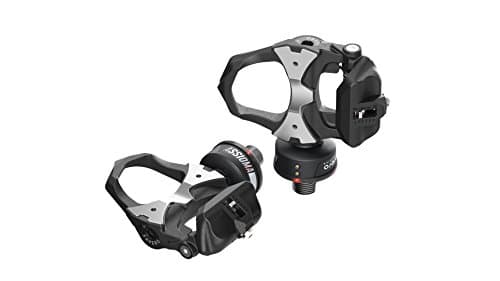
Almost every power meter under a thousand dollars measures one leg and doubles it.That is the fact the category advertises around, and it is the first thing to settle before you compare a single accuracy claim, because it changes what the number on your head unit means. A single-sided meter reads the left crank or the left pedal, multiplies by two, and calls the result your power. If your legs are symmetrical, that is a good estimate. If they are not — after a knee injury, say — it is a number with a permanent bias in it, and no amount of ±1% accuracy fixes a doubling assumption.
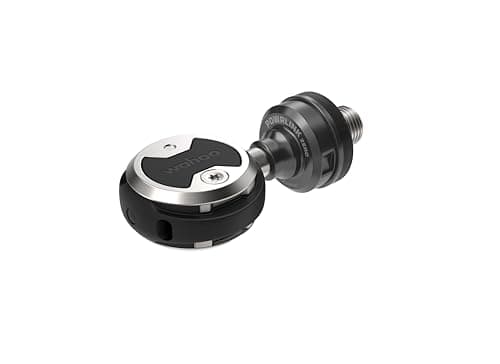
Wahoo says this out loud on its own product page, which is more than most of the field manages: the left-sided sensor “measures power and cadence, doubling the value to calculate your total power output.” Read that as the category's plain-English disclosure rather than a criticism of Wahoo. Once you know it, the five products below sort themselves into two piles, and the pile you want depends entirely on whether you care about the split.
Where the meter sits decides what you have to change
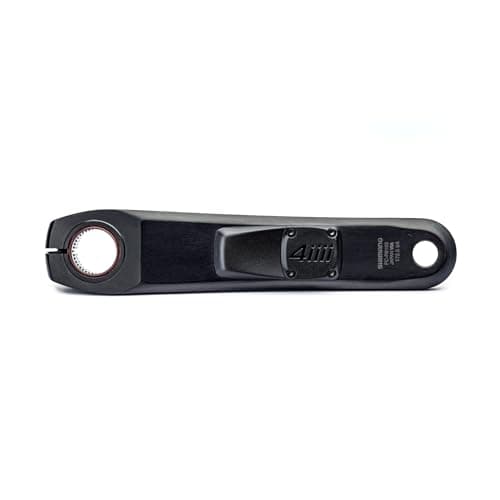
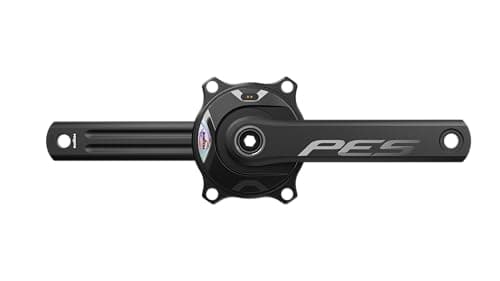
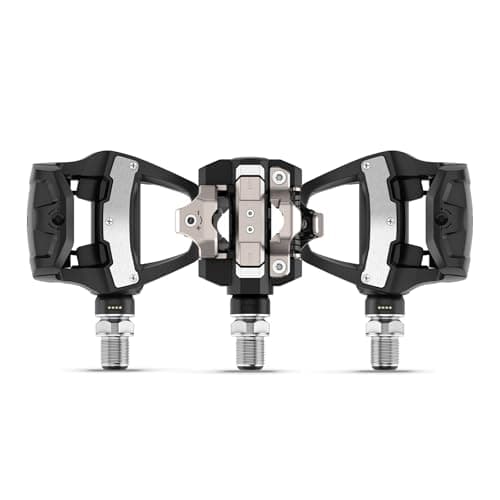
The second decision is location, and it is a compatibility question long before it is an accuracy one. A pedal meter (Favero, Garmin, Wahoo here) replaces your pedals and therefore your cleats; it swaps between bikes with one wrench, which is why it suits anyone with a summer bike and a winter bike. A crank-arm meter (4iiii) replaces the left arm and leaves your pedals alone, which is the least intrusive option on the bike and the least portable between bikes. A cranksetmeter (Magene) replaces the whole crank, chainrings included, which is the cheapest way in and the deepest into your drivetrain — you need to know your bottom bracket before you order. Our guide to power meter types takes that apart properly, including the hub- and spider-based designs that are not represented here.
Fitment is where this category actually goes wrong for people. The 4iiii listing is not “a power meter” — it is an Ultegra 8100 left arm at 172.5 mm, and if your bike has 170 mm cranks you have bought the wrong thing. The Magene is not a sensor you attach, it is a 110 BCD crankset, so both your bottom bracket standard and your chainring plans are now involved. If you are not sure what your crank is, our cassette and chainring guide explains where those numbers are stamped and what they mean.
What ±1% actually claims
Every meter here publishes the same accuracy figure: ±1%. It is worth being precise about what that claim is and is not. It is the manufacturer's statement about how closely the strain gauges track the force applied to them under their own test conditions — not a guarantee that two brands will agree with each other on your bike, and not a claim about drift over a season. Temperature is the usual culprit for disagreement, which is why Garmin ships a calibration prompt that watches for temperature change and why every meter here wants a zero-offset before a hard effort.
We have not verified anyone's ±1%, and nobody publishing a roundup like this one has either without a lab and a dynamometer. What we can do is tell you the number is universal in this category, which makes it a poor way to choose between these five and a good reason to choose on the things that genuinely differ: how many legs are measured, what has to come off your bike, and how the thing is powered.
Batteries: coin cell versus rechargeable
The split here is real and it is a lifestyle choice, not a spec-sheet win. 4iiii's 800-hour CR2032 is the longest published figure on the page by a distance, and when it dies you buy a battery at a supermarket. Garmin's 90 hours and Favero's 50-plus are rechargeable, which means a cable, a charging habit, and eventually a battery that has aged — but no seals to open and no coin cell to lose in the garage. Garmin also publishes a genuinely useful figure that the others do not: fifteen minutes of charging returns about twelve hours of riding, which is the difference between noticing a flat meter the night before and noticing it an hour before.
Who each of these is for
If you want the number to be trustworthy in both legs, buy the dual-sided pedals. If you want a power number, ride Shimano, and would rather not think about pedals at all, the crank arm is the tidiest thing here. If the entry price is the obstacle, the crankset is genuinely cheaper than the field and publishes more of its own specifications than several products costing twice as much. And if you already know the number is going to live on a Garmin head unit alongside seated/standing time and platform-offset fields, the Rally is the only one that fills those fields in.
One thing a power meter will not do, whichever you pick, is display anything on its own. It broadcasts, and something has to listen — see our bike computer roundup for what to pair it with, and bike computer versus phone if you are wondering whether the phone in your jersey can do the job.
How many legs it measures.Dual-sided reads both cranks; single-sided reads the left and multiplies by two. If you want left/right balance as a training input — or you have a reason to expect asymmetry — only a dual-sided meter can give it to you. Everything else on this list is a very good estimate of a symmetrical rider.
What has to come off the bike. Pedals: fifteen minutes and a 15 mm wrench, plus new cleats. Crank arm: the left arm comes off, which on a modern Shimano crank means the right side is disturbed too. Crankset: the bottom bracket is now part of the conversation. This decides both the install and how easily the meter follows you to your next bike.
The fitment numbers that actually block a purchase. Crank length (the 4iiii listing is 172.5 mm), chainring bolt circle (the Magene is 110 BCD), pedal system (SPD-SL on the Garmin, Speedplay on the Wahoo), and bottom bracket standard on anything that replaces a crank. None of these is negotiable after the box arrives.
Power source.A coin cell is replaceable anywhere and lasts a season or more; a rechargeable pack is one fewer thing to seal but one more thing to charge. Neither is better — but if the idea of a meter going flat mid-block annoys you, the 800-hour cell is the least demanding thing here.
What it talks to.All five broadcast ANT+ and Bluetooth, which means any modern head unit will read watts and cadence. The extra fields — cycling dynamics, platform offset, seated/standing time — are Garmin's, and they only render on Garmin hardware. Do not pay for data your computer cannot display.
Most people shopping this category are choosing between two specific products rather than five, so that decision has its own page: Favero Assioma vs Garmin Rally sets out why the cleat standard, not the accuracy claim, is what actually separates them.