Shimano GRX vs 105
Two Shimano 12-speed groups, one honest question: what does the gravel one actually change? Three things, all published — and one of them is a number you can compute before you spend anything.
Heads up: we earn a commission if you buy through the links on this page, at no extra cost to you. It never decides what makes the list — here’s how that works.
Shimano sells two mechanical 12-speed groups that a gravel buyer will genuinely be choosing between: GRX RX820, which it calls its gravel group, and 105 R7100, its road group. Both shift twelve sprockets, both use flat-mount hydraulic disc brakes, and a bike shop will hand you the same sentence either way: GRX is gravel-specific.
That sentence is true, and it is also useless, because it does not say what changes. So we read Shimano’s own published specifications for both groups and found exactly three differences that are printed rather than felt. One of them is arithmetic you can do in ten seconds, and it is the one that should decide your purchase.
On Shimano’s published tooth counts, every GRX RX820 configuration has a lowest gear under 1:1. Exactly one 105 configuration does — the 50-34 crank with an 11-36 cassette, at 0.94:1 — and it needs the widest cassette Shimano lists to get there. GRX pays for that bottom end with roughly four tenths of a ratio at the top.
Difference one: the crank is smaller, and that is the whole argument
Shimano publishes the RX820 group with an FC-RX820-2 crankset at 48-31T, paired with either a CS-R8101-12 HYPERGLIDE+ 11-34T cassette or a CS-HG710-12 11-36T. It publishes the 105 R7100 crankset at 50-34T or 52-36T, with 11-34T and 11-36T cassette options.
Lowest gear is the small chainring divided by the largest sprocket. It is the number this site judges every gravel drivetrain by, because it decides whether you ride up a loose climb or push. On the published counts:
GRX with 11-34 is 31 ÷ 34 = 0.91:1. GRX with 11-36 is 31 ÷ 36 = 0.86:1. The 105 50-34 crank with 11-34 is 34 ÷ 34 = 1.00:1 exactly, and with 11-36 it is 34 ÷ 36 = 0.94:1. The 52-36 crank goes the wrong way: 36 ÷ 34 = 1.06:1, or 36 ÷ 36 = 1.00:1 with the widest cassette available.
So the marketing claim survives contact with the arithmetic, which is not something we get to say often. GRX is genuinely geared lower, by a margin that matters on the kind of climb gravel produces. Gravel gearing explained works through why 1:1 is the line rather than an arbitrary round number.
The other half of the trade is real too. The GRX big ring is 48T against 105’s 50T or 52T, so at the same 11-tooth sprocket the top gears are 4.36:1, 4.55:1 and 4.73:1 respectively. If you spend a lot of time above 25 mph on tarmac, GRX will spin out before 105 does. If you spend a lot of time on loose 12% climbs, that is a trade you should take happily.
The parts that produce those numbers
Nothing here is ranked — these are the specific components the arithmetic above is calculated from, so you can check our division against the same parts. The two cranks are the comparison; the cassette is the part that moves the answer on either group.
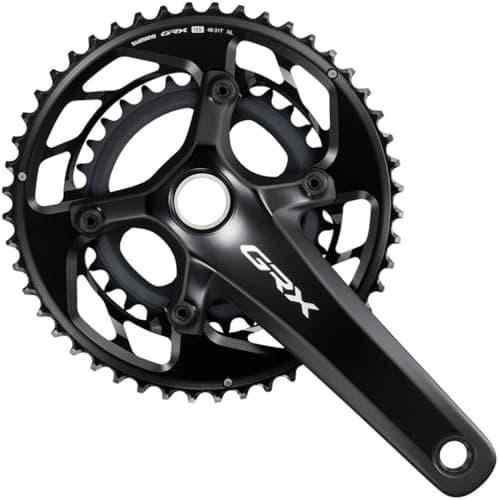
Shimano GRX RX820 Crankset 48-31T
The sub-compact half of the comparison. Shimano publishes the RX820 2x12 crank as FC-RX820-2 at 48-31T, and the 31-tooth small ring is where the sub-1:1 low gear comes from.
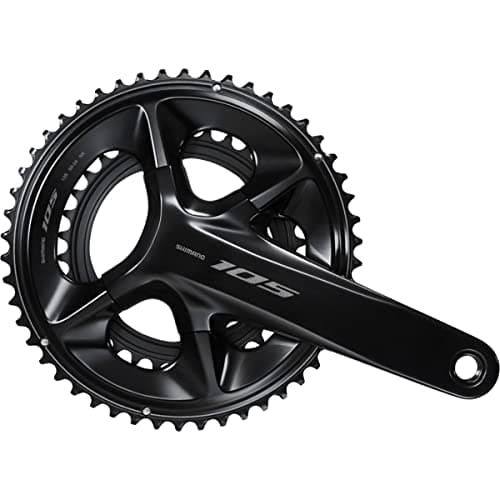
Shimano 105 FC-R7100 Crankset 50-34T
The road half. Shimano publishes FC-R7100 at 50-34T and 52-36T; this is the 50-34, which is the only 105 crank that gets under 1:1 at all, and only with the wide cassette.
$195.00 · View on Amazon$225.00 −13%
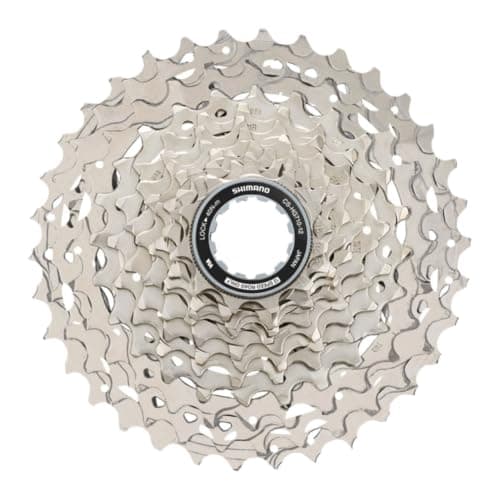
Shimano HG710 12-Speed Cassette 11-36T
The 11-36T cassette Shimano lists in the RX820 line-up as CS-HG710-12. It is also the part that pulls a 105 50-34 crank from 1.00:1 down to 0.94:1, which is the cheapest way to fix road gearing on a gravel route.
$82.92 · View on Amazon$96.95 −14%
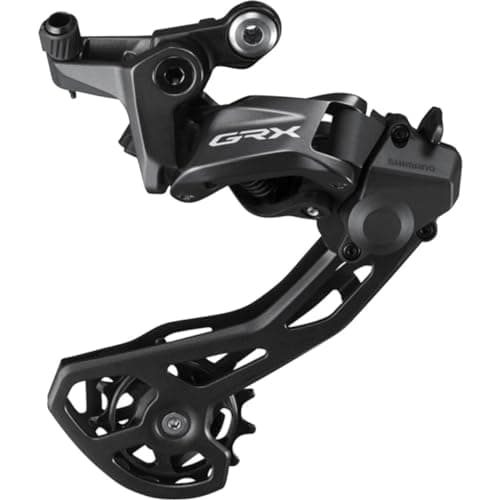
Shimano GRX RD-RX820 Rear Derailleur
The clutch. Shimano's own naming carries the spec: RD-RX820 is SHADOW RD+, the 105 RD-R7100 is SHADOW RD. Note this listing publishes no cage length, so check the variant against your cassette before ordering.
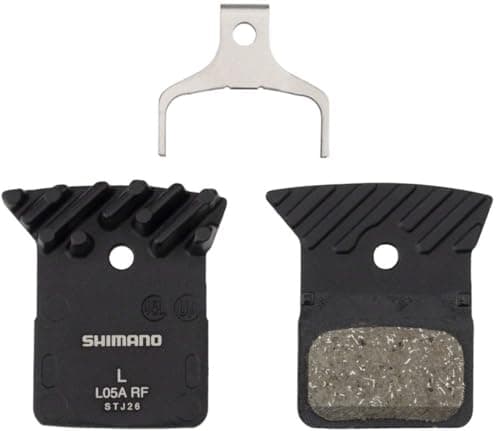
Shimano L05A-RF Resin Pads
The part both groups take. Shimano's published pad compatibility list covers the GRX BR-RX820 and the 105 BR-R7170 with the same BP-L05A-RF, which is a useful reminder of how much of these two groups is shared.
$24.21 · View on Amazon$37.00 −35%
We haven’t tested any of these — they’re the parts the job above calls for, listed so you don’t have to go hunting. Prices are live from Amazon and we earn a commission if you buy. #ad
Difference two: the clutch, and Shimano’s naming gives it away
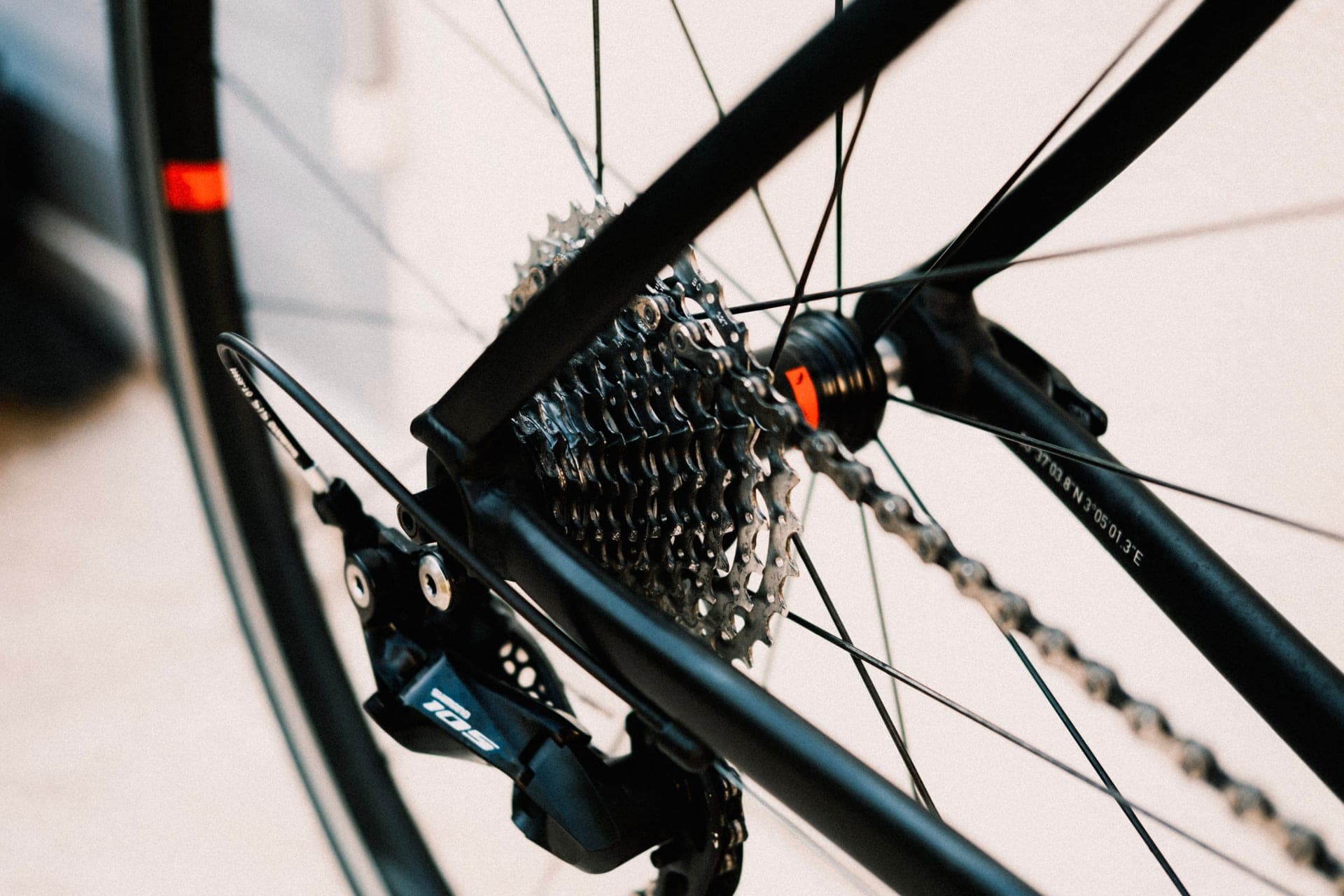
You do not need a review to establish this one. Shimano publishes the GRX rear derailleur as RD-RX820 SHIMANO SHADOW RD+and the 105 rear derailleur as RD-R7100 with SHADOW RD. The plus is the chain stabilizer — a friction clutch on the derailleur cage that resists the cage swinging forward when the chain is thrown around by rough ground.
What that buys you is not shifting quality. It is the chain staying on the chainring over washboard and rock, and it is the difference between a drivetrain that slaps the chainstay for two hours and one that does not. On tarmac it does approximately nothing, which is why 105 does not have it and is not worse for the omission.
This is the difference most likely to matter to you if your gravel is genuinely rough rather than a smooth fire road. It is also the one that cannot be retrofitted by buying a cassette: a clutch is a derailleur, and a derailleur is the expensive part.
Difference three: the front derailleur is moved outboard by 2.5mm
This is the least discussed and the most quietly clever of the three. Shimano publishes every GRX front derailleur — the current FD-RX820, and the RX810 and RX400 before it — with a 2.5mm outboard chain line design to allow wider tire clearance for mixed-terrain riding. That is Shimano’s own wording, not a reviewer’s.
Move the chain line out and the chainstays can be made wider at the tire without the chain fouling them, which is the actual mechanism behind “more tire clearance” on a gravel frame. It is a frame-design enabler rather than something you feel through the pedals, and it is why a GRX-equipped frame can carry a wider tire than an otherwise similar road frame. The tire width guide covers why that clearance is the number that defines the category in the first place.
The practical consequence for a buyer is narrower than it sounds: if you are building or buying a whole bike, this matters and the frame will already have been designed around it. If you are upgrading parts on a frame you own, your frame’s clearance is already fixed and a GRX front derailleur will not widen it.
What is identical, and it is more than the marketing suggests
Set the three differences aside and these groups have a great deal in common, which is worth saying because it is the part nobody selling you a groupset will mention.
Both are 12-speed mechanical. Both run flat-mount hydraulic disc brakes. The cassettes overlap directly — Shimano lists the CS-R8101-12 11-34T, an Ultegra-tier road cassette, inside the GRX RX820 line-up, and the 11-36T CS-HG710-12 is available to either group. And Shimano’s published brake pad table puts the same BP-L05A-RF pad in the GRX BR-RX820 and the 105 BR-R7170 calipers, which is the clearest possible illustration: at the point where the bike actually stops, these two groups are the same part. The pad roundup has the full caliper list.
Which reframes the decision usefully. You are not choosing between a gravel drivetrain and a road drivetrain. You are choosing a chainring size, a clutch, and a frame design assumption — and only the first of those three is cheap to change your mind about later.
What we cannot tell you
We have not ridden either group, and this page contains no ride impressions, no shift-feel adjectives and no durability claims. Every figure above is Shimano’s own published specification, read on 4 September 2026 and linked, or our division applied to Shimano’s published tooth counts and shown in full so you can redo it.
Three gaps are worth naming. We have deliberately not compared weights here: Shimano does publish them, but we did not verify them for these two groups in this pass, and a remembered gram figure would be a fabrication. Our 105 versus Ultegra pageis the one that does that work properly, from the same database. We have also not covered GRX’s 1x option, which is a different decision with its own trade-offs — 1x versus 2x covers it. And Shimano does not publish a maximum tire clearance figure for the RX820 group, because clearance is a frame property rather than a groupset one.
Every configuration, and whether it clears 1:1
Lowest gear is the small chainring divided by the largest sprocket; highest is the big ring divided by the smallest. Both are our arithmetic on Shimano’s published tooth counts, shown so you can check them. Chainring and cassette figures read from Shimano on 4 September 2026.
| Group | Crank | Cassette | Lowest gear | Highest gear | Under 1:1? |
|---|---|---|---|---|---|
| GRX RX820 | 48-31T | 11-34T (CS-R8101-12) | 0.91:1 | 4.36:1 | Yes |
| GRX RX820 | 48-31T | 11-36T (CS-HG710-12) | 0.86:1 | 4.36:1 | Yes |
| 105 R7100 | 50-34T | 11-34T | 1.00:1 | 4.55:1 | No |
| 105 R7100 | 50-34T | 11-36T | 0.94:1 | 4.55:1 | Yes |
| 105 R7100 | 52-36T | 11-34T | 1.06:1 | 4.73:1 | No |
| 105 R7100 | 52-36T | 11-36T | 1.00:1 | 4.73:1 | No |
Both GRX rows clear the bar. One 105 row out of four does. Note what that costs: 1.00:1 exactly is not under 1:1, and a 52-36 crank cannot get there on any cassette Shimano lists for the group. Note also what GRX gives up — between 0.19 and 0.37 of a ratio at the top end, which is real if your rides are fast and flat.
What actually decides this purchase
Buying a complete bike? Take the GRX build and stop thinking about it. The gearing is better for the terrain, the clutch is not retrofittable cheaply, and the frame was designed around the outboard chain line. All three arguments point the same way and none of them requires you to trust a review.
Already own a 105 bike? Buy a cassette, not a groupset.An 11-36T on a 50-34 crank gets you to 0.94:1, which clears the bar. Check your rear derailleur handles a 36-tooth sprocket first — Shimano publishes the 105 long-cage derailleur as accommodating up to 36 teeth, and the short cage does not.
Ride fast and flat more than you ride loose and steep? 105 is the better group. A 50 or 52-tooth big ring against GRX’s 48 is a real advantage on tarmac, and the clutch you would be paying for does nothing on a smooth surface. Buying gravel parts for road riding is the mirror image of the mistake this page exists to prevent.
If your gravel is genuinely rough, the clutch is the line item to pay for. Chainring size can be changed later for the price of a crank; a chain stabilizer means replacing the rear derailleur. Of the three differences, this is the one worth deciding correctly the first time.
Do not upgrade a front derailleur for tire clearance. The 2.5mm outboard chain line lets a frame designer build in clearance. It does not create clearance in a frame that was built without it, and no derailleur will widen your chainstays.
Do the division before you believe anyone, including us.Small ring divided by biggest sprocket. It takes ten seconds, it uses numbers printed on the parts, and it is the single most useful check available to a drivetrain buyer — the cassette and chainring guide covers what else those numbers tell you.
Common questions
Is Shimano GRX just 105 with a different name?
No, and Shimano’s own published specs show three real differences. The GRX RX820 crank is 48-31T against 105’s 50-34T or 52-36T, which is what produces a lower bottom gear. The GRX rear derailleur is published as SHADOW RD+ — a chain stabilizer — while the 105 RD-R7100 is SHADOW RD without it. And every GRX front derailleur is published with a 2.5mm outboard chain line for tire clearance. Plenty is shared, including cassettes and brake pads, but those three are not.
What is the lowest gear on Shimano GRX RX820?
0.91:1 with the 11-34T cassette and 0.86:1 with the 11-36T, calculated from Shimano’s published 48-31T crank. Both are under the 1:1 bar this site uses as the test for whether a drivetrain can climb loose ground rather than making you push. For comparison, a 105 50-34 crank reaches 1.00:1 with an 11-34 and 0.94:1 with an 11-36.
Can I use a 105 groupset for gravel riding?
Yes, with one change. Fit the 50-34 crank rather than the 52-36 and pair it with an 11-36T cassette and a long-cage rear derailleur, and you get 0.94:1 — under 1:1 and perfectly usable on gravel. What you will not have is the chain stabilizer, so expect more chain slap and a slightly higher chance of dropping the chain on rough ground.
Does GRX give up top-end speed compared to 105?
Yes, and the amount is calculable. GRX’s 48-tooth big ring against an 11-tooth sprocket gives 4.36:1. The 105 50-34 crank gives 4.55:1 and the 52-36 gives 4.73:1. That is between 0.19 and 0.37 of a ratio, which you will notice on a fast descent or a tailwind-assisted flat road and never notice anywhere else.
Do GRX and 105 use the same cassettes and brake pads?
Largely, yes. Shimano lists the CS-R8101-12 11-34T and CS-HG710-12 11-36T cassettes in the GRX RX820 line-up, and both are available to 105 too. Shimano’s published brake pad compatibility table puts the same BP-L05A-RF pad in the GRX BR-RX820 caliper and the 105 BR-R7170, so the consumables largely cross over even though the cranks and derailleurs do not.
What does the 2.5mm outboard chain line on GRX actually do?
It lets a frame carry a wider tire. Shimano publishes every GRX front derailleur with a 2.5mm outboard chain line design “to allow wider tire clearance for mixed-terrain riding”. Moving the chain outward means the chainstays can be made wider around the tire without the chain fouling them. It is a frame-design enabler, so it matters when you buy a complete bike and does nothing if you bolt a GRX front derailleur to a road frame.
Is GRX worth the money over 105?
It depends entirely on the ground. If your riding is loose and steep, you are buying a lower bottom gear and a clutch, and both do real work. If your riding is mostly tarmac with gravel sections, 105 with an 11-36 cassette gets you almost the same bottom gear, keeps a taller top gear and costs less. Prices move constantly so we show the live figure on each buy button rather than printing one that will be wrong next week.
Sources
- Shimano — GRX RX820 2x12 published line-up (crankset FC-RX820-2 48-31T; cassettes CS-R8101-12 HYPERGLIDE+ 12-speed 11-34T and CS-HG710-12 HG 12-speed 11-36T; rear derailleur RD-RX820 SHIMANO SHADOW RD+; front derailleur FD-RX820 brazed-on type; ST-RX820-L/R levers with BR-RX820 flat mount hydraulic disc brakes and RT-CL800 CENTER LOCK rotors in 180/160/140mm). Shimano publishes no maximum tire clearance for the group, clearance being a frame property — retrieved 2026-09-04
- Shimano — GRX front derailleur FD-RX820 (published with a "2.5 mm outboard chain line design" that "provides wider tire clearance for mixed-terrain riding"; the same 2.5mm outboard chain line is published for the FD-RX810-F 2x11 and FD-RX400-F 2x10 derailleurs) — retrieved 2026-09-04
- Shimano — 105 R7100 crankset FC-R7100 (published gear combinations 50-34T and 52-36T; Q-factor 148 mm; crank arm lengths 160, 165, 170, 172.5 and 175 mm) — retrieved 2026-09-04
- Shimano — 105 R7100 12-speed mechanical groupset announcement (cassette options published as 11-34T and 11-36T; RD-R7100 rear derailleur described with SHADOW RD technology; a long-cage rear derailleur accommodating up to a 36-tooth cassette). Note the absence: SHADOW RD, not SHADOW RD+, i.e. no chain stabilizer — retrieved 2026-09-04
- Shimano — brake pad line-up compatibility table (BP-L05A-RF published as fitting both the GRX BR-RX820 and the 105 BR-R7170 calipers, among others) — retrieved 2026-09-04
- Gear ratios on this page are our own arithmetic on the tooth counts above — small chainring divided by largest sprocket for the lowest gear, big chainring divided by smallest sprocket for the highest. No ratio here is quoted from a manufacturer, and every input is shown so the division can be repeated
- Live Amazon listings for the five components linked on this page, read 4 September 2026 — the source for each part's stated size and speed count, and for the observation that the RD-RX820 listing does not publish a cage length
Read next
- Gravel bike gearing explained
Why 1:1 is the line this page tests both groups against.
- The groupset hierarchy
Where GRX and 105 sit in Shimano's wider ladder.
- Shimano 105 vs Ultegra
The same database, used to do the weight comparison this page doesn't.
- The best gravel bikes for beginners
The same sub-1:1 test applied to complete bikes you can buy.
We haven’t ridden or tested any of the products on this page, and we don’t pretend otherwise. Read how we research — or tell us we’re wrong and we’ll log the correction.