Skip to content
ChainringClub

The Best Gravel Bikes for Beginners

Six complete bikes, judged on the same two published numbers we judge every gravel bike by — and an honest account of which ones fail half the test.

A lone rider crests a dirt track under a blown-out sky, seen from behind.
By Stephen V.Published August 26, 2026How we research

Heads up: we earn a commission if you buy through the links on this page, at no extra cost to you. It never decides what makes the list — here’s how that works.

Quick picks

Tap any row for the full write-up. Specs are the manufacturer's own published claims, read on 26 August 2026.

#ProductBest forPrice
1
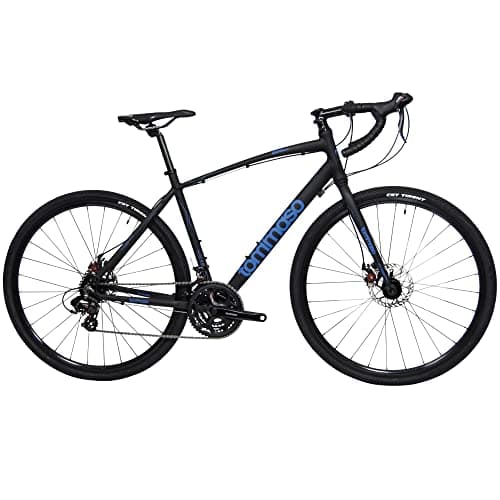
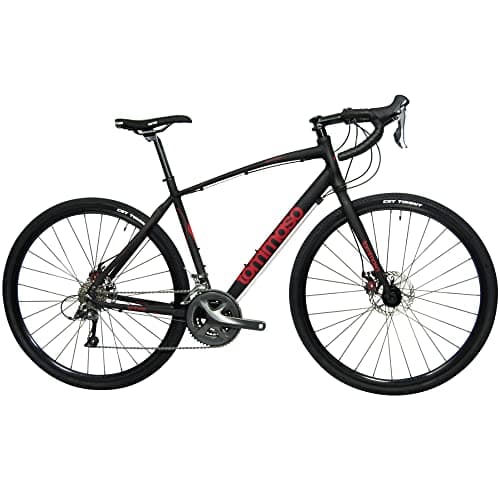
Tommaso Sentiero

Tommaso Sentiero

The cheapest bike here with a published size chart, 40c tires and a genuinely wide gear range — and it still misses our gearing bar.

Top pick
A first drop-bar gravel bike on the smallest sensible budget
2
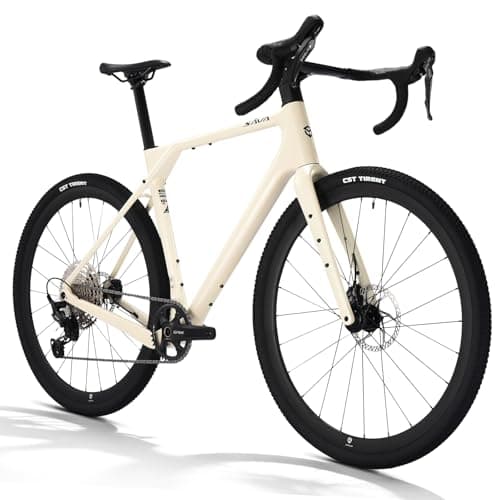
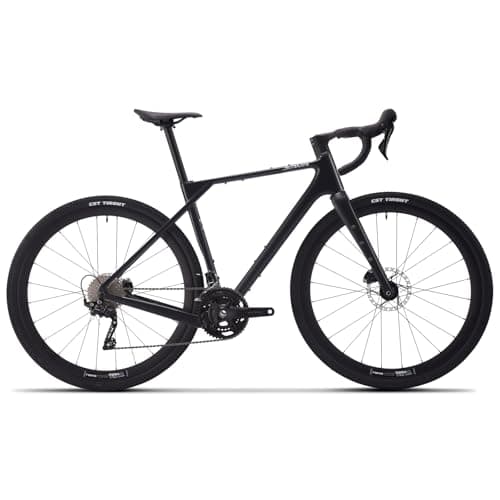
SAVADECK Carbon Gravel Bike (Shimano GRX400)

SAVADECK Carbon Gravel Bike (Shimano GRX400)

The cheapest bike here built around a gravel-specific groupset, hydraulic discs and a low gear under 1:1.

The rider who wants the gearing and brakes we actually recommend
3
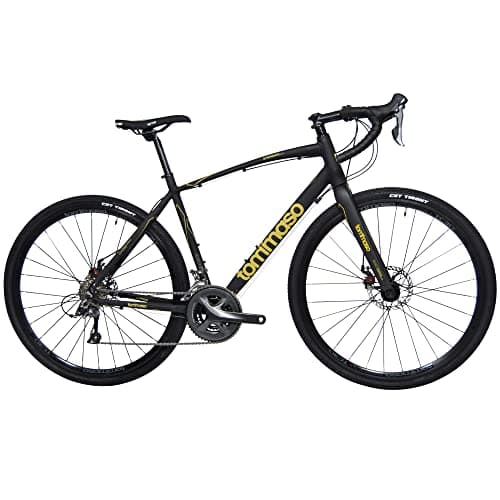
Tommaso Siena

Tommaso Siena

The same frame, fork, brakes and tires as our top pick with a 7-speed Tourney drivetrain and a lower price.

The lowest price of entry, if seven sprockets are enough
4
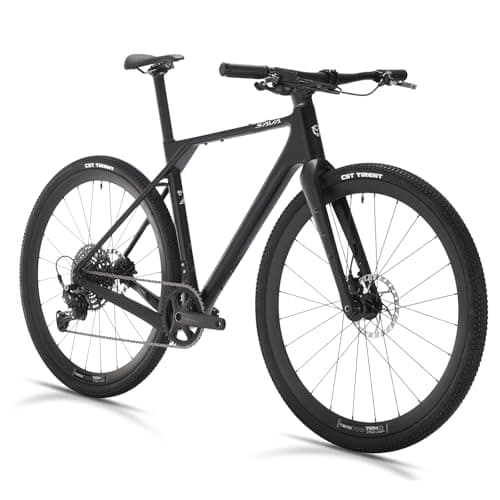
SAVADECK Carbon Gravel Bike (Shimano CUES U6000)

SAVADECK Carbon Gravel Bike (Shimano CUES U6000)

A 1x carbon build on Shimano's CUES parts — one shifter, no front derailleur, and a huge spread of gears.

A beginner who wants the simplest possible shifting
5
Tommaso Sterrata

Tommaso Sterrata

The Sentiero's drivetrain in a semi-compact frame with a carbon fork, for riders who feel every seam.

Cutting road buzz without changing the drivetrain
6
SAVADECK Gelaro S8

SAVADECK Gelaro S8

The only bike here whose listing names its model — and the one that stops being a beginner purchase.

A rider who already knows gravel is going to stick

This site judges every gravel bike on two published numbers: how wide a tire the frame takes and how low the gearing goes. Clearance at 40mm or more means the frame can do what the category exists to do; a lowest gear under 1:1 means you can ride up the loose stuff rather than push. Both are on a spec sheet before you spend anything, which is why we use them: they need no test ride, no lab and nobody’s opinion.

Applied honestly to what you can actually buy as a beginner, that test produces an uncomfortable answer, and it is the reason this page exists. The three cheapest bikes here — all Tommaso — ship a 30-tooth small ring and a 28-tooth big sprocket, which is a lowest gear of 1.07:1. That is above our own bar. We are still recommending one of them, because at this price the alternative is not a better gravel bike, it is no bike. But you should know what you are accepting before you buy it, not after.

Amazon’s gravel aisle is two brands

Search for a complete gravel bike and you get Tommaso, SAVADECK, and then a long tail of 700C road bikes wearing gravel keywords. Established shop brands are almost entirely absent: searching for a Diamondback Haanjo returns kickstands, mirrors and top-tube bags for the Haanjo rather than the bike. That is worth saying plainly, because it reframes the question. You are not choosing among the gravel bikes that exist. You are choosing among the ones a direct-to-consumer brand ships in a box.

The consequence is that a local shop is still a live option and often a better one at the same money, especially secondhand. A used bike from a shop comes assembled by someone who knows what a torque wrench is, sized by someone who watched you sit on it, and with a first-service relationship attached. If that is available to you, take it. This page is for the case where it is not.

What “for beginners” actually changes

Almost nothing about the bike, and almost everything about the buying. Four things move to the front:

The size chart is the spec that matters most. Every bike here publishes one — Tommaso in five sizes against rider heights from 5′2″ to 6′5″, SAVA in six from 47 to 58 cm with heights in centimeters and feet. A bike that fits with mediocre parts is a good bike; a bike that does not fit is furniture. If you fall between two sizes and cannot try both, that on its own is a reason to buy locally.

It arrives in a box, partly assembled. Bars, wheel, pedals, seatpost and brake setup are yours to finish. Budget either a shop build or a few hours and the tools; the torque figures for every bolt you will touch are published, and a carbon frame in particular is unforgiving of a clamp tightened by feel.

Cable discs are not a downgrade in the way you would assume. Avid BB5 calipers, fitted to all three Tommasos, are adjusted with a barrel adjuster and the pad dials on the caliper, so a rub can be sorted out at the roadside with nothing exotic in your bag. Hydraulics give more power for less hand force and need bleeding roughly never, but when they do need it, they need a kit. For a first bike, either is defensible.

Tires are the first upgrade, not the drivetrain. Every bike here ships 40c rubber, and on the three Tommaso frames 40c is also all the clearance you can plan for, since Tommaso publishes no maximum. Within that width there is an enormous range of speed and grip — see the gravel tire roundup and the width guide.

The gearing arithmetic, in full

Lowest gear is the small chainring divided by the largest sprocket. It is arithmetic, not opinion, and it is the single most useful calculation a first-time buyer can do.

The Tommaso triples are 30/39/50T with an 11-28t cassette (12-28t on the Siena): 30 ÷ 28 = 1.07:1. Shimano’s published RX400 group pairs a 46-30T crank with an 11-34T or 11-36T cassette: 30 ÷ 34 = 0.88:1, or 30 ÷ 36 = 0.83:1. SAVA’s published CUES gravel build runs a 42T ring against a 50T sprocket: 42 ÷ 50 = 0.84:1.

On a 10% climb on loose surface, the difference between 1.07:1 and 0.85:1 is roughly the difference between grinding and stopping. It is also the hardest thing to change later: a wider cassette needs a derailleur with the capacity to wrap it, and a smaller chainring on a triple means a new crank. Gravel gearing explained works through the ratios properly.

What we could not check

We have not ridden these bikes, weighed them or measured a frame. Every specification above is either the manufacturer’s own published claim, read on 26 August 2026 and attributed by name, or a quote from the live Amazon listing marked “Listing:”. The gear ratios are our arithmetic on published tooth counts and are shown so you can redo them.

Three gaps are worth naming. Tommaso publishes no maximum tire clearance for any of its three bikes, so the table says so rather than guessing from the fitted tire. Two of the SAVADECK listings do not name their model, and SAVA sells several similar carbon builds, so we have not attributed a crank or cassette to them — only what their own listings state. And none of the six publishes a full geometry chart on the page you buy from, which is the one thing a fit-critical purchase most needs.

The two numbers, side by side

Lowest gear is the smallest chainring divided by the largest sprocket, calculated from published tooth counts. Where a listing does not name its model, we do not assign it a crank or cassette — those rows say so. All figures read 26 August 2026.

BikeFrame / forkDrivetrainLowest gearBrakesTire / published clearance
Tommaso Sentiero6061 alloy / steelClaris 3x8, 30/39/50 · 11-281.07:1Avid BB5 cable700x40c / not published
SAVADECK carbon (GRX400)T800 carbon / carbonShimano GRX400, 10-speed (listing)Not published on the listingHydraulic700x40mm / not on the listing
Tommaso Siena6061 alloy / steelTourney 3x7, 30/39/50 · 12-281.07:1Avid BB5 cable700x40c / not published
SAVADECK carbon (CUES U6000)T800 carbon / carbonShimano U6000, 11-speed (listing)Not published on the listingHydraulic700x40mm / not on the listing
Tommaso Sterrata6061 alloy / carbonClaris 3x8, 30/39/50 · 11-281.07:1Avid BB5 cable700x40c / not published
SAVADECK Gelaro S8T800 carbon / carbonGRX820 1x12, tooth counts not publishedNot publishedBR-RX820 hydraulic700x40C / up to 45C

Every figure in bold fails our own test. A 1.07:1 low gear is above the 1:1 this site says a gravel bike needs. For the SAVADECK rows, the maker publishes 0.88:1 for its GRX400 carbon gravel build and 0.84:1 for its CUES build — but the Amazon listings do not name a model, so we have not written those numbers into the table as if they were confirmed.

The picks, in detail

1

Tommaso Sentiero

Top pick
Tommaso Sentiero
$749.99 · View on Amazon

Price as of Aug 31, 2026. #ad

Best for: A first drop-bar gravel bike on the smallest sensible budget

The cheapest bike here with a published size chart, 40c tires and a genuinely wide gear range — and it still misses our gearing bar.

  • Tommaso: 6061 SLA aluminum frame, steel fork
  • Tommaso: Claris R2000 triple, 30/39/50T
  • Tommaso: Claris 11-28t, 8-speed
  • Tommaso: Avid BB5 cable disc brakes
  • Tommaso: CST Tirent All-Terrain 700x40c

Tommaso is unusually forthcoming for this end of the market. Its published Sentiero spec names the frame alloy, the crank, the cassette, the brake model and the tire, and pairs every frame size with a rider height. That is enough to buy against without a shop visit, which is the whole problem with buying a bike online. What it does not publish is a clearance number — so on our own definition of a gravel bike, the 40c tire it ships with is the only width you can count on.

Good

  • Tommaso publishes a five-size chart with a rider height range against each size — the single most useful thing a first-time buyer can be given
  • The triple crank covers 30/28 to 50/11, which is a wider spread than anything else at this price
  • Cable-actuated Avid BB5 discs can be adjusted at the roadside with basic tools and no bleed kit, which is not true of a hydraulic system

Less good

  • Its lowest gear works out at 1.07:1, above the sub-1:1 bailout this site says a gravel bike needs
  • The fork is steel, so it carries weight exactly where you notice it
  • Tommaso publishes no maximum tire clearance figure, so 40c is all you can plan around
  • A triple crank means a front derailleur and three chainrings to keep indexed — more setup than most beginners expect

Skip it if: Your local gravel involves steep loose climbs. A 1.07:1 low gear is a walking gear on a 15% fire road, and no amount of fitness makes a 30-tooth ring smaller. Buy the GRX400 build below instead, or accept that you will push.

2

SAVADECK Carbon Gravel Bike (Shimano GRX400)

SAVADECK Carbon Gravel Bike (Shimano GRX400)
$1,699.00 · View on Amazon

Price as of Aug 31, 2026. #ad

Best for: The rider who wants the gearing and brakes we actually recommend

The cheapest bike here built around a gravel-specific groupset, hydraulic discs and a low gear under 1:1.

  • Listing: T800 carbon frame and fork
  • Listing: Shimano GRX400, 10-speed
  • Listing: hydraulic disc brakes
  • Listing: 700C x 40mm tires
  • Shimano: RX400 crank published as 46-30T

We are quoting the listing and Shimano here, not SAVA’s spec sheet, and the distinction matters. Shimano publishes the RX400 2x10 lineup with an FC-RX600-10 crank at 46-30T and CS-HG500-10 (11-34T/11-32T) or CS-HG50-10 (11-36T) cassettes. SAVA’s own site publishes a GRX400 carbon gravel build with the 46-30 crank and an 11-34 cassette, about 10.2 kg, with a size chart from 47 to 58 cm. What we cannot do is prove the unnamed Amazon listing is that exact build, so we have not put its crank and cassette in the table below as fact.

Good

  • Shimano publishes the RX400 group with a 46-30T crank and 11-34T or 11-36T cassette options, which puts the low gear at 0.88:1 or 0.83:1 — under the 1:1 bar, unlike every Tommaso here
  • Hydraulic discs give more braking for less hand force, which matters most on long loose descents where beginners tire
  • GRX is Shimano's gravel group: the front derailleur is shifted outboard for tire clearance and the rear derailleur has a chain stabilizer to stop chain slap

Less good

  • The Amazon listing does not name the model, and SAVA sells several carbon gravel builds — so you cannot check the geometry chart for the bike in the box
  • It costs well over twice the entry point here for a first bike you may not keep
  • Direct-to-consumer support: no dealer network, and warranty work means shipping a bike
  • Two near-identical listings at the same price call this groupset 10-speed and 20-speed, which tells you how much care went into the copy

Skip it if: This is your first drop-bar bike of any kind and you are not certain you will ride gravel regularly. The extra you pay over the Sentiero buys gearing and brakes, not certainty — and a bike you ride twice is expensive at any price.

3

Tommaso Siena

Tommaso Siena
$649.99 · View on Amazon

Price as of Aug 31, 2026. #ad

Best for: The lowest price of entry, if seven sprockets are enough

The same frame, fork, brakes and tires as our top pick with a 7-speed Tourney drivetrain and a lower price.

  • Tommaso: 6061 SLA aluminum frame, steel fork
  • Tommaso: Tourney triple, 30/39/50T
  • Tommaso: Tourney 12-28t, 7-speed
  • Tommaso: Avid BB5 cable disc brakes
  • Tommaso: CST Tirent All-Terrain 700x40c

Tommaso’s published Siena spec is the Sentiero’s with a rung removed: the same 6061 aluminum frame, the same steel fork, the same Avid BB5 discs, the same CST 700x40c tires, and a Tourney 3x7 in place of the Claris 3x8. The gap is real but narrow, which is exactly why the Sentiero wins — you are a small step from a better drivetrain on an identical bike. See the groupset hierarchy for what each rung actually buys.

Good

  • Cheapest way onto a drop-bar bike with disc brakes and 40c tires that we could find in stock
  • Same published five-size fit chart as the rest of the Tommaso range
  • Seven-speed Tourney parts are cheap and available everywhere, which is a real argument for a bike that will be learned on

Less good

  • The cassette starts at 12t rather than 11t, so the top gear is 4.17:1 against the Sentiero's 4.55:1 — you spin out sooner on descents
  • Tourney sits at the bottom of Shimano's road hierarchy; shifts are heavier and less precise than Claris
  • Same 1.07:1 low gear as the rest of the Tommaso range, and the same absence of a published clearance figure
  • Twenty-one nominal gears with a lot of duplication — the usable count is far lower

Skip it if: You expect to add mileage quickly. The upgrade from 7-speed Tourney to 8-speed Claris is the difference between the two cheapest bikes on this page, and it is a much better use of that money than replacing the drivetrain later.

4

SAVADECK Carbon Gravel Bike (Shimano CUES U6000)

SAVADECK Carbon Gravel Bike (Shimano CUES U6000)
$1,299.00 · View on Amazon

Price as of Aug 31, 2026. #ad

Best for: A beginner who wants the simplest possible shifting

A 1x carbon build on Shimano's CUES parts — one shifter, no front derailleur, and a huge spread of gears.

  • Listing: T800 carbon frame and fork
  • Listing: Shimano U6000, 11-speed
  • Listing: hydraulic disc brakes
  • Listing: 700C x 40mm all-terrain tires

SAVA’s published CUES gravel spec lists a 42-tooth narrow-wide crank, a CS-LG400-11 cassette printed out sprocket by sprocket (11-13-15-17-20-23-26-30-36-43-50T), an RD-U6000 rear derailleur and a claimed weight around 10.4 kg. Read that tooth list and you can see the 1x compromise in the raw: three-tooth steps at the top, seven-tooth steps at the bottom. 1x versus 2x covers that trade in full.

Good

  • One shifter and one chainring removes the single most confusing part of a first drop-bar bike — there is no front derailleur to trim, rub or drop a chain off
  • SAVA's published CUES gravel build pairs a 42T ring with an 11-50T cassette, a 0.84:1 low gear that clears our bar comfortably
  • CUES is Shimano's newer, deliberately durable parts family, designed so one cassette and derailleur cover multiple bike types

Less good

  • The listing does not name the model, so again you cannot check geometry or confirm which crank and cassette arrive
  • A 1x drivetrain trades gear steps for simplicity: an 11-50 cassette has big jumps, and holding a steady cadence on rolling ground is harder
  • SAVA's published build tops out at 42/11, around 3.82:1 — you will run out of gear on fast descents sooner than on any 2x here
  • Carbon frames are unforgiving of clamp damage, which matters if you are learning to work on your own bike

Skip it if: You ride mostly on tarmac between gravel sectors. The big steps in a wide-range 1x cassette are most annoying exactly where road riders spend their time, and the 2x GRX400 build above solves that for a modest step up.

5

Tommaso Sterrata

Tommaso Sterrata
$799.99 · View on Amazon

Price as of Aug 31, 2026. #ad

Best for: Cutting road buzz without changing the drivetrain

The Sentiero's drivetrain in a semi-compact frame with a carbon fork, for riders who feel every seam.

  • Tommaso: 6061 SLA aluminum semi-compact frame
  • Tommaso: HCT carbon fork, tapered alloy steerer
  • Tommaso: Claris R2000 triple, 30/39/50T
  • Tommaso: Claris R2000 11-28t, 8-speed
  • Tommaso: Avid BB5 cable disc brakes

The published Sterrata spec differs from the Sentiero in exactly two places a rider feels: an HCT carbon fork with a tapered aluminum steerer instead of the steel one, and a Corsa TC-30D wheelset instead of the TC-20D. Same triple, same cassette, same brakes, same tires. Whether that is worth the difference is a comfort question, not a performance one, and only you can answer it.

Good

  • A carbon fork is the cheapest way to take the sting out of a rigid front end, and it is lighter than the steel fork on the other two Tommasos
  • Identical Claris 3x8 drivetrain to our top pick, so nothing about the shifting changes
  • Semi-compact geometry and the same published rider-height chart across five sizes

Less good

  • It costs more than the Sentiero for a fork swap and a wheelset name change — everything else on the published spec is the same
  • Same 1.07:1 low gear, so the fork does nothing about the gearing problem
  • Stock is thin size by size: on the day we checked, the size this link lands on showed only a couple of units left while a larger size was fully in stock
  • Still cable discs and still no published clearance number

Skip it if: Comfort is not your complaint. If the roads you ride are smooth, the fork upgrade is money that would do more good as a set of supple 40c tires or a bike fit.

6

SAVADECK Gelaro S8

SAVADECK Gelaro S8
$2,299.00 · View on Amazon

Price as of Aug 31, 2026. #ad

Best for: A rider who already knows gravel is going to stick

The only bike here whose listing names its model — and the one that stops being a beginner purchase.

  • SAVA: R21 T800 carbon frame and fork
  • SAVA: GRX FC-RX820-1 crank, 1x
  • SAVA: CS-M6200-12 cassette, 12-speed
  • SAVA: BR-RX820 hydraulic discs, 160/140mm rotors
  • SAVA: 700x40C tires, compatible up to 45C

SAVA’s published Gelaro S8 spec is the most complete on this page: frame, fork, every drivetrain part number, rotor sizes, a weight, and a size chart from 47 to 58 cm with rider heights in both centimeters and feet. It also shows the limit of published data. The crank and cassette are named but not sized, so the one number our test needs — the lowest gear — is the one thing you cannot read off the page.

Good

  • The listing names the model, so SAVA's own published spec sheet, size chart and claimed 10.2 kg weight apply to the bike you are buying — nothing else on this page can say that
  • GRX820 is Shimano's current top gravel group: 12-speed, hydraulic, with a clutch derailleur
  • SAVA publishes tire compatibility up to 45C, the only clearance claim on this page that reaches the width we recommend

Less good

  • It costs roughly three times our top pick, which is a lot of money to spend on a discipline you have not tried
  • SAVA publishes the crank as FC-RX820-1 and the cassette as CS-M6200-12 without tooth counts, so the actual low gear is not published
  • 1x12 has the same big-step compromise as the CUES build, at a much higher price
  • Support is still direct-to-consumer, and a bike at this price still arrives in a box

Skip it if: This is your first bike. Buy the Sentiero, ride a season, and put the difference toward tires, shoes and a bike fit — all three will do more for your riding than a groupset upgrade you cannot yet use.

What actually decides this purchase

Start with the size chart, not the spec sheet. Every maker here publishes rider heights against frame sizes. Read that first, and if you sit exactly on a boundary, treat it as a reason to buy somewhere you can throw a leg over the bike.

Check the buy link’s size and color before you order. These listings have per-size and per-color variants with separate stock. The link takes you to one of them; change it to yours on Amazon’s page rather than assuming.

Do the division yourself. Small chainring divided by biggest sprocket. Under 1:1 and the bike will climb loose ground; over it and you will walk sometimes. It takes ten seconds and it is the number the marketing copy never prints.

Budget for the build, not just the bike. A shop assembly and safety check is money extremely well spent on a boxed bike, especially a carbon one where clamp torque matters. If you build it yourself, use a torque wrench and the published figures.

Spend the first upgrade on tires, the second on contact points. Tires change how a gravel bike rides more than any other part, and pedals, shoes and a saddle decide whether you enjoy hour four. The drivetrain is almost never the right first purchase — see the gravel pedal roundup for the cheapest of those upgrades.

Ask the honest question before any of it. If your riding is canal paths and commuting, a hybrid with wider tires does the job for less. We would rather say that than sell you a category: gravel bike vs hybrid makes the case properly.

Common questions

What should a beginner look for in a gravel bike?

Two published numbers and one chart. The numbers are maximum tire clearance (40mm or more means the frame can do gravel work) and the lowest gear ratio, which is the smallest chainring divided by the biggest sprocket — under 1:1 is what you want for loose climbs. The chart is the maker’s size guide: a bike that does not fit cannot be fixed by parts. Everything else, including frame material, matters far less than those three things at a first-bike price.

Is an aluminum or carbon gravel bike better for a beginner?

Neither is better in a way you will notice in your first season. Carbon frames are lighter and can be shaped for compliance; aluminum is cheaper, tougher against knocks and far more forgiving of a seatpost clamp done up too tight. The bikes on this page split cleanly along that line, with the aluminum Tommasos at roughly a third of the carbon SAVADECK’s price. Spend the difference on fit and tires and you will be faster than the frame material would have made you.

Do gravel bikes from Amazon come fully assembled?

No. Expect the bike roughly 85% built, with the handlebar, front wheel, pedals, seatpost and brake adjustment left to you or a shop. That is normal for any boxed bike, but it is the step most first-time buyers underestimate. Either budget a shop build and safety check, or buy a torque wrench and follow the published figures for every bolt you touch.

Is a triple chainring bad on a gravel bike?

Not bad, just old-fashioned and more to maintain. A triple gives a wide range cheaply, which is why the entry-level bikes here use one, but it means a front derailleur to keep indexed and a lot of duplicated gears. The modern answer is a 1x with a wide cassette or a sub-compact 2x. What matters is the ratio at each end, not how many chainrings produced it.

How much should a first gravel bike cost?

Enough for disc brakes, 40c tires and a drivetrain that will not need replacing in a season — which on this page is the entry-level aluminum bracket, not the carbon one. Prices move constantly, so we show the live figure on each buy button rather than printing one that will be wrong next week. The more useful budgeting rule: leave something aside for a shop build, a set of tires and a bike fit, because all three will do more for your riding than the next groupset up.

Sources

We haven’t ridden or tested any of the products on this page, and we don’t pretend otherwise. Read how we research — or tell us we’re wrong and we’ll log the correction.