Skip to content
ChainringClub

The Best Gravel Bike Pedals

Seven pedals, ranked on the specification that matters when a climb goes loose: how far your heel has to travel before your foot is free.

A crankset, chainrings and pedal spindle on a bike, drive side.
By Stephen V.Published August 18, 2026How we research

Heads up: we earn a commission if you buy through the links on this page, at no extra cost to you. It never decides what makes the list — here’s how that works.

Quick picks

Tap any row for the full write-up. Specs are the manufacturer's own published claims, read on 18 August 2026.

#ProductBest forPrice
1
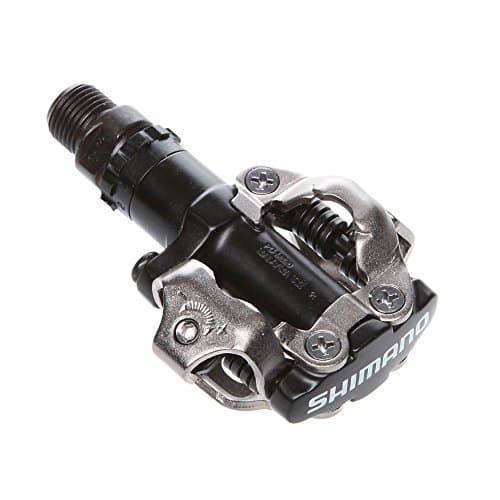
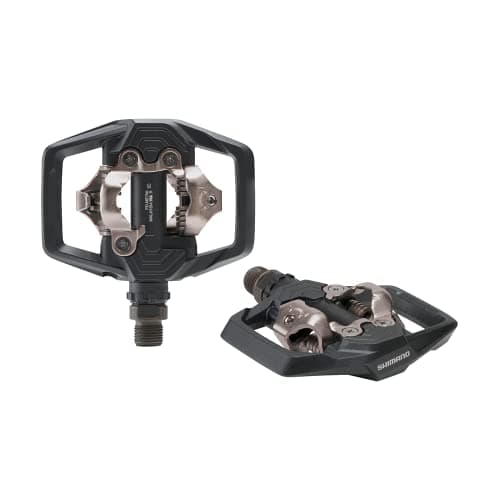
Shimano PD-ME700

Shimano PD-ME700

Dual-sided SPD with a wider body — the pedal that makes clipping in on a rough climb a non-event.

Top pick
Gravel riding where you stop and start on loose ground
2
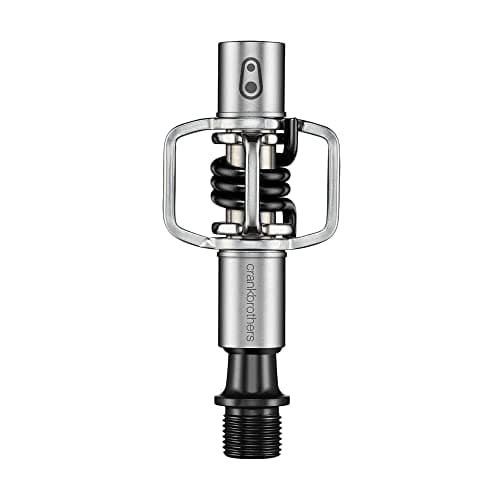
Crankbrothers Eggbeater 1

Crankbrothers Eggbeater 1

Four-sided entry and almost nothing for mud to stick to — the classic answer to a wet gravel race.

Mud, cyclocross and minimal weight
3
Shimano PD-M520

Shimano PD-M520

The default SPD: dual-sided, indestructible, and the cheapest entry into the standard.

A first clipless pedal, on any bike
4
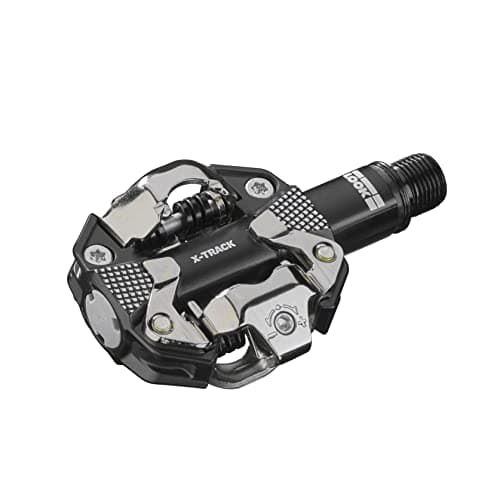
Look X-Track

Look X-Track

An SPD-compatible alternative with a wider platform than Shimano's basic pedals.

SPD cleats with more support
5
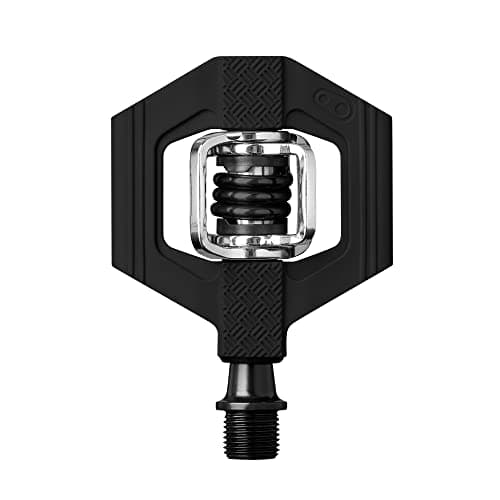
Crankbrothers Candy 1

Crankbrothers Candy 1

An Eggbeater with a platform around it — the compromise pick in this list.

Mud-shedding plus a bit of support
6
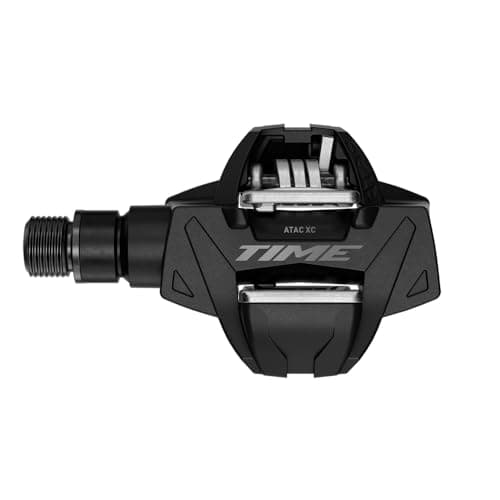
Time ATAC XC

Time ATAC XC

The mud pedal with the most float in the category, and a price to match.

Riders whose knees dislike a fixed foot position
7
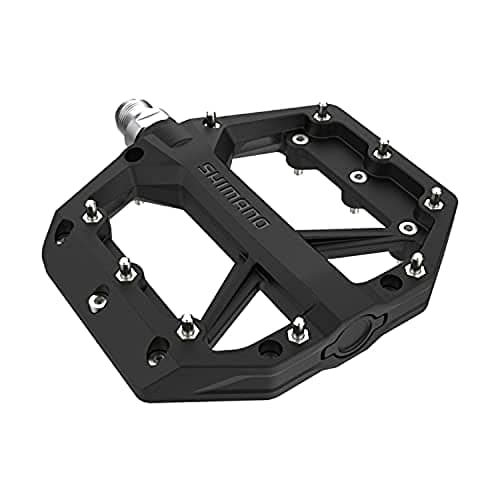
Shimano PD-GR400

Shimano PD-GR400

The skip for most gravel riders — but the right answer for the minority who should not be clipped in.

Bikepacking, commuting and anyone not sold on clipless

Gravel pedals are sold on weight and chosen on release.The specification that matters on a loose climb is how far your heel has to rotate before your foot comes free — and, secondarily, how much your foot can move while it is still attached. Both are published, both are decided by the cleat rather than the pedal, and both are cheap to change after purchase.

Shimano publishes a 13° clip-out angle for its SPD cleats and sells two behaviors: the SM-SH51, which releases only when the heel moves outward, and the SM-SH56, which releases by twisting in any direction. Crankbrothers publishes 10° release for its Easy Release cleats and 15° for Standard Release, each available with 0° or 6° of float. That is more comparable data than most gravel components offer, and it is the right basis for a decision.

Mud clearance is the gravel-specific requirement

Road pedals have a large platform and a wide cleat because the ground is clean. Gravel and cyclocross pedals are small and open because the ground is not: mud packs into a recessed mechanism and stops the cleat engaging entirely, which is how riders end up running a cyclocross climb with a foot skating off the pedal.

The Eggbeater is the extreme of this design — four wire springs and almost no surfaces for mud to sit on. The trade is support: with no platform, the load path runs entirely through your shoe’s sole, which is why sole stiffness matters more with these pedals than with any other. Our road versus gravel shoes comparison covers what to look for in the sole, and the cycling shoe roundup covers what each maker publishes about it.

Two-bolt cleats, and why gravel shoes have them

Every clipless pedal here uses a recessed two-bolt cleat — SPD or a variant — rather than the three-bolt road standard. The reason is walking. A two-bolt cleat sits inside a lugged sole, so you can push a bike up a bank or walk into a shop without skating across the floor on a plastic wedge. On a gravel bike, where getting off and walking is part of the format, that is not a small thing.

Check your shoes before you buy pedals: if the sole has two threaded holes in a recess, any pedal on this page except the Time will work with the appropriate cleat. Time’s ATAC uses its own cleat, which still bolts to the same two-hole pattern but is not interchangeable with SPD.

Float: comfort, not performance

Float is how far your foot can rotate while clipped in. Zero float locks your foot at one angle; six degrees lets it find its own. The pedaling-efficiency argument for either is thin, and the knee argument is not: a foot held at an angle its owner’s anatomy dislikes, thousands of times an hour, is a well-known route to knee pain.

The practical advice is unglamorous. Start with float, not without it. Crankbrothers sells both 0° and 6° cleats for the same pedals; Shimano’s SPD system has float built into the cleat design; Time’s ATAC is known for the most generous float in the category. If you have never had knee trouble and want a locked-in feel, zero float is available — but it is a preference to grow into rather than start with.

Spring tension is the adjustment nobody uses

Most SPD-pattern pedals have a small hex screw on each side that adjusts release tension. Wound out, the pedal releases with noticeably less force. This is the setting that turns a frightening first month into an ordinary one, and it is the first thing to adjust if you are nervous about being clipped in on technical ground.

Set it soft, ride until clipping out is automatic, and firm it up over a season. The pedals that ship at factory tension have caught out more new riders than any other component adjustment on a bike.

What we could not check

We have not ridden these pedals, measured release forces or timed mud shedding. The release and float figures above are Shimano’s and Crankbrothers’ own published numbers, read on 18 August 2026, and everything marked “Listing:” comes from the live Amazon listing. Where a manufacturer publishes no float figure — which is true of the Time and Look listings here — the table says so rather than repeating a number from a forum.

Entry, release and cleat standard

Release and float figures are the manufacturers’ published numbers; everything else is from the live Amazon listings, read 18 August 2026. Note that release angle is a property of the cleat, so it is changeable after purchase.

PedalEntry sidesCleat standardPublished release / floatMud clearance
Shimano PD-ME7002SPD13° clip-out (SH51/SH56)Good
Crankbrothers Eggbeater 14Crankbrothers10° release, 6° float (Easy Release)Best here
Shimano PD-M5202SPD13° clip-out (SH51/SH56)Good
LOOK X-Track2SPD-compatibleNot published on the listingGood
Crankbrothers Candy 14Crankbrothers10° release, 6° float (Easy Release)Very good
TIME ATAC XC C12ATAC (own standard)Not published on the listingVery good
Shimano PD-GR400Flat — no cleatNonen/an/a

The release column is a cleat property, not a pedal one. If a pedal feels too hard or too easy to escape, the cheapest fix is a different cleat — and both Shimano and Crankbrothers publish exactly what each one does.

The picks, in detail

1

Shimano PD-ME700

Top pick
Shimano PD-ME700
$52.49 · View on Amazon

Price as of Aug 31, 2026. #ad

Best for: Gravel riding where you stop and start on loose ground

Dual-sided SPD with a wider body — the pedal that makes clipping in on a rough climb a non-event.

  • Listing: PD-ME700, dual sided
  • Listing: trail/all-mountain platform
  • SPD cleat, micro-adjustable tension
  • Shimano cleats: 13° clip-out angle

The specification worth knowing here is the cleat, not the pedal. Shimano publishes a 13° clip-out angle for the SM-SH51 single-release cleat — which releases only when the heel moves outward — and the same 13° for the SM-SH56 multi-release cleat, which can release by twisting in any direction. Same pedal, different confidence level. The cleat is a cheap part and it changes the pedal’s behavior completely.

Good

  • Dual-sided entry means you never have to flip the pedal — the single biggest usability gain on rough terrain
  • A wider body supports the shoe sole, which reduces hot spots on long days
  • Shimano's SPD ecosystem is universal: cleats, shoes and spares are everywhere

Less good

  • Heavier than a minimalist gravel pedal
  • A larger platform can catch on rocks in genuinely technical terrain
  • The pedal ships with single-release cleats unless you choose otherwise

Skip it if: You are counting grams. This is a trail pedal doing gravel duty extremely well; the Eggbeater below is a fraction of the mass if that matters more than support.

2

Crankbrothers Eggbeater 1

Crankbrothers Eggbeater 1
$54.62 · View on Amazon

Price as of Aug 31, 2026. #ad

Best for: Mud, cyclocross and minimal weight

Four-sided entry and almost nothing for mud to stick to — the classic answer to a wet gravel race.

  • Listing: Eggbeater 1
  • Four-sided entry
  • Ships with Easy Release cleats
  • Crankbrothers: 10° release, 6° float

Crankbrothers is unusually clear about the numbers: Easy Release cleats give a 10° release angle, Standard Release 15°, and both come in 0° or 6° float. Release is how far your heel travels to unclip; float is how much your foot can move while clipped in. Buying the pedal is buying the mechanism — the cleats decide the feel.

Good

  • The open spring design has essentially no mud-trapping surfaces — this is the mud pedal
  • Four entry surfaces means you clip in without looking, from any orientation
  • Crankbrothers publishes both float and release angle, and both are changeable by swapping cleats

Less good

  • Minimal platform: support comes almost entirely from the shoe's sole stiffness
  • Brass cleats wear and are a consumable
  • Easy Release cleats on this model release at a smaller angle, which some riders find too easy

Skip it if: Your shoes have flexible soles. With no platform under the foot, an Eggbeater transmits everything through a small contact area, and a soft sole will fold around it on long climbs.

3

Shimano PD-M520

Shimano PD-M520
$61.90 · View on Amazon

Price as of Aug 31, 2026. #ad

Best for: A first clipless pedal, on any bike

The default SPD: dual-sided, indestructible, and the cheapest entry into the standard.

  • Listing: PD-M520 clipless SPD
  • Dual sided
  • Adjustable release tension
  • Cleats included

Good

  • The most widely used clipless pedal design in cycling — parts and cleats are available everywhere
  • Adjustable spring tension means you can start soft and firm it up as confidence grows
  • Genuinely durable; these routinely last a decade with an occasional service

Less good

  • No platform to speak of, so shoe sole stiffness carries the load
  • Heavier than the premium options for the same function
  • Small body can pack with mud in the worst conditions

Skip it if: You ride in deep mud regularly. The open Eggbeater design sheds it better, and that is the specific job it exists for.

4

Look X-Track

Look X-Track
$60.00 · View on Amazon

Price as of Aug 31, 2026. #ad

Best for: SPD cleats with more support

An SPD-compatible alternative with a wider platform than Shimano's basic pedals.

  • Listing: X-Track MTB pedal
  • SPD-compatible cleat interface
  • Dual sided
  • Wider body than a bare-spindle SPD

Good

  • Uses the same SPD cleat standard, so switching does not mean new shoes or cleats
  • More body area under the shoe than a minimal SPD design
  • Look's mountain range is well regarded and priced against Shimano's mid-tier

Less good

  • Less ubiquitous than Shimano for spares
  • Neither the lightest nor the widest option here
  • The listing publishes little beyond the model name

Skip it if: You already own Shimano pedals that work. This is a lateral move within the same cleat standard rather than an upgrade.

5

Crankbrothers Candy 1

Crankbrothers Candy 1
$51.06 · View on Amazon

$59.99 15%

Price as of Aug 31, 2026. #ad

Best for: Mud-shedding plus a bit of support

An Eggbeater with a platform around it — the compromise pick in this list.

  • Listing: Candy 1
  • Four-sided entry
  • Small platform around the mechanism
  • Ships with Easy Release cleats

Good

  • Keeps the Eggbeater's four-sided entry and mud clearance while adding a supporting platform
  • Same cleat system, so float and release are tunable by cleat choice
  • Better for softer-soled shoes than a bare Eggbeater

Less good

  • The platform reduces the mud clearance that makes the Eggbeater special
  • Still a modest platform compared with a trail SPD
  • Brass cleats remain a consumable

Skip it if: You want the extreme of either end. This is deliberately the middle: less mud clearance than an Eggbeater, less support than a trail pedal.

6

Time ATAC XC

Time ATAC XC
$100.00 · View on Amazon

Price as of Aug 31, 2026. #ad

Best for: Riders whose knees dislike a fixed foot position

The mud pedal with the most float in the category, and a price to match.

  • Listing: ATAC XC C1, steel
  • ATAC mechanism, dual sided
  • Known for generous angular and lateral float
  • Steel body version

Good

  • Time's ATAC system is the reference for float — the foot moves both angularly and laterally while clipped in
  • Excellent mud clearance, which is why it has a long cyclocross following
  • Steel construction on this version rather than composite

Less good

  • Most expensive pedal on this page
  • Its own cleat standard — not SPD-compatible, so shoes and spares are a separate ecosystem
  • The listing publishes no float or release figures

Skip it if: You want one cleat standard across your bikes. Buying into ATAC means a second cleat type in the house unless you convert everything.

7

Shimano PD-GR400

Shimano PD-GR400
$69.02 · View on Amazon

Price as of Aug 31, 2026. #ad

Best for: Bikepacking, commuting and anyone not sold on clipless

The skip for most gravel riders — but the right answer for the minority who should not be clipped in.

  • Listing: PD-GR400 flat pedal
  • Listing: resin body
  • Listing: removable pins
  • No cleats, any shoes

Good

  • Removable pins let you tune grip to your shoe soles
  • Any footwear works, which matters on a bikepacking trip where you also walk
  • Nothing to unclip means nothing to fail to unclip on a technical section

Less good

  • No connection to the pedal on rough ground — your foot can bounce off
  • Resin body is less durable than alloy under rock strikes
  • Loses the pedaling efficiency benefit that most gravel riders buy pedals for

Skip it if: You ride long gravel days on varied terrain. This is a skip for the mainstream gravel use case and a genuinely good choice for the specific one it names.

What actually decides this purchase

Check your shoes first. Every clipless pedal here needs a two-bolt recessed cleat mount. If your shoes are three-bolt road soles, the pedal is not your first purchase.

Buy for the worst conditions you ride in. Mud is what separates these designs. If your gravel is dry and dusty, any of them works; if it is a wet cyclocross season, the open four-sided designs are the reason they exist.

Start with float and soft spring tension. Both are adjustable or cleat-selectable, both make the first month far less alarming, and both can be firmed up later. Nobody has ever regretted starting easier.

Match platform to sole stiffness.A bare-spindle pedal puts the whole load through your shoe’s sole. Stiff soles, minimal pedals; softer or more walkable soles, a platform pedal.

Stay in one cleat standard if you can. Mixing SPD and ATAC across bikes means two sets of shoes or constant cleat swaps. It is a small annoyance that never goes away.

Common questions

What pedals should I use on a gravel bike?

Two-bolt clipless pedals — SPD or an equivalent — because they use recessed cleats you can walk in and shed mud far better than road pedals. Choose a dual- or four-sided design so you can clip in without looking on rough ground, and pick the platform size to match how stiff your shoe soles are.

What is the difference between float and release angle?

Release is how far your heel must rotate before the cleat lets go; float is how much your foot can move while still attached. Crankbrothers publishes both — 10° release on Easy Release cleats, 15° on Standard, each with 0° or 6° float. Shimano publishes a 13° clip-out angle for its SPD cleats. Release affects confidence; float affects knees.

Are Crankbrothers Eggbeaters better than SPD for gravel?

In mud, the open Eggbeater design sheds better and its four entry surfaces mean you clip in without looking. In every other respect SPD is the more practical standard: cleats, shoes and spares are available everywhere, and platform designs give more support for softer soles. Neither is a wrong answer; the mud is the deciding variable.

Can I use flat pedals for gravel riding?

Yes, and for bikepacking or mixed-terrain touring where you walk a lot, they make real sense. What you give up is the connection on rough ground — a foot can bounce off a flat pedal on washboard where a clipped-in foot stays put. Pinned flats and grippy soles narrow the gap but do not close it.

How do I stop being scared of clipless pedals?

Wind the spring tension all the way out, fit multi-release cleats if your system offers them (Shimano’s SM-SH56 releases by twisting in any direction rather than only outward), and practice unclipping on grass. The fear is entirely about the first few stops, and both of those adjustments are free or nearly so.

Sources

We haven’t ridden or tested any of the products on this page, and we don’t pretend otherwise. Read how we research — or tell us we’re wrong and we’ll log the correction.