Skip to content
ChainringClub

The Best Cycling Shoes

Six shoes, ranked. Not on sole stiffness — not one manufacturer here publishes a stiffness figure for these models. Ranked on which pedal standard each one commits you to, and what you can check before you pay.

White road cycling shoes clipped into a pedal beside a road bike wheel.
By Stephen V.Published July 20, 2026How we research

Heads up: we earn a commission if you buy through the links on this page, at no extra cost to you. It never decides what makes the list — here’s how that works.

Quick picks

Tap any row for the full write-up. Specs are the manufacturer's own published claims, read on 20 July 2026.

#ProductBest forPrice
1
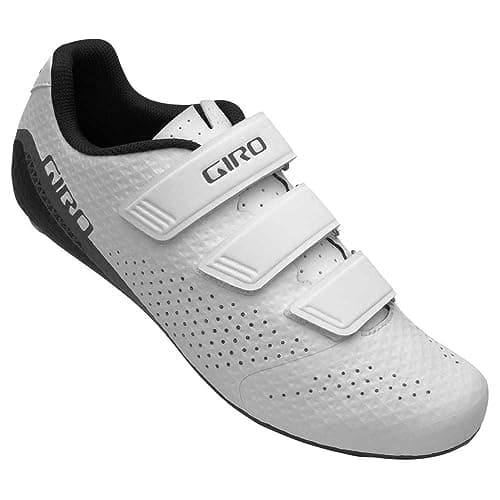
Giro Stylus

Giro Stylus

The only shoe here whose sole is drilled for both cleat standards, which makes it the one that doesn't force the pedal decision before you've made it.

Top pick
A first pair of clipless shoes, bought before you've committed to a pedal system
2
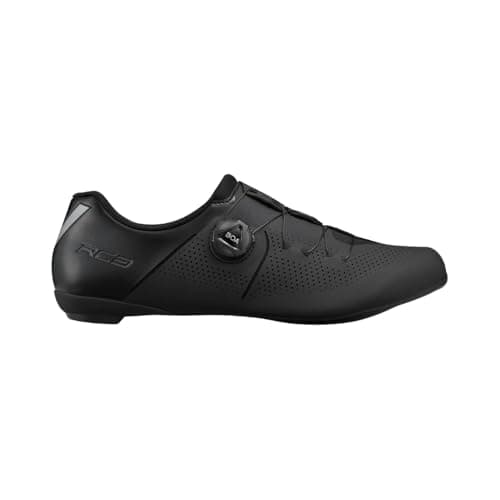
Shimano SH-RC302

Shimano SH-RC302

A Boa dial and the widest published wide-fit range here — Shimano lists it in wide sizes up to EU 52, and nothing else on this page publishes a wide range at all.

Wide feet, and riders who want to adjust tension without stopping
3
Shimano SH-RC102

Shimano SH-RC102

Shimano's entry road shoe: three straps, a sole the company calls stiff and fiberglass-reinforced, and a published size chart from the firm that makes most road pedals.

Riders buying into Shimano's road ecosystem who want the brand's own size chart
4
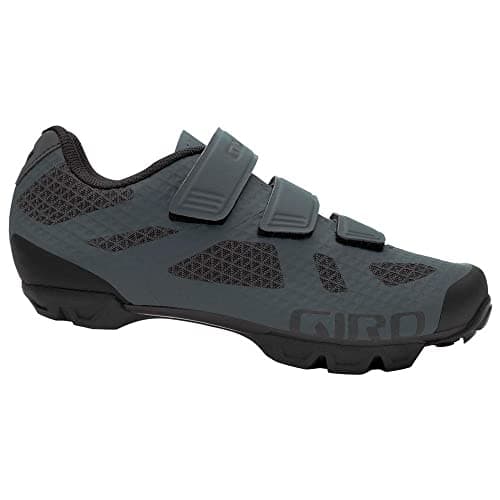
Giro Ranger

Giro Ranger

The cheapest shoe here and the only one built around a rubber outsole, which is the difference between walking and clattering.

Gravel, commuting, and any ride where you get off the bike and walk somewhere
5
Shimano SH-RX600

Shimano SH-RX600

The only sole on this page its maker calls carbon-reinforced, with a Boa dial, aimed at gravel days long enough for sole flex to become the thing that hurts.

Long gravel and adventure rides where the sole is the limiting factor
6
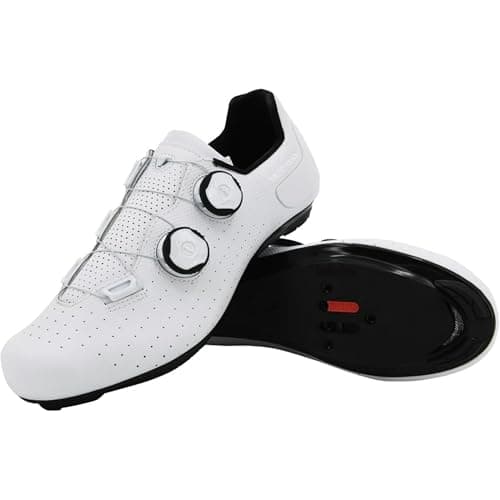
Tommaso Strada Elite Duale

Tommaso Strada Elite Duale

The only shoe here that takes Delta cleats, which is its entire reason for existing: it bridges an indoor studio bike and an outdoor road bike.

One pair of shoes covering an indoor bike and a road bike

Start with the thing that decides this purchase, because it is not the shoe. It is the number of bolts drilled into the sole. Three-bolt shoes take road cleats and road pedals. Two-bolt shoes take SPD-style cleats and SPD-style pedals. A shoe drilled for one cannot take the other, pedals cost real money, and most people buy the shoes first — so the shoe silently makes a pedal decision on your behalf and you find out later.

That is the axis this page ranks on. Not stiffness, and here is why: we read all six manufacturer product pages on 20 July 2026 and not one of them publishes a stiffness index for these models. Shimano says “stiff fiberglass reinforced” and “stiff carbon reinforced”. Tommaso says “No-Flex”. Giro publishes the sole composition by percentage and no stiffness figure at all. Those are four different vocabularies for one unmeasured quantity, and a ranking built on them would be a ranking built on adjectives. Every rival roundup in this category publishes a stiffness order anyway. Ask yourself where the numbers came from.

What is actually published, and what is not

Across six shoes from four brands, here is the complete set of things a manufacturer is willing to state: closure system, upper material, sole material, size range, and — on exactly one of them — the cleat bolt pattern. Here is what none of them state: claimed weight, stiffness index, and, on five of six, whether the sole is drilled for two bolts or three.

That last gap is remarkable when you consider it is the only irreversible property of the purchase. Giro publishes a universal 3/2 pattern on the Stylus, which is both the most useful disclosure on this page and the reason that shoe wins. For the other five you are reading it off the listing photos or the category the shoe is sold in, and you should check before you buy pedals rather than after. We are not going to state a bolt count that a manufacturer did not publish, so where the table below says “not published”, it means we looked and it was not there.

Amazon sells shoes one listing per size, and the price follows the size

This affects how you read every price on this page. Footwear on Amazon is listed as a separate item per size and color combination, so the price attached to each shoe here is the live price of the specific variant we resolved — a particular size, in a particular color. Other sizes of the identical shoe are frequently priced differently, sometimes substantially, and stock varies by size in a way it never does for a chain lube.

So treat the prices here as what the category costs rather than as a quote for your size. Click through, pick your size, read the price on the page you land on. That is also why every buy button here falls back to a search for the model rather than dead-ending if a particular variant sells out.

Fit is the specification, and it is the one nobody sells you

A cycling shoe is a rigid platform strapped to a foot that swells over the course of a ride. Too long and your heel lifts on every upstroke; too narrow and the ball of your foot goes numb somewhere in hour two; too tight over the instep and you get the classic hot spot that riders blame on the pedal. None of that is fixed by a stiffer sole or a better dial, and all of it is decided before you leave the house.

The practical version: measure your foot in centimeters, heel to longest toe, standing, in the evening. Compare that against the manufacturer's own published size chart rather than against your street shoe size — Shimano publishes one and it is the reason its shoes are the easiest here to order remotely. If you are between sizes, or if your foot is wide, the shoe that publishes a wide range with numbers on it is worth more to you than any amount of published sole material.

The cleat is a separate purchase, and it is where the float lives

Every shoe here ships without cleats or with cleats sold as a variant. That is normal, and it is also the point where knee comfort is decided — float, the few degrees of rotation the cleat allows before it releases, is a property of the cleat, not the shoe. Shimano publishes six degrees on its yellow road cleat and four on the standard SPD cleat, and swapping cleats costs a fraction of what swapping shoes does. We go through the whole two-bolt versus three-bolt mechanism, float included, in road vs gravel cycling shoes — read that first if you have not yet chosen a pedal system, because it is the more consequential decision and this page assumes you have made it.

What each manufacturer publishes

Read off each brand’s own product page on 20 July 2026. Not one cell is an estimate — every “Not published” below is a real gap on a real manufacturer page, and the two columns that matter most are the emptiest.

ShoeCleat bolt patternClosureSole materialWide fit
Giro StylusUniversal 3/2Three hook-and-loop strapsInjection-molded nylon + glass fiberNot published
Shimano SH-RC302Not publishedBOA L6E dialFiberglass-reinforced nylonEU 40–52
Shimano SH-RC102Not publishedThree offset hook-and-loop strapsFiberglass reinforcedNot offered
Giro RangerNot publishedThree wide strapsNylon + glass fiber plate, rubber outsoleNot published
Shimano SH-RX600SPD (two-bolt)L6 BOA dialCarbon reinforcedNot on the product page
Tommaso Strada Elite DualeDelta, SPD-SL and SPDDual quicklaceFiberglass infused, ventedNot published

There is no stiffness column because there is no stiffness data — not one of these four manufacturers publishes an index, a rating or a number for these models, only the words “stiff” and “No-Flex”. There is no weight column for the same reason. Half the bolt-pattern column is empty, for the one property of a cycling shoe that cannot be changed after purchase.

The picks, in detail

1

Giro Stylus

Top pick
Giro Stylus
$89.59 · View on Amazon

$124.95 28%

Price as of Jul 21, 2026. #ad

Best for: A first pair of clipless shoes, bought before you've committed to a pedal system

The only shoe here whose sole is drilled for both cleat standards, which makes it the one that doesn't force the pedal decision before you've made it.

  • Universal 3/2 cleat bolt pattern (Giro)
  • Three compression-molded hook-and-loop straps (Giro)
  • Synchwire single-piece upper (Giro)
  • Injection-molded nylon and glass fiber outsole, over-molded heel and toe pads (Giro)
  • Claimed weight: not published
  • Stiffness index: not published

Here is the trap this shoe avoids. Cycling shoes come drilled for one of two cleat patterns, and the pattern decides which pedals you can ever use with them. Buy a three-bolt road shoe and you have quietly also bought road pedals; buy a two-bolt shoe and you have bought SPD-style pedals. Neither is reversible, and pedals are a second purchase most people make afterwards, not before. Giro publishes a universal 3/2 cleat bolt pattern on the Stylus, which means the same sole accepts either. That is the single most useful property a first pair of shoes can have, it is published rather than inferred, and it is why this is the top pick despite being the cheapest road shoe on the page.

Good

  • Takes three-bolt road cleats and two-bolt SPD cleats from the same sole — Giro publishes this as a universal 3/2 pattern
  • The lowest-priced road shoe on this page, under both Shimano road shoes here
  • Giro publishes the upper construction, the outsole material and the closure, which is more than most listings in this category manage

Less good

  • Three hook-and-loop straps, not a dial — you can loosen them at a stop but you cannot micro-adjust tension while riding
  • Nylon-and-glass-fiber outsole; the only sole here that its maker calls carbon-reinforced is on a different shoe
  • Giro publishes no claimed weight and no stiffness figure for it

Skip it if: You already own road pedals, you're certain you'll never ride anything else, and you want the stiffest sole your money buys. The universal 3/2 pattern is this shoe's headline advantage and it is entirely an advantage of optionality — if you have already spent the optionality, you are paying a sole-material compromise for a feature you will not use. Buy the RX600 in that case, or the RC302 if you want the dial.

2

Shimano SH-RC302

Shimano SH-RC302
$140.00 · View on Amazon

Price as of Jul 21, 2026. #ad

Best for: Wide feet, and riders who want to adjust tension without stopping

A Boa dial and the widest published wide-fit range here — Shimano lists it in wide sizes up to EU 52, and nothing else on this page publishes a wide range at all.

  • BOA L6E micro-adjustable dial (Shimano)
  • Standard sizes EU 40–48, plus wide EU 40–52 (Shimano)
  • Synthetic leather upper with strategically-placed perforations (Shimano)
  • Fiberglass-reinforced nylon sole, integrated seamless midsole (Shimano)
  • Claimed weight: not published
  • Cleat bolt pattern: not stated on the product page

Wide feet are the quiet catastrophe of this category. Most cycling shoes are built on a narrow last, most brands publish nothing about width, and the standard advice — order a size up — makes the shoe longer without making it wider, so your heel lifts and your toes still hurt. Shimano publishes standard sizes from 40–48 plus wide options from 40–52 on this model. That is a real published fit range in a category where the honest answer is usually a shrug, and it is worth more than any adjective on this page.

Good

  • Wide sizing published with actual numbers, up to EU 52 — no other shoe here publishes a wide range
  • A dial you can tighten a click at a time mid-ride; every strap shoe on this page needs you to stop
  • Shimano publishes the upper material, the sole material and the full size range in both widths

Less good

  • Shimano publishes no claimed weight and no stiffness index for it
  • Fiberglass-reinforced nylon sole — stiff, in Shimano's own description, but not the carbon-reinforced sole further down this page
  • The product page never states the cleat bolt pattern, so confirm it on the listing before you buy pedals

Skip it if: Your feet are narrow and straps have never bothered you. The two things that lift this shoe above the entry Shimano are the dial and the wide range, and it costs more than the RC102 for exactly those two things. If neither is a problem you have, that is money spent on solving somebody else's.

3

Shimano SH-RC102

Shimano SH-RC102
$120.00 · View on Amazon

Price as of Jul 21, 2026. #ad

Best for: Riders buying into Shimano's road ecosystem who want the brand's own size chart

Shimano's entry road shoe: three straps, a sole the company calls stiff and fiberglass-reinforced, and a published size chart from the firm that makes most road pedals.

  • Revised 3-strap upper, three offset hook-and-loop straps (Shimano)
  • Synthetic leather upper with perforations, recycled mesh material (Shimano)
  • Stiff fiberglass reinforced sole (Shimano)
  • Sizes EU 40–48 / US M7–M12.5 (Shimano)
  • Wide fit: not offered on this model
  • Claimed weight: not published

There is a specific, unglamorous reason to buy this shoe: the size chart. Shimano publishes EU 40–48 with US equivalents and a footwear size chart you can measure your own foot against in centimeters. Cycling shoe sizing is not street-shoe sizing and the gap between them is where most returns come from. A maker that publishes the conversion is doing something concrete for you; three of the six shoes here leave you guessing from a US number on a listing.

Good

  • Shimano publishes the full size range in both EU and US, so you can measure against it before ordering
  • Recycled mesh in the upper is one of the few material claims anyone on this page bothers to make
  • Same brand as the pedals and cleats most road riders already own, which makes the fit chart easier to trust

Less good

  • Costs more than the Giro top pick and gives you one bolt pattern where the Giro gives you two
  • No wide fit on this model — if your feet are wide the RC302 is the one that publishes a range
  • Shimano publishes no claimed weight, no stiffness index and no cleat bolt pattern on the page

Skip it if: You haven't bought pedals yet. This is a road shoe from a road-pedal company and everything about the purchase assumes you are heading for a three-bolt road system. If that decision is still open, the top pick keeps it open for less money, and you can spend the difference on the pedals once you've decided.

4

Giro Ranger

Giro Ranger
$74.97 · View on Amazon

$124.95 40%

Price as of Jul 21, 2026. #ad

Best for: Gravel, commuting, and any ride where you get off the bike and walk somewhere

The cheapest shoe here and the only one built around a rubber outsole, which is the difference between walking and clattering.

  • XC-style shoe (Giro)
  • Dual-injected outsole: injection-molded nylon and glass fiber plate fused to a rubber outsole (Giro)
  • Sole composition 50% injection (70% Nylon 6, 30% Glass Fiber), 50% rubber (Giro)
  • Supple synthetic fiber upper with mesh panels, three wide straps, EVA footbed (Giro)
  • Cleat bolt pattern: not stated in the product copy we retrieved
  • Claimed weight: not published

Giro describes the Ranger as an XC-style shoe with a dual-injected outsole — a nylon and glass-fiber plate for pedaling, fused to an aggressive rubber outsole for grip in rocks and mud. That construction is the whole product. A road sole is a plate with a plastic cleat bolted proud of it, and walking on it is a party trick; a lugged rubber sole with the cleat recessed into a channel is a shoe you can stand in, walk in and put a foot down on loose gravel in. The two-bolt versus three-bolt page explains why that one geometric difference generates every other difference between these shoe types.

Good

  • A real rubber tread — cafés, gas station stops, hike-a-bike and mud all become non-events
  • The lowest price on this page by a clear margin
  • Giro publishes the sole composition by percentage, which nothing else on this page does

Less good

  • The product copy we retrieved never states the bolt pattern — confirm the cleat standard on the listing before you buy cleats
  • Rubber and a nylon plate mean more weight and less stiffness than a road sole; that is the trade you are making
  • Straps rather than a dial, and no published weight or stiffness figure

Skip it if: Every ride you do is paved, planned, and ends where it started. The entire case for this shoe is the outsole you can walk on, and walkability is worth nothing to a rider who clips in at the door and clips out at the door. You would be carrying rubber and tread blocks around for no return.

5

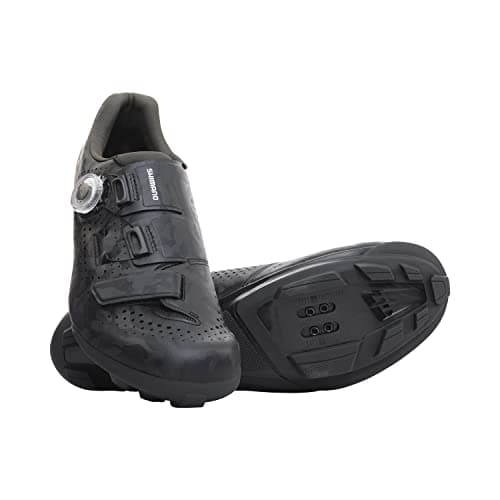
Shimano SH-RX600

Shimano SH-RX600
$190.00 · View on Amazon

Price as of Jul 21, 2026. #ad

Best for: Long gravel and adventure rides where the sole is the limiting factor

The only sole on this page its maker calls carbon-reinforced, with a Boa dial, aimed at gravel days long enough for sole flex to become the thing that hurts.

  • SPD gravel shoe (Shimano)
  • L6 BOA dial closure system (Shimano)
  • Stiff carbon reinforced outsole (Shimano)
  • Sizes EU 40 (M7) to 50 (M14) (Shimano)
  • Claimed weight: not published
  • Listing we price: black, US 10 / EU 44, wide

Shimano publishes that this shoe has a stiff carbon reinforced outsole and an L6 Boa dial. Carbon-reinforced is not the same as full carbon and Shimano does not claim it is, but it is the only sole-material claim on this page that reaches past nylon and glass fiber. The thing worth knowing is what the stiffness buys: it is not speed you can measure, it is the absence of a hotspot under the ball of your foot in hour four. That is a real benefit and it is also a benefit with a duration threshold, which is why this shoe sits fifth rather than first.

Good

  • Carbon-reinforced outsole, published as such by Shimano — no other shoe here makes that claim
  • Two-bolt SPD, so it takes the same cleats as the Ranger and it still walks
  • Boa dial: adjustable mid-ride, which matters most on the long days this shoe is built for

Less good

  • The most expensive shoe on this page by a wide margin
  • Shimano's product page does not mention a wide fit, yet the specific listing we price is a wide size — check which variant you are actually ordering
  • No claimed weight and no stiffness index published, despite being the shoe sold on stiffness

Skip it if: Your gravel rides are an hour or two. Sole flex is a fatigue problem that shows up late — it is a four-hour complaint, not a forty-minute one — and on shorter rides you would be paying roughly double the Ranger for a difference you will not be out long enough to feel. Buy the Ranger and spend the rest on tires.

6

Tommaso Strada Elite Duale

Tommaso Strada Elite Duale
$119.99 · View on Amazon

Price as of Jul 21, 2026. #ad

Best for: One pair of shoes covering an indoor bike and a road bike

The only shoe here that takes Delta cleats, which is its entire reason for existing: it bridges an indoor studio bike and an outdoor road bike.

  • Compatible with Delta, SPD-SL and SPD cleats (Tommaso)
  • Dual quicklace closure system (Tommaso)
  • No-Flex fiberglass infused vented sole (Tommaso)
  • Vegan leather upper with over 500 perforations (Tommaso)
  • Claimed weight: not published
  • Cleats: sold as install-your-own on the listing we price

The indoor-bike problem is real and badly served. Most studio bikes ship with Delta-pattern pedals, most road shoes are drilled for SPD-SL or SPD, and the cross-compatibility is nobody's marketing priority. Tommaso publishes that the Strada Elite Duale is compatible with all cleat systems — Delta, SPD-SL, SPD . If you have a bike in the living room and a bike in the garage, that is the whole purchase decision, and this is the only shoe on this page that satisfies it.

Good

  • Takes Delta cleats — the pattern most indoor studio bikes ship with — as well as both outdoor standards
  • One shoe genuinely covers the indoor bike and the road bike, which no other shoe on this page can do
  • Tommaso publishes the upper, the sole construction and the cleat compatibility in plain terms

Less good

  • “No-Flex” is a brand adjective with no number behind it — nothing here is anchored to a stiffness figure
  • A lace system, however quick, cannot be adjusted with a dial's precision once you're moving
  • The listing we price is the install-your-own-cleats version, so budget for cleats in whichever pattern you need

Skip it if: You never ride indoors. This shoe's one distinguishing feature is a cleat pattern you would have no use for, and every other property of it is matched or beaten by something further up the page. Multi-standard compatibility is only worth paying for when you actually straddle two standards.

What actually decides this purchase

Choose the pedal system first, then the shoe. The bolt pattern is the only irreversible decision here and it is the one most people make by accident. Two-bolt if you will ever put a foot down on gravel, walk into a café, commute, or own one pair of shoes for everything. Three-bolt if you ride paved roads, your stops are planned, and you want the biggest cleat-to-sole contact patch. The full comparison is here, and it matters more than which of these six shoes you buy.

Measure your foot, do not order your street size. Heel to longest toe, in centimeters, standing, in the evening when your foot is at its largest. Then read the manufacturer's published size chart. Cycling shoe sizing is European, it is not consistent between brands, and a shoe that fits at the shop temperature can be a size too small at the end of a warm four-hour ride.

If your feet are wide, buy from the brand that publishes a wide range.Only one shoe on this page does. The usual workaround — size up — buys length you do not need while leaving the width unchanged, so the heel lifts and the forefoot still hurts. A published wide fitting is a genuine specification; “roomy toe box” is not.

Ignore every stiffness adjective on every listing. Stiff, No-Flex, race-grade — none of these are anchored to a number by anyone selling them. What stiffness genuinely does is delay a hotspot under the ball of your foot on long rides, which means it is worth paying for in proportion to how long your rides are, and nearly worthless if they are short.

Budget for cleats, and use them to fix knee pain rather than buying new shoes. Cleats are a separate purchase on every shoe here. They are also where float lives, and float is what decides whether your knees are comfortable. Cleats cost a fraction of shoes, so if something hurts, change the cheap part first. If the discomfort is in your sit bones rather than your feet, that is a different system entirely — start with the saddle.

Common questions

Do I actually need cycling shoes?

No. Plenty of people ride a long way in trainers on flat pedals and enjoy it. What clipless shoes give you is a foot that stays exactly where you put it, a stiff platform that stops the pedal pressing into your arch, and the ability to pull as well as push at the point in the stroke where it helps. Those are real, and none of them is a prerequisite for cycling. If you are riding under an hour at a time on flat pedals and nothing hurts, there is no problem here for a shoe to solve.

Two-bolt or three-bolt for a first pair of shoes?

Two-bolt, for most people, most of the time. The cleat recesses into the sole so you can walk normally, it is the standard on gravel and commuting shoes, and it is far more forgiving of the stops that real rides contain. Three-bolt is the road standard and gives a bigger cleat and a bigger contact patch, at the cost of walking like you are on stilts. The exception on this page is the top pick, whose sole is drilled for both — which is exactly why it is the top pick for a first pair.

Are carbon soles worth the money?

Sometimes, and the honest test is duration rather than speed. A stiffer sole spreads pedal load across more of your foot and delays the hotspot that shows up under the ball of the foot on long rides. That is a fatigue benefit at hour three or four; on a commute it is close to undetectable. Note also that exactly one shoe on this page is described by its maker as carbon-reinforced, and even that is not full carbon — nobody here publishes a number you could use to compare, so buy on ride length, not on the word.

Can I use these on a Peloton or a studio bike?

Only one of them without modification. Most studio bikes ship with Delta-pattern pedals, and Tommaso publishes that the Strada Elite Duale takes Delta as well as SPD-SL and SPD — it is on this page specifically because it bridges an indoor bike and an outdoor one. For the others you would be changing the pedals on the indoor bike to match the shoe, which is a perfectly normal thing to do and is often cheaper than a second pair of shoes.

Why are the prices different for different sizes of the same shoe?

Because footwear is listed one item per size and color, so each variant carries its own price and its own stock. The price you see beside each shoe here is the live price of the specific variant that resolved, refreshed from the retailer's API rather than typed in by us. It is a reliable guide to what the category costs and an unreliable guide to what your size costs. Click through, choose your size, and read the price on the page you land on.

Why don't you rank these on sole stiffness like everyone else?

Because the data does not exist publicly. We read all six manufacturer product pages and none publishes a stiffness index for these models — the vocabulary runs to “stiff”, “carbon reinforced” and “No-Flex”, which are three different brands' adjectives for an unmeasured quantity. A stiffness ranking would therefore be six numbers we made up and presented as measurement. We would rather rank on bolt pattern, closure and published fit range, all of which you can verify yourself before you spend anything.

Sources

We haven’t ridden or tested any of the products on this page, and we don’t pretend otherwise. Read how we research — or tell us we’re wrong and we’ll log the correction.