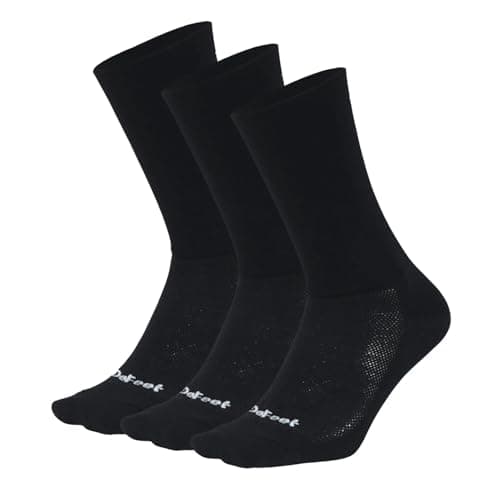
Cycling socks are the one garment in this sport with a published maximum height — and, oddly, the one whose listings most often refuse to publish a height at all. The UCI’s clothing regulations cap how far a sock may rise up the leg in competition, measured from anatomy rather than fashion: the limit sits at the midpoint between the ankle bone and the top of the calf bone, which lands somewhere around mid-shin on most riders.
Two honest notes on that rule. It applies to racing, not to you on a Sunday. And we could not read the primary text: the UCI’s own PDF of Part I redirects in a loop between its live and archive domains, so what we can tell you is the substance of the clause from the UCI’s regulations index rather than a verbatim quotation we have verified. What matters for buying is the side-effect: because height is regulated at the top of the sport, sock makers who take cycling seriously publish it, usually in inches, right in the product name.
Height is the specification, and it is in the name
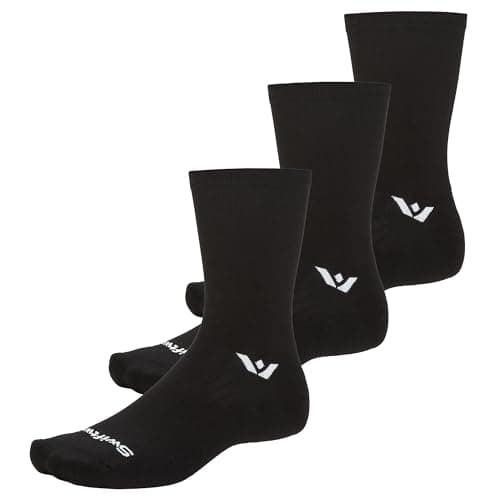
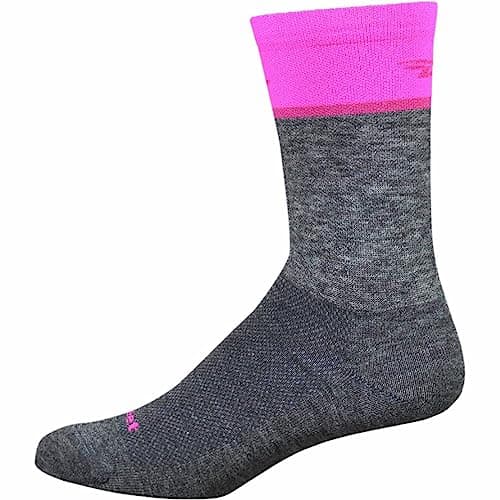
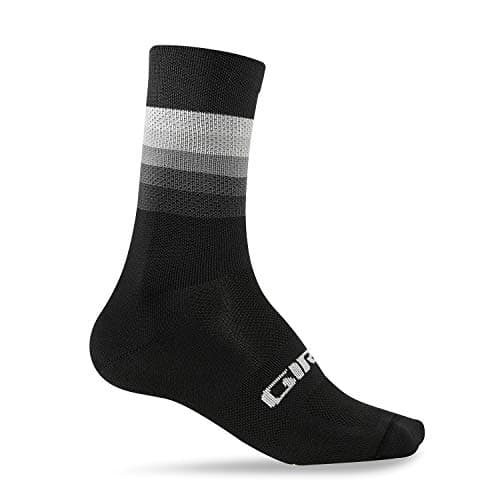
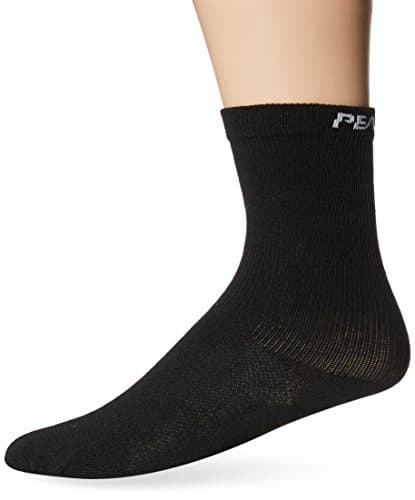
Read the listings above and you can see the convention. DeFeet’s Aireator and Wooleator Pro are listed as 6″ socks. Swiftwick’s Aspire Sevenis named for a seven-inch cuff. Giro’s Comp Racer says “high rise” and leaves it there. Pearl Izumi’s says “Tall” and does the same — a direction, not a dimension. Three of five publish a number or a name that encodes one, which is a better hit rate than any other kit category on this site — and it means you can shop for a specific sock line rather than hoping.
For reference: a 5–6 inch cuff sits just above the ankle bone and reads as a normal modern road sock. Seven to eight inches is the tall look that has dominated racing for a decade. Below about four inches you are into ankle socks, which will disappear into a cycling shoe and rub.
Material decides comfort more than thickness does
There are three fiber families in this category, and the difference is what happens when the sock gets wet.
- Synthetic (nylon/polyester, often as a mesh knit).Dries fastest, breathes best in heat, cheapest to replace. The default summer sock, and what the Aireator’s “mesh weave” describes.
- Merino wool blends.Wool keeps insulating when damp and resists odor over multi-day trips; blended with a synthetic (Repreve, in the Wooleator’s case) it gains the abrasion resistance pure merino lacks. The cold-and-wet answer.
- Cotton. Do not. It holds water, goes cold and stays cold, and is the same failure mode our cold-weather layering guide describes in detail for base layers. A cotton sock in a wet shoe is how a two-hour ride becomes miserable.
The sock is part of your shoe fit
This is the part riders discover the expensive way. Cycling shoes are fitted closely and, unlike running shoes, are not designed with much give; changing sock thickness mid-season can make a well-fitting shoe tight enough to cause numbness across the top of the foot, or loose enough to let the heel lift. If you are buying shoes and socks at the same time, buy the socks you will actually ride in and try the shoes with them — our cycling shoe roundup covers closure systems and published fit ranges, and road versus gravel shoes covers the sole and cleat differences.
A related and under-appreciated point: a thicker winter sock inside an unchanged summer shoe can restrict circulation enough to make your feet colder. Warmth in a cycling shoe comes from blood flow and windproofing, not from padding, which is why overshoes exist and why the answer to cold feet is rarely a thicker sock.
Seams, heels and how long a sock lasts
Cycling socks fail in two places: the heel and the toe seam. A flat or hand-linked toe seam matters more in a stiff-soled shoe than in a trainer, because your toes sit closer to the material and cannot escape a ridge. Heel wear is a function of fiber — pure merino goes first, which is why every serious wool sock in this category is a blend.
The other longevity variable is the wash. Socks are the item most often thrown in on a hot cycle with softener, and both wreck elastic. Cold, gentle, no softener, air-dry, exactly as described in our guide to washing cycling kit. A sock that has lost its cuff elasticity does not stay up, and a sock that does not stay up will annoy you into buying another one.
What we could not check
We have not worn any of these socks, measured a cuff, or tested a compression claim — there is no lab here. What is on this page is the specification each seller publishes, read on 18 August 2026, plus a ranking built on those specifications. Where the listing publishes nothing — and one of these five publishes neither a height nor a material — the table below says so, and the pick says so, rather than inventing a description.