Almost every road pedal comparison ranks on weight, and almost none of the makers publish one. Of the eight pedals here, exactly three carry a manufacturer’s weight figure, and the three are not measured the same way. That is the state of published data in this category, and it means a weight ranking would be mostly invention.
There is a better axis, and it is the one that actually decides whether you are still riding these pedals in three years: float. Float is how far your foot can rotate while clipped in, and it is the difference between a knee that tolerates ten thousand pedal strokes an hour and one that does not. Every maker on this page publishes a float figure. What almost nobody explains is that the figure belongs to the cleat, not the pedal — so the real question is not “how much float does this pedal have” but “how cheaply can I change it when the first setting is wrong”.
Four systems, and what each one publishes
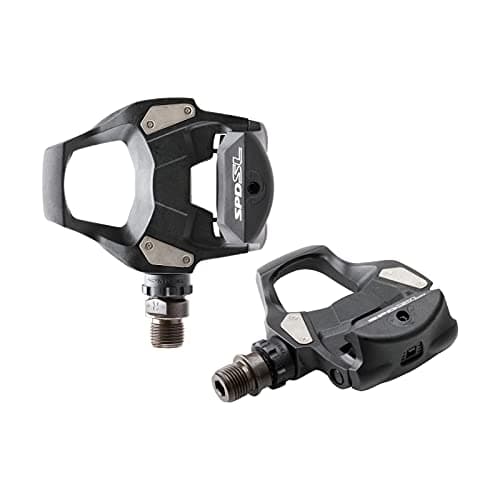
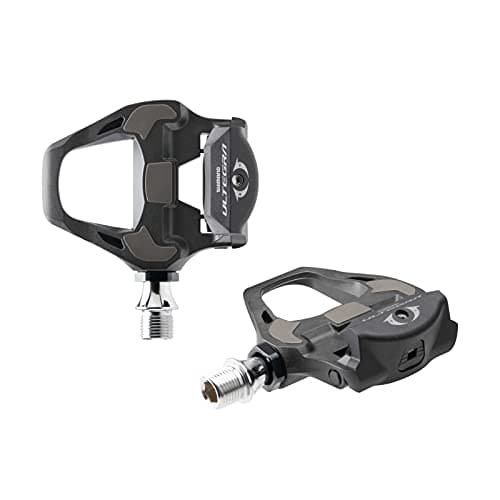
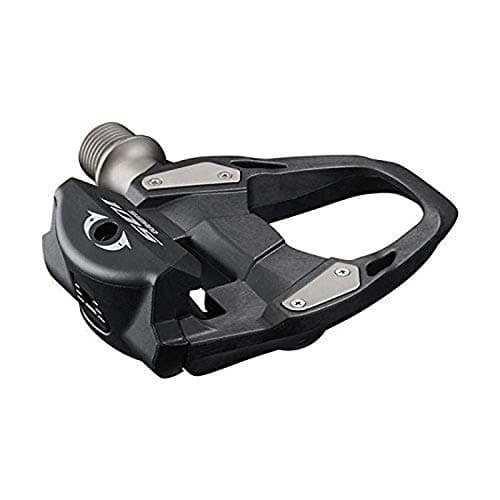
Shimano SPD-SL (three-bolt). Shimano publishes three cleats and says who each is for. The SM-SH11 is yellow, has a “six-degree float range (three degrees in each direction)” and pivots at the center of the cleat; Shimano names it for riders “new to cycling, experiencing knee pain, lack flexibility”. The SM-SH12 is blue, with “two degrees of float (one degree in each direction)” and a pivot at the frontof the cleat, which changes where the movement happens rather than just how much of it there is. The SM-SH10 is red and has “0 Degrees of Float”, described as “100% fixed in position” and “optimal for sprinters, professional athletes”. Every SPD-SL pedal on this page ships with the SM-SH11.
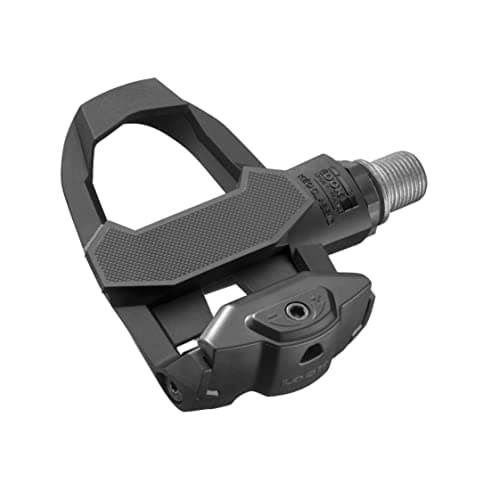
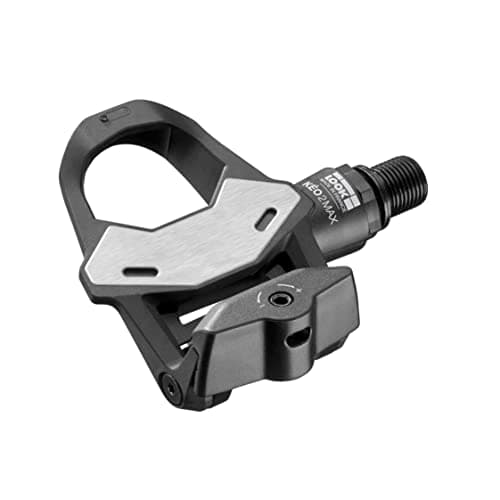
LOOK Keo (three-bolt). LOOK publishes its KEO GRIP cleat in “0° / 4.5° / 9° (black, grey or red)”, with 4 mm of lateral and 9 mm of longitudinal adjustment and a published 60 g for the pair with fastenings. That 4.5° middle option sits in the gap between Shimano’s 2° and 6°, which is a real reason to pick Keo if you have found both Shimano settings wrong. LOOK does not publish which of the three ships with either pedal.
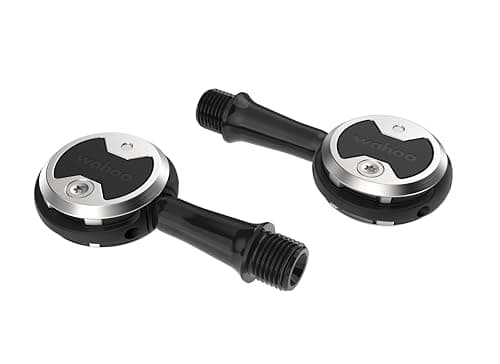
Speedplay (four-bolt, three-bolt adapter). Wahoo publishes float as “Adjustable from 0° to 15°” and, separately, release angle as “Micro Adjustable from 0° to 7.5°”. Those are two independent settings on one cleat, which no other system here offers at any price. Wahoo also publishes what nobody else does: a Q factor of 53 mm, a cornering clearance of 39°, and two stack heights depending on whether your shoe is drilled three holes or four.
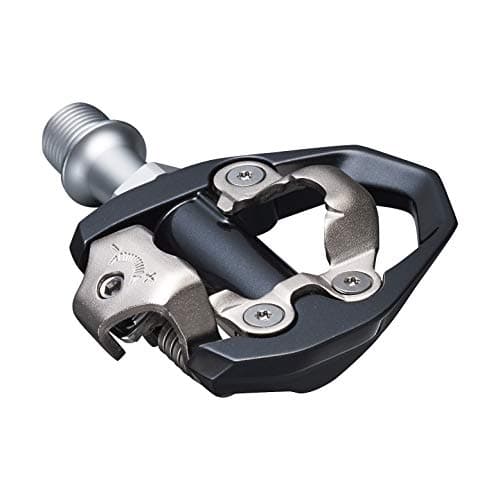
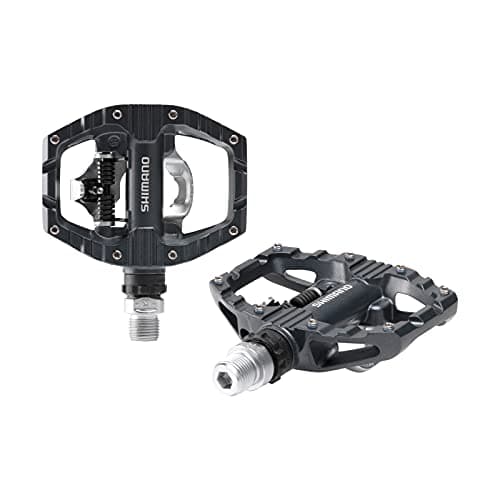
Shimano SPD (two-bolt).The mountain-bike standard, on road pedals. Shimano publishes “4 degrees of float” and a “13-degree clip-out angle” for both the single-release SM-SH51 and the multi-release SM-SH56. There is no float choice at all — what you choose instead is the release behavior. The trade you are making is float options for the ability to walk, because an SPD cleat is recessed into the sole.
What changing your mind costs
This is the number nobody puts in a comparison table, and it is the one that separates the systems. In SPD-SL and Keo, changing float means buying a cleat — the cheapest item on any of these pages, available in three published angles, and a five-minute job with a hex key. In Speedplay, changing float means turning a screw, which is better still. Leaving Speedplay, however, means new cleats and possibly new shoes, because the four-bolt pattern is its own.
So the honest ranking is not “which pedal is best”. It is: how much fit can this system give you, how much of it is published before you spend, and what does it cost to get it wrong the first time. On that basis SPD-SL wins on cost and availability, Speedplay wins on precision, Keo wins on how much of the pedal’s own geometry is published, and SPD wins the moment you have to walk anywhere.
Stack height and stance, published by two makers out of three
Stack heightis the distance from the pedal axle to the sole of your shoe. It sets your effective saddle height, which is why it matters if you are switching systems on a bike you have already had fitted. LOOK publishes it for both its pedals — 17.8 mm for the Keo Classic 3 as 11.5 mm of pedal plus 6.3 mm of cleat, and 17.3 mm for the Keo 2 Max. Wahoo publishes 11.5 mm on a three-hole shoe and 8.5 mm on a four-hole one. Shimano publishes no stack height for any road pedal on this page.
Stance— how far apart your feet sit, usually discussed as Q factor — is published even less often. Wahoo states 53 mm. Shimano publishes an axle length instead, offering the Ultegra PD-R8000 in a standard 52 mm or a version 4 mm longer. Nobody else here publishes anything. If a bike fitter has told you your stance needs changing, those two products are the only ones on this page that can act on it.
The weights are published and still not comparable
Three of these publish a weight, and the three are measured differently. LOOK gives 350 g for the Keo Classic 3 and 328 g for the Keo 2 Max, explicitly as the pair including cleats. Wahoo gives 232 g per pair. Shimano gives 248 g per pair for the Ultegra PD-R8000 and 279 g a pair for the PD-ES600, without stating whether cleats are in that figure. A cleat set is not a rounding error at these weights, so sorting those five numbers into a league table would produce an order that means nothing. We have printed each figure with its source and left them unsorted.
Why five of the eight are Shimano
Because Shimano makes SPD-SL and SPD, both of those standards need a beginner option and an upgrade option, and no other manufacturer covers the same span on Amazon at prices worth writing about. It is a real concentration and it is worth naming rather than disguising. The consequence for you as a reader is a fitting question, not a brand one: three of the eight are SPD-SL and take the same cleat, two more are Keo and bolt to the same three-hole shoe with a different cleat, two are SPD on a two-hole sole, and one is Speedplay’s own four-hole pattern. If you already own three-bolt road shoes, five of these eight are open to you and three are not.
What that concentration also means is that this page is not a fair contest between brands. It is a map of what is currently buyable, which is a smaller and less exciting set than the category as a whole.
What we cannot tell you
Nobody publishes a stiffness figure, a bearing life, an engagement force or a power-transfer measurement for any pedal on this page, so the usual claims — stiffer, more efficient, better power transfer — have no numbers under them from any of these makers, and none from us either. We have not ridden any of these pedals. Every figure above is a manufacturer’s own published claim, attributed by name, or a quote from the live Amazon listing marked “Listing:”, all read on 10 September 2026. How we research sets out the rest of the method, including why there are no scores on this site.