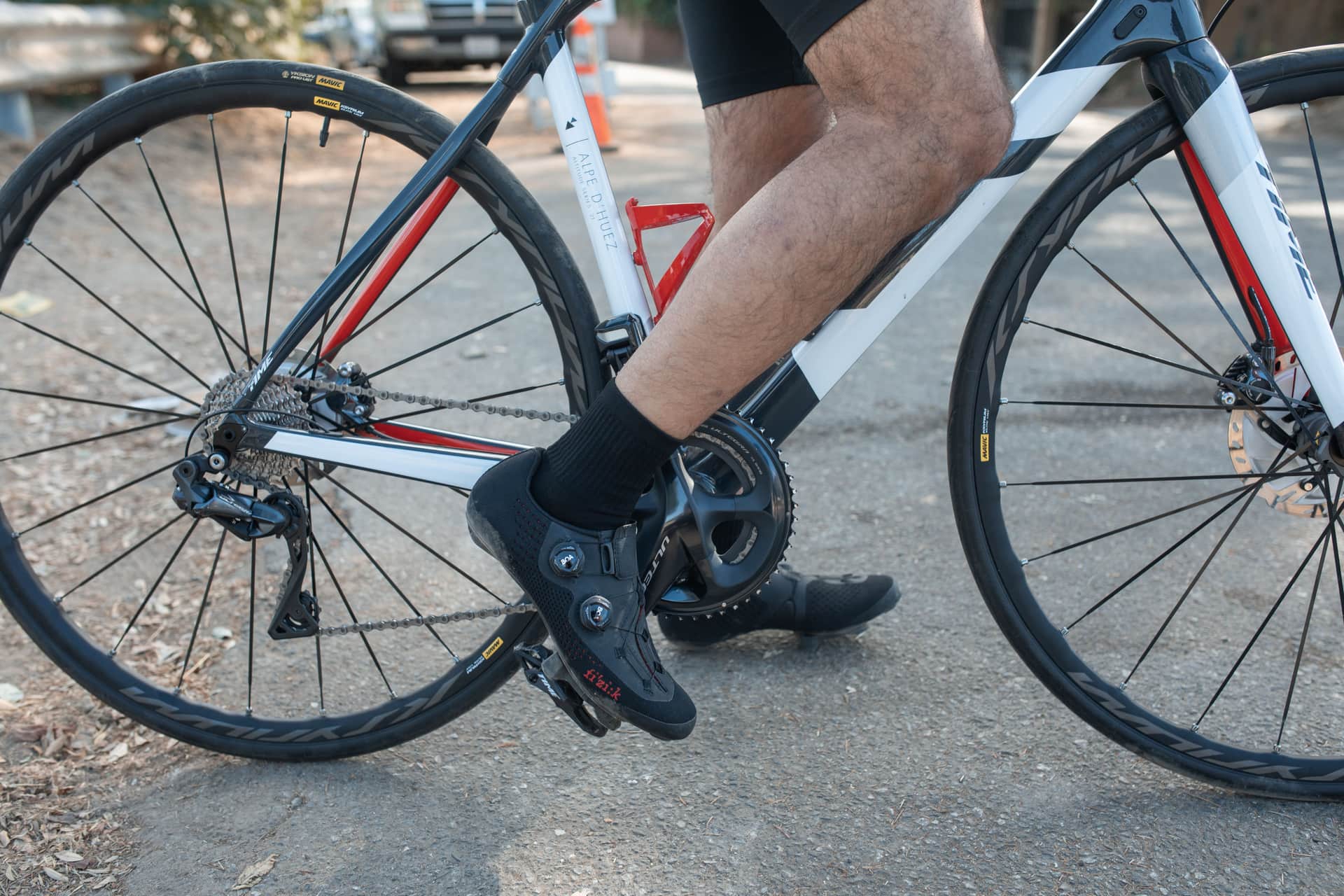
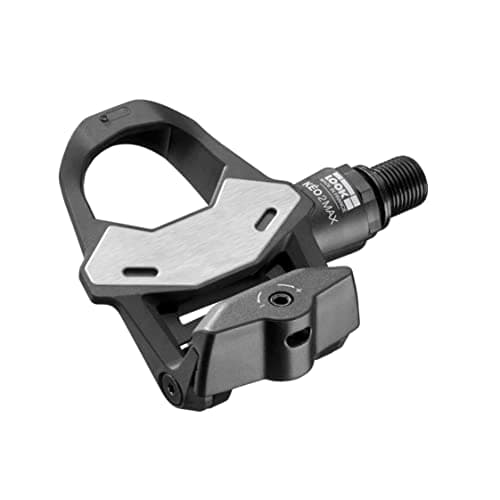
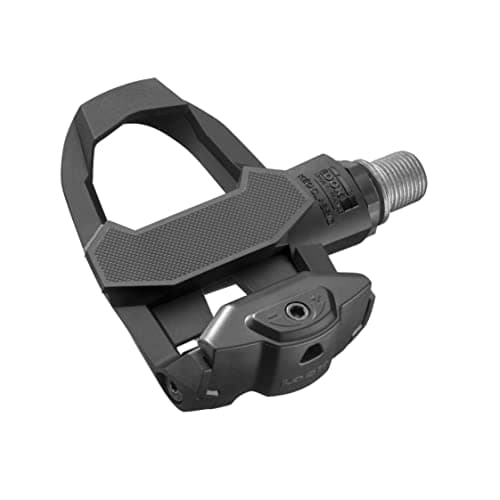
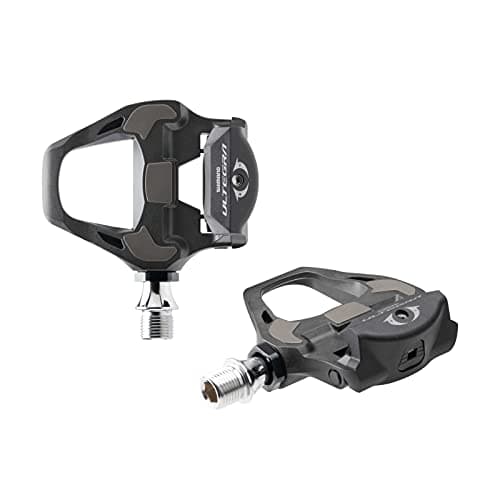
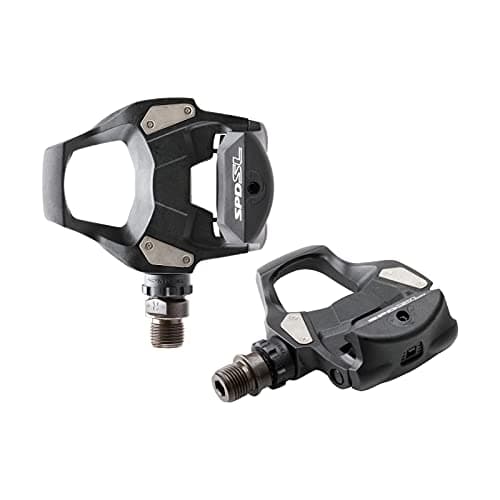
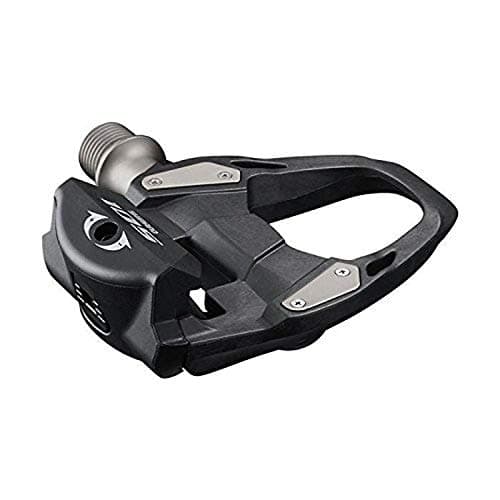
Pick Shimano SPD-SL if you want the cleat documented before you buy, and LOOK Keo if you want the pedal’s geometry documented before you buy. Neither maker gives you both.For most riders, and especially a first road pedal, the Shimano 105 PD-R7000 is the better purchase — not because it is a better pedal, which we have no way of knowing, but because Shimano publishes which cleat is in the box, what its float is, what its clip-out angle is, and what the two alternatives are if the one you got is wrong.
The two systems use the same three-bolt shoe pattern, and their cleats are not interchangeable. That is the whole commitment: you are not buying a pedal, you are buying a consumable you will keep rebuying for as long as you keep those shoes. Our pedal roundup ranks eight pedals across four systems on exactly this; this page is the head-to-head between the two that matter on a road bike.
The float numbers, which is what most people mean by the question
Both systems publish three float angles, and the ranges are genuinely different:
SPD-SL:0°, 2° and 6°. The 6° cleat (SM-SH11) is the one in every box on this page, and Shimano publishes its pivot as centered and its clip-out angle as 13°.
KEO GRIP:0°, 4.5° and 9°. LOOK publishes the family in the box (KEO GRIP) but not which of the three angles it is.
Two useful consequences. First, Keo’s middle option at 4.5° lands between Shimano’s 2° and 6°, which is a real gap in Shimano’s range — if 6° feels vague under load and 2° feels locked, there is no Shimano cleat in between and there is a Keo one. Second, Keo’s 9° exceeds anything SPD-SL offers, which matters to riders whose knees want the rotation.
And one caution we have made elsewhere and will repeat: float is not the same thing as release. Float is how far your foot rotates while clipped in; release is how far it has to go before the pedal lets go. Shimano publishes both for the SM-SH11 (6° and 13°); LOOK publishes a spring tension range (8 to 12) rather than a release angle. The only system on our roundup that lets you set the two independently is Speedplay, which is a different purchase with a different trade.
What Keo publishes that SPD-SL does not
Geometry, and it is not a small list: contact area in mm², platform width in mm, stack height broken into pedal and cleat, pair weight including cleats, and a spring tension range. For the Keo 2 Max that is 500 mm², 60 mm, 17.3 mm (11 + 6.3), 328 g and 8–12.
Shimano publishes no stack height for any SPD-SL pedal on this site, no contact area for any of them, and no weight below Ultegra. So a sentence like “the Keo has a lower stack than the 105” cannot be written from published data in either direction — and you will find it written confidently all over the internet. We are not going to add to that. What we can say is that one maker gives you the numbers and the other does not, and if stack height matters to your fit, only one of these systems lets you check it.
What SPD-SL publishes that Keo does not
The cleat you are actually getting. Every Shimano pedal on this page states SM-SH11 in the box, and Shimano publishes that cleat’s float, its direction of float, its pivot position and its clip-out angle. It also publishes the two alternatives by part number.
Shimano additionally publishes an axle length choice on the Ultegra pedal — standard 52 mm or 4 mm longer — which is the one fit variable on this page that no amount of float will fix. If your knees track inside your feet, a longer axle is the adjustment, and LOOK offers no equivalent in the pedals we list.
There is also the unglamorous point that decides this for a lot of riders: SPD-SL cleats are on more shop walls in the US than Keo cleats are. On a part that wears and has to be replaced mid-season, availability is a specification.
What this page refuses to tell you
Which one feels better. Neither maker publishes a stiffness figure, a power-transfer figure or a durability figure, nobody independent tests road pedals at scale, and we have not ridden any of them — see how we research. Every “Keo feels more connected” and “SPD-SL has a more positive engagement” sentence you have read is somebody’s impression, and most of them were written by someone who owns one and not the other.
What is checkable is the list above, plus the two consequences that actually cost money: the cleat you will keep buying, and whether you can get it locally.
The honest summary
First road pedals, or no strong view on float: Shimano, because the cleat is documented and revisable. Coming from SPD mountain pedals and wanting more float than 6°: LOOK, because 9° exists there and does not exist in SPD-SL. Fitting a bike where stack height is part of the calculation: LOOK, because it is the only one of the two that publishes it. Already invested in one system’s cleats: stay, because the shoes are compatible and the cleats are not, and nothing on this page is worth the switching cost.
If you have not yet decided between road and mountain pedals at all, that is the prior question and it is answered separately in SPD versus SPD-SL. If you have the pedals and the shoes and now need the cleats in the right place, cleat setup is the page that matters more than this one.