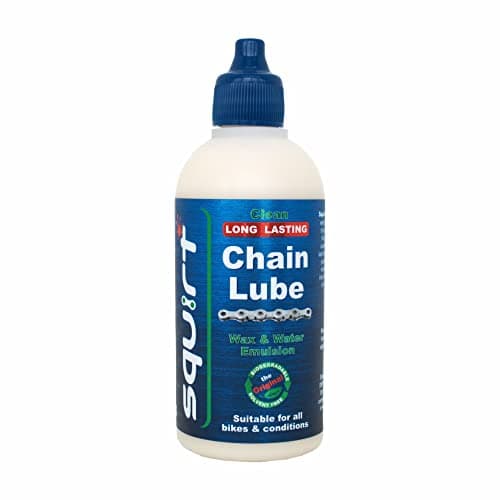
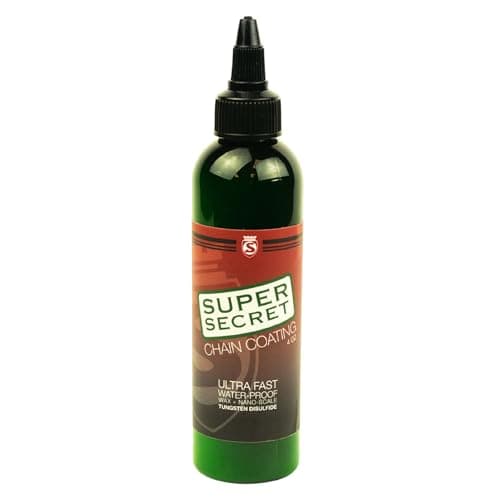
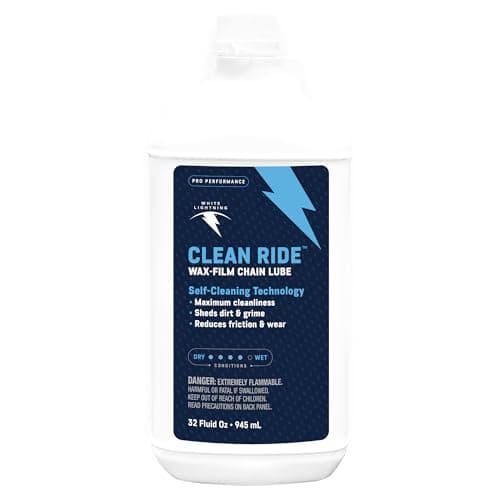
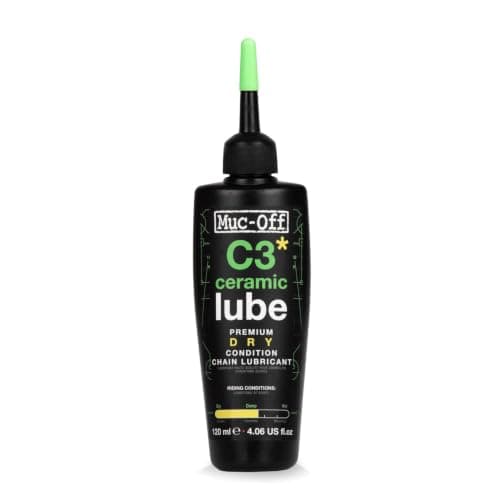
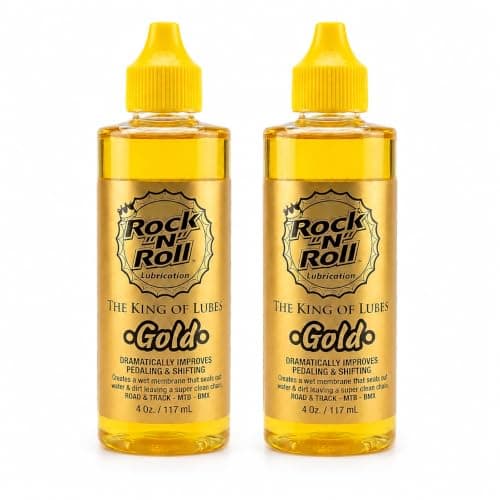
There is no such thing as e-bike chain lube. No maker on this page sells one, and any page that tells you otherwise is inventing a category. What is real is that an e-bike drivetrain is loaded differently from a pedal bike’s, and that the honest response to that is a maintenance interval, not a magic bottle.
We have not ridden any of these, we have not measured chain wear on an e-bike, and nobody publishes a wear rate for one. What we can do is show you the one published fact that proves the industry treats e-bike drivetrains as a different problem, explain what it means for your chain, and then price the lubricants honestly with the live arithmetic this site runs on every other lube page.
The published fact: Shimano builds e-bike-specific chains
Shimano’s own general chain specification list — read 18 September 2026 — contains chains that exist only for electric bikes: the CN-E8000-11, the CN-E6090-10 and the CN-E6070-9, alongside the LINKGLIDE CN-LG500. Those are not marketing variants of road chains; they sit in the lineup as their own models.
That is as close as this industry comes to publishing the thing everyone wants to know. A company that manufactures both road chains and e-bike chains has decided the two applications are different enough to need different products. The mechanism is not mysterious: on a mid-drive e-bike the motor’s torque is applied at the crank and travels through the same chain and cassette your legs use, so the drivetrain sees loads no unassisted rider produces. Our hub vs mid-drive comparison sets out which motor layout does that and which does not.
What we will not do is turn that into a number. We have seen no published figure for how much faster an e-bike chain wears, from Shimano or anyone else, and inventing one would be exactly the fabrication this site exists to avoid.
Hub motor or mid-drive changes the answer
This is the single most useful distinction on the page, and almost nobody makes it. A hub motor drives the wheel directly. Its torque never touches the chain, so the drivetrain on a hub-drive e-bike is loaded exactly like a normal bike’s — just ridden further, faster and in worse weather, because that is what e-bikes get used for.
A mid-drive motor drives the crank. Everything it produces goes through the chain, the cassette and the chainring. If your e-bike has a motor in the middle of the frame rather than in a wheel hub, this is the page’s advice in full: shorten the interval, check wear more often, and keep a chain checker on the bench.
Mileage is the real difference for most riders
Whatever the motor layout, the honest headline is that e-bikes get ridden. A bike that replaces car trips does winter, rain, dark and grit, and it does them every week rather than on selected Sundays. That alone will wear a chain faster than the same chain on a road bike that comes out when the weather is good.
Which is why the ranking above is not a ranking of chemistry. It is a ranking of what is most likely to get applied often enough: a combined cleaner and lubricant at the top, low-contamination wax emulsions in the middle, a 32 oz jug for riders whose problem is running out, and a tracer dye for riders whose problem is missing half the chain.
Measure the chain, do not guess it
The number that matters is elongation, and it is cheap to read. Park Tool publishes the standard thresholds and the reason they exist: a worn chain can cause excessive wear to the rear cogs, turning a cheap replacement into an expensive one. That arithmetic gets worse on an e-bike, because e-bike cassettes and chainrings are not cheaper than anyone else’s.
Our chain wear guide works through the 0.5% and 0.75% thresholds and how to use a go/no-go checker without fooling yourself. On a mid-drive e-bike, check at half the interval you would use on a pedal bike until you know your own numbers — that is a procedure, not a claim about your wear rate.
Where the friction data in this category comes from
Almost every chain lube recommendation you will read online traces back to Zero Friction Cycling, which runs the only substantial independent lubricant wear testing in cycling. It is good work and we cite it. It is also worth knowing, and almost never disclosed, that ZFC retails chains and lubricants. None of its testing covers e-bike drivetrains specifically, so no figure from it can be transferred to this page as though it did.
What this page does not answer
How many miles an e-bike chain lasts. How much faster it wears than an unassisted one. Which lube reduces e-bike drivetrain wear most. Every one of those would require test data that does not exist publicly, and we are not going to produce it by confident writing. For the full cost breakdown of running an electric bike, including the parts that are computable, see what an e-bike costs to run.