Skip to content
ChainringClub

The Best E-Bike Conversion Kits

Four kits, compared on published wattage, fitment and what actually ships in the box — including the one that puts your converted bike outside the federal definition of a bicycle.

A bicycle cassette and chain on a converted bike, close up.
By Stephen V.Published August 18, 2026How we research

Heads up: we earn a commission if you buy through the links on this page, at no extra cost to you. It never decides what makes the list — here’s how that works.

Quick picks

Tap any row for the full write-up. Specs are the manufacturer's own published claims, read on 18 August 2026.

#ProductBest forPrice
1
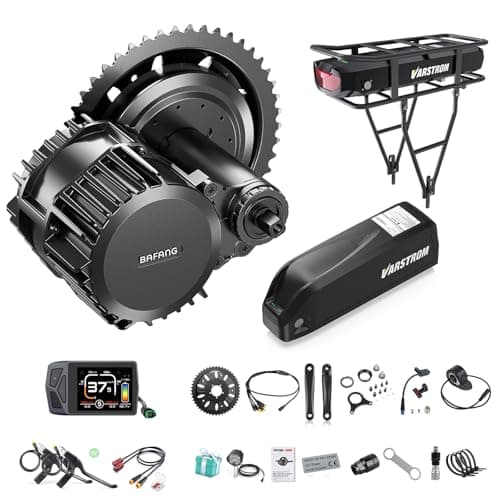
Bafang BBS02B Mid-Drive Kit

Bafang BBS02B Mid-Drive Kit

The mid-drive standard: it drives the chain, so it climbs like a bike with strong legs rather than a scooter.

Top pick
A proper conversion you will still like in three years
2
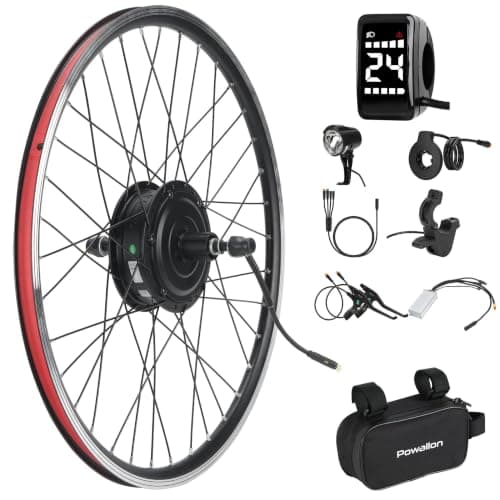
Bafang Hub Motor Conversion Kit

Bafang Hub Motor Conversion Kit

The simple one: a motor built into a wheel, and your drivetrain never knows.

The straightforward conversion
3
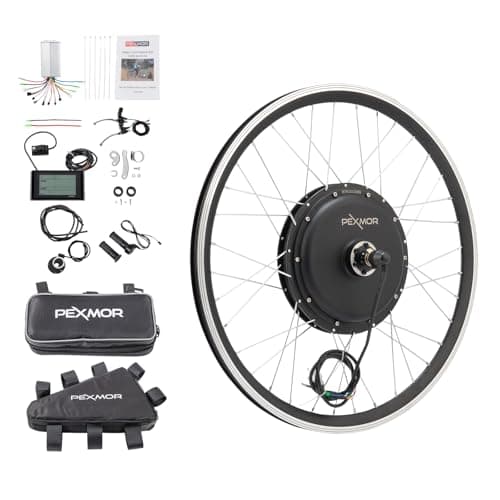
PEXMOR Electric Bike Conversion Kit

PEXMOR Electric Bike Conversion Kit

The cheapest way in: a front wheel, a controller and a display, with the caveats that implies.

Trying the idea without spending much
4
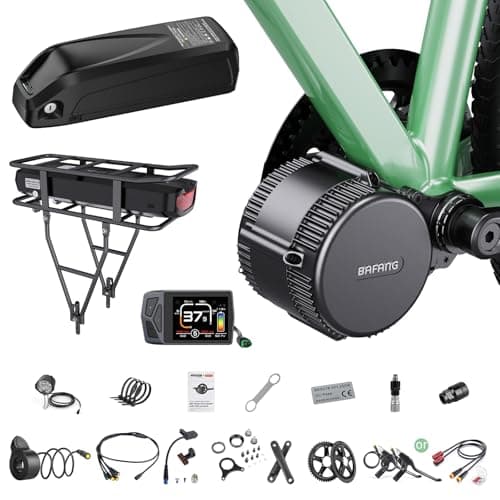
Bafang BBSHD Mid-Drive Kit

Bafang BBSHD Mid-Drive Kit

The skip for road-legal use: 1000W of mid-drive, which is more motor than a bicycle is federally allowed.

Private land, cargo hauling, off-road use

Two facts decide this purchase, and neither is on most listings. The first is legal: federal law defines a low-speed electric bicycle as having fully operable pedals and “an electric motor of less than 750 watts”, with a top motor-only speed under 20 mph for a 170 lb rider. Kits are routinely sold at 1000W. A 1000W conversion is a capable machine and it is not, federally, a bicycle.

The second is commercial: most conversion kits do not include a battery, and the battery is typically the single most expensive component in an e-bike. A kit price that looks like a bargain against a complete e-bike is usually comparing a motor to a whole vehicle. Budget the battery in before you decide.

Mid-drive or hub: the one decision that changes the bike

A mid-drivereplaces the bottom bracket and drives the chain, so its torque passes through your gears — on a steep climb it can use a low gear exactly as your legs do. That is why mid-drives climb better, and why they wear chains and cassettes faster. A hub motor drives the wheel directly at a fixed reduction. It is simpler, cheaper, leaves the drivetrain alone, and cannot gear down for a climb.

Our hub versus mid-drive comparison works through the mechanics properly. For a conversion specifically, the shorthand is: hilly terrain or heavy loads point to mid-drive; flat commuting and a simple install point to a hub.

Fitment, which is where conversions actually fail

Every kit on this page has a hard compatibility requirement, and getting one wrong means a return rather than a workaround:

  • Bottom bracket shell (mid-drives). Width and type. The BBSHD listing publishes 68/100/120 mm compatibility; threaded shells are straightforward, press-fit and oversized designs frequently are not.
  • Wheel size (hub kits).The motor is built into a specific wheel. The kits here are listed for 26″ and 20″ wheels respectively. Your tire size has to match the rim you are buying.
  • Dropout spacing and material. Rear hubs need the right axle spacing; aluminum dropouts and forks need torque arms because they are not designed to resist motor torque.
  • Brakes.Motor cut-off levers or sensors are part of most kits, and a converted bike is heavier and faster — rim brakes on a converted hybrid deserve a hard look.
  • Frame material. Steel and aluminum, yes. Carbon frames and forks are not designed for clamped motor torque or the point loads a hub axle applies.

The battery is the project

A kit gives you a motor, a controller, a display and usually a pedal-assist sensor. The battery is separate, and it is where both the money and the risk are. Capacity in watt-hours decides range far more than motor wattage does — our battery and range explainer shows the arithmetic, and how far can an e-bike go puts real numbers on it.

Buy the battery as carefully as the motor. Charging and storage practice matters for any lithium pack — see how to charge and store an e-bike battery — and a cheap pack of unknown cell provenance is the wrong place to save money on a device that lives in your house.

The legal picture, honestly

We have read and quoted the federal definition and California’s model three-class statute. We have notread fifty state codes, and we are not going to summarize laws we have not opened — PeopleForBikes maintains a state-by-state directory that is the right next click. What holds nationally is the shape of it: 750W and 20 mph are the numbers the framework is built on, most states adopt the three-class system, and a conversion that exceeds those thresholds is regulated as something other than a bicycle.

Our e-bike classes explainercovers the class system in full, including the throttle and assist-cutoff differences that a conversion kit’s controller quietly decides for you.

What we could not check

We have not installed any of these kits, measured their output, or verified a wattage claim. Everything above is the seller’s published listing text read on 18 August 2026, plus statutes we fetched and quoted. Motor wattage claims in this category are notoriously elastic — nominal versus peak is rarely specified — and where a listing quotes a figure, that is a claim by the seller and not a measurement by anyone.

Published power, fitment and the federal line

From the live Amazon listings, read 18 August 2026, checked against 15 U.S.C. § 2085, which defines a low-speed electric bicycle as having a motor of less than 750 watts.

KitDrive typeListed powerKey fitmentInside the federal 750W definition?
Bafang BBS02BMid-drive500 / 750 / 1000W optionsBottom bracket shellDepends on the option you pick
Bafang rear hub kitRear hub48V 500W26" wheel, dropout spacingYes
PEXMOR front wheel kitFront hub36V 750W20" wheel, fork strengthAt the ceiling, not below it
Bafang BBSHDMid-drive1000W68 / 100 / 120 mm BBNo

The statute says less than 750 watts, which is why the 750W row reads as it does. No kit listing on Amazon mentions this, and it is the single most consequential thing about the purchase.

The picks, in detail

1

Bafang BBS02B Mid-Drive Kit

Top pick
Bafang BBS02B Mid-Drive Kit
$379.99 · View on Amazon

Price as of Aug 31, 2026. #ad

Best for: A proper conversion you will still like in three years

The mid-drive standard: it drives the chain, so it climbs like a bike with strong legs rather than a scooter.

  • Listing: BBS02B mid-drive kit
  • Listing: 500W / 750W / 1000W options
  • Drives the chain through the existing gears
  • Requires a compatible bottom bracket shell

Pick the wattage deliberately. Federal law defines a low-speed electric bicycle as having “an electric motor of less than 750 watts” — so on this multi-option listing, the 500W and 750W choices keep you inside that definition and the 1000W does not. That is a legal distinction, not a performance one, and it decides where the finished bike may be ridden.

Good

  • A mid-drive uses your cassette, so it multiplies torque through the gears on climbs — the single biggest functional advantage in this category
  • Weight sits low and central, which barely changes how the bike handles
  • Bafang's BBS platform is the most widely documented conversion system in the world; parts and help are everywhere

Less good

  • Bottom bracket shell width and shape decide whether it fits at all — this is not a universal kit
  • Mid-drives put all their torque through your chain and cassette, which wear faster
  • Choose the wattage option carefully: the 1000W version takes the bike outside the federal bicycle definition

Skip it if: Your bike has a press-fit or oversized bottom bracket. Measure the shell before ordering — a mid-drive that will not clamp is a returned parcel, not a project.

2

Bafang Hub Motor Conversion Kit

Bafang Hub Motor Conversion Kit
$262.00 · View on Amazon

Price as of Aug 31, 2026. #ad

Best for: The straightforward conversion

The simple one: a motor built into a wheel, and your drivetrain never knows.

  • Listing: 48V 500W rear hub kit
  • Listing: for 26" bikes
  • Wheel-in motor, drivetrain untouched
  • 500W — inside the federal 750W limit

Good

  • Installation is largely a wheel swap plus wiring — far less intimidating than a mid-drive
  • Your chain, cassette and chainrings see no extra load at all
  • 500W keeps the finished bike within the federal low-speed electric bicycle definition

Less good

  • A hub motor has one gear ratio: it cannot multiply torque through your cassette on steep climbs
  • Wheel size on the listing is 26" — the wrong wheel size is the most common ordering error here
  • Rear hub kits need the right dropout spacing and a freewheel/cassette match

Skip it if: You live somewhere steep. A hub motor at fixed reduction is where hub-versus-mid-drive stops being theoretical, and our comparison covers exactly what changes.

3

PEXMOR Electric Bike Conversion Kit

PEXMOR Electric Bike Conversion Kit
$139.99 · View on Amazon

Price as of Aug 31, 2026. #ad

Best for: Trying the idea without spending much

The cheapest way in: a front wheel, a controller and a display, with the caveats that implies.

  • Listing: 20" front wheel kit
  • Listing: 36V 750W hub motor
  • Listing: 3-mode controller with PAS and LCD
  • Front-wheel installation

Good

  • By far the lowest entry price on this page
  • Front hub installation avoids the drivetrain entirely — no cassette, freewheel or chain-line questions
  • Includes the controller, PAS sensor and LCD display, so it is a complete system minus the battery

Less good

  • Front hub motors put drive torque into the fork, which makes a torque arm essential rather than optional
  • The listing is a 20" wheel — check your wheel size before anything else
  • 750W is at the federal ceiling, not below it: the statute says less than 750 watts

Skip it if: Your fork is carbon or lightweight aluminum. Front-drive torque on a fork not designed for it is the one failure mode in this category that hurts, and no bargain justifies it.

4

Bafang BBSHD Mid-Drive Kit

Bafang BBSHD Mid-Drive Kit
$647.88 · View on Amazon

Price as of Aug 31, 2026. #ad

Best for: Private land, cargo hauling, off-road use

The skip for road-legal use: 1000W of mid-drive, which is more motor than a bicycle is federally allowed.

  • Listing: BBSHD 1000W mid-drive
  • Listing: fits 68 / 100 / 120 mm bottom brackets
  • Heavy-duty mid-drive platform
  • Above the federal 750W definition

To be clear about what this is and is not: the BBSHD is a well-regarded, capable motor, and on private land or a cargo bike it makes sense. But the federal definition is unambiguous — less than750 watts — and the three-class state framework built on top of it (California’s Vehicle Code § 312.5 is the model statute) also uses 750W. A 1000W conversion is not a bicycle under those rules, whatever the listing calls it.

Good

  • Genuinely powerful — the platform of choice for cargo bikes and heavy loads
  • Published bottom bracket compatibility across three widths, which is more fitment information than most listings give
  • The same well-documented Bafang ecosystem as the top pick

Less good

  • At 1000W the finished bike does not meet the federal definition of a low-speed electric bicycle
  • That has downstream consequences for where it may be ridden and how it is treated legally
  • Most expensive kit here, and the heaviest

Skip it if: You intend to ride it on public bike paths and roads as a bicycle. This is the one product on this page whose problem is not the engineering — it is the statute.

What actually decides this purchase

Decide the legal envelope first. If the bike will be ridden on public roads and paths as a bicycle, choose a motor under 750W. Above that, the finished machine is not a low-speed electric bicycle federally, and the three-class state framework does not cover it.

Measure before you order. Bottom bracket shell width for a mid-drive; wheel size and dropout spacing for a hub. These are the two returns that dominate this category, and both take five minutes with a ruler to avoid.

Budget the battery separately. Most kits do not include one, and it is usually the biggest single cost. Watt-hours, not motor watts, decide your range.

Fit torque arms on any hub motor. Especially front hubs and aluminum dropouts. A motor twisting itself out of a dropout at speed is the serious failure mode in this category.

Look at the brakes before you finish. A converted bike is heavier and faster than the bike you started with. If it has rim brakes and you are adding 8 kg and 8 mph, that is now the weakest part of the system.

Common questions

Are e-bike conversion kits legal?

The kit is legal to buy; what matters is the finished bike. Federal law defines a low-speed electric bicycle as having fully operable pedals and an electric motor of less than 750 watts, with a motor-only top speed under 20 mph for a 170 lb rider. A 500W or 750W-class conversion is designed to sit inside that; a 1000W kit does not. Most states then apply the three-class framework on top — see PeopleForBikes for your own state.

Is a mid-drive or hub conversion kit better?

Mid-drive for hills and heavy loads, because the motor drives the chain and can use your gears; hub for simplicity and cost, because it is essentially a wheel swap and leaves your drivetrain untouched. The trade-off is real in both directions: mid-drives wear chains and cassettes faster, hubs cannot gear down for a climb.

Do conversion kits come with a battery?

Usually not, and it is the most common budgeting mistake in this category. A kit gives you the motor, controller, display and pedal-assist sensor; the battery is typically bought separately and is often the single most expensive component. Compare kit-plus-battery against a complete e-bike, not kit against e-bike.

Can I convert any bike?

Steel and aluminum frames in good condition, generally yes. Carbon frames and forks, no — they are not designed for the clamped or point loads a motor applies. Beyond material, the blockers are bottom bracket type for mid-drives, wheel size and dropout spacing for hubs, and brakes: a converted bike is heavier and faster than the one you started with.

Do I need a torque arm?

For any hub motor, treat it as required rather than optional — especially on a front wheel or with aluminum dropouts. A hub motor applies rotational force directly to the dropout, which is not what dropouts were designed to resist. It is a cheap part that prevents the one genuinely dangerous failure in a conversion.

Sources

We haven’t ridden or tested any of the products on this page, and we don’t pretend otherwise. Read how we research — or tell us we’re wrong and we’ll log the correction.