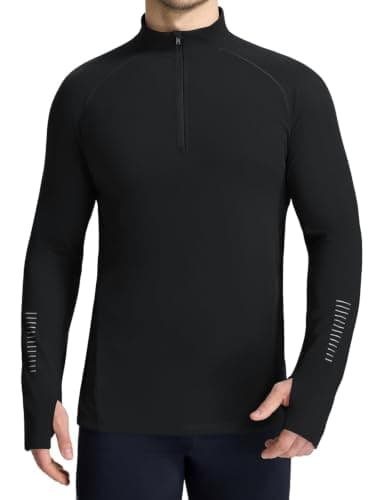
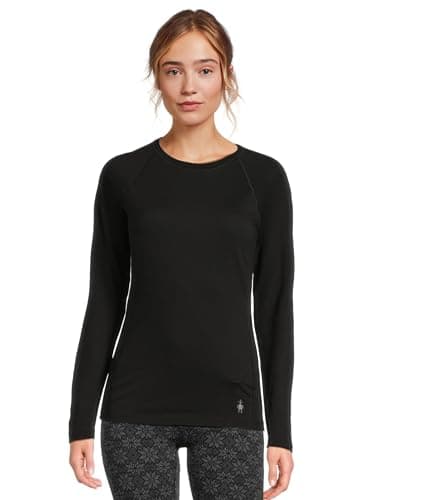
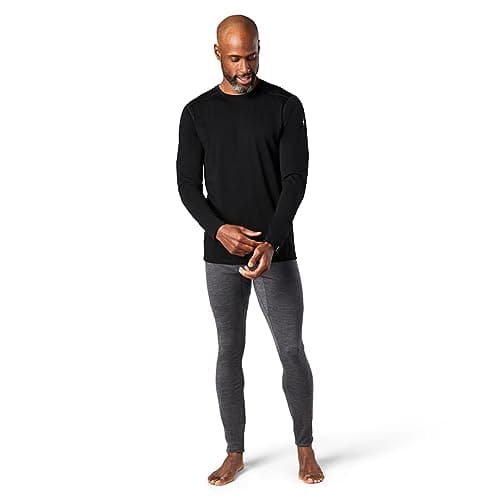
A base layer has one job: move sweat off your skin.Not insulate — that is the jersey and the jacket. Not block wind — that is the shell. If the layer against your skin holds moisture, every garment over it is working on a wet system, and that is why our cold weather layering guide treats it as the decision the rest of the outfit depends on.
Two numbers predict how a base layer behaves: fabric weight, usually in grams per square meter, and fiber content. Weight tells you how warm it is. Fiber tells you how it behaves wet, how fast it dries and whether it will smell after one ride.
So we audited the seven listings for those two numbers. Two publish a weight figure. One publishes a fiber percentage.The other four publish adjectives: “Thermal”, “Superlight”, “All-Season”, “Extreme”. That is the page’s ranking axis, because in a category where every garment looks the same in a photograph, the brand willing to print a number is the brand you can hold to it.
The merino shorthand, and why “200” is a specification
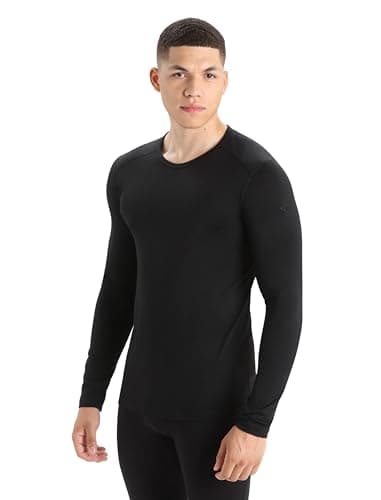
Merino clothing is sold by fabric weight in grams per square meter, and the number is usually in the product name. Icebreaker’s 200Oasis is a 200 g/m² fabric. Lighter merino — around 150 — is the three-season weight; 200 is the cold-weather standard; anything above 250 is winter-only for most riders. That convention is the single most useful thing in this category, and it is why the Icebreaker listing is more informative than listings costing the same.
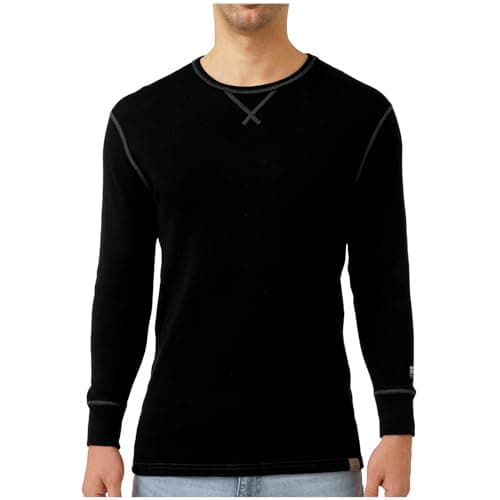
MERIWOOL publishes both a fiber percentage and a figure: “100% Merino Wool” and “Heavyweight 400g”. We are quoting that verbatim and declining to interpret it, because the listing does not say whether 400 g is the fabric weight per square meter or the weight of the garment — and those are wildly different claims. Either way the word heavyweight is doing honest work: it is the warmest thing on this page.
Smartwool’s Classic All-Season layers publish no number at all. Based on where Smartwool positions that line it sits at the lighter end, and we are not going to print a figure the seller does not. What we can say is what the name claims: all-season, which on a bike is the right target.
Merino or synthetic: the actual trade
Merinokeeps insulating when damp, resists odor for several rides, and feels comfortable across a wider temperature band than synthetic. It dries slower, costs more, and wears out faster — particularly at the shoulders under a pack strap.
Synthetic— polyester and polypropylene — moves moisture faster, dries much faster, costs less, and survives more washes. It also holds odor, which is why a synthetic base layer is a wash-every-ride garment and a merino one is not.
For cycling specifically, the moment that decides it is the stop. If you climb hard, sweat through the layer, and then descend for twenty minutes, merino is wearing better in that twenty minutes. If you ride steadily in heat and want sweat gone as fast as physically possible, synthetic mesh wins. Our sock roundup reaches the same conclusion from the other end of the body, and for the same reason.
The summer base layer, which sounds wrong and is not
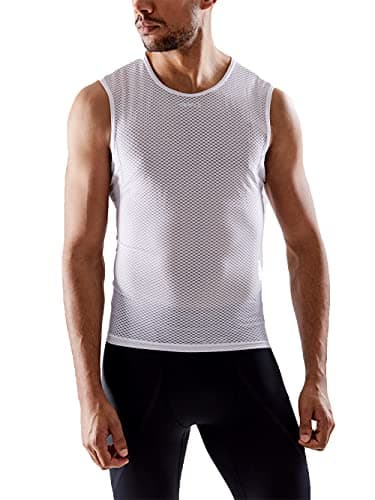
Two of the completions Google offers for this category are about summer and hot weather, and the instinct behind them — surely a base layer makes you hotter? — is wrong in a specific way. In heat, a soaked jersey clings to your back, and a clinging wet garment is both unpleasant and bad at evaporating. An open mesh layer under it holds the jersey a few millimeters off your skin and wicks sweat into the jersey, where air can actually reach it.
The garment that does this is thin, open and does not insulate — Craft’s Cool Mesh Superlight is the archetype. A thermal base layer in July is a mistake; a mesh one is the reason professional riders wear something under the jersey in a heatwave.
Wind chill is why a base layer matters more on a bike
A cyclist generates their own wind. At 18 mph on a 35°F day the air hitting your chest behaves like 24°F according to the National Weather Service wind chill formula, and that figure assumes dry skin. Wet skin loses heat faster still, which is the whole argument for a layer that moves sweat away rather than holding it.
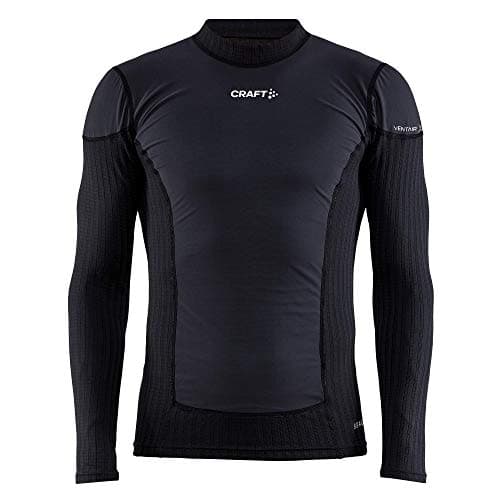
This is also the case for the one genuinely differentiated garment on this page: Craft’s Active Extreme X Wind, which builds a wind-blocking panel into the base layer itself. If you already own a windproof gilet or a cycling jacket, that panel is a duplicate. If your cold-weather kit is a jersey and nothing else, it is a cheap way to add the one thing a jersey cannot do.
Fit, and the one rule that matters
A base layer must be snug. The moisture transfer happens by contact: fabric touching skin draws sweat into itself and passes it outward. A loose base layer is a bag of air that does nothing except add a layer of nothing. If you are between sizes on a base layer, go down, which is the opposite of the advice for a jacket.
Cycling-specific cuts — longer at the back, higher at the front, close at the sleeve — exist because a riding position stretches a garment forward. A general-outdoor base layer like the MERIWOOL will ride up at the back on a bike; it is not a defect, it is a different design target.
Washing, which is where merino gets ruined
Wool shrinks in heat and dies in fabric softener. Wash cool, skip the softener, and air dry — the full method is in how to wash cycling kit, which also explains why synthetic base layers keep smelling after a normal wash and what fixes that. One structural point worth planning around: a synthetic base layer needs washing after every ride, and a merino one does not, so a merino layer and a laundry habit are substitutes for each other.
What we could not check
We have not worn these garments, measured a drying time, or weighed a fabric. Every specification above is the live Amazon listing text for the exact ASIN linked, read on 5 October 2026, and where a listing publishes no weight and no fiber content — which is four of these seven — the table below says so rather than estimating one. The merino weight convention described above is an industry naming practice, which is why we report Icebreaker’s 200 as published and decline to assign a number to any garment that does not carry one.