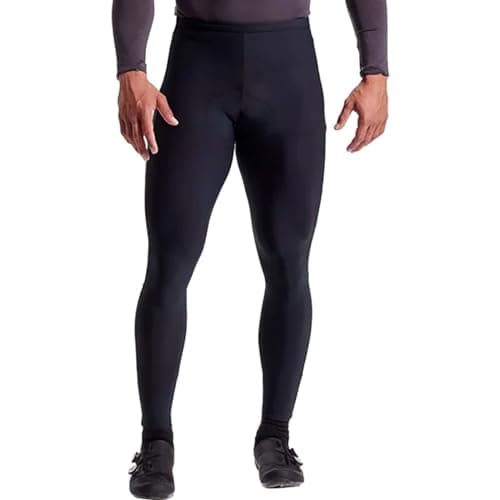
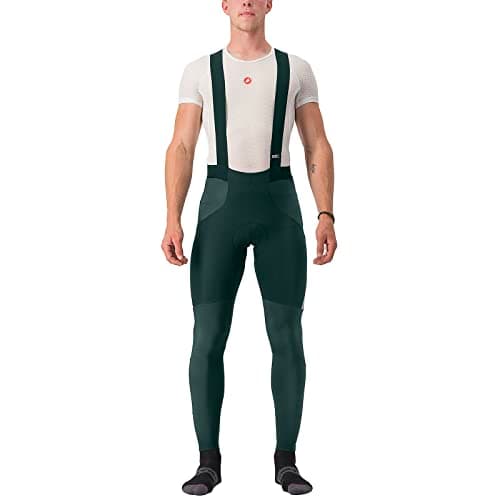
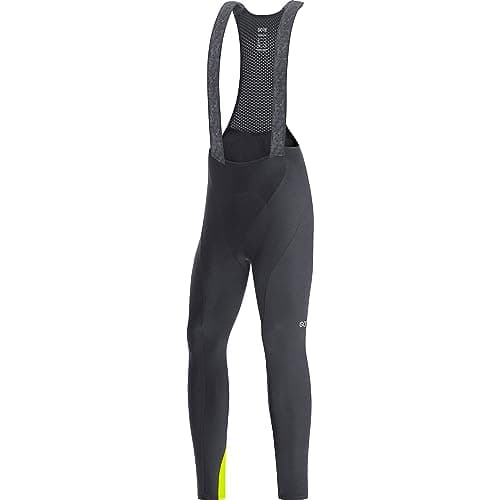
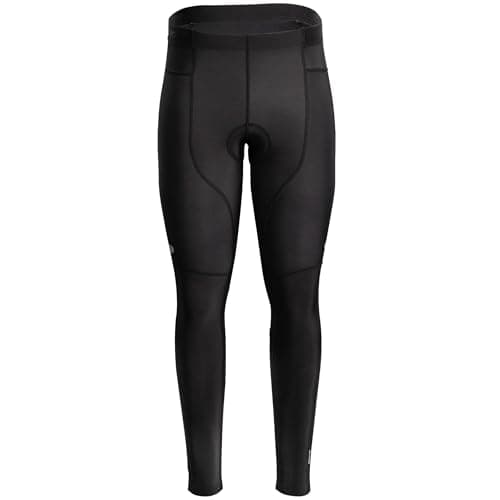
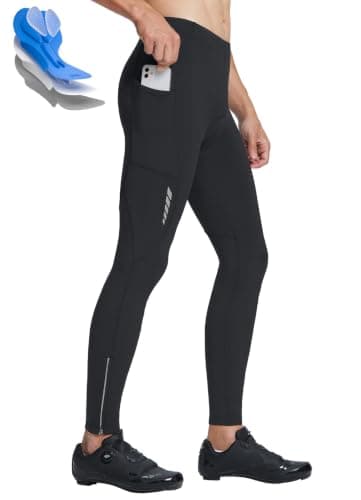
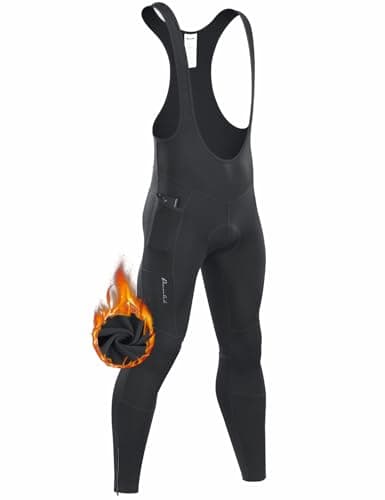
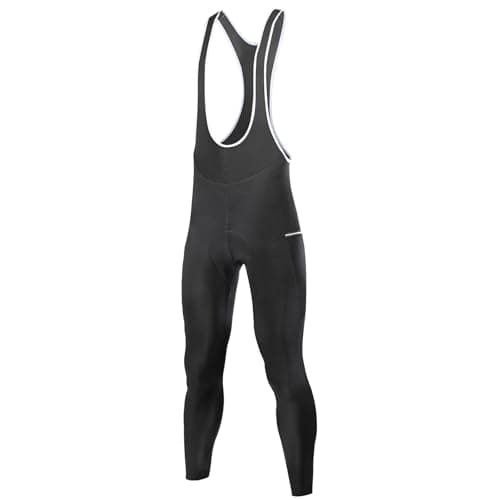
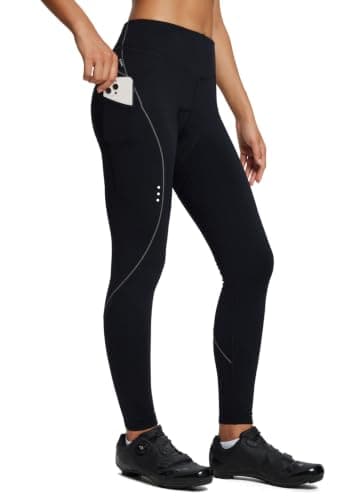
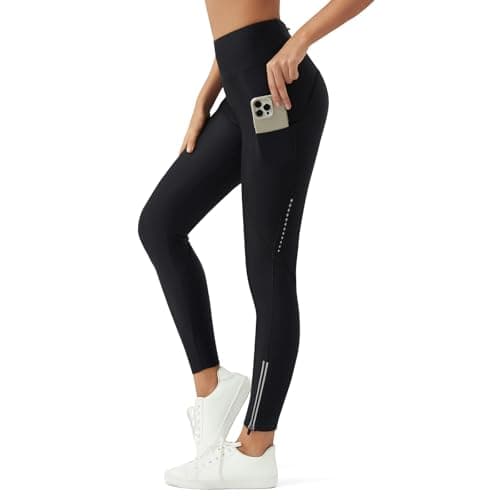
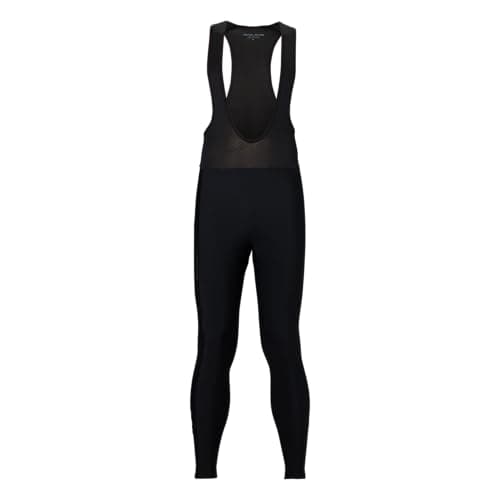
Not one of these ten listings publishes a temperature range, so this page does not pretend to. What the listings do publish is construction: bib or waist, fleece-lined or “insulated”, water-repellent or silent on the subject, and a chamois that either has a name or has a number of dimensions. Those four facts decide what a tight can do, and they are auditable before you buy. A temperature rating would be better. It does not exist anywhere in this category.
The second finding is about the pad. Three of these ten listings name their chamois. The other seven print a number of dimensions. Pearl Izumi names Select Levitate and Elite Levitate — two different pads in a published hierarchy. The budget half of this page says “4D Padded”, which is not a measurement of anything: our chamois pad guide goes through what actually varies between pads (density, thickness zones, and the shape of the sit-bone platform), and none of it is what the letter D refers to.
Your own speed is the weather you are dressing for
This is the part most buying advice skips, and it is the only genuinely quantitative thing on this page. Cycling generates its own wind. The National Weather Service publishes the wind chill formula as “Wind chill (ºF) = 35.74 + 0.6215T - 35.75(V^0.16) + 0.4275T(V^0.16)”, where T is air temperature in °F and V is wind speed in mph. Put your riding speed in as V and you get the temperature your legs are actually working in.
At 45°F and 18 mph, that arithmetic lands around 37°F. The same still-air morning in which a pair of shorts and knee warmers feels about right while you are standing in the driveway is a different garment problem eight minutes later. Our layering guide already carries the full table across riding speeds; the table below does the one thing that guide cannot, which is to say which of the constructions on sale here each band actually calls for.
Two honest caveats, because this number is widely misused. The NWS formula was derived for ambient wind on exposed skin, not for a cyclist’s self-generated airflow over fabric, so treat it as the right direction and magnitude rather than a measurement of your thigh. And it does not know about sunshine, humidity or how hard you are working — a 6% climb at 8 mph is a completely different thermal situation from a descent at 30 mph on the same road.
Bib or waist, which is the real decision
A bib tight has no waistband. On a drop-bar bike, folded forward, the waistband is the single most common comfort complaint in cold-weather kit, because the fabric is thicker and the position puts it exactly where your hip folds. Bibs also keep the back of the garment up, which means no cold gap at the base of your spine. Five of these ten are bibs.
A waist tightcomes off without removing your jacket, which in February is a practical matter and not a small one. It suits an upright position — a commuter, a hybrid, an e-bike — where the waistband is not folded into anything. It is also the only construction available in most of the women’s half of this field, which is a gap rather than a preference.
The same argument applies one layer up: bib shorts versus waist shorts works through the position question in detail, and the conclusion transfers directly to tights.
Fleece, insulation and the panel nobody claims
Three constructions appear in these listings, and they are not interchangeable.
Fleece-lined(Baleaf, Santic, Baleaf women’s) is a brushed inner face that traps air against your skin. It is the cheapest effective warmth in cycling apparel and it works well in dry cold. Wet, it holds water and loses most of its advantage.
Insulated(both Pearl Izumi listings) is a vaguer claim and usually means a heavier knit or a laminated panel rather than a brushed lining. Pearl Izumi pairs it with “High-Stretch” on one listing and “Water-Repellent” on the other, which is more information than most of this field offers.
Wind-blocked front panels are the construction that separates a 50-degree tight from a 30-degree one, and not one of these ten listings explicitly claims one.GORE’s product name carries a plus sign, and in GORE’s own range a suffix is where membrane information lives — but the listing does not say so, so this page does not either. Our cycling jackets roundupran into the same problem one layer up and found GORE’s published taxonomy classifying two of its own jackets as not waterproof. The lesson transfers: on apparel, a word is not a rating.
Where tights sit in the system
Legs are the last thing most riders upgrade and the first thing that ruins a ride. The order that actually works, in our cold-weather layering guide, is extremities first (hands, feet, head), then torso, then legs — because fingers go numb before quads do. But legs have the biggest comfort cliff: a working muscle generates its own heat right up until the wind strips it, and then your pedaling efficiency drops with your muscle temperature.
Practical consequence: a tight is a bigger upgrade than a second jacket, and a cheap fleece-lined tight plus good gloves beats premium tights plus summer gloves on every cold ride. The adjacent pages worth reading before you spend are the glove roundup, the base layer roundup (the layer everything else depends on) and the sock roundup, since a thick winter sock in a summer-fitted shoe makes your feet colder, not warmer.
Sizes, variants and what the ASIN actually is
Worth stating plainly: several of these Amazon listings carry a specific size and color in the title — “Black, Large”, “Grey S”, “Rover Green - Small”. That is how Amazon variant listings work, and you select your own size on the page. We quote the title as retrieved because it is our provenance for the specifications, not because you have to buy that size.
Three of these ten are women’s listings, two of them explicitly women’s-cut. That ratio is consistent with the audit behind our gifts for female cyclistspage, which found a published women’s-specific cut on a small minority of the apparel listings on this site. A chamois is a shaped part; a unisex pad is a compromise, and the listings that say so are worth preferring.
What we could not check
Nothing here has been worn, measured or ridden in. Every “Listing:” specification above is the live Amazon listing text for the exact ASIN linked, read on 12 October 2026. No manufacturer site figure is used on this page: the ISO standard that defines required clothing insulation for cold environments is paywalled and returned HTTP 403 to automated retrieval, so the point it would support — that a measurable insulation standard exists and no cycling apparel maker publishes against it — is stated as an absence rather than quoted. The wind chill arithmetic uses the National Weather Service’s published formula and nothing else.
The middle column is wind chill at 18 mph, computed from the National Weather Service’s published formula with riding speed used as the wind speed — the same arithmetic, at the same speed, as our cold-weather layering guide, which carries the full table across riding speeds. The right-hand column is this page’s reading of what that band needs, expressed in the construction terms the listings use.
The middle column is computed live from the published formula on every page build, so the arithmetic cannot drift from its source. The formula was derived for ambient wind on exposed skin, not for airflow over fabric on a moving rider — right in direction and magnitude, not a measurement of your thigh. The right-hand column is editorial judgment, not a published rating, because no maker in this category publishes one.
Read from the live Amazon listing for each linked ASIN on 12 October 2026. A blank is not a no; it is a listing that does not say. Note the last column: it is empty for all ten.
Zero published temperature ranges out of ten, one published water claim, and three listings that name the pad. Five bibs, five waist tights, and no listing anywhere in the field that claims a wind-blocking front panel in words.