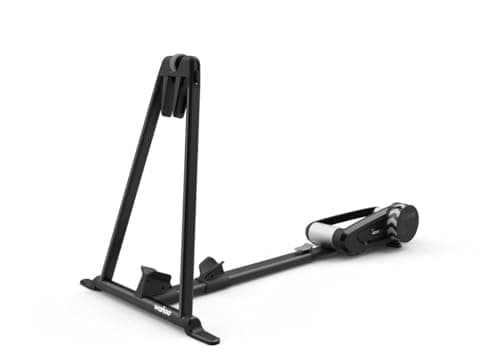
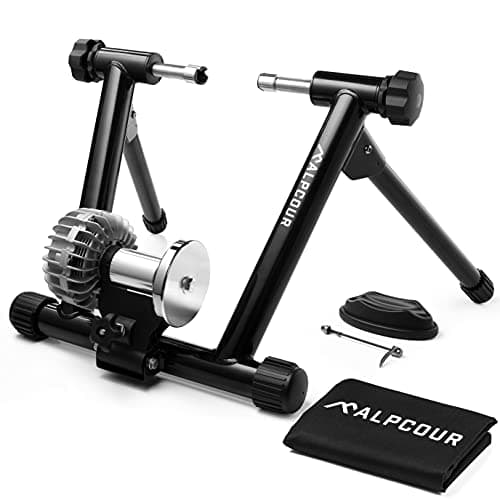
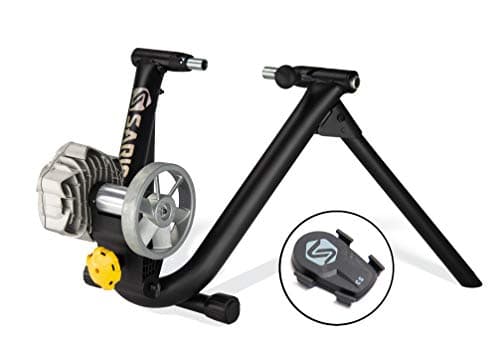
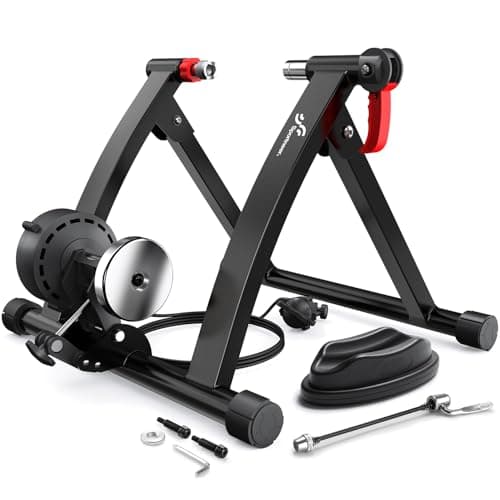
How the bike connects is the whole decision.Everything else about an indoor trainer — the app, the noise, the numbers, the money you spend after the purchase — follows from whether your rear wheel comes off, sits on a roller, or stays in place with the tire pressed against a drum. That is why this page sorts on drive type first, and why two trainers at the same price can have totally different total costs.
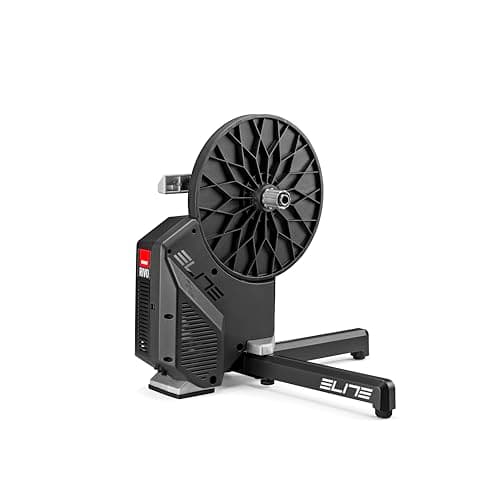
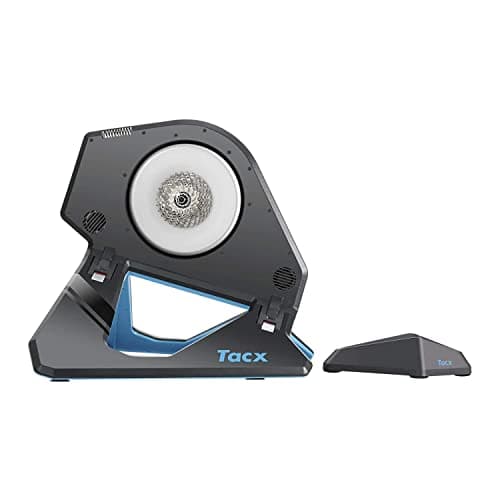
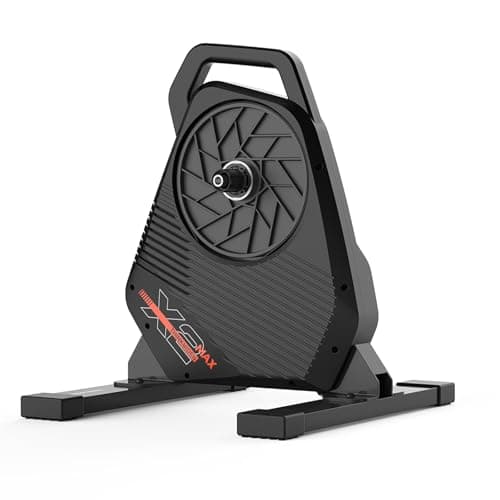
The second thing to know is uncomfortable. One of these ten listings publishes a power accuracy figure, and it is not one of the two most expensive trainers. Elite publishes “±2.5% Power Accuracy” on the Rivo. The Wahoo KICKR V6 listing is six words long. The Garmin Tacx NEO 2T listing is five. Two listings publish a simulated gradient (Elite’s 24%, ThinkRider’s 18%) and one publishes a wattage ceiling (ThinkRider’s 2000 W). Nobody publishes a decibel figure, a weight, or a validation protocol for any of it.
“Smart” is used for two different things, and one of them costs you
There are two completely different capabilities sold under the same adjective, and a listing title will happily use it for either.
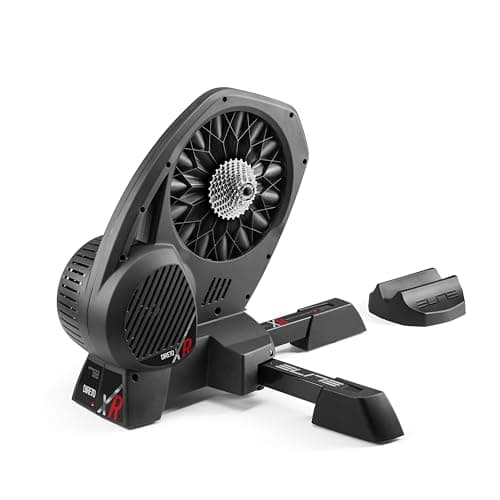
A controllable trainertakes instructions. The app says “hold 240 watts” or “this is a 6% climb” and the trainer’s resistance unit obeys. Elite’s Direto XR listing says this out loud — “Interactive … Electronic Resistance” — and that phrasing is what you are looking for.
A broadcasting traineronly reports. The Saris Fluid2 is listed as “Smart Equipped … Includes Speed Sensor”, and both halves of that are true: it is a classic fluid trainer with a sensor in the box. An app reads your wheel speed, looks up a curve for that trainer and estimates a wattage. The resistance never changes because nothing on the trainer can change it.
Both are legitimate products. Only one of them can run a structured workout for you, and the difference is invisible in a product title. If you want an app to hold your wattage while you suffer, look for the words interactive, electronic resistance, or app-controlled — not for the word smart.
Direct drive: what it fixes, and the bill after the bill
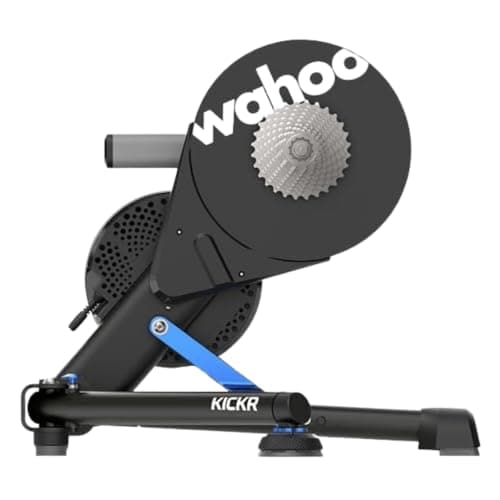
On a direct-drive trainer the rear wheel comes off and your chain runs on a cassette bolted to the trainer itself. That removes the two biggest sources of indoor nonsense in one move: tire pressure (which changes the rolling resistance between your tire and a drum, and therefore changes your numbers between Monday and Thursday) and roller clamp force (which does the same, and is set by hand).
The cost is a second purchase that three of these five direct-drive listings do not mention. A trainer needs a cassette, it needs to be the right speed count for your drivetrain, and it needs to match the freehub standard the trainer shipped with. Elite’s Rivo listing is the only one here that says “Cassette Not Included” in the title, which is to its credit. Our cassette roundup covers what fits what, and 11-speed versus 12-speedcovers the compatibility question that decides it. Budget for a cassette, a chain whip and a lockring tool, or for a shop to fit it — the home workshop page has the two tools involved.
Wheel-on: fluid versus magnetic, which is not a close call
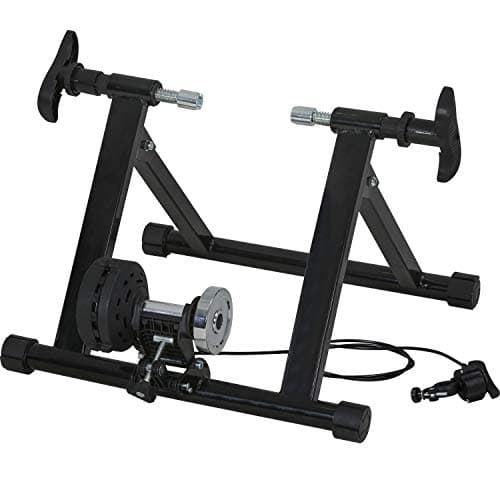
A wheel-on trainer presses a drum against your rear tire. The drum is attached to one of two resistance units, and the difference between them is bigger than the price gap suggests.
Fluidresistance is progressive: a paddle spins in a viscous fluid, so resistance rises with speed, the way air drag does on a road. Alpcour’s listing calls this “Progressive Resistance”, and it is the single reason a fluid trainer feels like riding and a magnetic one feels like a gym machine. Fluid units are also markedly quieter.
Magneticresistance uses a magnet against a flywheel at a setting you choose by hand — Sportneer publishes “6 Resistance Levels”. At a given setting the resistance barely changes with your speed, so you shift to make it harder, and under load the unit is loud. For a race-morning warm-up this is completely fine and the cheapest thing here does it well. For a winter of riding it is the thing people stop using in week three.
Either way, the rear tire is a consumable. A road tire on a drum wears in a pattern it was not designed for, which is why trainer-specific tires exist, and why when to replace bike tires is worth reading before you put your good set on a roller all winter. Run a cheap tire indoors.
The number nobody publishes: how loud is it?
Not one of these ten listings publishes a decibel figure. Three publish an adjective (“Ultra-Quiet”, “Noise Reduction”, “Noise Reduction Wheel”) and the other seven publish nothing at all. That matters more than any other unpublished spec here, because noise is the reason an indoor setup gets abandoned — not boredom, and not the trainer itself.
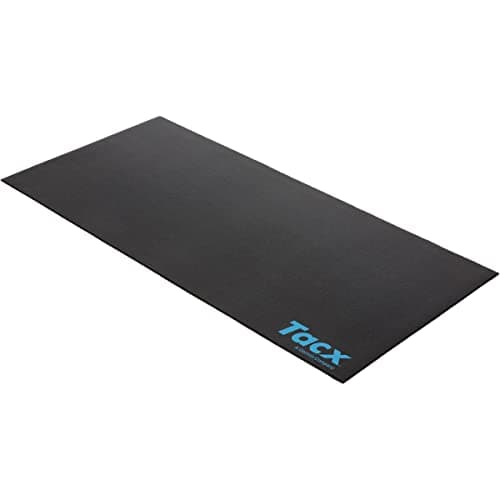
What is predictable without a number: direct drive is quietest because there is no tire involved and the loudest thing left is your own drivetrain. A roller or wheel-on fluid unit is next. Magnetic is loudest. On a hard floor, all of them transmit into the structure of the building, which is what a mat is actually for — floor protection is the listed benefit, and sound decoupling is the real one.
One genuinely useful consequence: on a direct-drive trainer, the noise you hear is your transmission, so a clean, well-lubricated chain is quieter indoors than out. Cleaning the chain is the cheapest noise reduction available to anyone reading this page.
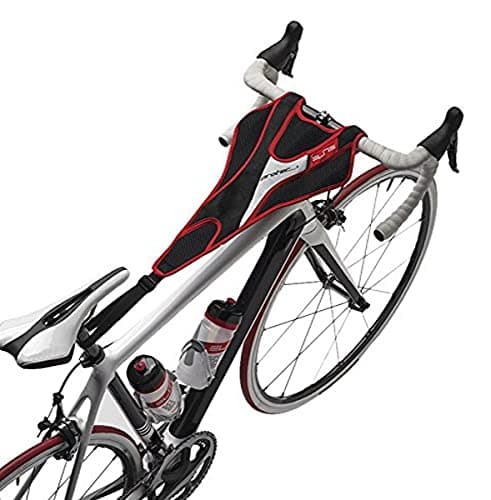
Not a ranking, and deliberately only two items. A trainer sits on a floor and gets rained on by a stationary rider, and those are two separate problems with two cheap answers. Everything else in the room is optional.
The floor and the sound. Garmin publishes 6 mm thickness and a water-repellent foam construction, and the listing names both floor protection and muffling the noise of a session. On a hard floor this is the difference between a trainer you can use at 6 a.m. and one you cannot.
The corrosion. A rider going nowhere drips onto the top tube, the headset and the stem bolts for an hour at a time, and Elite's listing names exactly that: it prevents corrosion, rust and sweat damage during training sessions. Salt water sitting on steel bolts is why winter bikes come out of the room with seized stems.
We haven’t tested any of these — they’re the parts the job above calls for, listed so you don’t have to go hunting. Prices are live from Amazon and we earn a commission if you buy. Prices as of October 17, 2026. #ad
What a trainer does not give you, and what to buy instead
A trainer is not a power meter, even when it reports watts. A direct-drive unit measures (or estimates) at the resistance unit, downstream of your whole drivetrain; a power meter measures at the pedal, crank or hub on the bike you actually ride outside. The two will not agree, and the useful habit is to compare each one only with itself. Where a power meter sits and why it matters explains the measurement points, and the power meter roundup covers the hardware if you want one figure that follows you indoors and out.
You also do not need a bike computer for indoor riding — the app is the computer. If you want your indoor rides to land in the same training record as your outdoor ones, that is a head-unit and platform question rather than a trainer one, and Garmin versus Wahoo is where the ecosystems diverge.
Riding indoors is a heat problem, not a cold one
Everything that makes you comfortable outdoors works against you in a room with no airflow. There is no wind to evaporate sweat, so your core temperature climbs at a power you could hold for hours outside. Two practical consequences: use a fan, and wear less than instinct says — a waist short rather than a bib is the single most common indoor kit change, and a thin base layer moves sweat off your skin rather than insulating you. Our kit washing guide is unusually relevant here, because indoor sweat loads are far higher than road ones and salt is what kills elastane.
If your position indoors feels different from your position outside, it is not your imagination: a trainer holds the bike still, so you move on the saddle less and load one spot continuously. Set the saddle height on the evidence rather than by feel before you commit to a winter of it.
What we could not check
Nothing on this page has been ridden, measured or compared against a reference power meter. Every “Listing:” specification above is the live Amazon listing text for the exact ASIN linked, read on 12 October 2026. Garmin’s own product page for the NEO 2T returned HTTP 404 to automated retrieval on that date, and Zwift’s support articles on trainer support and virtual power both returned 404 or truncated content, so no figure here is attributed to a manufacturer or platform page. We also found retailer listings for the same Thule and Tacx products disagreeing with one another on headline figures, which is precisely why this page quotes only the listing you would actually buy from. Where a listing publishes no accuracy, no gradient and no decibel rating — which is most of them — the table below says so instead of estimating.
If you are buying one of these for somebody else rather than for yourself, the cassette requirement is the thing that ruins Christmas morning — our gift guide for indoor cyclists orders this category by how much you need to know about their bike first.