When to Replace Bike Tires
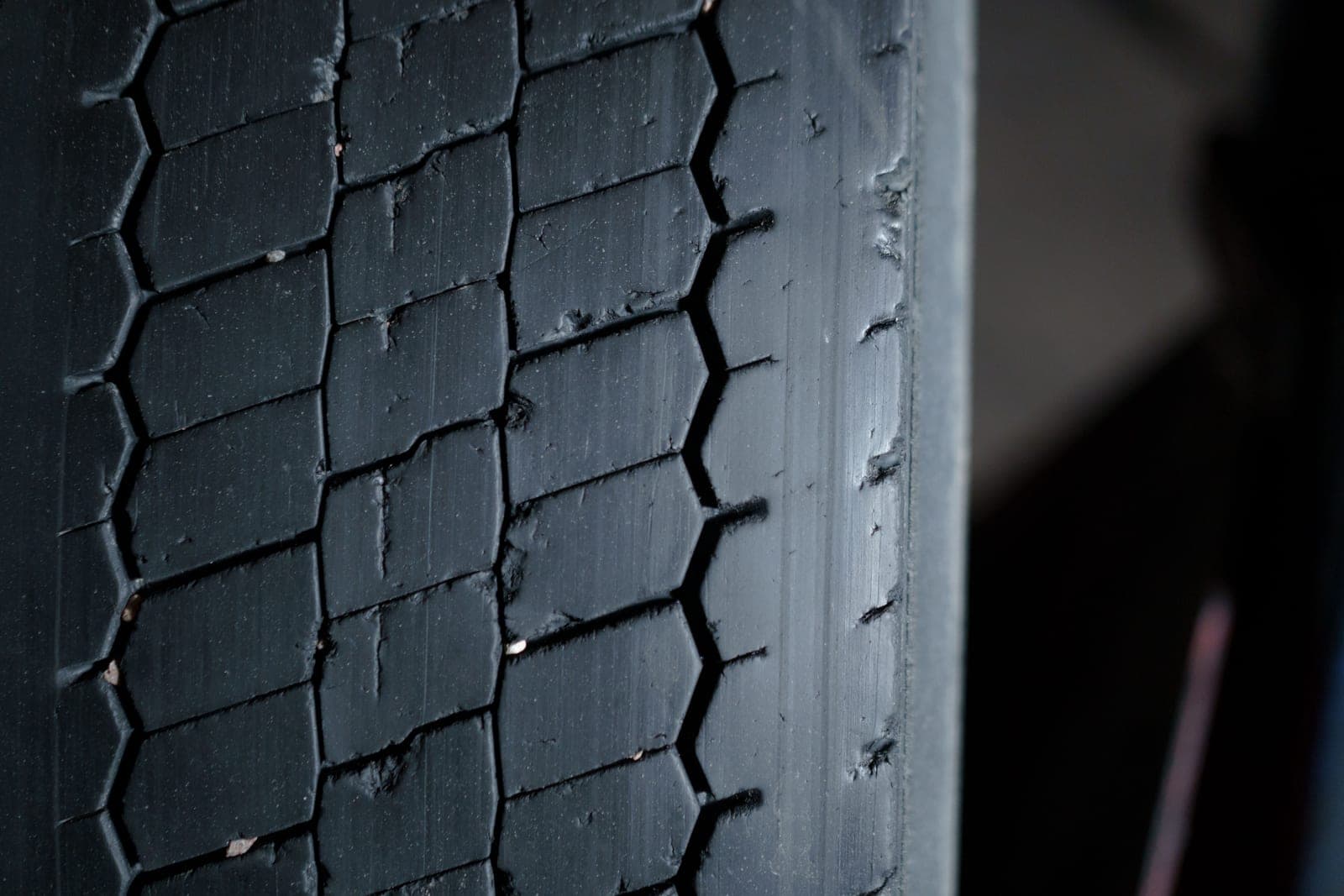
Tread depth is the wrong thing to look at on a bicycle. The published wear limit is the moment the casing starts showing through — and most tires die at the sidewall long before that.
Heads up: we earn a commission if you buy through the links on this page, at no extra cost to you. It never decides what makes the list — here’s how that works.
Most riders check a bike tire the way they check a car tire, by looking at the tread. On a bicycle that is close to the least useful thing you can look at. Schwalbe says so directly on its own technology FAQ: “In bicycle tires the tread is far less important than for instance in car tires. So using a tire with a worn out tread is less of a problem” — with mountain bike tires the exception.
We have not worn out a tire and measured it, and every figure on this page is a manufacturer’s published one, read from Schwalbe’s tire wear page on 18 September 2026 and attributed as such. Schwalbe is one of the few tire makers that publishes any of this at all, which is why it is the source here.
The published wear limit
Schwalbe states it in one sentence: “When the puncture protection belt or the carcass threads can be seen through the tread the tire has reached its wear limit and must be replaced.” That is the hard stop. Anything visible under the rubber — fabric threads, a coloured protection layer — means the tire is done, today.
There is a softer line before it, and Schwalbe names that too: “As puncture resistance also depends on the thickness of the tread layer, it may be useful to replace the tire sooner.” In plain terms, a tire that is legal to ride is not necessarily a tire you want on a wet commute, because the thing wearing away is also the thing stopping glass reaching your tube.
Tread wear indicators, if your tire has them
Some road tires publish the answer on the tire itself. Schwalbe fits its Pro One road range with four small indentations distributed around the tread, and marks their position on the sidewall with arrows and the letters T.W.I. — Tread Wear Indicator. When the indentations have disappeared, the tread has worn down as far as it should.
If your tire has them, they are the easiest check on this page: find the arrows on the sidewall, look at the tread at that spot, and see whether the dimples are still there. The Pro One is one of the picks on our road tire roundup, which is also where to look if the answer to this page turns out to be “yes, replace them”.
How many miles is that, roughly?
Schwalbe is careful about this and so are we: “It is difficult to answer this question, as mileage is influenced greatly by tire pressure, load, road surface, temperature and the rider.” With that caveat stated, it publishes general guidance for its own tires:
Standard Schwalbe tires, 2,000 to 5,000 km. The Marathon family, usually 6,000 to 12,000 km. The lighter Marathon Racer and Marathon Supreme, around 5,000 to 9,000 km. The Marathon Plus, “often much more than 10,000 km”. And for mountain bike tires: “No useful mileage data is possible… because the influence of riding style is too dominant.”
Those are Schwalbe’s figures for Schwalbe’s tires. We are not going to extend them to Continental, Vittoria, Pirelli or Panaracer, because those companies have not published equivalents and transferring the numbers would be inventing them. Treat the ranges as an order of magnitude: a light fast road tire lives in the low thousands of kilometres, a heavy touring tire in the high ones.
The sidewall usually goes first, and that is your fault
This is the most useful thing on the whole page, and almost nobody says it. Schwalbe: “The sidewalls of tires often fail before the tread is worn out. In most cases, this premature wear is due to prolonged use of the tire with insufficient pressure.”
An under-inflated tire deforms too much at the sides on every rotation, and the casing can only take that for so long. Schwalbe’s recommendation follows directly: “Checking and re-pumping the inflation pressure at least once a month with a pressure gauge is most important.” A monthly gauge check is, on this evidence, the cheapest life-extension available for a set of tires.
Reading the cracks
Schwalbe distinguishes two crack patterns and they mean different things. Fatigue cracks are “a few large cracks in the upper area of the sidewall” and come from riding at too low a pressure. Ageing cracks are “rather small and distributed evenly across the whole sidewall” and come from time rather than abuse.
There is a third tell worth knowing: if the tire is bald at the left and right rather than in the centre, Schwalbe lists that as a typical abrasion pattern from continued riding at insufficient pressure. A tire worn in the middle has simply done its miles; a tire worn at the shoulders has been ridden soft.
What the checks above call for
Not a ranking — these are the items the published guidance points at. A gauge, because Schwalbe's own advice is a monthly pressure check with one; levers, because the tire has to come off; and two replacement tires, one of which publishes the wear indicators described above.
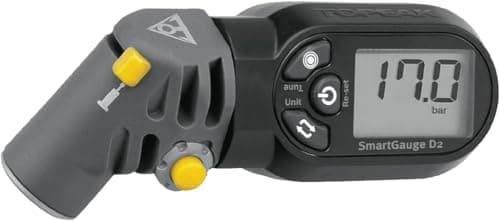
Topeak SmartGauge D2 Digital Gauge
A digital gauge published as Presta/Schrader compatible, reading to 250 psi / 17 bar. Schwalbe's own advice is to check and re-pump at least monthly with a gauge — that is what prevents sidewall fatigue.
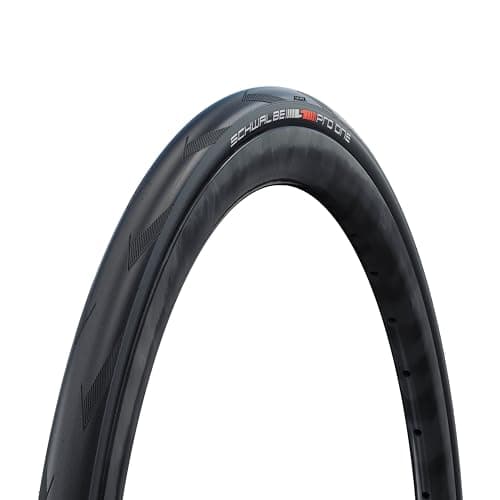
Schwalbe Pro One
The tubeless road tire whose range carries the four T.W.I. indentations described above, with arrows on the sidewall marking where to look. A tire that tells you when it is finished.
$60.32 · View on Amazon$69.99 −14%
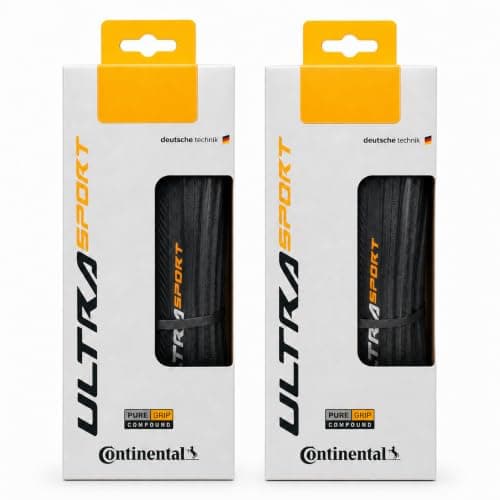
Continental Ultra Sport 3
The durable training option from our road tire roundup — listed as E25 e-bike rated, sold as a 2-pack, for riders replacing both ends at once.
$51.93 · View on Amazon$56.96 −9%
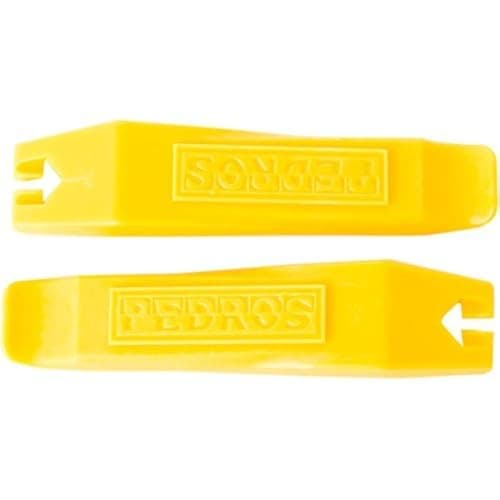
Pedro's Tire Levers
Two levers, because a tire that is being replaced has to come off first and a stubborn bead does not yield to thumbs.
$8.50 · View on Amazon$9.99 −15%
We haven’t tested any of these — they’re the parts the job above calls for, listed so you don’t have to go hunting. Prices are live from Amazon and we earn a commission if you buy. Prices as of October 18, 2026. #ad
Replace them in pairs, or not?
Not necessarily. The rear tire does the driving and carries more of your weight, so it wears faster — often roughly twice as fast, though no maker publishes a ratio and we are not going to print one as though someone had. The common shop practice of moving a part-worn front tire to the rear and fitting the new tire to the front is defensible on the grounds that a front blowout is the more dangerous failure.
What is genuinely worth doing in pairs is replacing both when the pair is old rather than worn, because ageing affects them equally and a five-year-old front tire is not improved by a new rear one.
How long do tires last in storage?
This is one of the top autocomplete variants of the question and it has a published answer: Schwalbe states its tires “can be stored for up to 5 years without issue”, in a cool, dry and above all dark place, and adds that longer may be possible with proper storage.
There is a storage warning attached that catches people who put a bike away for a winter: tires on a rim “should always be inflated or the bicycle should be hung up for storage”, because a bike left standing on flat tires can damage the sidewalls. Our bike storage guide covers the rest of what a long lay-up needs.
Replace it now, regardless of mileage, if:
Threads or a protection belt are visible through the tread. There is a cut deep enough to see the casing, or one you have booted to get home. The sidewall has a bulge, a tear or fatigue cracking. It has repeated punctures in the same area, which usually means something is still embedded in the casing. Or the tread is squared off flat across the centre and you are riding in the wet.
None of those needs a mileage figure to justify. They are the conditions under which the tire has already told you.
When you do change them
Park Tool publishes the full tire and tube removal and installation procedure, and it is worth reading before the first time rather than during it. Take the chance to run a rag around the inside of the casing while the tire is off — embedded glass is the single most common cause of a new tube puncturing within a week. Our how to fix a flat guide covers the same ground with the roadside version, and the tire pressure guide is the page that keeps the replacements alive longer than the ones you are throwing away.
Common questions
How do I know when my bike tires need replacing?
Schwalbe’s published wear limit is the point where “the puncture protection belt or the carcass threads can be seen through the tread”. Before that, replace sooner if the tread has thinned enough that punctures are becoming frequent, or if the sidewall is cracked, bulging or cut.
How many miles do bike tires last?
Schwalbe publishes 2,000 to 5,000 km for its standard tires, 6,000 to 12,000 km for the Marathon family and often more than 10,000 km for the Marathon Plus — while noting mileage depends heavily on pressure, load, surface, temperature and rider. Other makers do not publish equivalents, so treat these as an order of magnitude.
What is T.W.I. on a bike tire?
Tread Wear Indicator. On Schwalbe’s Pro One road range there are four small indentations around the tread, with arrows and the letters T.W.I. on the sidewall marking where to look. When the indentations are gone, the tread has worn to its limit.
Why did my sidewall crack before the tread wore out?
Almost always pressure. Schwalbe attributes premature sidewall failure to “prolonged use of the tire with insufficient pressure” and recommends checking and re-pumping at least once a month with a gauge. A few large cracks high on the sidewall are fatigue cracks; small even ones all over are ageing.
How long do bike tires last in storage?
Schwalbe states its tires can be stored up to 5 years without issue in a cool, dry, dark place, and possibly longer if stored properly. Tires already on rims should be kept inflated, or the bike hung up, to avoid sidewall damage.
Should I replace both tires at the same time?
Not necessarily — the rear wears faster because it drives the bike and carries more weight. Replace both together when they are old rather than worn, since ageing affects the pair equally.
Sources
- Schwalbe — Tire Wear (“In bicycle tires the tread is far less important than for instance in car tires”; “When the puncture protection belt or the carcass threads can be seen through the tread the tire has reached its wear limit and must be replaced”; “The sidewalls of tires often fail before the tread is worn out. In most cases, this premature wear is due to prolonged use of the tire with insufficient pressure”; “Checking and re-pumping the inflation pressure at least once a month with a pressure gauge is most important”; four T.W.I. indentations on the Pro One range marked on the sidewall with arrows; published mileage of 2,000-5,000 km for standard tires, 6,000-12,000 km for the Marathon family, approx. 5,000-9,000 km for Marathon Racer and Supreme, “often much more than 10000 km” for the Marathon Plus, and “no useful mileage data is possible” for MTB tires; fatigue cracks as “a few large cracks in the upper area of the sidewall” against ageing cracks “rather small and distributed evenly”; tires “can be stored for up to 5 years without issue” in a cool, dry, dark place) — retrieved 18 September 2026
- Schwalbe — Technology and FAQ index (the published technical reference the wear page sits in) — retrieved 18 September 2026
- Park Tool — Tire and Tube Removal and Installation (the replacement procedure itself) — retrieved 18 September 2026
- Published product claims for the four items above — each product's live Amazon listing via the Amazon Creators API, as recorded on /road/best-road-bike-tires and /workshop/best-bike-inner-tubes — retrieved 17 July to 2 September 2026
- Google Autocomplete — “when to replace bike tires” and “how long do bike tires last” both return full clusters (road, tubeless, in storage, in years, miles, after a puncture) — retrieved 18 September 2026
Read next
- The best road bike tires
Where to go once the answer is yes — including the tire with published wear indicators.
- Road bike tire pressure guide
The monthly check that stops sidewalls failing before the tread does.
- The best gravel bike tires
If the worn pair came off a gravel bike rather than a road one.
- How to fix a flat
The procedure, including checking the casing for what caused it.
- How to store a bike
Why a bike left standing on flat tires damages the sidewalls.
- Road bike tire width explained
If you are replacing them anyway, this is the moment to change width.
We haven’t ridden or tested any of the products on this page, and we don’t pretend otherwise. Read how we research — or tell us we’re wrong and we’ll log the correction.