How to Remove Rust From a Bike Chain
Every popular home method for this is an acid, and the chain manufacturer says not to use them. Here is the safe version — and the point at which the honest answer is a new chain.
Heads up: we earn a commission if you buy through the links on this page, at no extra cost to you. It never decides what makes the list — here’s how that works.
Start with the warning, because it contradicts most of the advice you will find elsewhere. Shimano’s dealer’s manual for its chains says to avoid using acid-based solvents such as rust cleaners — because if those solvents are used, the chain might break, which the manual is blunt about: a chain that breaks under load can put you on the floor.
That single sentence rules out the three home remedies the internet loves most: white vinegar, cola, and the phosphoric- or oxalic-acid rust removers sold in hardware shops. They do dissolve rust. They also attack the steel underneath it and can find their way into the pin-and-bushing interfaces you cannot inspect, where a chain carries its load. A shiny chain that fails at the wrong moment is not a repair.
Step 1 — Decide whether the chain is worth saving
This is the step that saves people money, and it comes first for a reason: a chain is the cheapest wearing part on the drivetrain, and a rusty one is often also a worn one. Shimano instructs riders to check the chain for damage — deformation, cracks or corrosion— along with elongation and skipping, and to replace it if it is damaged.
Practically, split rust into two cases:
- Surface rust on the outer plates only. The chain has been damp; the rollers still turn freely, the links articulate smoothly, and nothing is seized. This is recoverable.
- Rust in the rollers, or stiff links. If links do not articulate freely, if rollers do not spin, or if the chain has been left outdoors for a season, the corrosion is in the load-bearing surfaces. That is a replacement, not a cleaning job.
Then measure it. A chain checker settles the second question in thirty seconds: Park Tool publishes the CC-3.2 as a go/no-go gauge for 0.5% and 0.75% elongation, “the points at which most chain manufacturers suggest replacement”. If a rusty chain is also past 0.75%, the decision is made for you — and riding it further damages the cassette, which Park Tool notes is the much more expensive problem.
What this job needs
Not a ranking — the three items the procedure below assumes. Note what is absent: there is no rust remover here, because the chain manufacturer says not to use one.
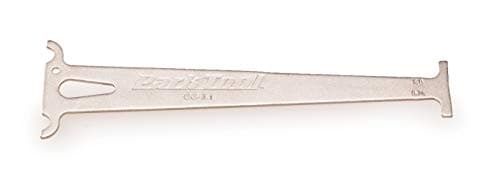
Park Tool CC-3.2 Chain Checker
Settles the save-or-replace question first. Go/no-go at 0.5% and 0.75% elongation, listed for 5–12 speed.
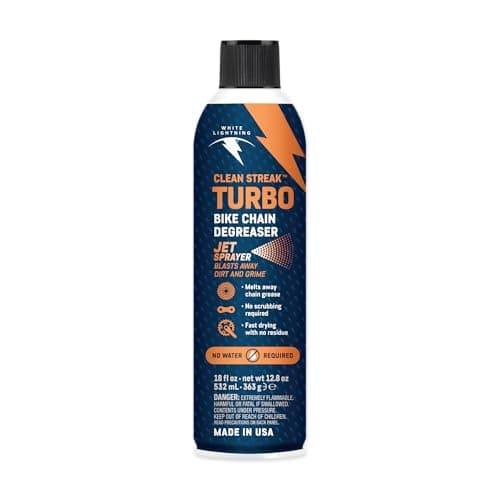
White Lightning Clean Streak
A fast-evaporating solvent degreaser for the mechanical clean. Solvent, not acid — it lifts grease and lets the brush reach the oxide.
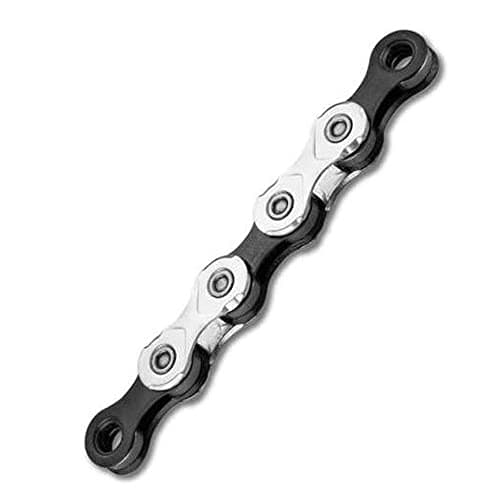
KMC X11 11-Speed Chain
The honest end point when rust has reached the rollers. This one is 11-speed — match your drivetrain, and replace the quick link too, as Shimano instructs.
We haven’t tested any of these — they’re the parts the job above calls for, listed so you don’t have to go hunting. Prices are live from Amazon and we earn a commission if you buy. Prices as of October 18, 2026. #ad
Step 2 — The safe method: mechanical, not chemical
With the chain judged salvageable, the removal is abrasive and solvent work, in this order:
- Take the chain off if it has a quick link.Working on the bench is faster and it keeps solvent away from the disc rotors — which matters, because contaminated brake pads are a replacement, not a clean.
- Degrease first. Rust hides under old lube and grime. A solvent degreaser strips that layer so the brush is working on oxide rather than grease.
- Scrub the rust mechanically. A stiff nylon brush for light surface rust; a brass or fine steel brush for heavier deposits on the outer plates. Brass is softer than the chain steel and takes the oxide without scoring the plates.
- Work the links. Flex each section laterally and articulate it as you go. A link that will not move freely after cleaning is telling you the corrosion is inside.
- Dry it completely. Any water or solvent left in the rollers restarts the process. Compressed air if you have it, a rag and time if you do not.
- Lubricate immediately. A stripped chain is bare steel and will start oxidizing again within hours in a damp garage. Wet lube penetrates better on a chain that has been rusty; see our chain lube roundup.
Step 3 — Check it before you ride it
Shimano’s published instruction is to check that the chain is not damaged and that its tension is correct, and to replace it if either fails — because the failure mode is the chain breaking. Run the chain slowly backwards through the derailleur and watch for a link that hops; that is a stiff link, and on a previously rusted chain it usually means corrosion in the pin.
One more published detail worth honoring: if you do replace the chain, Shimano says to replace the quick link with a new one as well. Re-using a quick link is one of the few genuinely risky economies in home bike maintenance.
Why acid is the tempting answer, and still the wrong one
Acids convert iron oxide into soluble salts, which is why a chain dunked in vinegar comes out gray and rust-free. The problem is selectivity: the acid does not stop at the oxide layer. It attacks the parent steel, it embrittles surfaces through hydrogen effects, and it wicks into the pin-plate interface where no amount of rinsing gets it back out and no inspection can confirm the damage.
You are also fixing the wrong thing. Rust on the outside of the plates is cosmetic and harmless once removed; rust inside the rollers has already changed how the chain wears. An acid bath does nothing about the second case and is unnecessary for the first. Shimano’s warning is, in that light, less a restriction than a shortcut: skip the chemistry, judge the chain, and replace it if the answer is bad.
Preventing it, which is far easier
Rust on a chain is a storage and drying problem, not a riding problem. Three habits fix almost all of it:
- Dry the chain after wet rides.Not the frame — the chain. A rag and thirty seconds, then a light re-lube if the ride was long or the water salty.
- Never leave it washed and unlubricated. A degreased chain is bare metal. If you clean the bike on Sunday, lube it on Sunday.
- Store it somewhere dry, and off a concrete floor. Unheated garages condense moisture onto cold metal every time the weather turns; our guide on how to store a bike covers the details, including why a shed floor is the worst place for it.
What we can and cannot tell you
The safety warning and the inspection guidance on this page are quoted from Shimano’s published chain dealer’s manuals, and the wear thresholds are Park Tool’s published figures for its own gauge. We have not tested rust removers, measured tensile strength after an acid soak, or destroyed chains to find out where the limit is — and nobody publishing home rust-removal advice with a jar of vinegar has either. Where this page differs from that advice, it is because a manufacturer put the warning in writing.
Save it or bin it — the decision table
Work down the rows. The first three are cleaning jobs; the last three are purchases, and trying to clean your way out of them is how a chain breaks under load.
| What you see | What it means | Action |
|---|---|---|
| Light orange film on the outer plates | Surface oxidation from damp storage | Degrease, brush, dry, lubricate |
| Rust patches, links still articulate freely | Deeper surface rust, load surfaces intact | Brass brush, solvent, then measure with a checker |
| Chain looks rusty but measures under 0.5% | Cosmetic — the chain has life left | Clean and keep riding it |
| Stiff links that will not free up | Corrosion inside the pin and plate interface | Replace the chain |
| Rollers that do not spin freely | Rust in the bearing surfaces | Replace the chain |
| Rusty and past 0.75% elongation | Worn out as well as corroded | Replace chain — and check the cassette |
Nowhere in this table is there a row that says “soak in vinegar”. Shimano’s manual says to avoid acid-based solvents such as rust cleaners because the chain might break, and no cosmetic improvement is worth that.
Common questions
Can I use vinegar or a rust remover on a bike chain?
Shimano’s chain dealer’s manual says to avoid acid-based solvents such as rust cleaners, warning that the chain might break if they are used. Vinegar, cola and most hardware-shop rust removers are acids. They do remove rust — and they also attack the steel and can reach the pin interfaces you cannot inspect afterwards. Use mechanical cleaning and a solvent degreaser instead.
Is a rusty bike chain safe to ride?
Depends where the rust is. Light surface rust on the outer plates, with every link articulating freely, is cosmetic once cleaned and lubricated. Stiff links, seized rollers or visible pitting mean the corrosion has reached load-bearing surfaces — Shimano tells riders to check for corrosion, deformation and cracks and to replace a damaged chain, because a chain that breaks under load causes a fall.
How do I know whether to clean or replace a rusty chain?
Two checks. First, articulation: if links do not move freely after cleaning, replace it. Second, wear: a chain checker reads elongation, and past Park Tool’s published 0.75% mark the chain is finished regardless of how it looks. A chain is the cheapest part of the drivetrain and the one that protects everything else.
What is the best way to remove rust from a bike chain?
Degrease first so the brush is working on oxide rather than grime, then use a brass or fine steel brush on the outer plates, articulate every link as you go, dry the chain completely, and lubricate it the same day. Brass is softer than chain steel, so it takes the rust without scoring the plates.
How do I stop the chain rusting again?
Dry it after wet rides, never leave it degreased and unlubricated overnight, and store the bike somewhere that does not condense moisture onto cold metal. A chain that is wiped and lubricated after wet rides essentially does not rust; one washed on Sunday and lubricated on Wednesday does.
Sources
- Shimano — Dealer's Manual, chain (DM-MACN001): check the chain for damage (deformation, cracks or corrosion), elongation due to wear, and skipping; replace a damaged chain, since a chain that breaks can cause a fall and serious injury; "Avoid using acid based solvents, such as rust cleaners. If those solvent be used chain might break and cause serious injury." — retrieved 2026-08-18
- Shimano — Dealer's Manual, 11-speed chain (DM-CN0001): when replacing the chain, replace the quick link with a new one as well; a re-used quick link may become damaged — retrieved 2026-08-18
- Park Tool — When to Replace a Chain (a worn chain causes excessive wear to the rear cogs, "causing a much more expensive problem") — retrieved 2026-08-18
- Park Tool — CC-3.2 Chain Checker product page (go/no-go gauge for 0.5% and 0.75% wear, "the points at which most chain manufacturers suggest replacement") — retrieved 2026-08-18
Read next
- When to replace a bike chain
The wear measurement that settles the save-or-bin question.
- How to clean a bike chain
The routine that stops rust happening in the first place.
- How to store a bike
Where the moisture that rusted the chain came from.
- The best bike degreasers
Solvent, not acid — what to strip the chain with.
We haven’t ridden or tested any of the products on this page, and we don’t pretend otherwise. Read how we research — or tell us we’re wrong and we’ll log the correction.