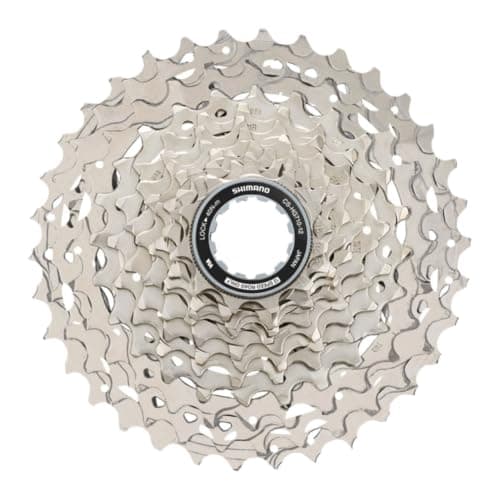
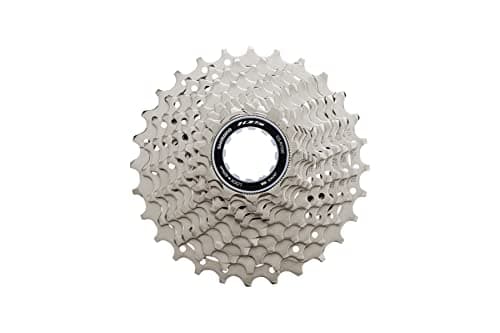
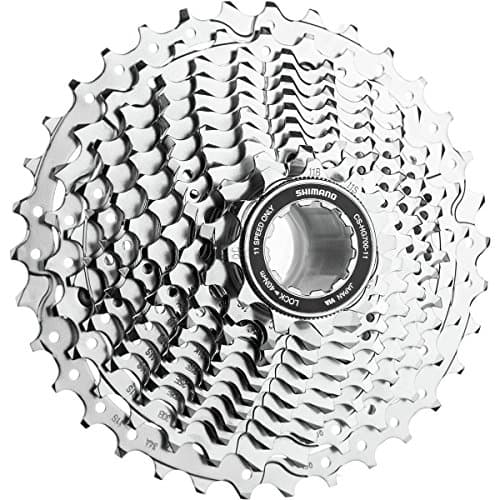
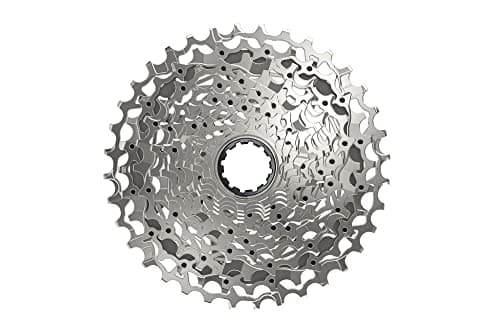
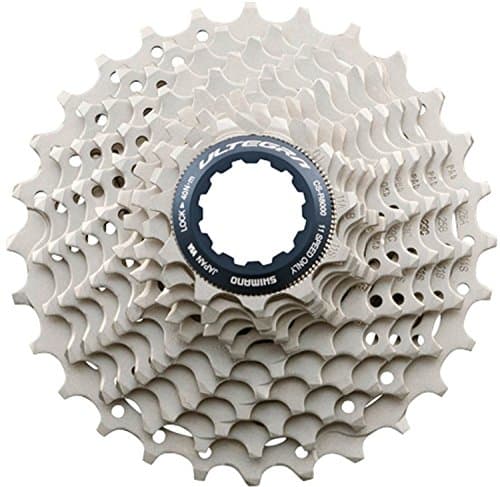
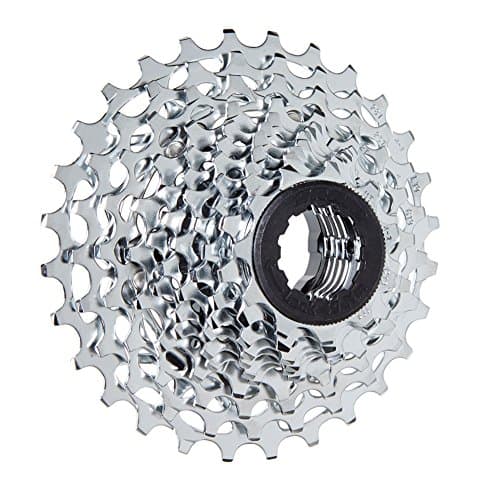
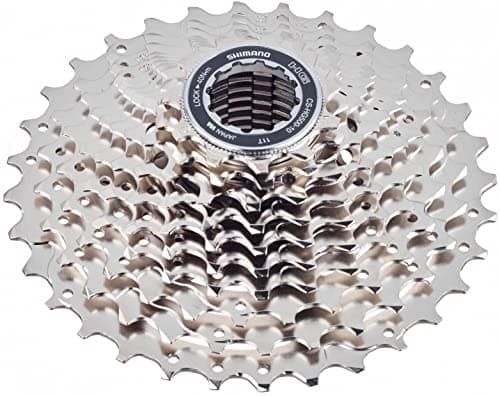
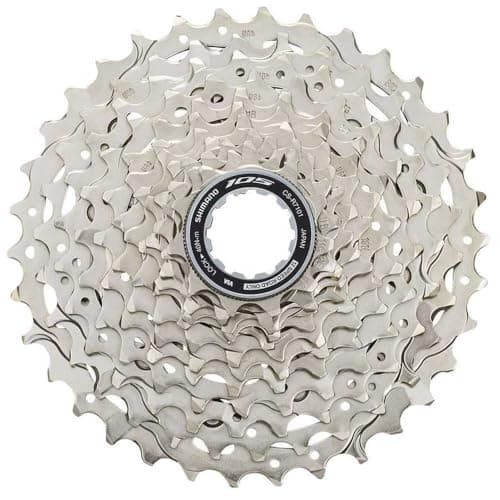
A cassette is the least free choice in cycling. Before you look at a single product, three numbers your bike already has have decided most of it: how many gears your shifter counts, which spline your wheel’s freehub has, and the largest sprocket your rear derailleur is published to reach. Get any of the three wrong and the cassette does not shift badly — it does not work.
So this page does not rank eight cassettes against each other. It sorts them by drivetrain, and inside each drivetrain it picks the one whose fit is best documented by the company that made it. Every tooth count, spline label and weight below is the maker’s own, and the only arithmetic we add is a range figure — largest cog divided by smallest — with the inputs on the page.
Number one: count your gears
The cassette has to have the same number of sprockets as your shifter has clicks, and the chain has to match both. Shimano’s spec table lists the chain for each cassette: the 105 CS-R7101 takes an “HG 12-speed” chain, the CS-R7000 an 11-speed one, the CS-HG500 a 10-speed one. There is no adapter for this and no exceptions worth building a bike around. If you are replacing a worn cassette, count the cogs on the old one. If you are thinking about changing the count, that is a drivetrain change, and our 11-speed versus 12-speed comparison sets out what it costs.
Number two: the spline, in Shimano’s and SRAM’s own words
Shimano’s road cassette table publishes a spline type for every cassette, and its labels are more useful than any summary:
- “HG spline L2 (ROAD 12-speed dedicated)”— the 12-speed 105, Ultegra and Dura-Ace cassettes, and the CS-HG710-12.
- “HG spline L (ROAD 12/11-speed)”— the 11-speed 105 CS-R7000 and Ultegra CS-R8000. The label itself tells you the older road spline serves both speed counts.
- “HG spline M (10/9/8-speed, MTB 11-speed, 7-speed CS-HG400/HG210)” — the 10- and 9-speed road cassettes, and, less obviously, the 11-speed CS-HG700-11 and CS-HG800-11.
SRAM’s 12-speed road cassettes are a different interface altogether. They start at a 10T cog and need the XDR driver body, which SRAM says “occupies the same space as an 11-speed HyperGlide road driver”. An 11-speed road wheel can usually take it, but only once the driver body is swapped. SRAM’s 11-speed PG-1130, by contrast, states it is “Compatible with 11-speed road splined driver bodies”.
Number three: the derailleur’s maximum sprocket
This is the one that catches people, because the same groupset ships with two different derailleurs. Shimano publishes a maximum low sprocket for each cage in its rear derailleur table, and the difference between them decides which version of a cassette you can buy:
- 105 RD-R7100 (12-speed): 36T maximum, 41T total capacity.
- 105 RD-R7000-SS / Ultegra RD-R8000-SS (11-speed, short cage): 30T maximum, 35T total capacity.
- 105 RD-R7000-GS / Ultegra RD-R8000-GS (11-speed, long cage): 34T maximum, 39T total capacity.
- Tiagra RD-4700-SS (10-speed, short cage): 28T maximum, 33T total capacity.
- Tiagra RD-4700-GS (10-speed, long cage): 34T maximum with a double crank, 41T total capacity.
The model code is printed on the derailleur. Read it, find the largest cog your cage accepts, and cross out every cassette with a bigger one. Then run the capacity sum — front ring difference plus rear cog difference, against the published total — which our cassette and chainring guide works through step by step. Several of the picks on this page land exactly on their derailleur’s published limit, and we say so in each one.
What range costs, in teeth
Once fit is settled the only real choice left is range, and range is paid for in the size of the steps. Shimano’s published sequences show it precisely. The 105 11-speed cassette in 11-28T runs 11-12-13-14-15-17-19-21-23-25-28: single-tooth steps to 15T. The same cassette in 11-32T runs 11-12-13-14-16-18-20-22-25-28-32: single steps only to 14T. The CS-HG700-11 in 11-34T runs 11-13-15-17-19-21-23-25-27-30-34 and has no single-tooth step at all.
Twelve-speed softens this, which is the honest case for it. The 105 11-34T and the HG710 11-36T share their first nine cogs exactly, so the bigger cassette changes nothing above the 24T. And SRAM’s 10T start buys a 300% range from a 30T largest cog, with single-tooth steps all the way from 10 to 15. If you ride flat roads, the tight end is where you live; if you ride hills, the big end is. There is no cassette that is best at both, and anyone who tells you otherwise has not read the tooth counts.
What more money buys
On Shimano’s own published figures, the answer is grams. The Ultegra CS-R8000 in 11-30T is 269 g against 304 g for the 105 CS-R7000 in the same range, with an identical sequence — 35 g. In 12-speed the Ultegra CS-R8101 at 11-34T is 345 g against 361 g for the 105 — 16 g. Shimano publishes the construction differences — a carbon spider arm on the 11-speed Ultegra, aluminum lockrings on both Ultegra cassettes against steel on both 105s — and publishes no difference in the gears themselves. Whether that is worth paying for is your call; the numbers are not in dispute.
Why six of the eight are Shimano
Because Shimano makes the drivetrains most road bikes are sold with, publishes a cassette for every speed count from 9 to 12, and publishes more about each one than anybody else. The two SRAM picks cover SRAM’s own 11- and 12-speed road systems. That concentration is worth naming rather than disguising, and it does not matter much in practice: the three fit numbers above narrow any reader to one or two rows of this page before brand comes into it.
What we cannot tell you
No maker on this page publishes a wear life, a shifting-quality measure or a noise figure, so there is no honest way to rank cassettes on durability or feel — and we have not ridden any of them. SRAM publishes no weight for either of its cassettes here, and Shimano publishes none for the CS-HG500-10; those cells say so. Every figure on this page is the manufacturer’s own published claim, attributed by name, or a quote from the live Amazon listing marked “Listing:”, all read on 11 September 2026. How we research sets out the rest of the method.