Why Is My Bike Chain Skipping?
Four faults feel identical from the saddle and cost between nothing and a new drivetrain. The symptom tells you which one you have.
Heads up: we earn a commission if you buy through the links on this page, at no extra cost to you. It never decides what makes the list — here’s how that works.
“Skipping” is four different faults wearing the same costume. The chain lurches forward, the pedals drop half a stroke, and your first instinct is that the gears need adjusting. Sometimes that is right and it costs you a quarter-turn of a barrel adjuster. Sometimes it is a worn cassette and it costs real money. The difference is decided by three questions you can answer on a ride you have already done.
Does it happen in one gear or all of them? Only under load, or all the time? Once per pedal revolution, or at random? Work through those in order and the part you need to look at is usually obvious before you have touched a tool.
Symptom 1: it skips in one or two gears, only under load
This is the classic, and the answer is nearly always wear — specifically, a mismatch between a chain and the sprockets it runs on. As a chain wears it gets longer, its rollers no longer sit in the sprocket valleys at the pitch the teeth were cut for, and the teeth gradually reshape themselves to match the worn chain. Ride the pair together and everything is fine. Fit a fresh chain to that reshaped cassette and the new rollers ride up and over the worn teeth the first time you push hard: that is your skip.
Two tells confirm it. First, it happens in the gears you use most, because those cogs did the wearing. Second, it happens when torque is highest — standing on a climb, or pulling away from lights — and disappears when you soft-pedal. Park Tool describes the underlying economics plainly: a worn chain can cause excessive wear to the rear cogs, “causing a much more expensive problem”, and replacing a cassette costs far more than replacing a chain.
Measure before you buy anything. A go/no-go chain checker reads elongation directly: Park Tool’s CC-3.2 indicates 0.5% and 0.75% wear, “the points at which most chain manufacturers suggest replacement”. Under 0.5%, a new chain will almost certainly run on your existing cassette. Past 0.75%, you should expect to replace both. Our chain wear guide works through exactly where the thresholds come from and how to use the tool without fooling yourself.
The thirty-second measurement
Not a ranking — this is the one tool the diagnosis above actually needs. A chain checker turns 'it might be worn' into a number, and the number decides whether you are buying a chain or a chain and a cassette.
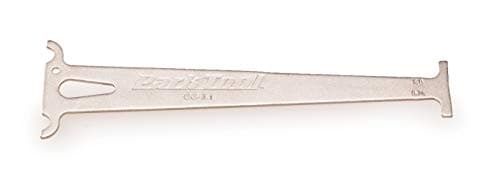
Park Tool CC-3.2 Chain Checker
Go/no-go gauge for 0.5% and 0.75% elongation, listed for 5–12 speed. If the 0.5 end drops in, order a chain today.
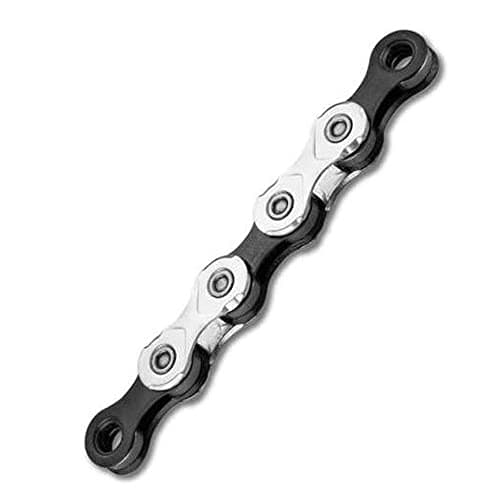
KMC X11 11-Speed Chain
A replacement chain has to match your drivetrain's speed count — this one is 11-speed. Check yours first; our chains roundup covers 11- and 12-speed options.
We haven’t tested any of these — they’re the parts the job above calls for, listed so you don’t have to go hunting. Prices are live from Amazon and we earn a commission if you buy. Prices as of October 18, 2026. #ad
Symptom 2: it skips or hesitates across every gear
If the chain is noisy and reluctant everywhere rather than jumping in one cog, this is indexing, not wear. Cable tension changes over time as a new inner wire settles and as housing compresses, and a system that was set perfectly in spring can be a quarter-turn out by autumn. The tell is that the noise moves with the gear: rub or hesitation that gets worse toward one end of the cassette and better toward the other is a tension error, and Park Tool’s rear derailleur adjustment procedure is the fix — we walk through the same sequence in how to adjust a rear derailleur.
There is a second cause in this category worth ruling out early, because no amount of cable adjustment fixes it: a bent derailleur hanger. The hanger is a deliberately soft aluminum sacrificial part, and it bends if the bike falls on its drive side — sometimes far enough to ruin shifting, rarely far enough to see by eye. Park Tool’s hanger alignment article is the reference; the practical version is that if indexing will not hold across the whole cassette no matter how you set it, suspect the hanger before you suspect the shifter.
Symptom 3: one clunk per pedal revolution, in every gear
A regular, rhythmic skip that repeats at the same point in each crank rotation is almost always a stiff link. It usually appears immediately after a chain installation — a connecting pin pressed slightly too far, or a quick link that has not fully seated — and it announces itself as the tight link passes through the rear derailleur’s tight radius.
Find it by backpedaling slowly and watching the chain feed through the jockey wheels: the stiff link will visibly hop. Free it by flexing the chain laterally either side of that link with your thumbs. If flexing does not free it, the pin is not seated correctly, and the honest answer is a new quick link rather than more persuasion — a chain that comes apart under load is a crash, not an inconvenience.
Symptom 4: the pedals spin free, or the skip is at the hub
If the cranks suddenly spin with no resistance at all — usually with a burst of rapid clicking from the rear wheel — that is not the chain. It is the freehub: the pawls inside the rear hub body have failed to engage, typically because old grease has gone thick and slow in cold weather, or the mechanism is dirty or worn. The distinction matters because every part of this page’s advice above is useless for it. Chain skipping loads and releases; a freehub failure gives you no resistance at all, and the noise comes from the hub rather than from the cassette teeth.
The wear cascade, and why chains are the cheap part
Underneath three of those four symptoms is the same economic story. The chain is the sacrificial component in a drivetrain: it is the cheapest part, it wears fastest, and if you replace it on time it protects everything it touches. Ride a chain well past 0.75% elongation and it reshapes the cassette teeth and eventually the chainrings, at which point you are not buying a chain, you are buying a drivetrain. That is the entire argument for owning a checker — and the reason our chain roundup spends more time on speed compatibility than on grams.
Compatibility is the other trap. Chains are speed-specific: an 11-speed chain is narrower than a 10-speed one and a 12-speed narrower still, and fitting the wrong width to a cassette gives you a drivetrain that shifts poorly and skips under load while every part on it is technically new. Our 11-speed vs 12-speed comparison lays out what actually changes between the two, and the cassette and chainring guide explains how to read what you already have.
What we can and cannot tell you
This page is a diagnostic ladder built from published manufacturer and tool-maker guidance, not from a bench test. We have not worn out a cassette on a rig to photograph the tooth profile, and we are not going to claim we have. What is verifiable is quoted: the 0.5% and 0.75% thresholds are Park Tool’s published figures for its own gauge, and the warning about a worn chain damaging cogs is Park Tool’s wording, not our inference. The symptom-to-cause mapping is standard workshop diagnosis, and the honest way to use it is as an order of investigation — cheapest and most likely first — rather than a guarantee.
One fault is deliberately not on this ladder, because it is a different problem with a different fix: a chain that comes off the rings altogether rather than jumping on them. That is travel, not wear, and why does my bike chain keep falling off diagnoses it by which direction the chain went.
Symptom, cause, and what it costs to fix
Work down the table — it is ordered by how cheap the fix is, which is also roughly how likely it is. The cost column is deliberately in parts, not dollars: prices move, and the useful information is which parts you are committing to.
| What you feel | Most likely cause | How to confirm | What it costs |
|---|---|---|---|
| Rhythmic clunk once per crank revolution | Stiff link from a recent chain install | Backpedal slowly and watch the jockey wheels for a hopping link | Nothing, or one quick link |
| Hesitation and noise across every gear | Cable tension / indexing drift | Noise worsens toward one end of the cassette | A barrel-adjuster turn; at worst an inner wire |
| Shifting will not index however you set it | Bent derailleur hanger | Alignment gauge, or a drive-side fall in the history | A hanger, or an alignment |
| Skips under load in your most-used gears | Worn chain, worn cogs, or both | Chain checker: 0.5% and 0.75% marks | A chain — or a chain and a cassette |
| New chain skips immediately on an old cassette | Cassette teeth reshaped by the old chain | It skips only on the cogs you ride most | The cassette (the chain is already bought) |
| Cranks spin freely with rapid clicking | Freehub pawls not engaging | No resistance at all, noise from the hub | A freehub service or body |
Measure before you buy. The two rows at the bottom of the money column are separated by one thirty-second check with a gauge, and doing that check in the right order is the difference between a chain and a drivetrain.
Common questions
Why does my chain skip only when I pedal hard?
Because load is what makes a worn tooth profile give up. Under gentle pressure a stretched chain still sits in the cog; put full torque through it and the roller climbs the reshaped tooth and jumps. Skipping that appears when standing and vanishes when you soft-pedal is a wear symptom until a chain checker proves otherwise.
I fitted a new chain and now it skips — what did I do wrong?
Probably nothing, except leaving the old chain on too long. The old, elongated chain reshaped the cassette teeth to match itself; the new chain has the correct pitch and no longer meshes with them. It will typically skip only on the sprockets you used most. The fix is a cassette, and the lesson is the checker: replacing the chain before 0.75% elongation is what prevents this.
Can a dirty chain cause skipping?
Dirt accelerates the wear that causes skipping, and a chain packed with grit will shift badly, but grime alone rarely makes a chain jump under load. Clean it, then measure it — a proper clean also makes the checker reading honest, because a filthy chain can foul the gauge.
How do I know if it is the chain or the freehub?
Resistance. Chain skip loads up and then releases — the pedals lurch forward and then catch again. A freehub failure gives you nothing at all: the cranks spin free with a burst of fast clicking from the hub, and no gear is immune. If your pedals are spinning weightlessly, stop reading about chains.
Is it safe to keep riding a skipping chain?
Not really. Skipping under load is how riders slip a pedal and land on the top tube, and if the cause is a badly seated pin the chain can come apart entirely. Ride home gently in a gear that does not skip, then diagnose it. A skipping drivetrain also destroys itself faster the longer it is ridden.
Sources
- Park Tool — When to Replace a Chain (a worn chain "can cause poor shifting and in time can even cause excessive wear to the derailleur and rear cogs, causing a much more expensive problem"; replacing a cassette costs more than replacing a chain) — retrieved 2026-08-18
- Park Tool — CC-3.2 Chain Checker product page (go/no-go gauge indicating 0.5% and 0.75% wear, "the points at which most chain manufacturers suggest replacement"; 5–12 speed) — retrieved 2026-08-18
- Park Tool — Rear Derailleur Adjustment (indexing and cable tension procedure) — retrieved 2026-08-18
- Park Tool — Rear Derailleur Hanger Alignment (the sacrificial hanger and why misalignment defeats indexing) — retrieved 2026-08-18
Read next
- When to replace a bike chain
The 0.5% / 0.75% rule, and how to read the gauge properly.
- Why does my bike chain keep falling off?
The other chain fault — diagnosed by which direction it left the rings.
- How to adjust a rear derailleur
The fix when the skip is indexing rather than wear.
- The best bike chains
Speed compatibility first, weight a distant second.
- How to clean a bike chain
Do this before you measure — a filthy chain fouls the gauge.
We haven’t ridden or tested any of the products on this page, and we don’t pretend otherwise. Read how we research — or tell us we’re wrong and we’ll log the correction.