Skip to content
ChainringClub

Garmin vs Wahoo Bike Computers

This is a brand decision, not a product decision. One of these companies publishes a complete spec sheet where you can read it. The other publishes its numbers somewhere else entirely.

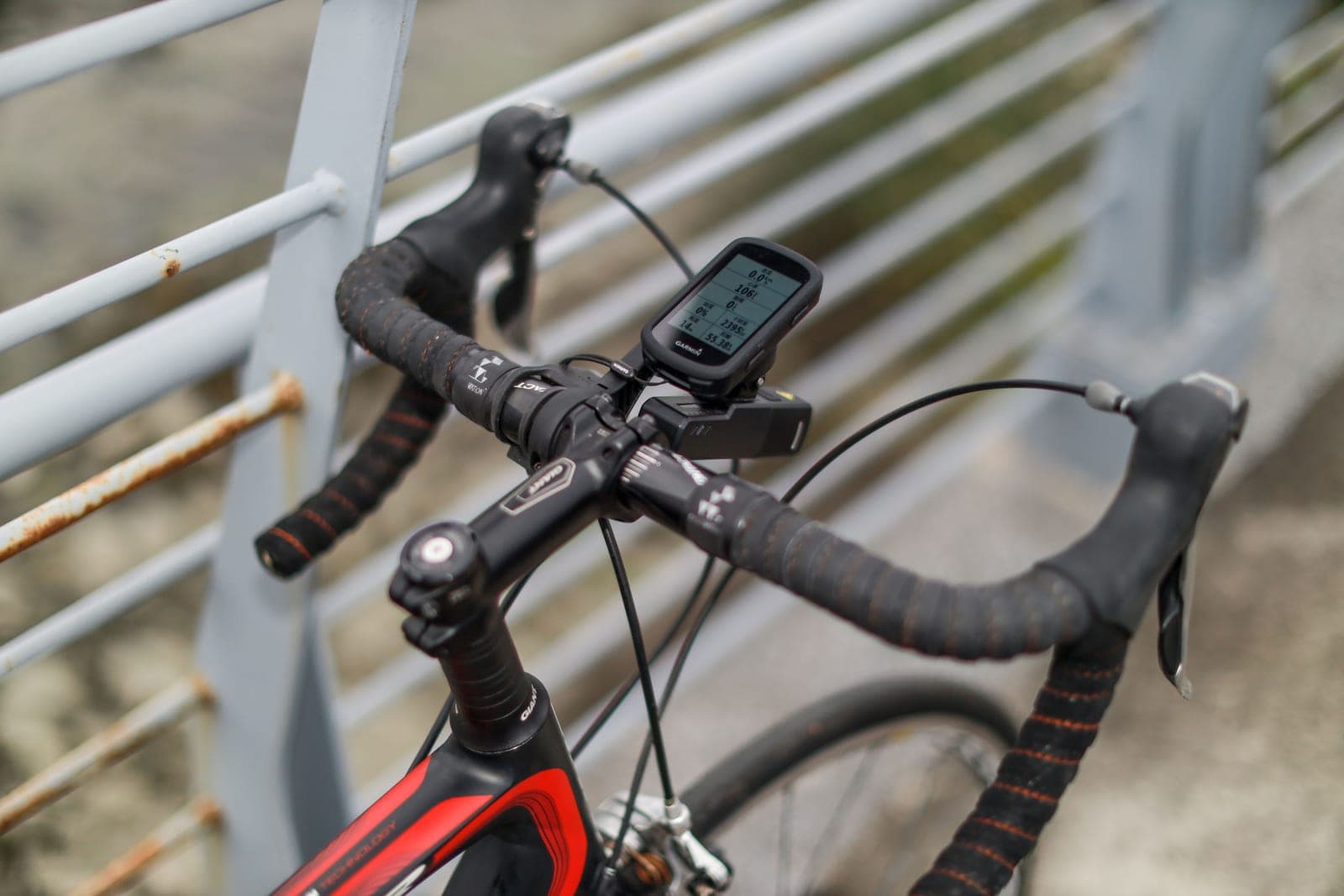
A bicycle handlebar with a GPS bike computer mounted, photographed close up in an urban street.
By Stephen V.Published September 18, 2026How we research

Heads up: we earn a commission if you buy through the links on this page, at no extra cost to you. It never decides what makes the list — here’s how that works.

Quick picks

Tap any row for the full write-up. Specs are the manufacturer's own published claims, read on 17 July 2026 (Amazon listings, via the computer roundup) and 18 September 2026 (Wahoo's own spec sheet).

#ProductBest forPrice
1
Wahoo Elemnt Bolt V3

Wahoo Elemnt Bolt V3

The only unit here whose maker publishes screen size, battery hours, weight, dimensions and GNSS bands on one page you can read before you spend.

Top pick
Buyers who want the numbers before the money
2
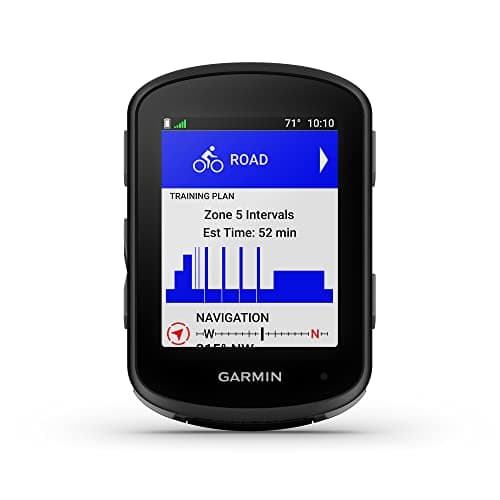
Garmin Edge 540

Garmin Edge 540

Garmin's compact training unit and the sensible middle of its range — buttons, mapping and a coaching feature set the listing names but never quantifies.

Riders who train to a structure and want buttons
3
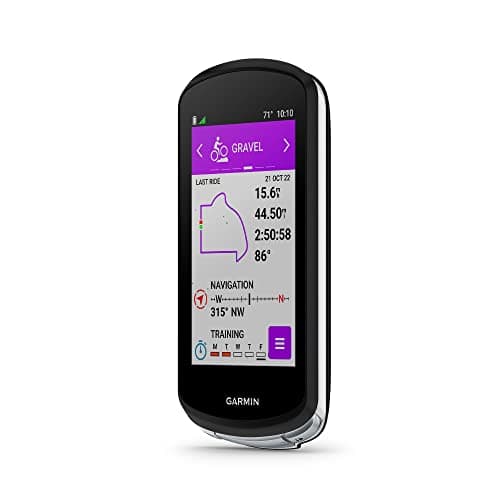
Garmin Edge 1040 Solar

Garmin Edge 1040 Solar

The big-screen flagship with a solar lens, sold on a “long-lasting battery” the listing declines to put a number on.

Long unsupported days away from a plug
4
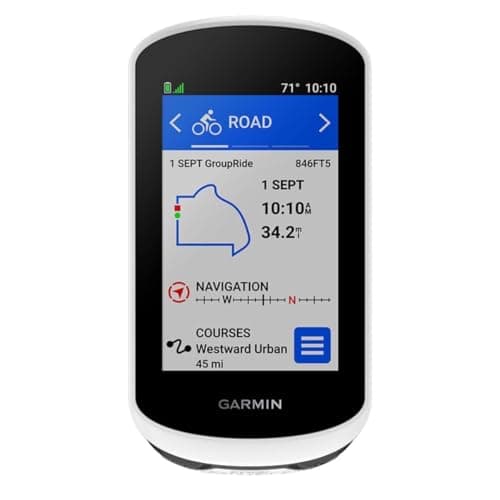
Garmin Edge Explore 2

Garmin Edge Explore 2

The cheapest door into Garmin mapping, and the listing with the least published data of any unit on this page.

Navigation without training features

Almost nobody compares an Edge 540 with an ELEMNT BOLT. People decide which company to buy into, and then pick the model. That is the honest shape of this question, and it is why our computer roundup — which ranks the whole field on what each listing publishes — does not answer it. A brand decision has different stakes: mounts, sensors, the app, and, eventually, the next unit.

We have not ridden either brand’s computers, and we hold no test data on GPS accuracy, screen legibility or real-world battery life. So we ranked this page on the one thing we can actually check: what each maker publishes, and where. That turned out to be the most decisive difference between these two companies, and it is one nobody writes about.

The short answer

Buy Wahoo if you want to read the specification before you spend. Wahoo publishes display size, battery hours, weight, case dimensions, every satellite constellation and the contents of the box on its own product page. Every one of those claims is auditable today.

Buy Garmin if you want range, radar and an ecosystem. Garmin sells at four price points on this page alone, and its sensors, radar tail lights and power meters all talk to each other. The cost is that Garmin’s Amazon listings tell you strikingly little: our roundup recorded “screen size: not published” and “battery life: not published” against the Edge Explore 2, and the Edge 1040 Solar listing advertises a “Long-Lasting Battery” without a figure anywhere near it.

What each brand publishes, and where it publishes it

This is the part worth slowing down for, because it decides how you shop rather than what you buy. Wahoo puts the spec sheet on the page that sells the product. Garmin puts feature names on the page that sells the product and the numbers on its support site, one model at a time.

Neither approach is dishonest. Garmin’s battery figures are real and published, with the conditions attached, and we link them above. But the practical effect is that a buyer comparing these two brands on the site where the money changes hands is comparing a specification against a set of adjectives — “compact”, “spot-on accuracy”, “advanced navigation”, “easy-to-use”. Those are not things we can rank, and we are not going to pretend otherwise.

That constraint also shapes the next decision down, if you land on Garmin. Edge 540 vs 1040 vs Explore 2 separates the three Edge units in our catalog using the only thing available — counting the jobs each listing claims. The 540 claims two (coaching and navigation), the 1040 claims solar and a scope, the Explore 2 claims navigation alone. That is Garmin’s own segmentation, in Garmin’s own words.

Mounts, and the cost nobody quotes you

Both brands use a quarter-turn mount, and both are proprietary. Switching brands means replacing every mount you own, and if you run an out-front mount on two bikes plus a stem mount on the winter bike, that is a real cost on top of the computer. Wahoo states an out-front mount (31.8 mm), a stem mount, a tether and a USB-C cable as in-box. The Garmin Edge 1040 Solar listing says “Device only”.

This is the single most under-discussed switching cost in the category, and it gets worse the longer you stay with one brand. It is also why the brand question matters more than the model question: you are choosing a mount standard for the next decade, not a screen for this season.

Sensors, radar and the ecosystem argument

Garmin’s advantage here is breadth. The same account and the same protocols cover computers, radar tail lights, power meters and heart-rate straps, and our bike light roundup covers the radar unit that most often pulls riders into Garmin’s ecosystem in the first place. If you already own a Garmin radar, that is a genuine reason to buy a Garmin computer.

Wahoo’s answer is standards. The BOLT publishes ANT+ and Bluetooth alongside WiFi, which means third-party sensors, power meters and heart-rate straps work without belonging to anyone in particular. Both brands upload to Strava, so the ride file is not a lock-in either way. Our power meter roundup is the page to read if the sensor side of this decision is the one that matters to you.

Where a phone still wins

If this is your first computer, the comparison that saves you the most money is not Garmin against Wahoo. It is a computer against the phone already in your pocket, and we work through it honestly in bike computer vs phone — including the cases where the phone is genuinely the right answer and the cases where battery drain and a wet screen make it the wrong one.

What this page refuses to do

We have not ridden either brand, and no figure on this page is ours. We will not reprint a Garmin battery number next to a Wahoo battery number as though they were measured the same way, because they were not measured by us at all and Garmin states its own conditions separately. And we will not rank these brands on feel, screen quality or menu design, because we have no basis for any of it. What is left is the spec sheet, the mount standard and the ecosystem — which, conveniently, is what the decision actually turns on.
What is published on the page that sells you the unit

Amazon listing claims read 17 July 2026 via the Creators API and recorded on our computer roundup. Wahoo’s own figures read from its product page on 18 September 2026. “Not published” means exactly that — not that the number does not exist.

UnitScreen sizeBattery figureWeightMount in boxWhere the numbers live
Wahoo ELEMNT BOLT2.3 in / 5.8 cmUp to 20 hours3.0 ozOut-front (31.8 mm) + stem mountWahoo product page
Garmin Edge 540Not published on listingNot published on listingNot published on listingNot statedGarmin support site
Garmin Edge 1040 SolarNot published on listing“Long-lasting”, no figureNot published on listingDevice onlyGarmin support site
Garmin Edge Explore 2Not published on listingNot published on listingNot published on listingNot statedGarmin support site

Read this table as a statement about shopping, not about quality. A Garmin Edge is not a worse computer for having its figures on a support page. But if you want to compare two units on numbers before you spend, one of these brands makes that a two-minute job and the other makes it an afternoon.

The picks, in detail

1

Wahoo Elemnt Bolt V3

Top pick
Wahoo Elemnt Bolt V3
$336.99 · View on Amazon

Price as of October 18, 2026. #ad

Best for: Buyers who want the numbers before the money

The only unit here whose maker publishes screen size, battery hours, weight, dimensions and GNSS bands on one page you can read before you spend.

  • GPS cycling computer
  • Black
  • Wahoo (own site, 18 Sep 2026): display 2.3 in / 5.8 cm color
  • Wahoo: battery life up to 20 hours
  • Wahoo: weight 3.0 oz; dimensions 83 x 47 x 24 mm
  • Wahoo: dual-band GNSS (GPS, GLONASS, BEIDOU, Galileo, QZSS, SBAS, NavIC); WiFi, Bluetooth and ANT+; USB-C
  • Wahoo: out-front mount (31.8 mm), stem mount, tether and USB-C cable in the box

We are not saying this is the better computer. We are saying it is the one you can check. Wahoo’s own product page lists the display size, the battery hours, the weight, the case dimensions, every GNSS constellation and what is in the box — read on 18 September 2026. That is a spec sheet a buyer can hold a maker to, and in this category it is unusual.

Good

  • Wahoo publishes the full sheet on its own product page — you can audit every claim on this row without buying anything
  • An out-front mount and a stem mount are stated as in-box, which is a real cost most computer listings leave you to discover
  • Dual-band GNSS is named by constellation rather than described as “spot-on accuracy”

Less good

  • The Amazon listing itself publishes nothing but “GPS cycling computer” and “Black” — the sheet is on Wahoo's site, not where you buy
  • One model at this price from Wahoo against four Garmin price points; if this unit is wrong for you, the brand has no cheaper answer
  • Setup is designed around the phone app, which is a positive for most people and a hard stop if you don't want the app

Skip it if: You want to buy a cycling computer cheaply. Wahoo's cycling computer range starts here; the value end of this category is where Garmin, CatEye, iGPSPORT and COOSPO live, and our computer roundup covers them.

2

Garmin Edge 540

Garmin Edge 540
$328.00 · View on Amazon

$349.99 −6%

Price as of October 18, 2026. #ad

Best for: Riders who train to a structure and want buttons

Garmin's compact training unit and the sensible middle of its range — buttons, mapping and a coaching feature set the listing names but never quantifies.

  • GPS cycling computer
  • Button controls (seller's claim)
  • Targeted adaptive coaching (seller's claim)
  • Advanced navigation (seller's claim)
  • Compact (seller's claim)

Good

  • Buttons work in winter gloves and in rain, which touchscreens do not always manage
  • Garmin's range spans four price points on this page alone — if this is the wrong unit, the brand has another
  • Pairs with Garmin's radar, sensors and power meters, the deepest first-party ecosystem in cycling

Less good

  • The listing publishes no screen size, no battery figure and no weight — the terms are “compact”, “targeted adaptive coaching” and “advanced navigation”
  • Superseded in Garmin's own lineup by the Edge 550, as our computer roundup records
  • “Adaptive coaching” is a feature name, not a measurement, and we cannot audit it

Skip it if: You want to read the spec sheet before you spend. Garmin does publish figures, but on its support site per model, not on the listing you are buying from — budget an hour of reading before you commit.

3

Garmin Edge 1040 Solar

Garmin Edge 1040 Solar
$589.99 · View on Amazon

$646.99 −9%

Price as of October 18, 2026. #ad

Best for: Long unsupported days away from a plug

The big-screen flagship with a solar lens, sold on a “long-lasting battery” the listing declines to put a number on.

  • Solar charging capabilities (seller's claim)
  • On and off-road
  • Spot-on accuracy (seller's claim)
  • Long-lasting battery (seller's claim — no figure published)
  • Device only

Garmin publishes battery-life expectations for this unit on its own support site, with the usage conditions attached. That is the right place to read them — but note what has happened: to compare this unit with the Wahoo you have to leave the store, find the right support article, and read figures that are not on the page taking your money.

Good

  • Solar charging is a genuine functional difference for multi-day riding, not a styling feature
  • The largest screen of the four, which is what most buyers of a flagship are actually paying for
  • Garmin does publish battery-life expectations, with the conditions attached, on its support site

Less good

  • The listing advertises “Long-Lasting Battery” and never says how long; we will not reprint a figure the listing we link to does not carry
  • “Device only” — mounts and sensors are extra, unlike the Wahoo's stated in-box mounts
  • The most expensive unit on this page by a wide margin, for a feature most riders will never need

Skip it if: Your longest ride ends at home the same day. Solar solves a problem created by riding for days between outlets; on a normal weekend ride any unit here recharges overnight.

4

Garmin Edge Explore 2

Garmin Edge Explore 2
$260.99 · View on Amazon

$299.99 −13%

Price as of October 18, 2026. #ad

Best for: Navigation without training features

The cheapest door into Garmin mapping, and the listing with the least published data of any unit on this page.

  • GPS cycling navigator (seller's claim)
  • "Easy-to-use" (seller's claim)
  • Screen size: not published
  • Battery life: not published
  • Claimed weight: not published

Good

  • Sells the map rather than the training plan, which is what most riders actually use a computer for
  • The lowest-priced route into Garmin's ecosystem and mount standard
  • Pairs with the same radar and sensors as the rest of the Edge range

Less good

  • Screen size, battery life and weight are all absent from the listing — our roundup records each as “not published”
  • No structured-training feature set; if you want intervals, this is the wrong Edge
  • “Easy-to-use” is the listing's main claim and is not a specification

Skip it if: You want power-based training. This is the navigation unit in the range; the Edge 540 is the training one, and the difference is deliberate rather than a price ladder.

What actually decides this purchase

Start with the mount, not the screen. The mount standard is the thing you are actually committing to, because it is the part you will have bought four of by the time you consider switching. If every bike in the garage already wears one brand’s mount, that is a legitimate reason to stay, and a better one than any feature comparison.

Then ask whether you train or navigate. Garmin splits these deliberately: the Edge 540 is the training unit, the Edge Explore 2 is the navigation one. Wahoo does not split them at this price. If you want intervals and structured workouts, that is a Garmin decision within Garmin’s range before it is a Garmin-versus-Wahoo decision.

Check what you already own. A Garmin radar tail light is the single most common reason to buy a Garmin computer, and it is a good one. Third-party sensors on ANT+ work with both. Nothing in a ride file locks you to either company.

Buttons or touchscreen is a weather question. Buttons work in full-finger gloves and heavy rain. If your riding is winter commuting rather than summer training, weigh that more heavily than any spec on this page — and see our cold-weather layering guide for the gloves that make the difference.

And if this is your first computer, price it against nothing. The value end of our computer roundup has units at a fraction of everything on this page that publish their screen size and battery hours on the listing. Brand loyalty is expensive to acquire and cheap to postpone.

Common questions

Is Garmin or Wahoo better for bike computers?

We hold no test data and will not call one better. On published information Wahoo is easier to buy: it prints screen size, battery hours, weight, dimensions and GNSS bands on its own product page. Garmin publishes its figures on its support site rather than on the listing, and offers a far wider range of models and first-party sensors.

Are Garmin and Wahoo mounts interchangeable?

Both use a quarter-turn mount and both are proprietary, so switching brands means replacing your mounts. Wahoo states an out-front mount and a stem mount as in-box; the Garmin Edge 1040 Solar listing says “Device only”. Factor the mount count across all your bikes into the price.

What is the battery life of the Wahoo ELEMNT BOLT?

Wahoo publishes “up to 20 hours” on its own product page, read 18 September 2026, along with a note that battery life varies with backlight brightness, settings and the number of connected sensors. That is the maker’s claim, not our measurement.

Do both brands work with Strava?

Yes. Both upload ride files to Strava, so the ride history is not a lock-in either way. The lock-in in this category is hardware — mounts and sensors — not data.

Which is better for navigation, Garmin or Wahoo?

Garmin sells a unit built specifically for it, the Edge Explore 2, at the bottom of its mapping range; Wahoo does not split navigation and training at this price. Neither listing publishes map coverage or routing detail, and we have not ridden either, so we cannot rank the routing itself.

Do I need a bike computer at all?

Often not. A phone records a ride perfectly well until rain, cold or a six-hour day gets involved. Our bike computer vs phone comparison sets out where each one fails.

Sources

We haven’t ridden or tested any of the products on this page, and we don’t pretend otherwise. Read how we research — or tell us we’re wrong and we’ll log the correction.