Skip to content
ChainringClub

Garmin Edge 540 vs 1040 vs Explore 2

Three Edge units, three price brackets, and between the three Amazon listings not a single published number. Here is what separates them, from Garmin's own choice of words.

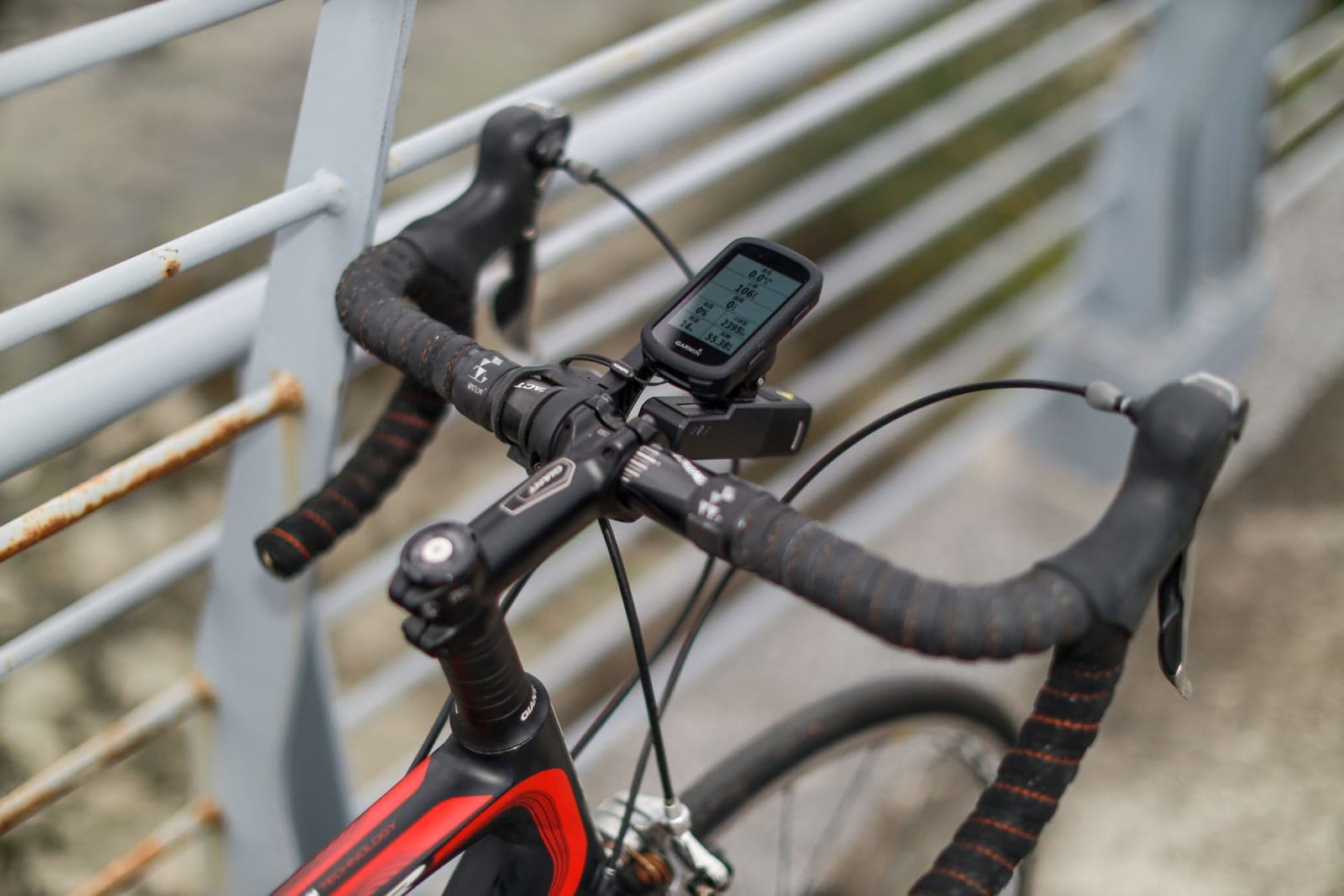
A GPS cycling computer mounted on the handlebars of a road bike.
By Stephen V.Published October 5, 2026How we research

Heads up: we earn a commission if you buy through the links on this page, at no extra cost to you. It never decides what makes the list — here’s how that works.

Quick picks

Tap any row for the full write-up. Specs are the manufacturer's own published claims, read on 17 July 2026 for the 540 and 1040, 17 August 2026 for the Explore 2 (via the computers roundup).

#ProductBest forPrice
1
Garmin Edge 540

Garmin Edge 540

The Garmin to buy unless you have a specific reason not to — the only one of the three whose listing claims both coaching and navigation.

Top pick
Training and navigating, without the flagship tax
2
Garmin Edge 1040 Solar

Garmin Edge 1040 Solar

The one you buy for charging reasons, not for screen reasons — and the only Edge here with a published figure anywhere, on Garmin's support site rather than its listing.

Rides measured in days, where charging is the actual problem
3
Garmin Edge Explore 2

Garmin Edge Explore 2

The cheapest door into Garmin, and the honest pick if you want the map and none of the training.

Navigation only, at the bottom of the Edge range

Buy the Edge 540. It is the only one of these three whose own listing claims both coaching and navigation, and it is roughly half the price of the 1040 Solar. Buy the Explore 2 instead if you want a map and have no interest in structured training — it is the cheapest way into Garmin and Garmin calls it a navigator rather than a computer, which is admirably honest. Buy the 1040 Solar only if your rides outlast your ability to charge, because solar is the one thing it does that the others cannot.

Now the part that makes this page unusual. We went to compare these three on specifications and discovered there are none.

Three Garmin listings, zero published numbers

Here, in full, is every specification the three Amazon listings publish between them:

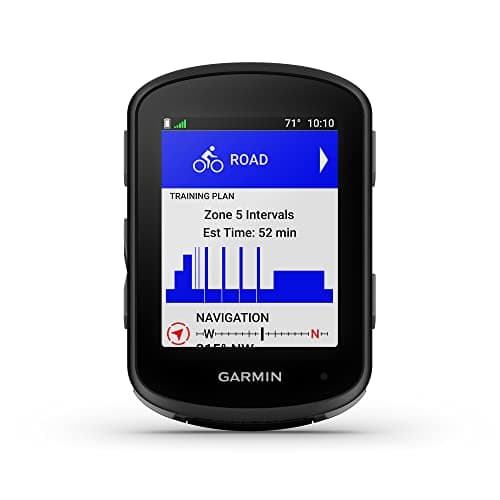
Edge 540: “Compact GPS Cycling Computer with Button Controls, Targeted Adaptive Coaching, Advanced Navigation and More”.

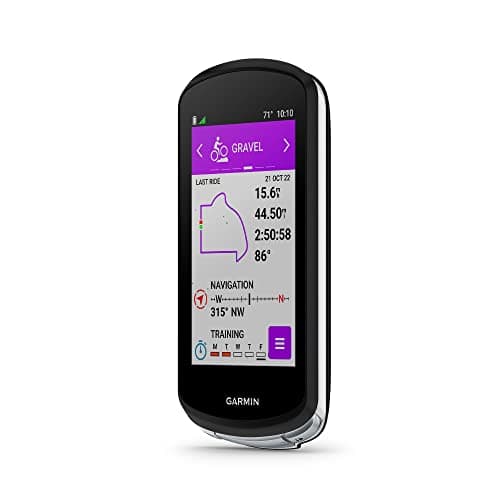
Edge 1040 Solar: “GPS Bike Computer with Solar Charging Capabilities, On and Off-Road, Spot-On Accuracy, Long-Lasting Battery, Device Only”.

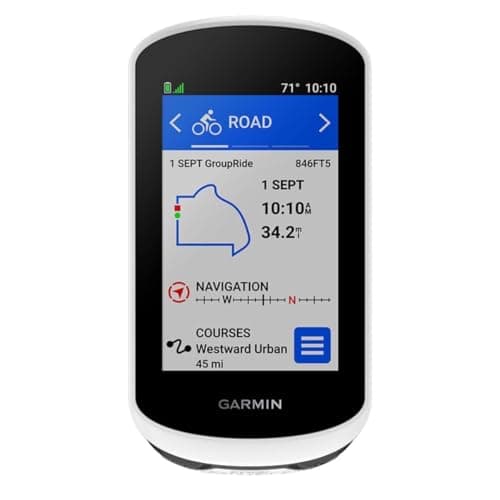
Edge Explore 2: “Easy-to-Use GPS Cycling Navigator”.

That is the complete published specification of all three devices in the channel most people buy them through. No screen size. No battery hours. No weight. No water rating. No satellite band count. Not one number across three products spanning a four-fold price range.

We want to be fair about this, because the uncharitable reading is wrong. Garmin does publish its figures— they are on support.garmin.com, and the Edge 1040 Solar battery article linked in that pick is a real, detailed, Garmin-authored document. The figures exist. They are simply not where you are standing when you decide. That is the same finding our Garmin vs Wahoo pagereached from the brand direction, where Wahoo publishes a complete spec sheet on its own product page — display size, weight, dimensions, battery hours and seven named GNSS constellations — and Garmin’s listings publish adjectives.

So what are we ranking on?

What each listing claims the product is. That sounds like a weak axis and it is actually a strong one, because a manufacturer’s choice of words about its own product is a deliberate, checkable, attributable thing — and when three products from one company are described in three different vocabularies, the vocabulary is the segmentation.

Count the claimed jobs. The 540’s listing names two: adaptive coaching and advanced navigation. The 1040’s names a feature (solar), a scope (on and off-road) and two adjectives (spot-on accuracy, long-lasting battery) — but no coaching. The Explore 2’s names one thing: navigation. Garmin is telling you, in its own words, that the 540 is the generalist, the 1040 is the endurance unit and the Explore 2 is the map. That maps cleanly onto who should buy which, and it required no guessing.

The three real differences, in plain terms

Buttons versus touchscreen. The 540’s listing specifies “Button Controls”; the other two do not specify an input method. Buttons work with cold wet fingers in full-finger gloves and cannot be triggered by rain; a touchscreen is better for panning a map. This is a genuine preference split rather than a quality difference, and it is the one thing on this page that will annoy you daily if you get it wrong.

Screen size. Not published for any of the three, so we cannot give you millimetres. What is published is Garmin’s own word “compact” for the 540, and the model numbering convention across the Edge range, where the 1040 sits above the 540. If a readable map is the purchase, the 1040 is the one that addresses it — and we are telling you that from Garmin’s product positioning, not from a figure.

Charging. Only the 1040 claims solar, and this is the clearest functional difference of the three. It matters for bikepacking, ultra-distance and multi-day touring and matters not at all for a two-hour club run. Everything else these units do, they do about equally.

The thing none of the three solves

Mount compatibility. Garmin’s quarter-turn mount is proprietary, as is Wahoo’s, which is the real switching cost our brand comparison identifies. All three units here share Garmin’s mount, so moving between them is free — and moving away from Garmin later is not. If you already own Garmin mounts, out-front and stem, that is a genuine reason to stay inside this family, and it is worth more than any feature difference above.

One last honest note, because it is the conclusion our roundup reaches and this page should not quietly contradict it: the computer that wins that roundup outright is not a Garmin at all. The iGPSPORT BSC100S is the only unit on that page whose listing publishes both a screen size and a battery figure, and it records the same ride to the same satellites for a small fraction of the money. The honest reasons to pay Garmin prices are the ecosystem — turn-by-turn routing worth the name and radar pairing — and if neither of those is on your list, read computer versus phone before you read any more of this.
The picks, in detail

1

Garmin Edge 540

Top pick
Garmin Edge 540
$328.00 · View on Amazon

$349.99 −6%

Price as of October 17, 2026. #ad

Best for: Training and navigating, without the flagship tax

The Garmin to buy unless you have a specific reason not to — the only one of the three whose listing claims both coaching and navigation.

  • GPS cycling computer
  • Button controls (seller's claim)
  • Targeted adaptive coaching (seller's claim)
  • Advanced navigation (seller's claim)
  • Compact (seller's claim)

This is the same conclusion our computers roundup reaches, and for the same reason: of the three Garmins, this is the one whose own listing claims the broadest set of jobs. Note the generation question honestly though. Garmin’s own announcement of the Edge 550 and 850, dated 9 September 2025, calls them its “brightest and smartest compact cycling computers” with a 2.7-inch display, and BikeRadar’s lineup guide lists the 540 and 840 as superseded. The 540 is still sold and still does everything its listing claims — you are buying the model that was replaced, which is usually good news on price and bad news on how long it stays supported.

Good

  • Its listing is the only one of the three that claims two jobs — “Targeted Adaptive Coaching” and “Advanced Navigation” — where the 1040 sells solar and the Explore 2 sells navigation alone
  • Buttons rather than a touchscreen, which in rain and full-finger gloves is a feature and not a compromise
  • Roughly half the price of the 1040 Solar for the same ecosystem: sensors, radar pairing, routing, structured workouts
  • “Compact” is Garmin's own word for it, and a small head unit is less to knock off a bar in a crash

Less good

  • The listing publishes no battery life, no screen size, no weight and no water rating — nothing numeric whatsoever
  • It is the outgoing generation: Garmin announced the Edge 550 and 850 on 9 September 2025, and BikeRadar's lineup guide lists the 540 and 840 as superseded by them
  • “Targeted adaptive coaching” is a phrase, not a specification, and the listing does not define what it does
  • If navigation on a readable map is the entire reason you are buying, the compact screen is the thing you are compromising

Skip it if: You want a map you can read while moving, or you ride for days at a time. Those are the two honest reasons to move off this unit, and they point at the Explore 2 and the 1040 Solar respectively rather than at each other.

2

Garmin Edge 1040 Solar

Garmin Edge 1040 Solar
$592.99 · View on Amazon

$646.99 −8%

Price as of October 17, 2026. #ad

Best for: Rides measured in days, where charging is the actual problem

The one you buy for charging reasons, not for screen reasons — and the only Edge here with a published figure anywhere, on Garmin's support site rather than its listing.

  • Solar charging capabilities (seller's claim)
  • On and off-road
  • Spot-on accuracy (seller's claim)
  • Long-lasting battery (seller's claim — no figure published)
  • Device only

Here is the most useful thing on this page about the 1040, and it is not on Amazon. Garmin’s own support article on Edge 1040 Solar battery life publishes battery expectations the Amazon listing omits entirely. That pattern — real numbers on the support site, adjectives in the shop — is the central finding of our Garmin vs Wahoo comparison, where Wahoo publishes a full spec sheet on its own product page and Garmin does not. Before you spend flagship money, read Garmin’s page rather than the listing.

Good

  • Solar charging is a real answer to a real problem if your rides run past where you can plug in
  • The listing claims both on- and off-road capability, so it is one device across disciplines
  • The largest screen of the three, which is the thing that makes a map usable at speed
  • The only one of the three for which Garmin publishes a battery expectation anywhere, even if not on the listing

Less good

  • The listing says “Long-Lasting Battery” and publishes no hours; the real figures are on Garmin's support site, not where you buy it
  • “Device Only” in the title means exactly that — check what mounts are in the box
  • Roughly twice the 540 for a set of capabilities most riders will not reach the limits of
  • BikeRadar's guide names the Edge 1050 as Garmin's current flagship, so this is no longer the top of the range even though it is still a current model

Skip it if: Your longest ride is a long day rather than several. Solar solves a charging problem; if you can charge every night, you are paying for an answer to a question you do not have, and the 540 does the riding part identically.

3

Garmin Edge Explore 2

Garmin Edge Explore 2
$260.99 · View on Amazon

$299.99 −13%

Price as of October 17, 2026. #ad

Best for: Navigation only, at the bottom of the Edge range

The cheapest door into Garmin, and the honest pick if you want the map and none of the training.

  • GPS cycling navigator (seller's claim)
  • "Easy-to-use" (seller's claim)
  • Screen size: not published
  • Battery life: not published
  • Claimed weight: not published

Good

  • The cheapest current Edge, inside exactly the same ecosystem — sensors, radar pairing and routing all behave the same
  • Garmin calls it a “navigator” rather than a computer, which is unusually clear about what you are buying
  • Cheaper than the 540 while still giving you the thing most people buy a Garmin for
  • A touchscreen navigator is the right interface for a map, where buttons are the right interface for data fields

Less good

  • Its listing is the thinnest of the three — a product name and the words “Easy-to-Use GPS Cycling Navigator”, and nothing else
  • No claim of structured training or coaching anywhere in the listing, which is a real functional gap rather than an omission
  • Still several times the price of the computer that wins our roundup outright on published specs

Skip it if: You want to be coached rather than directed. The 540's listing claims adaptive coaching and this one does not mention training at all; if intervals and structured workouts are the point, pay the difference.

Common questions

Should I buy the Garmin Edge 540 or the 1040?

The 540, unless charging is your constraint. The 540’s listing claims both adaptive coaching and advanced navigation and it costs roughly half the 1040 Solar; the 1040’s distinguishing claim is solar charging, which solves a problem that only exists on rides long enough that you cannot plug in. The larger screen is the other reason, though Garmin publishes no screen size for either unit.

What is the difference between the Garmin Edge 540 and the Edge Explore 2?

Garmin’s own words are the difference. The 540 is listed as a “Cycling Computer” claiming targeted adaptive coaching and advanced navigation; the Explore 2 is listed as a “Cycling Navigator” and claims navigation only, with no mention of training. The Explore 2 is cheaper. If you want structured workouts, that gap is real.

Is the Garmin Edge 540 discontinued?

It is still sold, but it is the outgoing generation. Garmin announced the Edge 550 and 850 on 9 September 2025, describing them as its brightest and smartest compact cycling computers with a 2.7-inch display, and BikeRadar’s Edge lineup guide lists the 540 and 840 as superseded by them. The 1040 and 1040 Solar remain current models, with the Edge 1050 named as the flagship.

How long does the Garmin Edge 1040 Solar battery last?

The Amazon listing says only “Long-Lasting Battery” and publishes no hours. Garmin publishes battery life expectations for the Edge 1040 Solar in its own support documentation, which is where we point readers, because we will not reprint a figure second-hand from a retail page that does not carry one.

Do all three Edge units use the same mount?

They share Garmin’s quarter-turn mount, so moving between these three costs you nothing in hardware. That mount is proprietary, as Wahoo’s is, which means the switching cost shows up only when you leave the brand — the point our Garmin vs Wahoo comparison is built around.

Is any Garmin worth it over a cheap bike computer?

Only for two things, in our reading: turn-by-turn navigation that actually works, and pairing with a Varia radar so vehicle alerts appear on the head unit. Those are the two jobs a budget computer genuinely cannot do. Everything else on a Garmin spec sheet is a nice-to-have, and the computer that wins our roundup is the one whose listing publishes a screen size and a battery figure — which no Garmin listing does.

Sources

We haven’t ridden or tested any of the products on this page, and we don’t pretend otherwise. Read how we research — or tell us we’re wrong and we’ll log the correction.