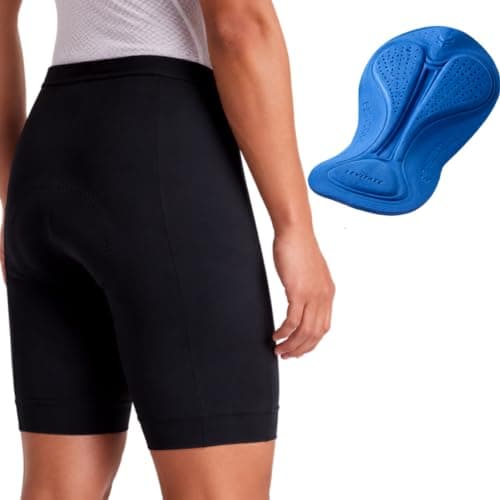
A cycling short is a chamois pad and a way of holding it against you. Bibs use straps. Everything on this page uses a waistband. Our bibs versus shorts comparisonworks through why straps win for a rider folded forward over drop bars — and why the whole argument collapses the moment you sit upright. A commuter, a hybrid, most e-bikes, a trainer in a spare room: none of those positions put a waistband on a folded abdomen, so none of them need straps. Until now that page told you to buy waist shorts and then had nowhere to send you, because every pick in our bib roundup is a bib. This is the page it sends you to.
Inseam is the specification, and this category prints it
The number that decides whether a waist short works is how far down the thigh it ends. Too short and skin rubs skin; too long and the hem catches the saddle nose or reaches the knee. The bib category mostly refuses to publish it — the top pick on our bib page lists no inseam at all. Waist shorts are different. Seven of the nine listings above print an inseam in inches, four of them in the product name itself: Quest 9″, High Waist 7″, Sugar 5″, 11.5″ Inseam. That is a better hit rate than any garment we have priced except socks, and it is the reason this page can be ranked on something other than price.
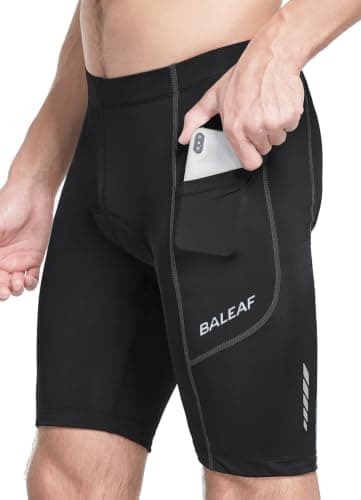
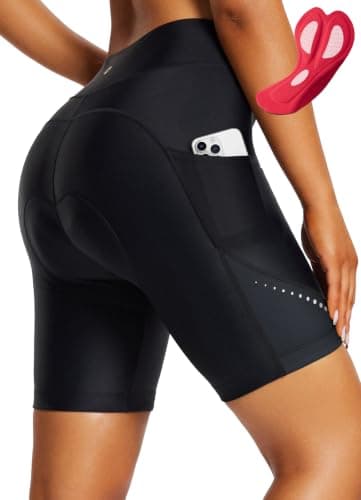
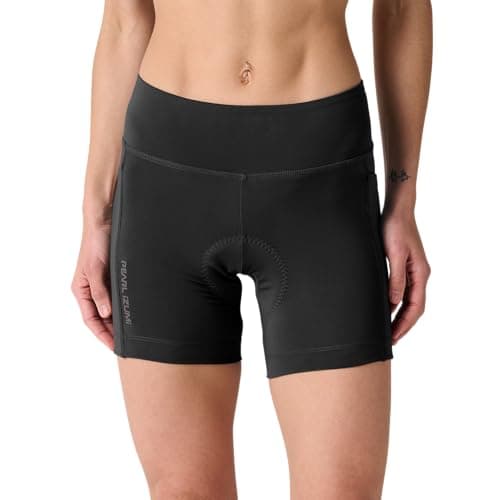
For orientation: five inches is a studio short and ends high on the thigh. Sevenis the point the Baleaf women’s listing argues for — past the widest part of the thigh, so bare skin does not meet bare skin. Eight and a half to nineis the normal road length and what both Quest shorts and the Baleaf men’s cut use. Eleven and a halfis a mountain-bike baggy that reaches most knees. The two listings that publish nothing — the Endura and the Santic — sit where they sit on this page partly for that reason.
Three kinds of short, and which one you actually want
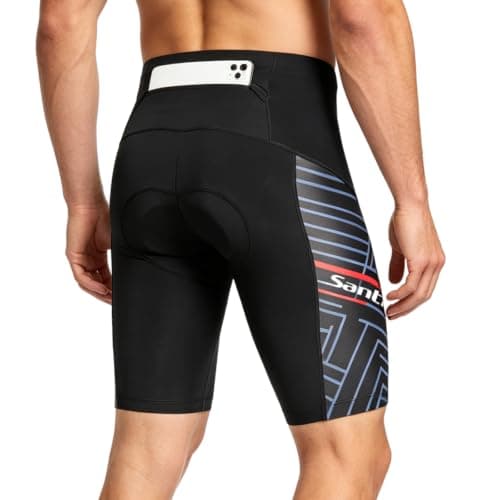
- A padded short. Lycra with a chamois sewn in, held up by a waistband. The two Quest shorts, the two Baleaf fitted shorts, the Sugar and the Santic. Closest to a bib in function; buy this for the trainer, for road riding sat up, and for any commute where you change at the far end. Indoors it is the right garment for a reason that has nothing to do with position: with no airflow in the room, heat is the whole problem, and a five- or seven-inch waist short is the coolest thing in this hub.
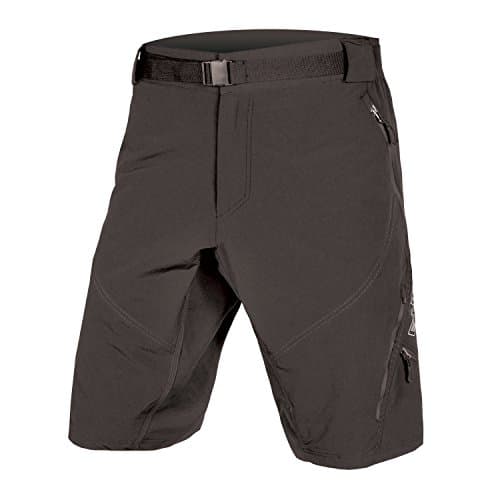
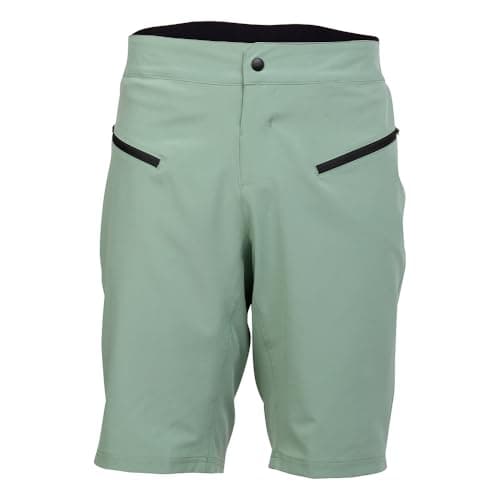
- A baggy with a liner. A loose outer short with pockets over a separate padded liner clipped or buttoned inside. The Endura Hummvee and the Pearl Izumi mountain bike short. Buy this for gravel, trail and any ride where you walk into a shop, because a baggy passes as clothing and lycra does not. The cost is two garments, more fabric and more warmth.
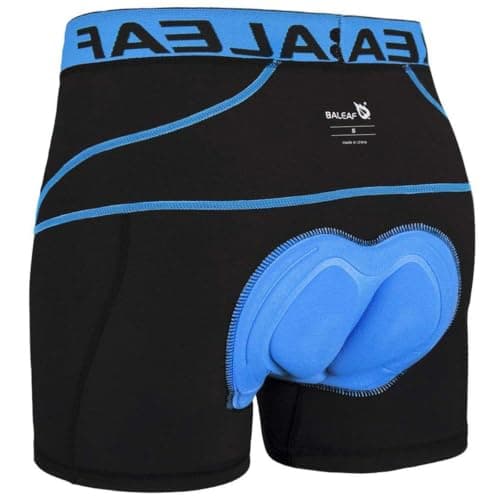
- A liner on its own. The Baleaf padded underwear. A chamois with a waistband and nothing else, worn under whatever you already ride in. This is what the bib comparison is really recommending when it says upright riders should not bother with bibs, and it is the cheapest way on this page to learn whether a pad helps you.
The pad is still unreviewable — but some listings publish more than others
The honest problem with every short on this site is the same: the chamois is the product, and how it suits you depends on your sit bones and your position, which no reviewer has access to. Our chamois guide explains what the construction terms mean; what this page can add is which listings say anything checkable.
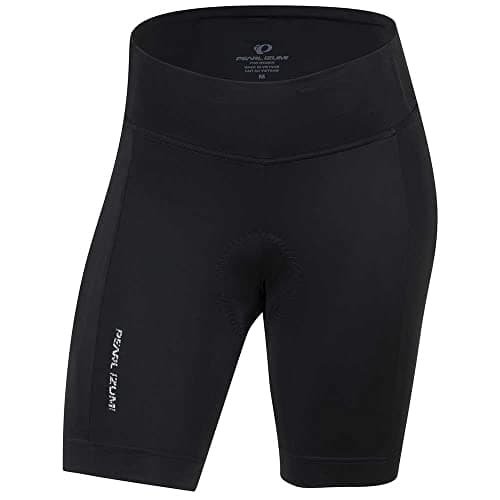
Pearl Izumi names its pads. Both Quest shorts are listed with the Levitate chamois, and the women’s listing goes further and says SELECT Levitate, which the brand’s own chamois page describes as the entry tier of a three-tier platform, below Elite and Pro. That is a real piece of information: it tells you the Quest is the everyday pad, not the race one, and the seller is not pretending otherwise. The Sugar and the mountain bike short name an Escape 1:1 pad that is not on that page at all, so we cannot place it in the hierarchy and do not try.
Baleaf goes the other way and publishes a number: the women’s 7″ short lists a foam density of 50–120 kg/m³. We have not measured it and cannot tell you what density suits you, but it is the only pad figure on the page, it sits inside the 40 to 200 kg/m³ range that pad maker Elastic Interface publishes for its own foams (our chamois guidequotes the source), and a seller who prints one is at least making a claim that could be checked. The same listing then promises “support for at least four hours and 30 miles”, which is a promise about your body, and the Santic promises a pad good for 300 km of continuous riding in two to three hours, which works out to an average speed of 100 to 150 km/h. Read pad claims the way you read the “3D” and “4D” labels: as marketing, until a number appears.
Pockets are the one thing a waist short does better than a bib
A bib cannot carry a pocket you can reach without unclipping the straps. A waist short can, and the listings above show three approaches. The two fitted Baleaf shorts publish two side pockets sized for a 5.5-inch phone. The Sugar publishes two mesh leg pockets at 3 by 2.5 inches, which is a gel or a key. The Santic publishes one rear waist pocket. The two baggies publish zipped hand pockets, and the Endura adds cargo and a rear map pocket. If the phone is going on the shorts, a zipped pocket on a baggy is the only one it will not fall out of on a rough descent, and a rear waist pocket is where it swings least on a fitted short.
UPF, reflectives and the claims worth reading
The Baleaf men’s short is the only listing on this page with a published sun rating, UPF 50+. According to the Skin Cancer Foundation, a UPF 50 fabric blocks 98 percent of the sun’s rays and lets one fiftieth through, and UPF 50 is the threshold for its Seal of Recommendation. A black lycra short with no published UPF may well protect you too, but only one seller here has put a number on it, and a number is the only thing we can compare. Three of the four Pearl Izumi listings publish BioViz reflective elements, and the women’s Quest listing gives a distance, 100 meters. That is a claim about a headlight at night, and it pairs with a rear light rather than replacing one.
Sizing, and why the linked listing says one size
Amazon splits most apparel into one listing per size and color, and the buy button above goes to the exact variant we priced — a Large here, an XXL there, a 34 waist on the mountain bike short. That is stated in each pick’s specs so you are not surprised. The product page lets you switch to your size, but the live price on this page is for the variant named, and a different size can carry a different price or no stock. A waist short is sized by waist and, for the baggies, by a waist number rather than S/M/L; the only listing that explains its own sizing logic is the Baleaf 7″, which argues its length from thigh anatomy rather than height.
Washing, and the thing that kills a waist short
The failure mode is the waistband. Elastic hates hot washes and fabric softener, and a waistband that has lost its recovery is a short that slides on every pedal stroke — exactly the problem straps were invented to solve. Cold, gentle, no softener, air-dry, as in our guide to washing cycling kit. The two baggies make this easier, not harder: the liner comes out and washes on the gentle cycle while the ripstop outer goes in with everything else.
What we could not check
We have not worn any of these shorts, measured an inseam, or assessed a chamois. There is no lab here and no test rider, and in this category there could not usefully be one, because a pad that suits one pelvis says nothing about the next. What is on this page is the specification each seller publishes on its live Amazon listing, read on 16 September 2026, and a ranking built from those specifications. Where a listing publishes nothing — and two of nine publish no inseam — the table below says so rather than filling the gap.