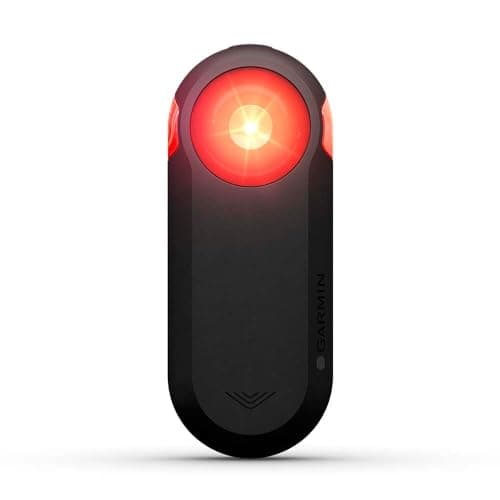
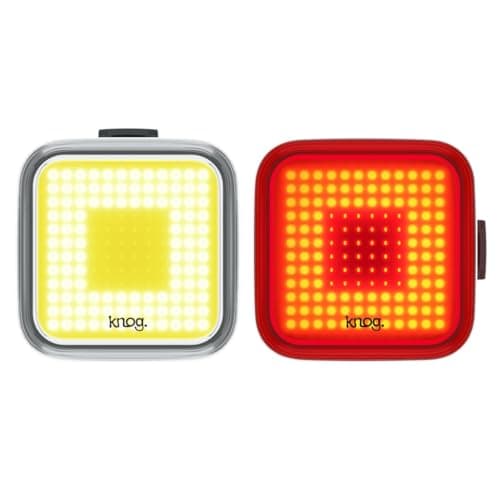
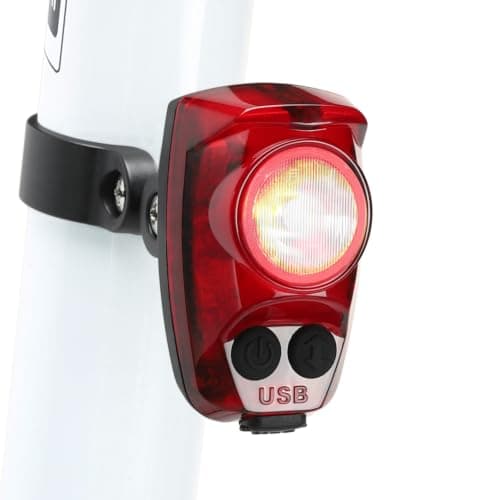
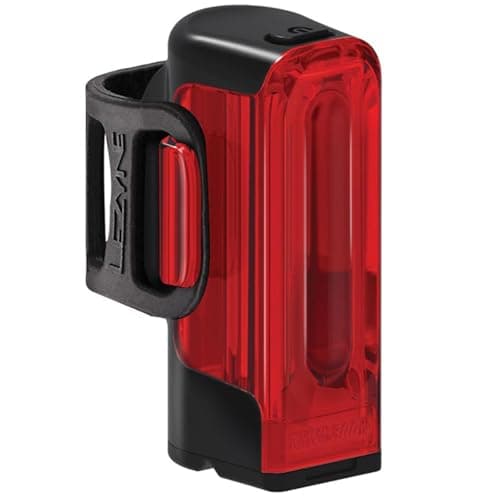
The Lezyne Strip Drive Pro 400+ is the rear light to buy for most riders, because it is the only tail light in this catalog that publishes both a submersion-grade water rating and a visibility angle — the two facts that decide whether a driver at a side junction sees you in the rain. If you ride fast, open roads, the Garmin Varia RTL515 is a different product wearing the same shape: a tail light with radar that warns you. The budget pick is the Cygolite Hotshot Pro, the cheapest light here and still the owner of a published IP code, six modes and a hard mount.
Everything on this page is a light whose own listing sells it as a rear or tail light. The headlights in this site’s catalog are not here; they are ranked on the lumen axis where they belong, in the main bike light roundup.
Why lumens are the wrong number at the back of the bike
A headlight has a job you can measure in lumens: put light on the road so you can see. A tail light has a job you cannot measure that way at all — be noticed, early, by someone who is not looking for you. Past a surprisingly low output, extra lumens at the rear mostly produce glare, and a glared driver is not a driver who has judged your distance correctly.
What does change the outcome is the angle: a light that throws 270 degrees is visible to the car waiting at the junction you are about to cross, and a narrow-beam light is not. And what changes it most of all is flash pattern in daylight— a running light in the afternoon is the single cheapest thing a road cyclist can do about being hit from behind. Three of the four lights here publish daytime modes. Bike light lumens explained covers why the number on the box is a less useful comparison than it looks.
What an IP rating actually promises
An IP code has two digits: dust, then water. IP64 means dust-tight and protected against splashing. IPX7 means the water digit was tested to temporary submersion and the dust digit was not tested at all. For a light that spends winter six inches above a wet road, the water digit is the one that matters, and the gap between a splash rating and a submersion rating is the gap between a light that survives one bad February and a light that does not.
One light on this page publishes IPX7, one publishes IP64, one says “waterproof” with no code at all, and the most expensive one publishes nothing. We do not credit a rating a listing has not printed.
What this page cannot tell you
Nobody here has ridden behind these lights, measured a beam, or drowned one in a bucket. Every specification above is read through this site’s reuse layer from the parent roundup, on the date that page records, so the two pages cannot drift apart.
No manufacturer in this category publishes the figure that would settle it: measured conspicuity at distance, in daylight, for a given flash pattern. Treat every lumen claim as a peak-mode number and every runtime silence as what it is — a runtime nobody wanted to print.
Water rating, visibility angle and the extra function, each as published by the seller. An empty cell is not a missing feature — it is a figure the listing declines to give, which on a safety product is itself information.
Every middle column is a claim the seller publishes in its own listing, not a measurement of ours. Prices are live from Amazon as of November 23, 2026 and 4 of 4 rows carry one right now. Every “Check price” link is an affiliate link and Amazon pays us at no cost to you. #ad
The headlights in this catalog — the Cygolite Metro 800 and the NiteRider Lumina — are deliberately absent. They are ranked on the lumen axis in
the main lights roundup, because that is the number a headlight is actually bought on.
Buy a daytime mode before you buy brightness. Most cyclists killed from behind are hit in daylight. A flashing rear light in the afternoon costs nothing extra and three of the four lights here publish day-specific modes.
Match the water rating to your actual winter. If the bike lives outside or the commute happens in the rain, IPX7 is worth paying for. If the bike lives in a hallway and rides in the dry, IP64 is enough and the money is better spent elsewhere.
Check the mount against your seatpost before you order. Aero posts defeat round brackets and round straps alike; this is the most common reason a good tail light ends up in a drawer. If the post is aero, plan to mount on a saddle bag loop or the seatstay instead.
Two cheap lights beat one expensive one. A second rear light on the seatstay or the bag is redundancy for a flat battery and a second angle for a driver. The budget pick here is cheap enough that owning two is a reasonable plan.
Radar is a different purchase, not a brighter one. The Varia is not competing with the lamps on this page; it is competing with a mirror and with your own ears. If that is the problem you are solving, our mirror roundup is the cheaper half of the same decision.