Saddle bags are compared on fabric and fail on mounts. The material almost never wears out first. What goes wrong is the attachment: a strap that loosens until the bag swings, a velcro loop that rubs a saddle rail, a bracket that was never fitted properly. That is why this page ranks on the mounting system and treats volume and weatherproofing as secondary.
The second thing nobody says out loud: the bag exists to carry a specific list of items, and that list is short. A tube, two levers, a patch kit, a multitool, and either a mini pump or a CO2 inflator — the roadside kit our flat repair guide spells out. If you run tubeless, add a plug tool from the tubeless repair kit. Buy the smallest bag that takes that list, because a bigger one just fills up with things you never use.
Bracket or strap: the decision that decides everything else
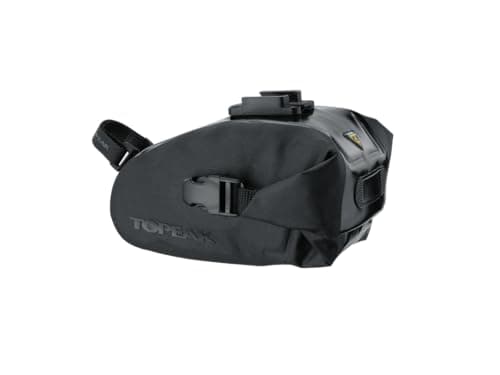
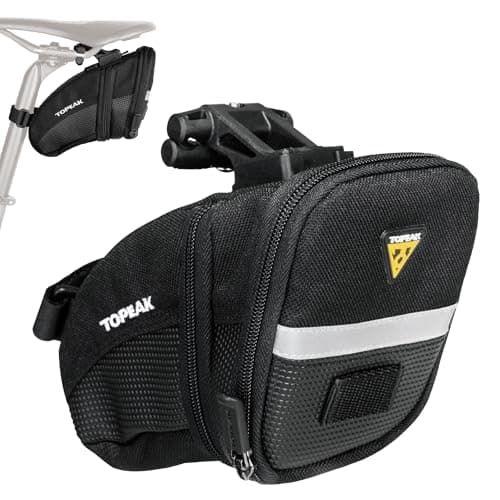
Bracket mounts(Topeak’s QuickClick is the common example) fix a small plastic bracket to the saddle rails, and the bag clips into it. The bag comes off in a second — useful at a café or when the bike goes in a car — and it does not move on rough ground. The cost is a five-minute install per bike and a bracket that stays on the saddle when the bag is off.
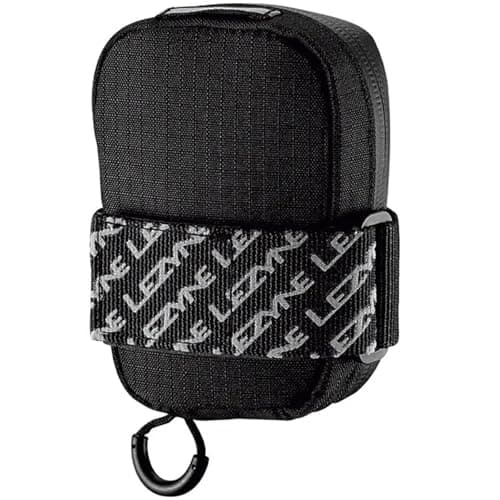
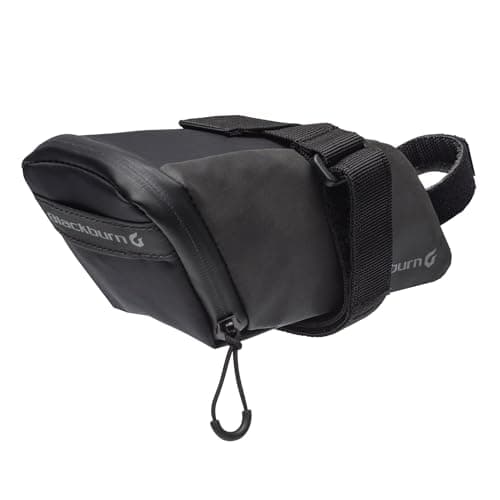
Strap mounts use velcro or buckles around the rails and seatpost. They move between bikes instantly and cost nothing to fit. They also loosen with use, and on carbon rails they need occasional checking for rub. For one bike and one bag, a strap is fine; for two bikes and a family of bags, brackets win.
Weatherproofing is a closure question
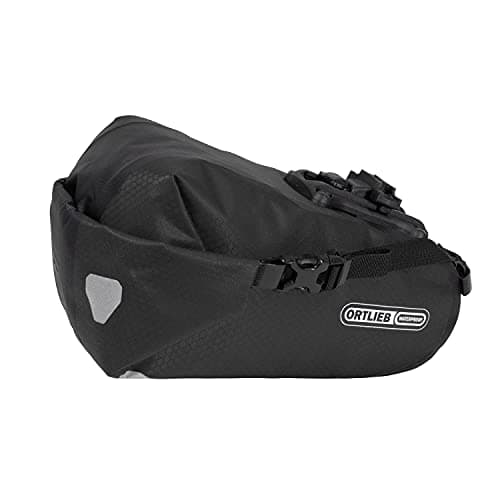
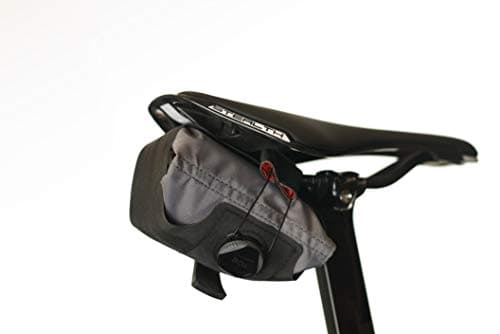
Three closure types, three levels of protection. A zipis fastest to open and the least weatherproof — water tracks along the teeth. A flap with a buckle sheds most spray. A roll closure, as on the Ortlieb, is the only design that is genuinely waterproof, because there is no seam to leak through — and it is the slowest to open with cold hands in the rain, which is precisely when you need it.
This matters more than it sounds because of what lives in the bag. A patch kit with damp glue is useless. A spare tube that has been wet and dried in a gritty bag picks up abrasive dust that goes straight into your tire. If you ride through winter, the closure is worth choosing deliberately.
Volume: published, and mostly not
One bag on this page publishes a volume figure — Ortlieb’s 1.6 liters for the road-sized Saddle-Bag Two, with a 4.1 liter alternative. The rest use size names (small, medium, large) that mean whatever the brand wants. Topeak at least publishes that its medium and large expand by 20–30%, which is a real, checkable claim about how the bag behaves when you overfill it.
A practical calibration: the roadside kit above fits a bag of roughly 0.5–1 liter. A liter and a half takes that plus a packable gilet. Anything more and you are buying a bikepacking seat pack, which is a different product with different mounting requirements entirely.
Rattle, rub and the two things that ruin a bag
Rattle comes from a partly filled bag with hard contents. The fixes are mechanical, not financial: wrap the multitool in the spare tube, or pick a roll format that binds everything together. Rub comes from a strap or a bag corner touching the saddle rails, the seatpost or a rear tire on full suspension travel. Check the clearance with the bag loaded, not empty, and check it again after the first long ride.
The third failure — the bag that swings into the tire on a descent — is always a mount problem, and it is why the bracket systems exist.
What we could not check
We have not loaded these bags, ridden with them, or hosed them down. Every specification above is either the manufacturer’s published claim or the live Amazon listing text read on 18 August 2026, and where a listing publishes no volume — which is four of these six — the table says so rather than estimating one.