An inner tube is the only part of a bicycle where the correct answer is almost entirely a fit question. There is no rolling-resistance figure on the box, no published durability rating, and no test any of us could run at home that would separate two butyl tubes of the same size. What there is — on the better listings — are four numbers that decide whether a tube works at all. Get them right and almost any tube on this page is fine. Get one of them wrong and the best tube in the world is a rubber donut in a bin.
So this page ranks on those four numbers, in the order the fit is decided, and on whether the seller publishes them. That is a ranking you can audit against a wheel and a tape measure, which is more than a score out of ten would ever give you.
The four numbers, in order
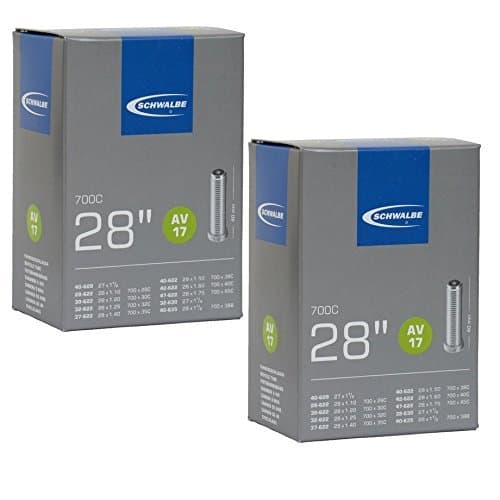
1. Bead seat diameter. This is the number that cannot be negotiated. Park Tool puts the ISO system plainly: “The larger number is always the bead seat diameter… Rims and tires with the same number are made to fit one another. For example, tires marked 622 will fit rims marked 622.” Every 700c and 29in wheel on this page is 622. A 27in wheel is 630, and an older city bike may be 635 — which is why the Schwalbe pick, published as 28/47-622/635, covers two diameters and the others cover one.
2. The tire-width range.A tube stretches, so one part number covers a band rather than a single width. Park Tool describes both failure modes, and they are opposites. Too narrow: the tube “will become very thin when inflated inside the tire body. This will cause it to be more susceptible to punctures and failures.” Too wide: it “will be difficult or impossible to properly fit inside the tire casing and seat in the rim.” The band printed on the packet is the whole of the specification.
3. Valve type.Decided by the hole in your rim and nothing else. Park Tool publishes the diameters: Schrader stems are “approximately 8mm”, Presta stems “nominally 6mm”. A Presta tube will go into a Schrader-drilled rim with an adapter sleeve; a Schrader tube in a Presta rim needs the rim drilled out to 8.5mm, which is permanent. Look at the wheel first.
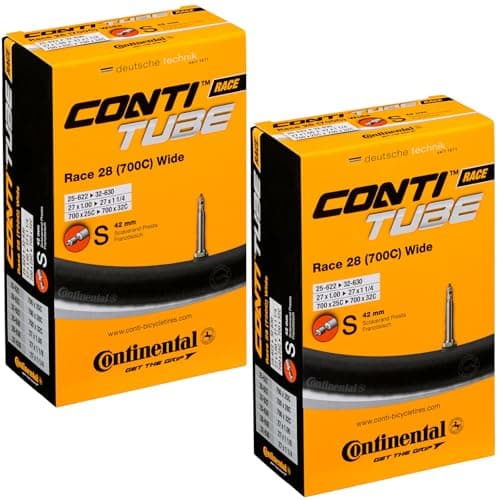
4. Valve length.The number people get wrong. Park Tool: “Rims with a very tall cross section require longer valve stems (60 mm or 80 mm).” Continental publishes the same three lengths — 42mm, 60mm and 80mm — across its range, and the rule is simply that the valve has to clear the rim with enough thread left for a pump head to lock onto. If your wheels are deep, this is the specification that eliminates most of the tubes on this page.
Then, and only then, the material
Four materials are on sale here and they are genuinely different products, not marketing tiers.
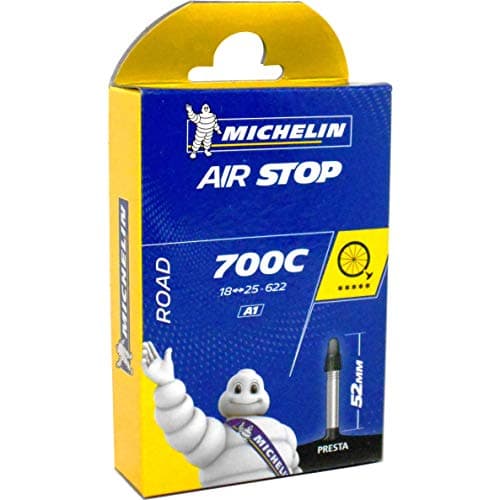
Butylis the default: heavy, cheap, patchable with any kit in any saddle bag, and the best at holding air. Schwalbe describes its standard butyl tube as retaining air “for an exceptionally long time”; Michelin sells the Airstop on “effective pressure hold through use of butyl”. The published weights bear out the cost of that: 95 g for Michelin’s narrow road tube, 150 g for Schwalbe’s wide commuter one.
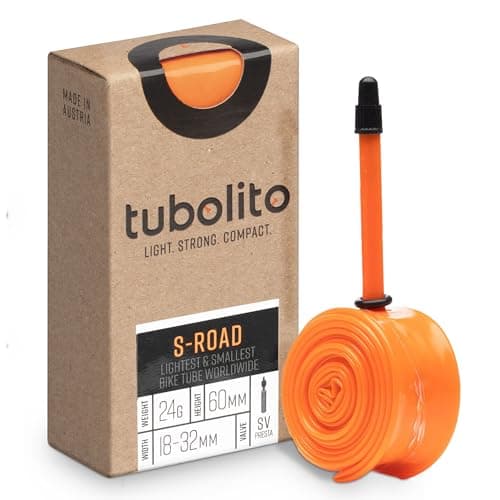
TPUis the plastic option, and its real advantage is volume rather than mass. Tubolito publishes 26 g for its road tube at a 42mm valve. That is roughly a quarter of the butyl weight, but the thing you notice is that it folds to the size of a bar wrapper. The catch is repair: Tubolito states that “repair kits made for butyl rubber tubes are not compatible with Tubolitos”, and Vittoria says the same of TPU generally — it needs “a specific patch kit”.
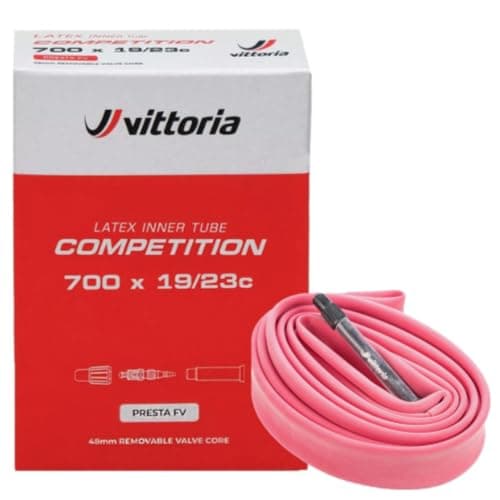
Latexis the oldest performance option and the most demanding. Vittoria publishes 105 g for the 30/38 size, and the same company’s material comparison credits TPU with fixing latex’s central flaw by “providing a system which is less susceptible to lose air over long periods”. In plain terms: latex goes soft overnight. If you will not pump before every ride, this is the wrong material for you regardless of how it feels.
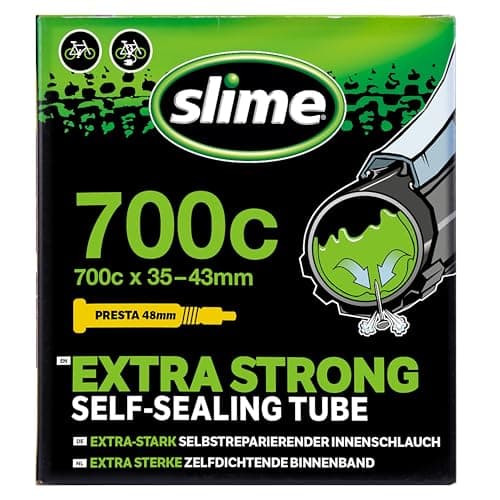
Sealant-filledis a butyl tube with liquid in it. Slime publishes the exact scope: tread-area punctures up to 1/8in (3mm), sealed repeatedly, for two years. That is a narrower promise than “no more flats” and a much more useful one, because it tells you the failure modes it does not cover. For everything sealant cannot fix, the roadside procedure still applies.
Should you be buying tubes at all?
Worth asking before you spend anything. If your rims and tires are tubeless-ready, sealant in the tire does the same job as the Slime tube here and does it lighter, and you still carry one tube as the recovery plan when a cut is too big to seal. We work the full trade through in tubeless versus tubes, and clincher versus tubeless versus tubular covers what each system physically is.
The honest summary: tubeless is usually right for gravel, usually not worth the ritual for a commuter, and either way you end up carrying a tube. Which is why a page about tubes is not an argument against tubeless — the tube in your bag is the reason tubeless is survivable at the roadside.
What this aisle does not publish
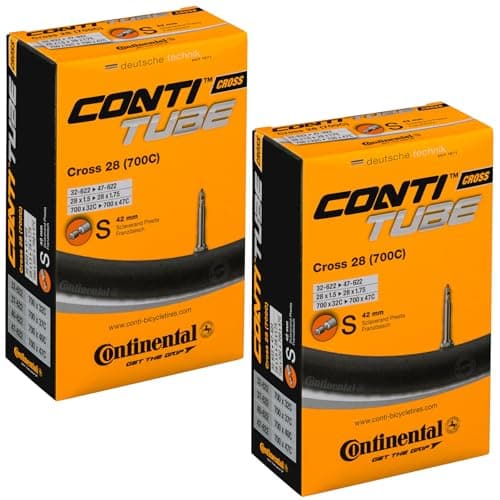
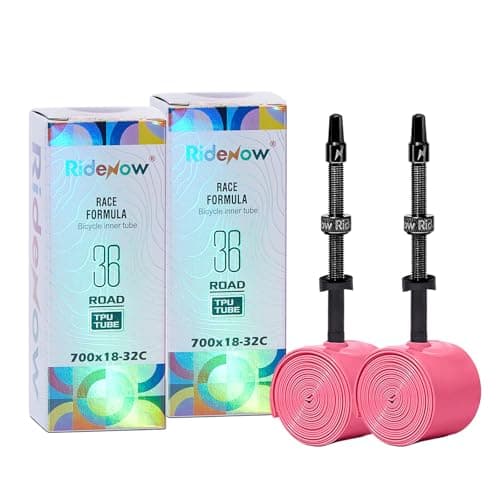
Half the work of writing this page was finding out which sellers publish a specification at all, and the answer splits the field cleanly. Michelin, Schwalbe, Tubolito and Vittoria all publish an ETRTO range, a valve type, a valve length and a weight per variant. Continental publishes valve lengths across its range but no per-tube weight or wall thickness for the Race 28 or the Cross 28, so both of our Continental picks are bought on the listing alone. RideNow publishes nothing beyond what is in the listing title — including no weight, on a tube sold for being light.
And one specification actively disagrees with itself. The Michelin listing states a 52mm valve. Michelin’s own published table for the same A1 tube lists 48mm and 60mm, and no 52mm. We have not resolved that, and the table below records both figures rather than choosing the tidier one. If you are buying against a rim depth where a few millimeters decide it, measure your rim and treat the listed length as approximate.
We have not ridden, weighed or cut open any of these tubes. Every figure above is either the manufacturer’s own published claim, attributed by name, or a quote from the live Amazon listing marked “Listing:”, all read on 2 September 2026. Where a number does not exist, the row says so instead of estimating it. That is the whole method — how we research sets out the rest of it.