Skip to content
ChainringClub

The Best E-Bikes for Hills

A climb is won by gearing, not by a peak watt number nobody labels the same way. So this page ranks on the gears each listing publishes — and names the one configuration none of these twelve bikes has.

A rider on an electric bicycle on a steep road climb.
By Stephen V.Published October 11, 2026How we research

Heads up: we earn a commission if you buy through the links on this page, at no extra cost to you. It never decides what makes the list — here’s how that works.

Quick picks

Tap any row for the full write-up. Specs are the manufacturer's own published claims, read on the dates recorded on each linked roundup (17 July 2026 for the complete bikes, 18 August 2026 for the conversion kits).

#ProductBest forPrice
1
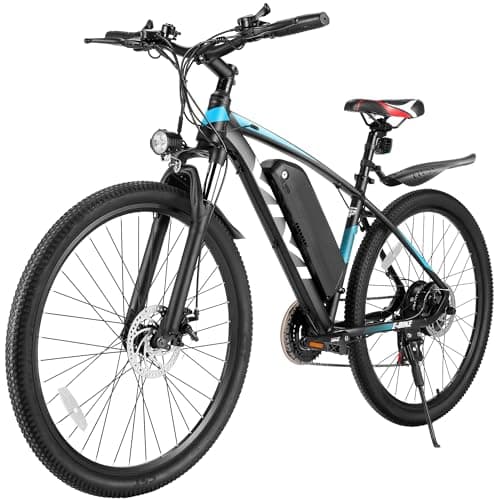
Vivi 27.5" Electric Mountain Bike

Vivi 27.5" Electric Mountain Bike

The only bike here that publishes both twenty-one rear gears and a 750W peak figure, which is the combination a long climb actually wants.

Top pick
The most published gears for the least money
Check price on Amazon →

No buyable offer right now — the link still shows the current listing.

2
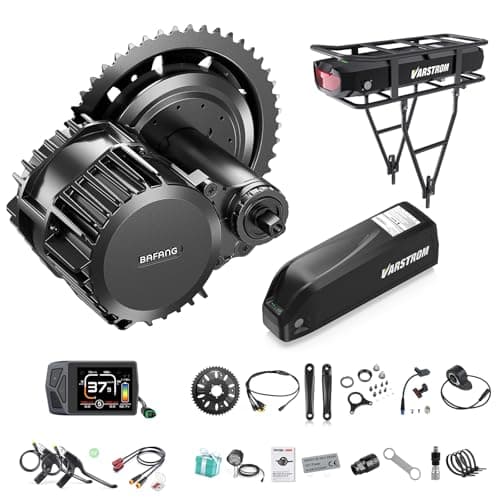
Bafang BBSHD Mid-Drive Kit

Bafang BBSHD Mid-Drive Kit

The only configuration on this entire site that lets a motor use the bike's own gears — which is what a mid-drive is for and what no complete e-bike here offers.

Turning a geared bike you already own into a climber
3
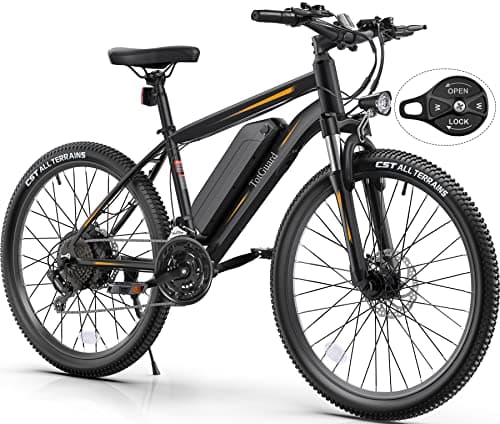
TotGuard 27.5" Electric Bike

TotGuard 27.5" Electric Bike

The same 21 published gears and the same wheel size as the top pick, with a lockable fork instead of a range claim.

Climbing on a fork that stops bobbing when you stand up
4
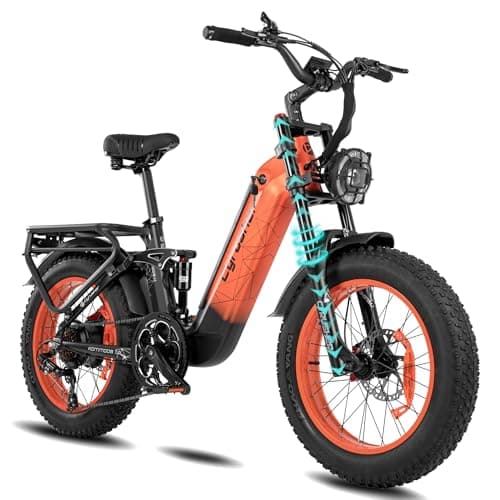
Cyrusher Kommoda

Cyrusher Kommoda

The biggest published battery and the only listing in the group that publishes hydraulic disc brakes — the hill spec most people forget is the descent.

Long hilly days where coming back down is the harder part
5
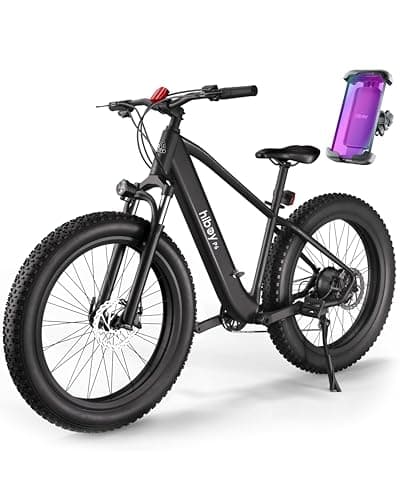
Hiboy Fat-Tire Electric Bike

Hiboy Fat-Tire Electric Bike

Seven published gears and the highest published assisted speed of the geared bikes, for hills that sit at the end of a fast flat run.

Rolling terrain rather than one sustained climb
6
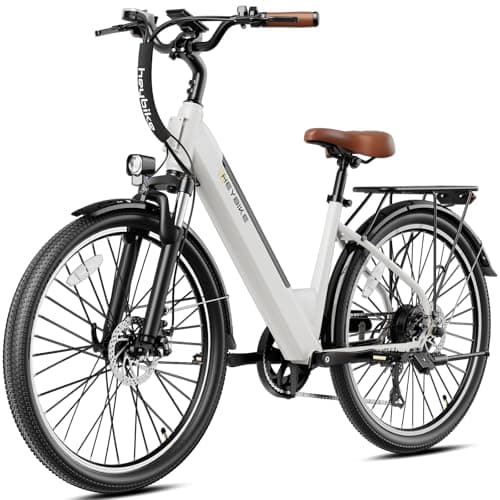
Heybike Cityscape 2.0

Heybike Cityscape 2.0

The lightest-duty pick here, and the one to buy if your hills are city gradients rather than mountain roads.

Mild town gradients on pavement

If you want one answer: the Vivi 27.5 inch is the pick, because it publishes 21 rear gears and nothing else in our catalog publishes more. If you already own a geared bicycle, the honest answer is different and better — a Bafang mid-drive kit, because a mid-drive is the only configuration here where the motor gets to use those gears too. Everything else on this page is a hub motor, and that distinction decides more about a climb than any number on the sticker.

We are not ranking these on watts, and the reason is published on this site already. The motor power audit went through all twelve e-bike listings in our catalog: seven label their watt figure “Peak”, four print a figure with no label at all, one prints nothing, and not a single one publishes a nominal rating or a torque figure. A peak figure is a ceiling the motor can touch, not a load it can hold for a ten-minute climb, and comparing a labelled peak against an unlabelled number is comparing nothing. Torque is the specification that would actually answer this query, and nobody in this category publishes it.

What a hill actually asks of an e-bike

A gradient does two things. It raises the force needed at the back wheel, and it drops your speed — and those two together are what cooks a hub motor. A hub motor is efficient in a fairly narrow band of wheel speed. Climb slowly enough and it falls out of that band, draws more current for less output, and gets hot. The bike does not stop working; it just gets slower, hungrier and warmer the longer the climb runs.

A mid-drive does not have that problem in the same way, because it drives the chain. Shift to a lower gear and the motor spins faster for the same road speed, which puts it back in its efficient band exactly when you need it. That is the entire argument for a mid-drive on hills, it is mechanical rather than marketing, and the hub versus mid-drive comparison is where we set it out in full.

Which leaves the rider. On a hub-drive bike, your gears are the only variable left, and a 21-speed drivetrain with a big sprocket at the back is what keeps your own legs turning at a workable cadence instead of stalling. That is why the gear count is this page’s ranking axis: it is published, it is comparable, and it is the part of the climb you control.

Every gear count in the catalog, published and unpublished

Here is the full audit from the stored live listing titles, for all twelve complete e-bikes and the four conversion kits. We have added nothing to it.

Published gears, published drive type

Sixteen listings. Five publish a rear gear count. Zero of the twelve complete bikes is a mid-drive. The “Motor can use the gears?” column is the one that decides a long climb, and it answers No for every complete bike on this site.

ModelGears publishedDrive typeMotor can use the gears?
Vivi 27.5in21-speedHubNo
TotGuard 27.5in21-speedHubNo
Heybike Cityscape 2.07-speedHubNo
Jasion EB57-speedHubNo
Hiboy Fat-Tire7-speedHubNo
Heybike Mars 3.0Not publishedHubNo
Heybike Ranger 2.0Not publishedHubNo
Gotrax R7Not publishedHubNo
ENGWE L20 2.0Not publishedHubNo
Cyrusher Kommoda 3.0Not publishedHubNo
Schwinn ParkwoodNot publishedHub (350W, published)No
isinwheel Step-ThruNot publishedHubNo
Bafang BBS02B kitYour bike'sMid-driveYes
Bafang BBSHD kitYour bike'sMid-driveYes
Bafang hub kitYour bike'sHubNo
PEXMOR front kitYour bike'sHub (front)No

Quoted from the stored live Amazon listing title of each product. “Not published” means the listing does not state a rear gear count — it does not mean the bike has one gear, and we are not going to guess which it is. Drive type is read from the listing’s own words: the two BBS kits say “Mid Drive”, the Bafang and PEXMOR kits say “Hub”, and none of the twelve complete bikes claims a mid-drive anywhere in its title.

The picks, in detail

1

Vivi 27.5" Electric Mountain Bike

Top pick
Vivi 27.5" Electric Mountain Bike
Check price on Amazon →

No buyable offer right now — the link still shows the current listing.

Best for: The most published gears for the least money

The only bike here that publishes both twenty-one rear gears and a 750W peak figure, which is the combination a long climb actually wants.

  • 48V 499.2Wh battery (listing)
  • Peak 750W (listing)
  • 19.8 mph (listing)
  • Up to 50-mile claimed range (listing)
  • 27.5in wheels, 21-speed
  • Certified to UL2849 (listing)
  • Weight: not published

On the value roundupthis bike wins on having a spec sheet at all for the money. On a hill it wins for a narrower reason: 21 published gears. A hub motor pushes the wheel directly, so when the gradient steepens the motor cannot gear down — but you can, and a 21-speed drivetrain is what lets your own legs keep a cadence instead of grinding to a stop and leaving the motor to do all of it at its least efficient. That is the whole mechanism, and it is why this page ranks on gears.

Good

  • 21-speed is the highest published gear count of any complete e-bike in our catalog, and gears are the part of a climb the rider controls
  • 27.5 inch wheels take a longer-travel cassette and a bigger tire than the 20 inch fat-tire bikes, which is why the geared bikes here are the big-wheel ones
  • Certified to UL2849, which is published on the listing and is not published on half the field
  • A 48V 499.2Wh battery is a real figure rather than an amp-hour number you have to multiply yourself

Less good

  • It is still a hub motor, so the 21 gears change what your legs do on a climb and nothing about what the motor does
  • 19.8 mph is the lowest published assisted speed in this group — fine uphill, slow on the flat run-in
  • The 750W figure is labelled Peak, and a peak figure tells you nothing about what the motor sustains on a ten-minute climb
  • No published weight, which on a hill is the number you would most like to have

Skip it if: Your hills are short and your commute is long and flat — then assisted speed matters more than gear range, and the Hiboy or the Cyrusher further down make more sense. Also skip it if you need a step-through frame.

2

Bafang BBSHD Mid-Drive Kit

Bafang BBSHD Mid-Drive Kit
$589.66 · View on Amazon

Price as of October 17, 2026. #ad

Best for: Turning a geared bike you already own into a climber

The only configuration on this entire site that lets a motor use the bike's own gears — which is what a mid-drive is for and what no complete e-bike here offers.

  • Listing: BBSHD 1000W mid-drive
  • Listing: fits 68 / 100 / 120 mm bottom brackets
  • Heavy-duty mid-drive platform
  • Above the federal 750W definition

This is the pick that exists because of a finding rather than a preference. Not one of the twelve complete e-bikes in our catalog is a mid-drive. All twelve are hub motors, and a hub motor is bolted to the wheel, outside the gears — so it cannot gear down when the road kicks up, however many sprockets are on the back. The hub versus mid-drive comparison sets out the mechanism in full. The honest consequence for this page is that the single best hill configuration available through this site is a mid-drive kit on a geared bike, and it is second here only because 15 U.S.C. § 2085 defines a low-speed electric bicycle around a 750 watt motor and this kit publishes 1000W.

Good

  • A mid-drive drives the chain, so the motor goes through the cassette with you — on a steep pitch the motor gets the same mechanical advantage your legs do
  • Fits 68, 100 and 120 mm bottom brackets per the listing, which covers most normal frames and the fat-bike shells too
  • If you already own a bike with a wide-range cassette, this is the cheapest route to a genuinely good climbing e-bike
  • The listing names the platform as heavy-duty, which is the honest description of what a 1000W mid-drive is

Less good

  • Published at 1000W, which is above the 750 watt figure in the federal definition of a low-speed electric bicycle — our conversion roundup treats it as off-road and private-land equipment and so should you
  • It is a build, not a purchase: you need a compatible bottom bracket, the tools and an afternoon
  • A mid-drive puts motor torque through your chain and cassette, so chain wear accelerates — plan on replacing drivetrain parts sooner
  • No warranty covers the bike you bolt it to

Skip it if: You want to buy a bike rather than build one, or you ride on public roads and bike paths where the 750W line matters. In that case the complete bikes above and below are the realistic field, and you should read the gear counts rather than the motor stickers.

3

TotGuard 27.5" Electric Bike

TotGuard 27.5" Electric Bike
$399.97 · View on Amazon

Price as of October 17, 2026. #ad

Best for: Climbing on a fork that stops bobbing when you stand up

The same 21 published gears and the same wheel size as the top pick, with a lockable fork instead of a range claim.

  • 48V 499Wh removable battery (listing)
  • 500W motor (listing)
  • 19.8 mph (listing)
  • 27.5in wheels, 21-speed
  • Lockable suspension fork (listing)
  • Claimed range: not published
  • Weight: not published

Good

  • 21-speed, 27.5 inch wheels — joint-highest published gear count in the catalog
  • The listing publishes a lockable suspension fork, and a locked-out fork is the one suspension feature that matters on a seated climb
  • 48V 499Wh removable battery is a published watt-hour figure, not an amp-hour number requiring arithmetic
  • 500W is published without the word Peak attached, which is rarer in this field than it should be

Less good

  • No claimed range published at all, so you are buying battery capacity and guessing the rest
  • 500W is the lowest published motor figure of the geared bikes here — on the steepest pitches you will be contributing more
  • Hub motor again: the 21 gears are for your legs only
  • No published weight

Skip it if: A published range figure is what you are shopping on — this listing simply does not print one, and the Vivi above gives you the same gearing with a claimed range beside it.

4

Cyrusher Kommoda

Cyrusher Kommoda
$1,599.00 · View on Amazon

Price as of October 17, 2026. #ad

Best for: Long hilly days where coming back down is the harder part

The biggest published battery and the only listing in the group that publishes hydraulic disc brakes — the hill spec most people forget is the descent.

  • 48V 20Ah battery (listing) — 960Wh if you multiply
  • 1500W motor (listing)
  • 28 mph (listing)
  • 75-mile claimed range (listing)
  • Air suspension, hydraulic disc brakes (listing)
  • 20in wheels, aluminum frame
  • Weight: not published

This pick is here for the half of hill riding nobody searches for. Going up is a motor and a cassette problem; coming down a 60 lb bike is a brake problem, and this is the only listing in the group that publishes the brake type. Our disc pad roundup covers what wears out afterwards, which on a heavy bike on repeated descents is sooner than you expect.

Good

  • 48V 20Ah, which is about 960Wh if you multiply it out — the largest published capacity in our catalog, and climbing is what empties a battery
  • Hydraulic disc brakes are published on the listing, and on a loaded descent that is the component doing the dangerous work
  • Air suspension, published — adjustable preload is more useful than a coil on a bike whose weight changes with cargo
  • 75-mile claimed range is the highest in the catalog, which buys margin on a route with real elevation

Less good

  • The listing publishes no gear count whatsoever, which on a climbing page is the specification you most wanted
  • 20 inch wheels: a smaller wheel is a lower effective gear, which helps on a pitch and hurts everywhere else
  • 1500W published, well above the federal 750 watt figure — check your local rules before you ride it on a path
  • Most expensive bike in our catalog, and the premium buys battery and suspension rather than a drivetrain

Skip it if: Your climbs are short. The thing you are paying for here is capacity and braking for sustained elevation, and on rolling ground a cheaper geared bike does the same job.

5

Hiboy Fat-Tire Electric Bike

Hiboy Fat-Tire Electric Bike
$1,299.99 · View on Amazon

Price as of October 17, 2026. #ad

Best for: Rolling terrain rather than one sustained climb

Seven published gears and the highest published assisted speed of the geared bikes, for hills that sit at the end of a fast flat run.

  • 48V 13Ah removable battery (listing) — 624Wh if you multiply
  • 1000W peak motor (listing)
  • 28 mph (listing)
  • 62.1-mile claimed range (listing)
  • 26 × 4.0in fat tires, hydraulic suspension, 7-speed
  • UL Certified (listing)
  • Weight: not published

Good

  • 7-speed published, which is seven more than the ungeared bikes in this catalog have
  • 28 mph published, so the flat sections between hills are not the slow part of the ride
  • 48V 13Ah, about 624Wh multiplied out — second-largest published capacity here
  • Hydraulic suspension and UL certification are both published on the listing

Less good

  • 26 x 4.0 fat tires are heavy and draggy, and weight is the enemy of every climb
  • Seven gears is a third of what the two 21-speed bikes publish, so the usable cadence range on a steep pitch is much narrower
  • 1000W is labelled Peak, which tells you nothing about sustained output
  • No published weight, which on a fat-tire bike is the figure you would most want

Skip it if: Your route is one long grind rather than a series of short ramps. Seven gears runs out of bottom end quickly, and on a sustained climb that is exactly when you need it.

6

Heybike Cityscape 2.0

Heybike Cityscape 2.0
$479.00 · View on Amazon

Price as of October 17, 2026. #ad

Best for: Mild town gradients on pavement

The lightest-duty pick here, and the one to buy if your hills are city gradients rather than mountain roads.

  • 468Wh removable battery (listing)
  • Up to 50 miles claimed range (listing)
  • 7-speed, 26in wheels, front suspension (listing)
  • UL Certified (listing)
  • Motor output: not published
  • Weight: not published

Good

  • 7-speed with 26 inch wheels, published — a real drivetrain rather than a single speed
  • 468Wh removable battery, so it can be carried indoors to charge at the top of a hill you live on
  • UL Certified is published on the listing
  • Front suspension published, which is the right amount of suspension for pavement

Less good

  • The listing publishes no motor output at all — not even a peak figure — so there is nothing to compare on power
  • 468Wh is the smallest published battery of the picks here, and climbing is the fastest way to empty one
  • Seven gears, hub drive: on anything steep you are doing the work the gears allow and no more
  • No published weight

Skip it if: Your gradient is genuinely steep or your climb is long. This is the mildest bike on the page and the listing is honest about what it is — a commuter — which is why it ranks last here and ranks first on our commuting page.

What actually decides this purchase

Read the gear count before the watt number

This is the single practical instruction on the page. The motor figure in a listing title is the figure the seller chose to lead with, and seven of twelve of them carry the word “Peak” precisely because peak is the bigger number. The gear count is boring, unmarketed and comparable. If two bikes are close on price and one publishes 21-speed while the other publishes nothing, the one that published is telling you something.

Wheel size is a gear ratio you cannot change later

A 20 inch wheel multiplies torque at the ground compared with a 27.5 inch wheel on the same drivetrain, which is why the small-wheel fat bikes here feel punchy off the line. The cost is everywhere else: a smaller wheel rolls worse over rough surfaces and tops out sooner. Both 21-speed bikes in our catalog are 27.5 inch, which is not a coincidence — a big wheel needs the gear range more.

The 750 watt line is a legal definition, not a performance tier

Three of the products on this page publish a figure above 750W, and one of them — the BBSHD — publishes 1000W as its headline. The federal definition of a low-speed electric bicycle in 15 U.S.C. § 2085 is built around a 750 watt motor and a 20 mph top speed under motor power alone on a level surface. What the statute does not say is whether its figure is peak or continuous, which is exactly why the motor power page refuses to place any specific bike on either side of that line. Read the class system before you buy something you intend to ride on a shared path.

Climbing is what drains a battery, so capacity is a hill spec

A watt-hour figure is energy, and a climb spends it faster than any other kind of riding — you are lifting bike, battery and rider against gravity rather than overcoming rolling resistance. The battery and range explainer covers how to turn amp-hours into watt-hours, which matters here because two of the picks on this page publish amp-hours and leave the arithmetic to you. The practical version: a hilly route will not deliver a claimed range that was computed on the flat, and nobody in this field publishes the conditions behind their claim.

Three things nobody in this category publishes

Torque. The number that actually describes hill ability. Zero of sixteen listings publish it. Weight. Zero of twelve complete bikes publish it, and on a gradient it is the figure that matters most after gearing. Sustained motor output. Nobody publishes a continuous rating, so a ten-minute climb is outside the published evidence for every bike here. We are telling you this rather than filling the gap, because filling it would mean inventing it.

Common questions

What is the best e-bike for steep hills?

Of the complete bikes in our catalog, the Vivi 27.5 inch, on the basis that it publishes 21 rear gears — the highest published gear count here — alongside a 750W peak figure. The better answer, if you already own a geared bicycle, is a Bafang mid-drive conversion kit, because a mid-drive can use the bike’s gears and none of the twelve complete e-bikes on this site can. That is a published distinction, not a preference.

Do I need a mid-drive motor for hills?

You do not need one, but it is the configuration built for the job. A mid-drive puts its power through the chain and therefore through the cassette, so on a steep pitch it gets the same mechanical advantage your legs do. A hub motor is bolted to the wheel, outside the gears, so it has one ratio forever. Plenty of people climb plenty of hills on hub motors — it is just slower and hotter.

How many watts do I need for hills?

We are not going to give you a number, and here is why. Of the twelve e-bike listings in our catalog, seven label their watt figure “Peak”, four print a figure with no label, and one prints nothing at all. None publishes a nominal or continuous rating. A peak figure is a ceiling, not a load the motor holds for a ten-minute climb, so “you need X watts” would be a sentence with no comparable data behind it. Read the gear count instead.

Will a 500W e-bike climb a steep hill?

Usually yes, slowly, with you helping. The TotGuard on this page publishes 500W and also publishes 21 gears, and the gears are what make that combination work — you drop into a low gear, keep your cadence up, and the motor contributes what it can. What a lower-powered hub motor will not do is carry you up unassisted at speed, and no listing in this category publishes the sustained figure that would tell you where its limit is.

Is a fat tire e-bike good for hills?

It is a trade. Fat tires add grip on loose surfaces and add weight and rolling resistance everywhere, and weight is what a climb charges you for. Of the fat-tire bikes in our catalog, only the Hiboy publishes a gear count at all. If your hills are paved, the 27.5 inch geared bikes are the better climbing platform.

Does climbing drain an e-bike battery faster?

Yes, substantially — you are spending energy lifting the whole bike and rider against gravity rather than just overcoming rolling resistance. Nobody in this category publishes the conditions behind their claimed range figure, so treat a 50-mile claim on a hilly route as unverified by anyone. Our range page covers what those numbers do and do not mean.

Sources

  • Gear count and drive type audit — the stored live Amazon listing titles of all twelve complete e-bikes and all four conversion kits in content/catalogue.json. Five of sixteen publish a rear gear count (two at 21-speed, three at 7-speed); two of sixteen publish a mid-drive, and both are conversion kits — retrieved 11 October 2026
  • Motor-figure audit, reused from /e-bikes/e-bike-motor-power-explained — seven of twelve e-bike listings label their watt figure “Peak”, four print a figure with no label, one prints nothing, and none publishes a nominal rating or a torque figure — retrieved 5 October 2026
  • 15 U.S.C. § 2085 — the federal definition of a low-speed electric bicycle (a 750 watt motor; 20 mph under motor power alone on a level surface with a 170 lb rider). The statute does not state whether its wattage figure is peak or continuous — retrieved 5 October 2026
  • Google Autocomplete — “best e bike for hills” returns “best e bike for hill climbing”, “best e bike for steep hills”, “best e bike for hills reddit” and “best folding e bike for hills”; “e bike for hills” returns “e bike for steep hills” and “e bike good for hills” — retrieved 11 October 2026

We haven’t ridden or tested any of the products on this page, and we don’t pretend otherwise. Read how we research — or tell us we’re wrong and we’ll log the correction.