E-Bike Motor Power Explained
Twelve e-bike listings, twelve watt figures, and not one of them is the number the law is written in. Here is what each figure is, what it is not, and how much you actually need.
Heads up: we earn a commission if you buy through the links on this page, at no extra cost to you. It never decides what makes the list — here’s how that works.
For almost everybody, a motor published at 500 to 750 watts is enough, and a bigger number on the listing is mostly a bigger number on the listing. What decides whether an e-bike feels strong is torque and the battery behind it, and neither of those appears on any of the twelve e-bike listings in our catalog. What does appear is a watt figure — and on seven of the twelve it is explicitly a peak figure, which is not the number the federal definition is written in.
This page is the audit behind that claim. We have not ridden any of these bikes and we hold no dynamometer data. What we can do is read all twelve listings and count, which is exactly what the table below is.
Watts: what the number is measuring
A watt is a rate of energy use. On an e-bike it describes how hard the motor is working, not how fast the bike goes and not how hard it pulls. Three different numbers get called “motor power” and they are not interchangeable:
Nominal (or continuous) power is the output a motor can sustain indefinitely without overheating. This is the figure European and most US regulation is written around, and it is the smallest of the three.
Peak power is the maximum the motor and controller can deliver in a short burst — starting from a standstill, or on a steep pitch. It is typically a large multiple of the nominal figure, and it is the figure a marketing department prefers, because it is bigger.
Torque is the twisting force at the axle or the crank, measured in newton-metres. This is the figure that correlates with how a bike actually feels when you push off at a light or point it up a hill. Not one listing in our catalog publishes it.
So the number on the box is usually the second of those three, and the one that matters most is the third. That is the whole problem in one sentence.
What the law is written in
15 U.S.C. § 2085 defines a low-speed electric bicycle as a two- or three-wheeled vehicle with functional pedals and “an electric motor of less than 750 watts (1 h.p.)”, whose maximum speed on a paved level surface, powered solely by the motor and ridden by a 170-pound operator, is “less than 20 mph”. Meeting that definition is what makes the thing a consumer product regulated as a bicycle rather than a motor vehicle.
Read the statute again and notice what it does notsay. It does not say “nominal”. It does not say “continuous”. It does not say “peak”. It says “less than 750 watts”, and a bike whose listing advertises 1400 watts of peak output may well have a nominal rating of 500 watts and sit comfortably inside the definition — or may not. We cannot tell you which, because none of these listings publishes a nominal figure at all.
Our conversion kit roundup runs into the same wall from the other direction: several kits sold in that category advertise 1000 watts, which is above the statutory line however you read it. On a complete bike the ambiguity is wider, because the figure being advertised is usually the peak.
The audit: what all twelve listings publish
Every figure in the table below is quoted from the stored live Amazon listing title for that bike. We have added nothing and converted nothing, except where a listing publishes volts and amp-hours instead of watt-hours, in which case the watt-hour figure in brackets is volts multiplied by amp-hours — arithmetic, not a claim.
Every motor figure published on this site, and how it is labelled
Twelve e-bikes. Seven label the watt figure “Peak”, four print a bare number with no label, one prints no watt figure at all, and none publishes a nominal rating or a torque figure. Quoted from each listing title.
| Bike | Motor as published | Labelled? | Battery | Top speed | Range |
|---|---|---|---|---|---|
| Heybike Mars 3.0 | 1400 W | Peak | 624 Wh | 32 mph | 70+ mi |
| Heybike Ranger 2.0 | 1400 W | Peak | 600 Wh | 28 mph | 60 mi |
| Heybike Cityscape 2.0 | Not published | — | 468 Wh | Not published | 50 mi |
| Vivi 27.5in Mountain | 750 W | Peak | 48 V / 499.2 Wh | 19.8 mph | 50 mi |
| Gotrax R7 | 750 W | Peak | Not published | Not published | 45 mi |
| Jasion EB5 | 1000 W | Peak | 360 Wh | 20 mph | 40 mi |
| ENGWE L20 2.0 | 1125 W | No label | 52 V / 13 Ah (676 Wh) | 28 mph | 68 mi |
| Cyrusher Kommoda 3.0 | 1500 W | No label | 48 V / 20 Ah (960 Wh) | 28 mph | 75 mi |
| Hiboy Fat-Tire | 1000 W | Peak | 48 V / 13 Ah (624 Wh) | 28 mph | 62.1 mi |
| Schwinn Parkwood | 350 W (hub) | No label | Not published | Not published | Not published |
| TotGuard 27.5in | 500 W | No label | 48 V / 499 Wh | 19.8 mph | Not published |
| isinwheel Step-Thru | 1500 W | Peak | 48 V / 13–18 Ah (624–864 Wh) | 28 mph | 75–105 mi |
Watt-hour figures in brackets are volts × amp-hours, computed from the two numbers the listing publishes. No torque figure appears on any of the twelve listings, and no listing publishes a nominal or continuous motor rating.
What actually decides this purchase
How many watts you actually need
The honest answer is that watts is the wrong question, and the reason is in the table above: the figure is unlabelled on four bikes, a peak figure on seven, and absent on one. A number you cannot define cannot be compared. So here is the substitute, in the order the decisions actually arrive.
One: ask what the terrain is, not what the number is. Flat city riding with a rider and a bag is the easiest work an e-bike motor does, and every bike in the table does it. Sustained steep hills, a heavy load or a trailer is where a motor runs at or near its continuous limit for minutes at a time — and that is the case where a larger nominal rating genuinely matters. If the listing does not publish a nominal rating, which none of these do, treat a bigger peak figure as weak evidence rather than none.
Two: look at watt-hours, not watts. Watts describe how hard the motor can work. Watt-hours describe how long it can keep doing it, and eight of these twelve listings publish enough to know. That is the figure our battery range explainer is built on, and the one the running-cost arithmetic uses, because it is the number that behaves like a fuel tank.
Three: find out where the motor is. A hub motor pushes the wheel; a mid-drive turns the cranks and multiplies its torque through your gears, which is why a mid-drive with a smaller watt figure can out-climb a hub motor with a bigger one. Our hub vs mid-drive comparison is the page for that, and it is a more useful question than the wattage.
Four: check the class, because the watt figure is not the legal test you will meet. In practice what governs where you can ride is the three-class system, which turns on assistance speed and whether there is a throttle — not on watts. Several bikes in the table publish 28 mph, which is Class 3 territory, and a couple publish 32 mph, which is above all three classes.
What a bigger number does cost you
A higher-output motor drawing from the same battery empties it faster. That is not a marketing claim, it is what a watt is. So a 1500-watt peak figure attached to a 624 watt-hour battery is a bike that can pull hard or go far, and the harder you use the first number the less you get of the second. The two bikes in the table with the largest published battery capacity are not the two with the largest published motor figure.
The second cost is on the drivetrain, and only on some bikes. A mid-drive sends its torque through the chain and cassette; a hub motor never touches them. If yours is a mid-drive, the chain is a consumable, which is the whole argument of our e-bike lube page— and no maker publishes an e-bike chain wear rate, so nobody can quantify it for you.
Three listings, three different ways of printing a motor number
Not a ranking, and not a shortlist — these are three bikes from the table above, picked because each one publishes its motor figure in a different style. Read them side by side and the pattern in the table stops being abstract. Prices are live; the specs are the sellers' own listing claims.
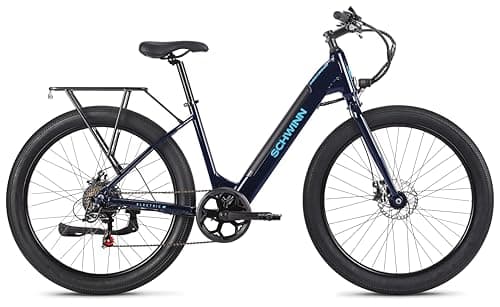
Schwinn Parkwood
The smallest published figure on the site, and the only listing that names the motor type in the same breath: “350W Hub Motor”. No “peak”, no battery figure, no speed and no range — a bare number with the least marketing attached to it.
$899.99 · View on Amazon$999.99 −10%
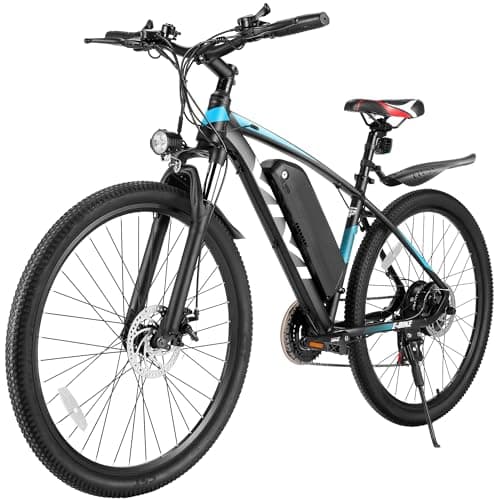
Vivi 27.5" Electric Mountain Bike
“Peak 750W” — the figure that sits exactly on the federal line, published as a peak rather than a continuous rating, next to 19.8 mph and a 48 V / 499.2 Wh battery. This is what the ambiguity in the statute looks like on a real listing.
Check price on Amazon →No buyable offer right now — the link still shows the current listing.
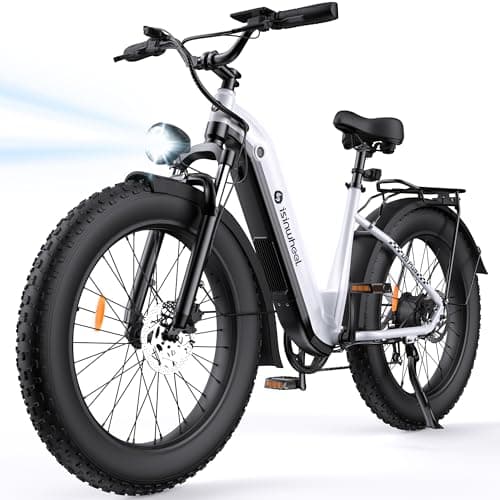
isinwheel Step-Thru Electric Bike
“1500W Peak” — double the statutory figure, published on the same 48 V platform with 13 or 18 Ah of battery. The listing is the most spec-dense of the twelve and still publishes no nominal rating and no torque.
Check price on Amazon →No buyable offer right now — the link still shows the current listing.
We haven’t tested any of these — they’re the parts the job above calls for, listed so you don’t have to go hunting. Prices are live from Amazon and we earn a commission if you buy. Prices as of October 18, 2026. #ad
Since the watt figure cannot rank these bikes, something else has to. Our hills roundup uses published rear gear count instead, which is comparable across the field and is the part of a climb the rider actually controls.
Common questions
How many watts is a good electric bike?
A motor published in the 500–750 watt range covers flat and rolling riding for almost everyone. Above that you are usually reading a peak figure rather than a continuous one, so it tells you less than it looks like it does. If you climb long steep hills or carry loads, the figures to chase are torque in newton-metres and battery watt-hours — and no listing in our catalog publishes torque at all.
What is the difference between peak and nominal watts on an e-bike?
Nominal (or continuous) power is what the motor can sustain without overheating. Peak power is the short burst it can deliver from a standstill or on a climb, and it is typically a large multiple of the nominal figure. Seven of the twelve e-bike listings on this site print “Peak” next to the watt figure; four print a bare number with no label; none publishes a nominal rating.
Is a 750W e-bike legal in the US?
15 U.S.C. § 2085 defines a low-speed electric bicycle as having a motor of less than750 watts and a motor-only top speed under 20 mph. The statute does not say whether its 750-watt figure is a peak or a continuous rating, and state vehicle codes vary on top of it, so a bike advertised at “750W Peak” cannot be confirmed legal or illegal from its listing alone. We will not guess which side of the line any specific bike falls on.
Does more watts mean a faster e-bike?
Not directly. Assistance speed is capped by the controller, which is why several bikes with very different published watt figures all publish the same 28 mph. More watts buys acceleration and hill-climbing, not a higher top speed.
Why don't e-bike listings publish torque?
We do not know, and we are not going to speculate about intent. We can tell you the fact: of the twelve e-bike listings in our catalog, zero publish a torque figure in newton-metres, while seven publish a peak watt figure. If torque is the number you want, it usually has to come from the manufacturer’s own spec page rather than the retail listing.
Can I fit a bigger motor to my e-bike?
Physically, often. Legally, that is how a bicycle stops being one — raising output or defeating the speed cutoff can take the machine outside the federal low-speed electric bicycle definition and outside your insurance. We do not cover derestriction.
Sources
- 15 U.S.C. § 2085 — low-speed electric bicycle defined as having functional pedals and “an electric motor of less than 750 watts (1 h.p.)”, with a motor-only top speed on a paved level surface, ridden by a 170-pound operator, of “less than 20 mph”. The statute specifies no measurement basis (peak or continuous) for the 750-watt figure — retrieved 18 August 2026
- Every motor, battery, speed and range figure in the table — quoted from the stored live Amazon listing title of each of the twelve e-bikes in content/catalogue.json, resolved through the Amazon Creators API. Labels audited verbatim: “Peak” appears on the Heybike Mars 3.0, Heybike Ranger 2.0, Vivi, Gotrax R7, Jasion EB5, Hiboy and isinwheel listings; the ENGWE L20, Cyrusher Kommoda 3.0, Schwinn Parkwood and TotGuard listings print a watt figure with no label; the Heybike Cityscape 2.0 listing prints no watt figure
- Watt-hour figures shown in brackets are volts × amp-hours computed from the two figures the listing publishes (52 V × 13 Ah, 48 V × 20 Ah, 48 V × 13 Ah, 48 V × 13–18 Ah). No manufacturer published those watt-hour totals directly
- Google Autocomplete — “e bike motor watts” returns “wattage”, “power”, “power ratings”, “1500 watt” and “2000 watt”; “how many watts e bike” returns “how many watts is a good electric bike” and “what is the best wattage for an e bike” — retrieved 5 October 2026
Read next
- Hub vs mid-drive motors
Where the motor sits matters more than how many watts it claims.
- E-bike battery range explained
Watt-hours is the number that behaves like a fuel tank.
- E-bike classes explained
The legal test you will actually meet, and it is not written in watts.
- The best e-bikes on Amazon
The twelve listings this audit is built from, ranked.
- The best e-bike conversion kits
The same 750-watt line, from the other direction.
- E-bike cost to run
What a watt-hour costs to put back in, worked out in full.
- The best e-bikes for hills
What to rank on when the watt figures are not comparable.
We haven’t ridden or tested any of the products on this page, and we don’t pretend otherwise. Read how we research — or tell us we’re wrong and we’ll log the correction.