Do You Get Exercise on an E-Bike?
Yes, and the figures are published rather than asserted — 4.9 METs against 1.4 for the same journey by car, in a randomised crossover trial. The caveat is that assistance level changes the answer, and one study measured it below moderate.
Heads up: we earn a commission if you buy through the links on this page, at no extra cost to you. It never decides what makes the list — here’s how that works.
Yes — and this is one of the few questions on this site where the honest answer comes with a measured number rather than a product claim. A randomised crossover trial published in Frontiers in Sports and Active Living measured riders covering a 4.5 km route three ways, with oxygen uptake recorded by a portable analyser, and found riding an electric-assisted bicycle carrying 30 kg of cargo produced 4.9 metabolic equivalents of task against 1.4 METs for driving the same route by car. That is a measurement from eleven participants wearing a gas analyser, not an opinion from a marketing page, and it is the single best piece of evidence we can point you at.
The caveat is just as published, and it matters: a separate study of outdoor e-trike riding measured exercise intensity belowmoderate once electric support was switched on. So the useful answer is not “yes” or “no” — it is that an e-bike produces real exercise, that how much depends on how much assistance you let it give you, and that both of those statements have numbers behind them.
What the e-cargo trial actually measured
The 2023 Frontiers study is the one worth reading if you read one. Its design was a randomised crossover: eleven participants, six of them women, each covered the same 4.5 km route three times — on an electric-assisted bicycle with 30 kg of cargo, on the same bike without cargo, and in a car. Oxygen uptake was measured with a Metamax 3B portable analyser and journey time with a stopwatch.
The published results, in the authors’ own figures:
- 4.9 METs riding the e-bike with 30 kg of cargo, against 1.4 METsdriving the car, a difference the paper reports at p ≤ 0.001.
- No significant difference in exercise intensitybetween the e-bike with cargo and the e-bike without it — which is a more interesting finding than it looks, because it says the assistance absorbed the extra load rather than the rider.
- 11.8 minutes with cargo, 11.1 without, 8.8 by car. The e-bike journeys were slower than driving by about three minutes over 4.5 km.
Two things that figure is not. It is not a measurement of any bike on this site — it is an e-cargo bike, which is heavier than the twelve e-bikes in our catalog and was carrying 30 kg on top. And a MET figure is an intensity, not a dose: 4.9 METs for twelve minutes is twelve minutes of exercise, not an afternoon of it.
The study that found the opposite, and why both can be true
Published in Assistive Technology, a study of outdoor e-trike cycling put twenty healthy participants on an electrically supported tricycle at 12 and 18 km/h with different levels of electric pedal support, measuring oxygen consumption with a Cosmed K4B2 and perceived exertion on the Borg scale. Its published numbers:
- 18.67 ± 3.13 ml/kg/min with no support, which the authors treat as above their moderate-intensity threshold.
- With electric support, intensity fell significantly below moderate intensity — the paper gives that threshold as 10.5 ml/kg/min.
- Borg 9.79 ± 1.72 without support, with every supported condition below that, and the paper gives Borg 11 as its moderate threshold.
- Speed and support level both significantly affected oxygen uptake.
The paper’s own conclusion is that e-trike cycling is a low intensity activity whose intensity can be raised. Put the two studies side by side and the contradiction dissolves: the variable is assistance. Ride with a lot of it and the vehicle does the work; ride with less of it, or carry something, or go faster, and you do. A third paper, a proof-of-concept study of a smart electrically assisted bicycle published in Medical Engineering & Physics, puts the general case plainly — based on exercise intensity, the authors write, riding an e-bike should be considered a physical activity.
What the research says, in one table
Three published studies, three different vehicles, every figure quoted from the paper that measured it.
The measured evidence, and what each study rode
Note the vehicle column. Not one of these studies measured any of the twelve e-bikes in our catalog, and we are not going to transfer their figures onto a specific bike.
| Study | Vehicle | Participants | Headline measurement | What it used |
|---|---|---|---|---|
| Frontiers in Sports and Active Living, 2023 | E-cargo bike, 30 kg load | 11 (6 women) | 4.9 METs vs 1.4 METs by car (p ≤ 0.001) | Metamax 3B gas analyser |
| Assistive Technology, 2022 | Electric tricycle | 20 healthy adults | 18.67 ml/kg/min unassisted; below moderate (10.5) with support | Cosmed K4B2, Borg RPE, torque sensor |
| Medical Engineering & Physics, 2021 | Smart e-bike (VELIS prototype) | 12 healthy adults | “Riding an E-bike should be considered as a physical activity” | GPS, heart rate, perceived exertion |
Figures quoted from each paper’s published abstract on PubMed, retrieved 11 October 2026. Sample sizes are small — eleven, twenty and twelve participants — which is normal for lab-instrumented exercise work and is also the reason to treat a single number as a finding rather than a law.
What actually decides this purchase
The four things that decide how much exercise you get
One: the assist level you choose. This is the whole ballgame, and it is the variable both studies isolated. The e-trike paper found support level significantly affected oxygen uptake and dropped intensity below its moderate threshold; the e-cargo paper found 4.9 METs on a loaded bike. Same technology, opposite results, because the rider sets how much of the work to hand over. If you want the exercise, use less assistance.
Two: whether you ride at all.The least glamorous argument is the strongest one. Zero METs is what a bike in the garage produces, and the e-cargo paper’s framing is explicitly about substitution — replacing a car journey, with its 1.4 METs, with a ride. An e-bike you use three times a week beats a road bike you use monthly on every measure that matters.
Three: speed and load.Both are published levers. The e-trike study found speed significantly affected oxygen uptake; the e-cargo study found that adding 30 kg did not reduce the rider’s intensity, which means the rider was still working. Hills do the same thing, and if that is your plan, the hills roundup ranks what is actually published about gearing.
Four: whether you are measuring it. An assist level is a number on a display; your effort is not, unless something records it. That is the only reason any product appears on this page.
If you want to know your own answer, measure it
Not a ranking, and only three items, because the question this page asks has exactly one honest answer for any individual rider: record a ride and look at it. These are the cheapest and the most capable ways to do that, from the roundups where each was ranked against its own category. Nothing here makes you fitter; it tells you whether you got fitter.
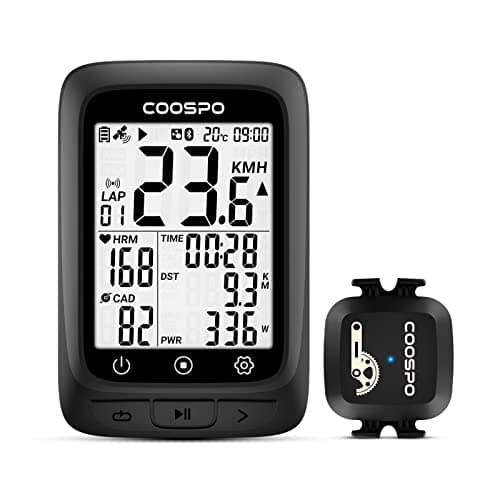
COOSPO BC107
The cheap end. Records time, speed and distance and pairs with external sensors over Bluetooth and ANT+, which is the feature that matters here — it means a heart-rate strap can be added later without replacing the computer.
$56.99 · View on Amazon$59.99 −5%
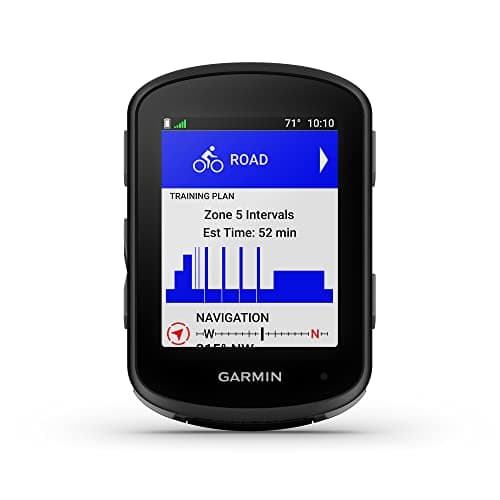
Garmin Edge 540
The capable end. Pairs with heart rate and power, stores structured rides, and uploads them somewhere you can compare one week against the next. This is the unit our computers roundup ranks on jobs claimed rather than on specs, because Garmin publishes none.
$328.00 · View on Amazon$349.99 −6%
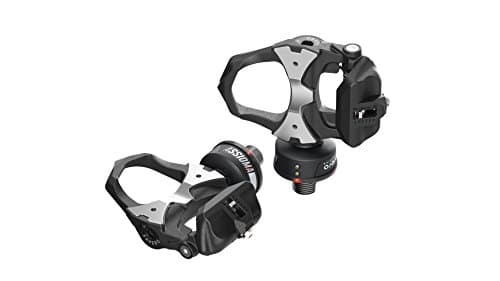
Favero Assioma DUO
The direct measurement. A power meter pedal records the watts your legs put in, which on an assisted bike is the only number that separates your contribution from the motor's. Be clear-eyed: Favero's listing publishes almost nothing, as our power meter comparison sets out at length.
We haven’t tested any of these — they’re the parts the job above calls for, listed so you don’t have to go hunting. Prices are live from Amazon and we earn a commission if you buy. Prices as of October 18, 2026. #ad
What we are not going to tell you
How many calories an e-bike ride burns. A MET figure is an intensity per kilogram of bodyweight, and turning it into calories needs your mass, your ride duration and an assumption about efficiency. We would be doing arithmetic on your behalf with two inputs we do not have.
Whether an e-bike is “as good as” a normal bike. None of the three studies above ran that comparison. The e-trike study compared assisted against unassisted riding on the same vehicle, which is informative but is not a road bike; the e-cargo study compared an e-bike against a car. Anyone quoting you a percentage is interpolating.
What any specific bike on this site will do for you. The twelve e-bike listings in our catalog publish a wheel size, a battery figure and usually a peak watt number. Not one publishes an assist level, a torque curve or a weight, and none of them was in any of these studies.
And the usual disclosure, which on a health question matters more than usual: we have not ridden any of these bikes, we have measured nobody’s oxygen uptake, and everything numeric on this page is quoted from a published paper with the paper named beside it. If you have a cardiac condition or you are returning to exercise after a long gap, the people to ask are your own clinicians — the studies above were run on healthy participants and say so.
Common questions
Do you still get exercise on an electric bike?
Yes. The strongest published figure we can point you at is 4.9 metabolic equivalents of task, measured with a portable gas analyser on riders covering a 4.5 km route on an electric-assisted cargo bike, against 1.4 METs for the same route by car. That is from a randomised crossover trial published in Frontiers in Sports and Active Living in 2023. How much exercise depends heavily on how much assistance you use.
Can you get fit on an e-bike?
The published evidence supports e-biking being physical activity — a 2021 proof-of- concept study in Medical Engineering & Physics states that based on exercise intensity, riding an e-bike should be considered a physical activity. What no study here measured is a fitness changeover weeks or months, so “can you get fit” is outside the evidence we can cite. What is inside it: the intensity is real, and it rises when you reduce assistance, ride faster, carry load or climb.
Is an e-bike good exercise for seniors?
The e-trike study was motivated by exactly this — it investigates electrically supported cycling for people with disabilities or chronic conditions, and found it to be a low intensity activity whose intensity can be increased. “Low intensity” is not a criticism in that context; it is the point, because it is activity that is accessible. Our senior e-bike roundup covers the frame and step-through questions. Anything medical belongs with your own clinician, not with us.
How many calories does an e-bike ride burn?
We will not give you a figure, because it cannot be computed from published data alone. The studies above report intensity — METs and ml/kg/min — which is per kilogram of your bodyweight. Converting that to calories needs your mass and your ride duration, and any site that prints a single number for “e-bike calories” has assumed both.
Does using a higher assist level mean less exercise?
Yes, and that is measured rather than inferred. The Assistive Technology e-trike study found that support level significantly affected oxygen uptake, and that with electric support the intensity fell significantly below its moderate-intensity threshold of 10.5 ml/kg/min, from 18.67 ml/kg/min unassisted. Perceived exertion on the Borg scale fell in the same direction.
Is e-biking better exercise than driving?
On the one trial that measured both, substantially: 4.9 METs against 1.4 METs over the same 4.5 km route, at a cost of about three minutes of journey time. That comparison is the paper’s actual subject — whether an e-cargo bike is a viable car replacement — and the answer it reports is yes, on both activity and emissions.
Sources
- Frontiers in Sports and Active Living (2023) — “Physical activity when riding an electric-assisted bicycle with and without cargo.” Randomised crossover, 11 participants (6 women), 4.5 km route, oxygen uptake by Metamax 3B. E-bike with 30 kg cargo 4.9 METs vs car 1.4 METs (p ≤ 0.001); no significant intensity difference with vs without cargo; 11.8 min with cargo, 11.1 min without, 8.8 min by car. doi 10.3389/fspor.2023.1179043 — retrieved 11 October 2026
- Assistive Technology (2022) — “Outdoor E-trike cycling: A low intensity physical activity.” 20 healthy participants, 12 and 18 km/h, varying electric support; Cosmed K4B2 oxygen uptake, Borg RPE, torque sensor. 18.67 ± 3.13 ml/kg/min without support; with support significantly below the paper's moderate-intensity threshold of 10.5 ml/kg/min (t = 11.37, p < .001); Borg 9.79 ± 1.72 without support against a moderate threshold of 11; speed and support both significantly affected oxygen uptake — retrieved 11 October 2026
- Medical Engineering & Physics (2021) — “Use of a smart electrically assisted bicycle (VELIS) in the health field — Proof of concept.” 12 healthy participants, four runs of a 14 km route with varying settings; GPS, heart rate and perceived exertion recorded. “Based on exercise intensity, we confirm that riding an E-bike should be considered as a physical activity” — retrieved 11 October 2026
- None of the three studies above measured any of the twelve e-bikes in content/catalogue.json. Two measured vehicles that are not bicycles of that kind at all (an e-cargo bike and an electric tricycle), and the page says so rather than transferring their figures
- Google Autocomplete — “do you get exercise on an e bike” returns “can you get exercise on an e bike”, “do you still get exercise on an e bike”, “can you get fit on an e bike” and “do you get good exercise on an electric bike”; “e bike exercise” returns “e bike exercise benefits” and “e bike exercise study” — retrieved 11 October 2026
Read next
- Are e-bikes worth it?
The money version of this question, with the trip as the deciding factor.
- The best e-bikes for hills
Where the intensity comes from, and the gearing that is actually published.
- The best commuter e-bikes
The substitution the cargo study was really about: the car trip you stop taking.
- The best bike computers
The instruments in the block above, ranked against their own category.
- The best power meters
Measuring your own contribution rather than the motor's.
- E-bike classes explained
Pedal assist versus throttle, and what the classes actually require of you.
We haven’t ridden or tested any of the products on this page, and we don’t pretend otherwise. Read how we research — or tell us we’re wrong and we’ll log the correction.