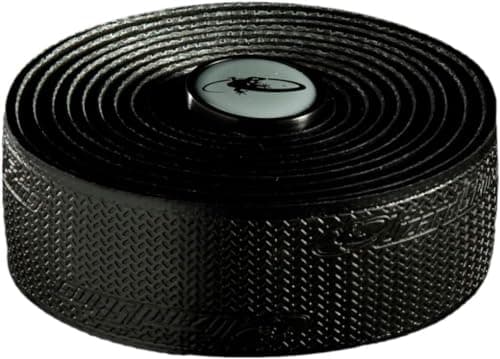
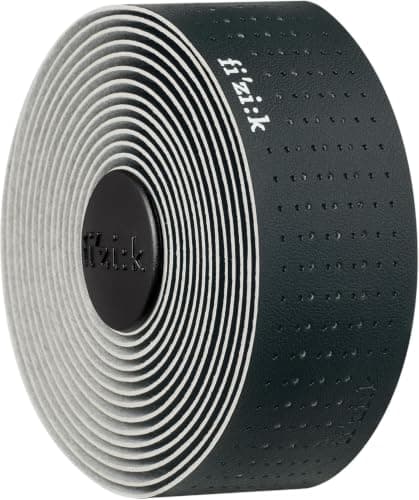
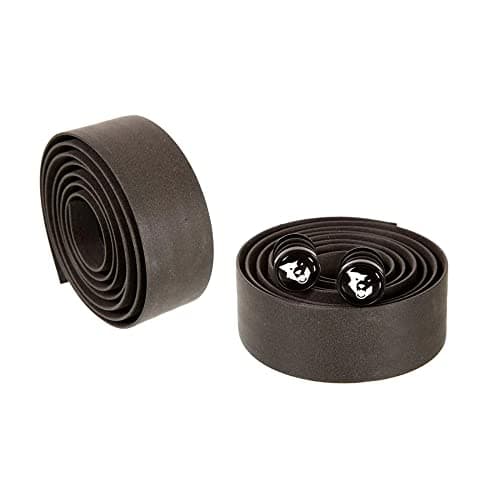
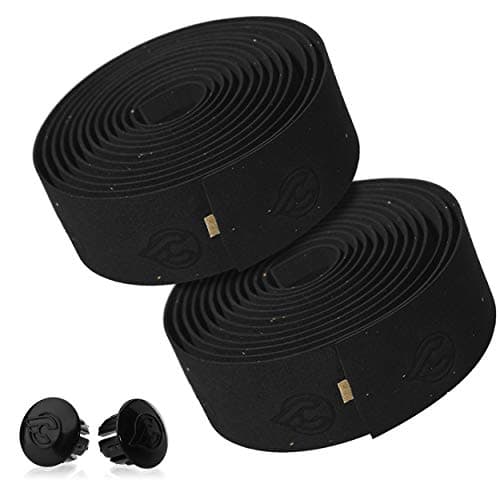
Bar tape is the only component you touch for the entire ride. It is also the cheapest thing on the bike that changes how the bike feels, and the one most often chosen on color. There are two real questions — how much material sits between your palm and the aluminum, and how grippy that material stays when your hands are wet — and the category answers the first one with a single number that turns out not to mean what it looks like.
What this page ranks on, and what it refuses to rank
Seven of the ten tapes here publish a thickness in millimeters. Lined up in a column they read as a league table: 2 mm, 2.5 mm, 2.7 mm, 3 mm, 3.2 mm, 5 mm. It is tempting to rank on that and go home.
We do not, because four of the seven brands here publish, in their own copy, a reason that number is not comparable.SILCA prints a conversion factor. Wolf Tooth says the figure moves with how you wrap. Cinelli and Arundel do not print a thickness at all — they are two of the three missing from that list of seven. A ranking built on one number that four of seven manufacturers have publicly qualified is not a ranking; it is a table with a confident font.
So the axis here is what each maker publishes about its own tape— thickness, width, length, weight, materials and what is in the box — and how much of that you can actually check. A tape whose maker tells you four dimensions can be compared. A tape whose maker tells you none cannot, whatever it feels like in the hand. That is why a long-respected product finishes tenth here, and the pick says so in those words rather than inventing a fault.
A millimeter is not one measurement, and the makers say so
Four separate admissions, all quoted from the manufacturers’ own pages and read on 30 September 2026:
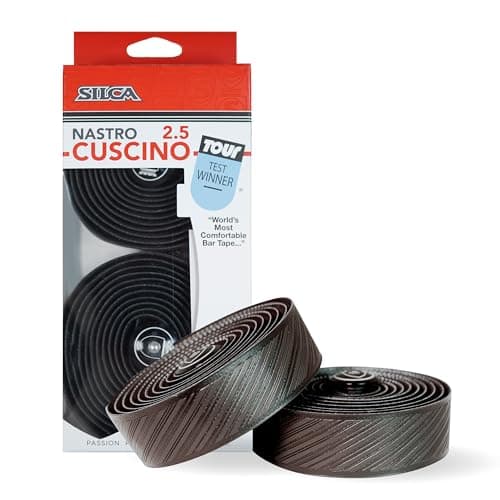
- SILCA publishes a conversion. The 2.5 mm Nastro Cuscino is “2.5mm of cushion similar dampening to 3.5mm in other tapes”, and the thicker version is “3.75mm of cushion similar dampening to 5mm in other tapes”. A maker at the top of the category is telling you its millimeters are worth more than somebody else’s. No test is published for that, and we print it as SILCA’s claim rather than as a fact — but the very existence of the claim concedes the point.
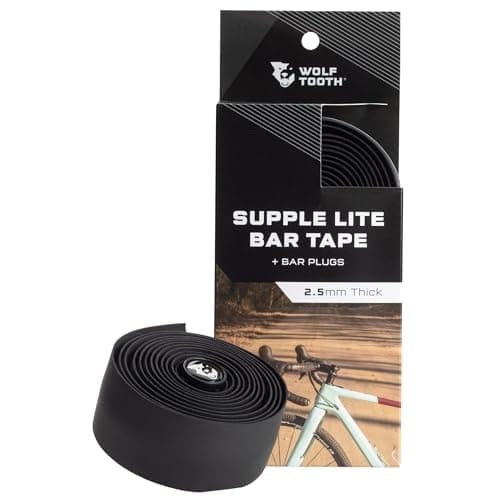
- Wolf Tooth publishes a range instead of a figure. “Thickness can be adjusted from 2.5mm to 5mm based on the amount of overlap.” That is the same product spanning the entire thickness range of this page, depending on how you wrap it. The tape on the reel and the tape on the bar are different thicknesses.
- Cinelli publishes nothing numerical. The Cork Ribbon page gives a material — “SYNTHETIC”, “mixed with real cork” — and the fact that it includes caps and finishing tape. No thickness, no width, no length, no weight.
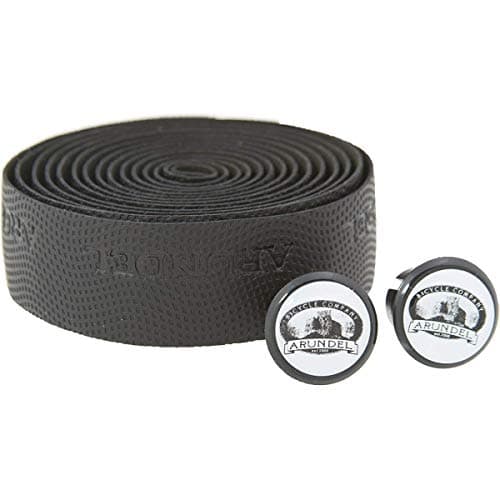
- Arundel publishes nothing numerical either. The Gecko Grip page is a paragraph of description that includes the phrase “thinner than cork” — a comparison to a tape whose own maker publishes no thickness.
The finding: thickness and weight run in opposite directions
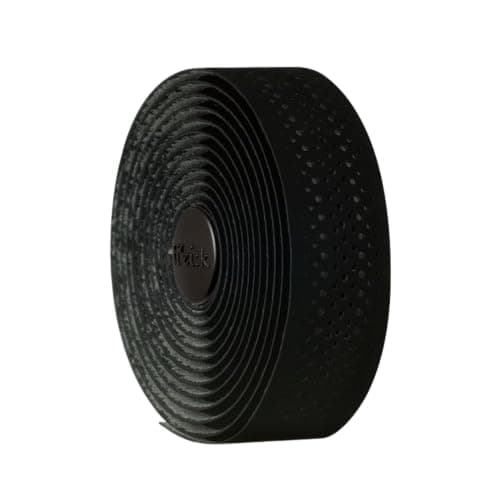
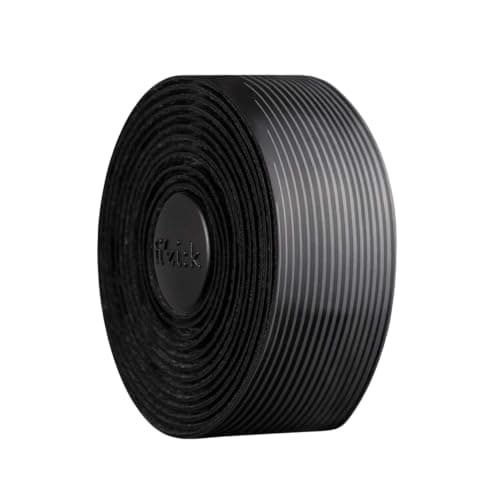
fizik is the only brand here with four tapes on its own site using one publishing convention, which makes it the only place a within-brand comparison is fair. Its published figures:
The thickest tape is the lightest and the thinnest is the heaviest, by a 35-gram margin, in one brand’s own published numbers. Nothing is wrong with the figures. The explanation is that a dense polyurethane skin weighs far more per millimeter than a foam does, so the thin race tape carries more material per unit of thickness than the thick comfort tape. And the consequence is the thing worth taking away: a thickness figure tells you how far your palm sits from the bar, and nothing whatsoever about what is in between. Two tapes at 2.5 mm can be a firm polymer and a soft foam, and they will not feel remotely alike.
It also quietly demolishes the most common shorthand in this category, which is that thin tape is for racers because it is lighter. On fizik’s own numbers, the thin tape is the heavy one. Thin tape is for people who want to feel the bar.
How much tape are you actually buying?
This is the question the category is worst at answering, and it is the one that decides whether you run out halfway up a wide gravel bar. Two numbers are needed — width and length — and two of the seven brands here publish both.
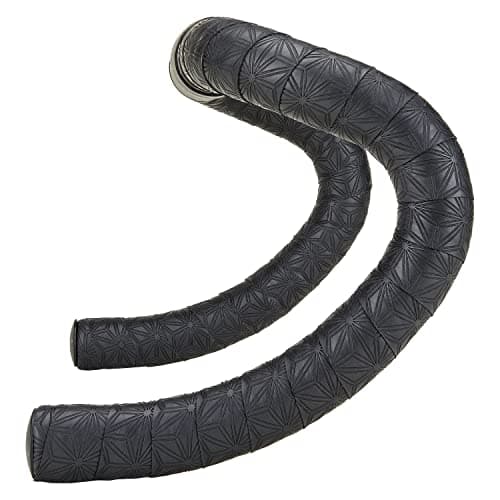
Supacaz publishes 30 mm by 2200 mm, which is 660 square centimeters a roll. Wolf Tooth publishes 40 mm by 152 cm, which is 608. That is the whole comparison anyone can make, and it is closer than the lengths suggest: the Wolf Tooth roll is a third shorter, but it is a third wider, so it ends up within about nine percent of the Supacaz roll on material rather than the third behind you would guess from the length alone. Everyone else publishes either a length with no width (SILCA at 230 cm, Lizard Skins at 82 inches) or nothing at all (all four fizik tapes, Cinelli, Arundel).
Width matters more than it sounds. A 40 mm tape covers a given length of bar in fewer turns than a 30 mm one, which means fewer overlaps, which is why Wolf Tooth can publish a shorter roll and still tell you it will wrap a drop bar. It also means a 40 mm tape changes feel more dramatically with overlap, which is exactly what Wolf Tooth’s 2.5-to-5 mm note is describing.
What comes in the box, and the part that actually fails
Bar tape does not usually wear out. What fails is the finishing tape at the stem end: the adhesive lets go, the last turn unravels, and the whole wrap follows within a week. So what is in the box is not a trivia question, and the makers split three ways.
Fully specified: Wolf Tooth Supple Lite names bar plugs, polyurethane finishing tape and brake clamp cover tape. SILCA names a laser-engraved aluminum end plug, fully adhesive finishing tape and a butterfly clamp cover. Lizard Skins names finish strips, clamp covers and screw-in plugs. Supacaz names its plugs and a rubberized finishing tape. Cinelli names caps and finishing tape.
Specified with a gap:Wolf Tooth’s 5 mm Supple includes self-fusing silicone finishing tape but lists bar end plugs as a separate product. If you buy it, budget for plugs.
Not specified at all: all four fizik tapes and the Arundel Gecko. They may well include everything; their makers simply do not say.
Two details worth knowing. A screw-in plug, which only Lizard Skins specifies here, expands inside the bar and does not pop out in a crash or a bike-rack loading. And a clamp cover— the small strip that goes over the lever clamp before you wrap — is what stops a gap appearing at the hood; three makers here name one.
Road, gravel, and hands that go numb
The sensible split is not brand, it is surface and duration. On smooth tarmac with a carbon fork, 2 mm to 2.5 mm keeps the bar’s shape legible and the levers where your fingers expect them. On gravel, broken asphalt or an aluminum bar, the 3 mm and up tapes are doing real work, and it is not subtle.
If your hands go numb, buy the thicker tape — but buy it second. Our guide to choosing cycling gloves lays out the order of operations, and tape is a bigger lever than padding: the first fixes are moving your hands between tops, hoods and drops, checking your fit, and then the wrap. A padded glove over thin tape is treating the symptom from the wrong end. The same page and the gloves roundup both say so, and neither of them had a tape page to send you to until now.
The other upstream lever is pressure. Dropping tire pressure does more for hand comfort than any tape, because it changes what reaches the bar in the first place — the road tire pressure guide and the gravel one have the arithmetic. If you are running a wide tire at an old narrow-tire pressure, fix that before you spend on tape.
What we could not check
We have not wrapped, ridden or measured any of these tapes. There is no lab here and no test fleet, and a tape’s feel is a report on one person’s hands and one bike’s bars in any case. What is on this page is the specification each manufacturer publishes on its own website, read on 30 September 2026, plus the live Amazon listing title for the exact variant linked, and a ranking built from those and nothing else.
Specifically: we cannot tell you whether SILCA’s damping equivalence holds, because no test is published for it. We cannot tell you the thickness of the Cinelli or the Arundel, because neither maker publishes one and repeating a retailer’s number as if it were the manufacturer’s is how a guess becomes a fact. We cannot tell you how much tape is in a fizik box. Where the table below says “Not published”, that is the finding, not a gap we forgot to fill.