Organic vs sintered disc brake pads
The cheapest part of your brake is the one people most often buy wrong. Organic (resin) and sintered (metal) aren't a budget-to-premium ladder — they're two compounds tuned for opposite conditions, and the maker who sells both refuses to name a winner.
Heads up: we earn a commission if you buy through the links on this page, at no extra cost to you. It never decides what makes the list — here’s how that works.
A set of disc brake pads is the cheapest part of your brake and the one riders agonize over most — usually right before buying the wrong pair. The mistake is treating “organic vs sintered”as a quality ladder, where resin is the budget option and metal is the upgrade. It isn’t. Read the manufacturers’ own words — SRAM’s pad overview lays it out plainly — and you’ll notice neither SRAM nor Shimano ever names a better pad. They describe two compounds with opposite strengths and leave you to match one to your riding.
That is the honest frame for this whole page. The compound isn’t chosen by budget or by which reviewer shouts loudest; it’s chosen by two things — heat and water— and by how much of each your riding throws at the brake. Get those two right and most of the rest is noise, sometimes literally. We haven’t bench-tested pads, so you won’t find a stopping distance here. What follows is the mechanism, the makers’ published tradeoffs, and the one number that actually tells you when a pad is finished.
The two compounds, and why they behave differently
Organic pads— also sold as resin pads — are a fibrous friction material bound together with a resin. It’s a comparatively soft compound. Sintered pads— also called metallic — are made of metal particles fused together under heat and pressure, which is literally what “sintered” means. Semi-metallic pads are the hedge between them: an organic-style compound with metal particles mixed in, which SRAM and independent guides both describe as a middle ground rather than a third category.
Those material differences aren’t trivia. A friction material’s entire job is to turn your speed into heat, and metal and resin deal with heat in opposite ways. Nearly every real-world difference between these pads — the bite, the fade, the wear, even the noise — falls out of that one fact. So it’s worth spending a paragraph on heat before anything else, because heat is the story.
The heat story is the whole story
Cold, resin wins. SRAM’s own description of organic pads is that they “provide a more consistent initial bite without the need to warm up”, while sintered pads “may not have the same initial grab… once warmed up, they deliver consistent performance”. Independent testing summaries agree that resin has the sharper response from cold. If most of your stops are short, from a cold brake — town riding, a commute, the first minute of a descent — resin gives you more brake for the first squeeze.
Hot, resin loses. Push a resin pad hard and long and it can fade, and it can glaze— the surface hardens under heat and the pad goes slippery, shedding a chunk of its power until it’s reconditioned. Sintered is built for exactly the case where resin gives up: SRAM calls metal pads “ideal for heavy or extreme duty applications, where resistance to higher temperatures is required, like a steep sustained descent”. Metal doesn’t glaze the way resin does and holds its bite as the temperature climbs.
The heat has to go somewhere, and this is where the marketing gets sloppy. A common line is that sintered pads “run cooler.” The mechanism is the other way around. Because metal conducts heat readily, a sintered pad transfers more of it back through the pad into the caliper and brake fluid; the more insulating organic compound keeps more heat out at the rotor face. Both BikeRadar and road.cc make this point explicitly — metal moves heat toward the fluid, resin holds it at the rotor. That is one reason finned and Ice-Tech-style pads exist at all: to shed the heat that metal is so good at carrying inward. It also means the honest answer to “which pad runs cooler” is neither — they just put the heat in different places, and each place has its own failure mode.
Wear, wet and noise — the day-to-day tradeoffs
Wear. Sintered lasts longer, and the gap widens in bad conditions: SRAM says organic pads “tend to wear faster than sintered pads, especially when wet”. Whichever you run, the number that matters isn’t on the box, it’s on the pad. Park Tool puts the wear limit at “at least 1mm thick”of friction material, and suggests stacked business cards as a rough field gauge before you reach for a caliper. Below that, replace them — a pad worn to the backing plate scores the rotor and turns a cheap job into an expensive one.
Wet.Sintered is the wet-weather pad. It stays more consistent in wet and muddy conditions and resists the glazing that dogs resin, which is why it’s the default choice in wet climates and for anyone who rides through winter. Resin can go vague and greasy when it’s soaked and dirty, then need a few hard, dry stops to come back.
Noise. Here resin has the edge: SRAM says organic pads “produce less noise”, while sintered pads “tend to be louder”and BikeRadar rates metal as much more likely to squeal. Be careful how much weight you put on that, though. Park Tool’s guidance on a noisy brake is to hunt the cause first — “always look for the source of the contamination… overspray from aerosol lubricants, or a leak in the hydraulic system”— because a contaminated pad or a badly bedded rotor will out-squeal any compound difference. Noise is often a setup problem wearing a compound’s name. If that is why you are here, work through how to fix squealing disc brakes before you change compound — it sorts the four causes by when the noise happens.
Rotor compatibility can cost you more than the pads
This is the row that turns a cheap decision expensive, and it’s the one the buying guides skip. Every pad lays a thin, matched film of its own material onto the rotor as it beds in. Change compound and you’re asking new pads to grip a surface glazed with the old ones. SRAM’s position is blunt: “when changing brake pad compounds, it is crucial to replace the rotors as well”, while swapping like-for-like — organic for organic, sintered for sintered — is “generally acceptable”. Park Tool frames the same risk more generally: there can be “compatibility issues with certain rotor material and pad material combinations. Check for any such warnings on the components or packaging.”
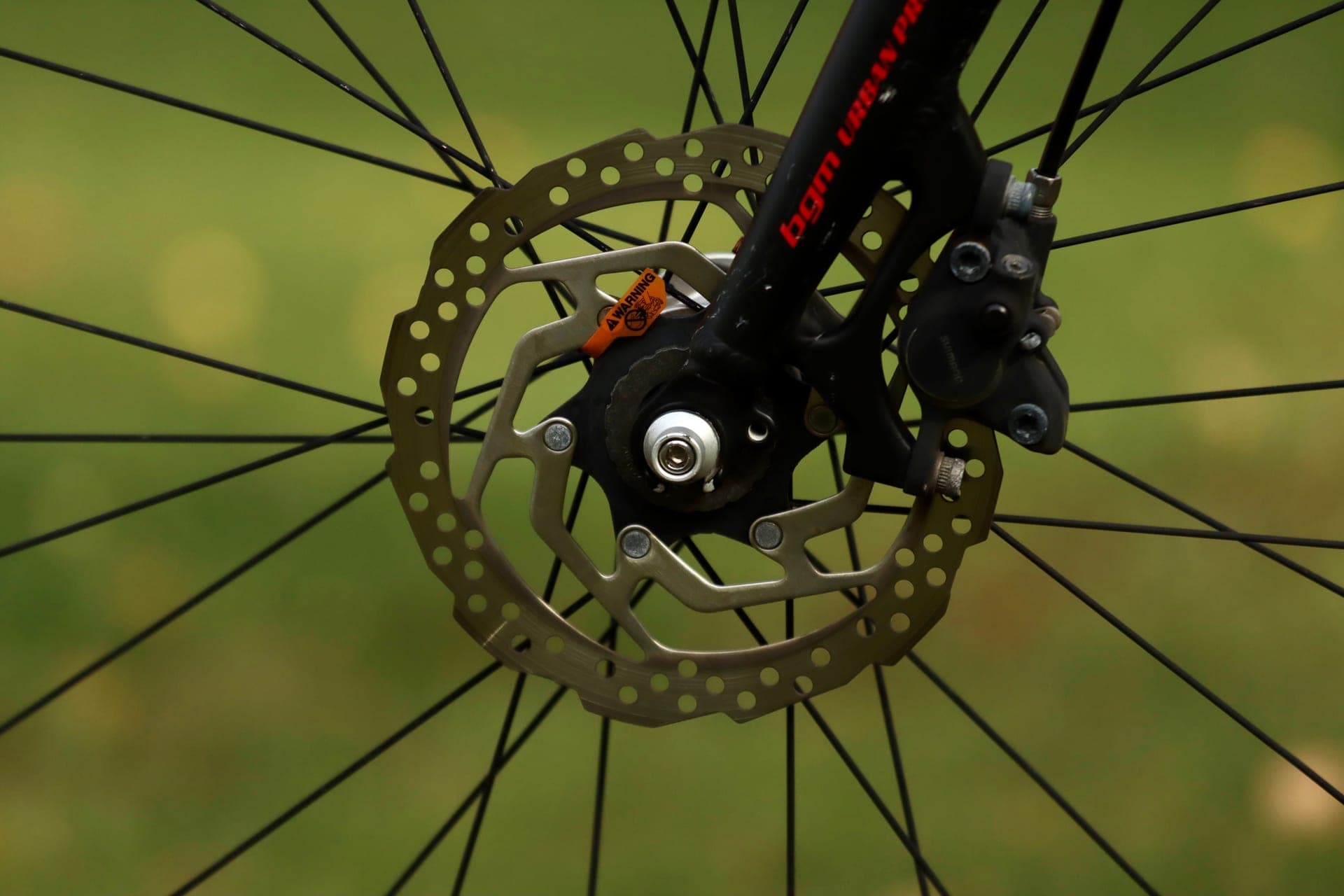
Those warnings are not hypothetical. Some rotors are sold as resin-pad-only, and Shimano goes as far as laser-etching “RESIN PAD ONLY” onto some of its lower-tier rotors. The reason is exactly the heat-and-metal story above: cheaper rotors aren’t made of the harder steel used higher up the range, so a hard sintered pad wears them out fast. Read the etching before you fit metal pads. This is precisely the case Park Tool is telling you to check the components for, and it’s the kind of quiet, cheap detail that — like a rear derailleur adjustment — punches far above its cost when you get it right, and bites when you don’t.
Bedding-in is free performance, and almost nobody does it
A new pad doesn’t work properly out of the box. It has to be bedded in: a series of firm, controlled stops in the dry that transfer an even layer of pad material onto the rotor and mesh the two surfaces. road.cc describes the process as controlled heat cycling in dry conditions, and warns that bedding pads in on a wet, gritty trail drags contamination into that fresh layer and hurts long-term performance. Skip it and even a good pad will feel weak, grabby, or noisy — and you’ll blame the compound.
Sintered asks for more of this than resin does. SRAM notes that metal pads “require a more thorough bedding-in process” while organic pads “require less time to bed-in”. That’s part of the real cost of the extra heat resistance: a sintered pad you haven’t bedded and warmed up is a sintered pad performing below a resin one. If you’re still deciding whether you’re even on discs, the wider case is in rim brakes vs disc brakes, which digs into what the federal brake standard actually tests — and, tellingly, what it doesn’t.
So which do you actually want? It depends, honestly
The uncomfortable answer this category avoids is that it genuinely depends on you, and it can change with the season. Dry-road riders and commutersare well served by resin: cold bite, quiet running, and heat they’ll rarely generate on flat tarmac. Long, wet mountain descents — and heavier loads, including many e-bikes and loaded tourers— are the sintered case, because that’s where heat and water and sheer energy pile up and resin fades. If you want one pad for everything, semi-metallic is the deliberate compromise. None of that is a verdict. It’s a matching exercise, and only you know the descents, the rain and the weight your brake has to deal with.
What we haven’t done
We have not tested a single pad. There is exactly one hard number on this page — Park Tool’s 1mm minimum thickness — and it’s about when a pad is dead, not how well it stops. Everything else is either quoted from the makers’ own pad pages or is mechanism you can reason out from where the heat goes and how metal and resin carry it. If a page tells you sintered stops x percent shorter, or hands you a torque-and-temperature table for something nobody publishes, treat the confidence as the product it is. The honest version has fewer numbers and one instruction: match the pad to your heat and your water, bed it in, and read the rotor before you switch. Pair it with how to fix a flatand you’ve got the two roadside-and-workshop skills a disc-braked bike actually asks of you.
Organic vs sintered, on the things that actually differ
No scores — we’ve tested nothing. The “honest read” column says which compound the mechanism favors for that row, and where the real answer is “it’s your setup, not your pad,” it says that instead.
| What you’re comparing | Organic (resin) | Sintered (metallic) | The honest read |
|---|---|---|---|
| Cold / first-stop bite | Bites hard from cold, no warm-up | Weaker until warm, then steady | Organic, for short cold stops |
| Wear life | Wears faster, worse in the wet | Lasts longer, holds up wet | Sintered, clearly |
| Wet + sustained heat | Can fade and glaze when cooked | Built for long, wet, hot descents | Sintered, clearly |
| Noise | Quieter | Tends to be louder | Organic — but contamination matters more |
| Best use | Dry road, commuting, light trails | Long wet descents, loaded bikes / e-bikes | Neither — it's your conditions |
Count the wins and sintered looks ahead — but three of these rows are only decisive if your riding reaches them. A commuter who never cooks a brakegets resin’s cold bite and quiet for free and never spends the heat resistance they paid extra for. The row that decides it is “best use,” and only you can fill it in.
What actually decides this purchase
Start with your worst descent, not your average ride.Pads are chosen at the extreme, because that’s where they fail. If your hardest day is a long, wet, loaded descent, buy for that day and accept slightly more noise the rest of the time. If your hardest day is a damp commute, resin’s cold bite and quiet are the features you’ll actually use.
Heavier bike, heavier case for sintered.An e-bike, a loaded tourer or a big rider puts more energy through the brake, and more energy means more heat — the exact condition resin fades in and sintered was built for. Weight quietly pushes the decision toward metal even on terrain that would otherwise suit resin.
Check the rotor before you switch compounds.SRAM says to replace the rotor when you change compound, and some rotors are etched resin-pad-only. Fitting sintered pads to a soft, resin-only rotor wears the rotor out fast; fitting any new compound to a rotor glazed with the old one gives you weak, noisy braking until it re-beds. Read the rotor first — it’s a ten-second look that saves a part.
Semi-metallic is a real answer, not a cop-out.If you genuinely ride a bit of everything and don’t want to swap pads by season, a semi-metallic compound splits the difference — more heat and wet tolerance than resin, more cold bite and less noise than full sintered. You give up the extremes at both ends, which for most riders is the right trade.
Bed them in, every time.The best compound fitted badly loses to the worst one fitted well. A series of firm dry stops after fitting is free performance, and sintered needs more of it than resin. Skipping it is the most common reason a “bad” pad is actually a fine pad that was never given its rotor film.
Watch the 1mm line.Whatever you run, Park Tool’s wear limit is 1mm of friction material. Below that you’re braking on the backing plate, scoring the rotor, and converting a cheap pad swap into a rotor bill. It’s the cheapest thing on this page to get right and the most expensive to ignore. When it is time to buy, the pad roundup sorts them by caliper shape— the question that has to be answered before the compound one.
Common questions
Are sintered pads just better than organic ones?
No, and it’s worth noticing that the companies selling both refuse to say so. SRAM and Shimano describe them as two compounds with opposite strengths: sintered resists heat and wet and lasts longer; organic bites better from cold, runs quieter and beds in faster. Sintered wins if your riding generates real heat and water — long wet descents, heavy loads. Organic wins if it doesn’t — dry roads, commuting, short cold stops. It’s a match, not a ranking.
Do resin pads really stop better when the brake is cold?
For the first stop, yes. SRAM’s own description is that organic pads give a consistent initial bite “without the need to warm up,” while sintered pads have less initial grab until they’re warm. That’s why resin suits town and commuting, where most stops start from a cold brake. The trade is at the other end of the temperature range: heat the resin pad hard and long and it can fade and glaze, where the metal pad is only getting into its working range.
Can I put metal (sintered) pads on my rotor?
Check the rotor first. Some rotors — typically cheaper ones — are marked resin-pad-only, and Shimano etches “RESIN PAD ONLY” onto some of its lower-tier rotors because their softer steel wears out fast under a hard sintered pad. Park Tool’s general rule is to check the components and packaging for exactly this kind of warning. Separately, SRAM advises replacing the rotor when you change compound at all, because pads lay down a matched film as they bed in and a new compound won’t grip the old one cleanly.
Why are my new disc pads squealing?
Sintered pads do tend to be louder than resin ones, but jumping to the compound is usually the wrong first move. Park Tool’s advice on a noisy brake is to hunt the cause: look for contamination first — aerosol lubricant overspray or a hydraulic leak are common sources — and make sure the pads were bedded in properly. A contaminated or unbedded pad will out-squeal any compound difference, and no pad choice fixes oil on the rotor.
When should I replace my disc brake pads?
Park Tool’s guidance is that the friction material should measure at least 1mm thick; below that, replace them. You can eyeball it with stacked business cards as a rough gauge and confirm with a caliper, and check the pad maker’s own wear spec since some differ. Don’t run them to the backing plate — a metal-on-metal pad scores the rotor and turns a cheap consumable into a rotor replacement.
Do I really need to bed in new pads?
Yes, and it’s the step most people skip. Bedding-in is a series of firm, controlled stops in the dry that transfer an even film of pad material onto the rotor; road.cc warns that doing it in the wet or on a gritty trail drags contamination into that layer and hurts performance long-term. Sintered pads need more of this than resin. A fresh pad that feels weak, grabby or noisy has very often just not been bedded in.
Sources
- SRAM — Brake Pad Overview (organic pads give "a more consistent initial bite without the need to warm up", "produce less noise", "require less time to bed-in" and "wear faster than sintered pads, especially when wet"; sintered pads are "louder", "require a more thorough bedding-in process" and are "ideal for heavy or extreme duty applications... like a steep sustained descent"; "when changing brake pad compounds, it is crucial to replace the rotors as well") — retrieved 2026-08-08
- Park Tool — Disc Brake Pad Removal & Installation (friction material wear limit "at least 1mm thick"; "there may be compatibility issues with certain rotor material and pad material combinations. Check for any such warnings on the components or packaging"; noise/contamination — "always look for the source of the contamination... overspray from aerosol lubricants, or a leak in the hydraulic system") — retrieved 2026-08-08
- BikeRadar — Disc brake pads explained: organic vs sintered vs semi-metallic (organic gives excellent initial bite at low temperatures, quieter, insulates and keeps heat at the rotor; sintered is louder, more consistent in the wet, resists glazing and transfers more heat to the brake fluid) — retrieved 2026-08-08
- road.cc / off-road.cc — Disc brake pads explained: organic vs sintered vs semi-metallic (glazing of resin pads at high temperature; metal conducts heat to the fluid while organic insulates; bedding-in is controlled heat cycling in the dry and doing it in wet/gritty conditions contaminates the pad) — retrieved 2026-08-08
Read next
- How to fix squealing disc brakes
Noise is usually setup, not compound — here is how to tell which you have.
- Rim brakes vs disc brakes
Whether you're even on discs, and what the standard tests.
- How to adjust a rear derailleur
The other cheap adjustment that punches above its cost.
- How to fix a flat
Roadside skills for the disc-braked bike.
We haven’t ridden or tested any of the products on this page, and we don’t pretend otherwise. Read how we research — or tell us we’re wrong and we’ll log the correction.