How to Fix Squealing Disc Brakes
Four causes make almost identical noises and one of them is free to fix. Work out which you have before you buy pads, and before you spray anything at a rotor.
Heads up: we earn a commission if you buy through the links on this page, at no extra cost to you. It never decides what makes the list — here’s how that works.
The useful question is not “why is it squealing”. It is “when does it squeal”. A brake that only makes noise when you pull the lever has a different fault from one that sings continuously as the wheel turns, and both are different from one that only squeals in the rain or only since the pads were replaced. Four causes, four fixes, and one of them costs nothing.
We have not tested any of this and hold no data on brake noise. The procedures below are Park Tool’s and the compound and bedding claims are SRAM’s and Shimano’s, published and attributed.
First: does it squeal only when you brake, or all the time?
Only when braking points at the pad-to-rotor interface: contamination, or pads that have not bedded in, or a compound-and-rotor mismatch.
All the time, in time with the wheel is rub, not squeal, and it is a mechanical alignment problem. Park Tool opens its alignment article by naming it as the common one: “A rubbing disc brake is a common problem, and even the slightest rub which might not really be slowing you down can still be annoying.”
Only in the wet is usually not a fault at all. A thin film of water and grit between pad and rotor is noisy, and it goes away after a few applications as the surface dries and cleans.
Cause 1: contamination — the one to rule out first
This is the cause worth checking before anything else, because a contaminated pad does not recover and no amount of alignment work will quiet it. Park Tool lists the symptoms as “a squeal, extra effort at the lever to slow down, or a darkness on the rotor and pads that smears when rubbed with a finger”. That third one is the tell: run a clean fingertip over the braking track and look at it.
The usual sources are ordinary workshop accidents — overspray from an aerosol lubricant, a rag that wiped a chain and then touched a rotor, chain lube flicked outward by a spinning wheel, or a hydraulic leak. Our degreaser roundup makes the same point from the other direction: the habit that prevents this is removing the wheel or masking the rotor before any spray comes out.
What Shimano says to clean brakes with, and what not to
This is where most advice on the internet goes wrong, so it is worth being precise. Shimano’s own dealer’s manual for hydraulic disc brakes instructs you to clean the brake system with soapy water and a dry cloth, and specifically not to use commercially available brake cleansers or silencing agents, which it warns can damage seals.
We follow the brake manufacturer over the label on a spray can, and so should you. If a rotor genuinely needs cleaning, soapy water and a clean cloth is the published instruction. If a pad is contaminated, the honest answer is that it is a consumable and it has been consumed — replace it. Shimano also warns that oil or grease on the rotor or pads may prevent the brakes from working at all, which is a rather larger problem than a noise.
Cause 2: pads that have not bedded in
A new pad does not work properly out of the box, and until it beds it is both weak and loud. SRAM publishes a bed-in procedure it describes as controlled slowing that “only takes 10 minutes” and calls “the only proven way to ensure optimal power, consistent feel, and quieter braking” — note that quieter braking is named as one of the outcomes.
SRAM also publishes the compound difference that matters here: organic pads produce “less noise, and require less time to bed-in”, while sintered pads “require a more thorough bedding-in process” and excel “in all conditions, especially in wet and muddy environments”. If your bike went quiet-to-loud the week you fitted metal pads, that is the published explanation.
One more published rule people skip, from SRAM: “When changing brake pad compounds, it is crucial to replace the rotors as well to achieve optimal performance.” Each pad lays down a thin film of its own material on the rotor; a new compound running on the previous compound’s film is a common route to noise. Our organic vs sintered comparison works through the whole tradeoff.
What the fixes above actually need
Not a ranking — these are the parts the diagnosis points at. Note what is deliberately absent: no brake cleaner, because Shimano's own manual says to use soapy water and a dry cloth and not commercially available brake cleansers. Pads are caliper-specific, so check yours before ordering.
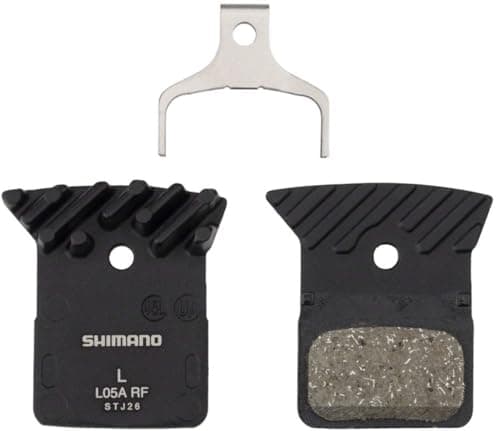
Shimano L05A-RF Resin Pads
Resin pads with a finned alloy back plate — the quieter, faster-bedding compound by SRAM's published description of the category. The straight swap when a pad is contaminated beyond saving.
$23.46 · View on Amazon$37.00 −37%
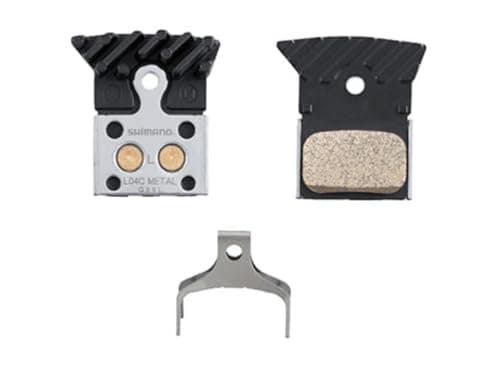
Shimano L04C Metal Pads
The metal pad, for riders whose noise complaint is really a heat complaint on long descents. Expect a more thorough bed-in and more noise, per SRAM's published comparison.
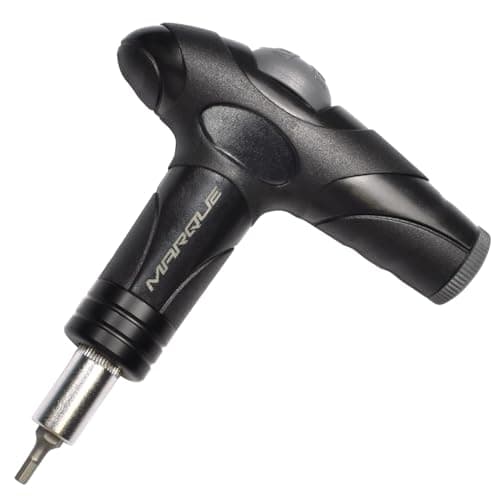
MARQUE Adjustable Bike Torque Wrench
A 4/5/6 N·m dial driver for the caliper mounting bolts you loosen during alignment. Park Tool publishes about 6-8 Nm for those bolts, so its 6 Nm setting reaches the bottom of that band and no further.
We haven’t tested any of these — they’re the parts the job above calls for, listed so you don’t have to go hunting. Prices are live from Amazon and we earn a commission if you buy. Prices as of October 18, 2026. #ad
Cause 3: rub, and Park Tool’s alignment procedure
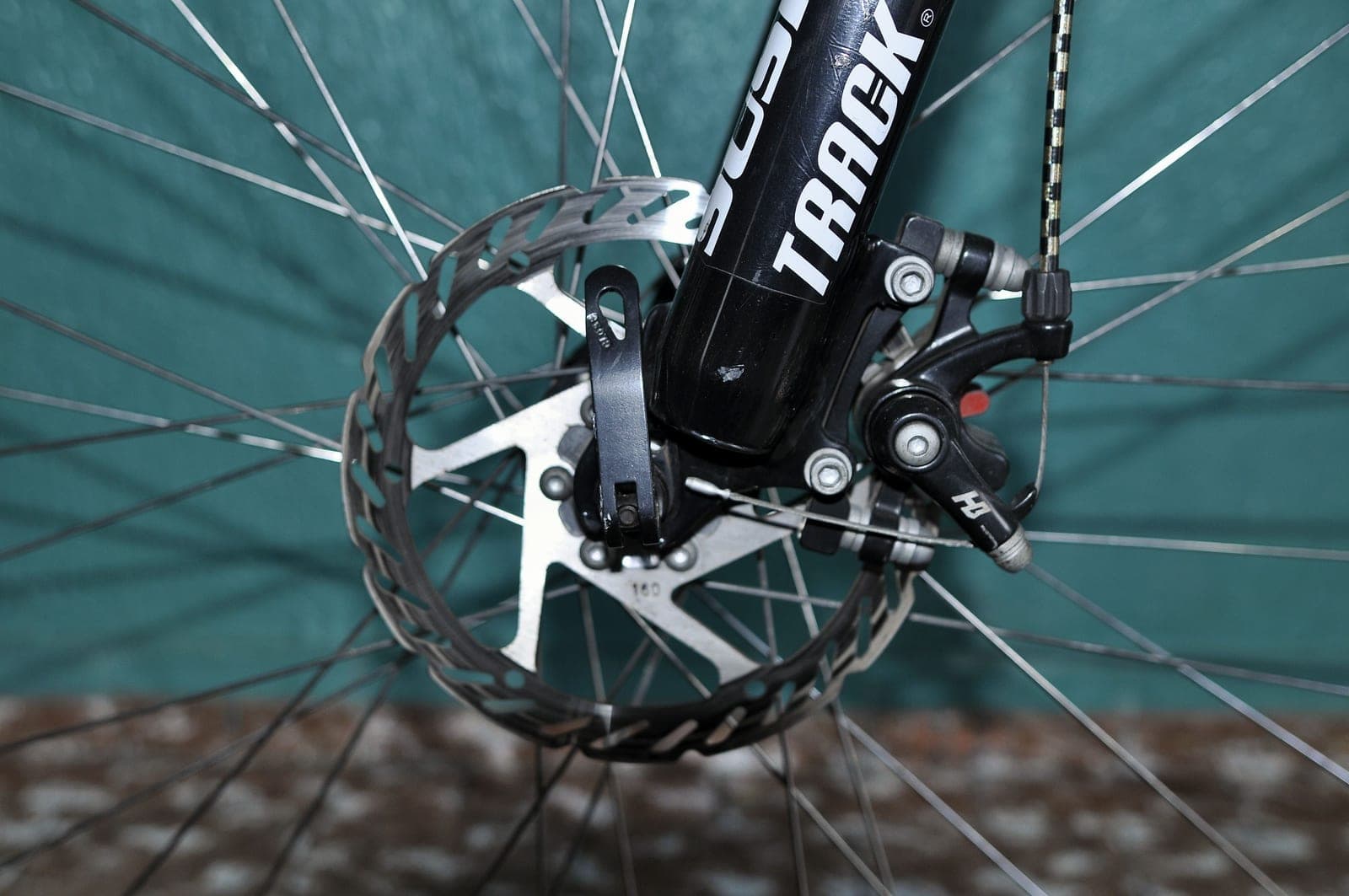
If the noise is continuous and in time with the wheel, the pads are touching the rotor. Park Tool’s hydraulic disc brake alignment article starts with diagnosis rather than adjustment, and its first step is the one most people skip: check the wheel is seated properly. With the bike on the floor, loosen the quick-release or axle, press down on the bike so the frame and axle are in contact, and re-tighten. Then elevate the bike, spin the wheel and sight the gap — backlighting the caliper makes it visible.
The alignment itself, as published:
Loosen both caliper mounting bolts until the caliper can move side to side. Squeeze the brake lever, which centres the caliper over the rotor. Holding the lever, snug the mounting bolts. Release, spin the wheel, and check. If it is clear, torque the bolts fully — Park Tool gives about 6–8 Nm — and you are done. If it still rubs, spin the wheel and loosen one bolt at a time, nudging the caliper away from the rub until there is a gap on both sides.
Park Tool also lists the things that make alignment impossible, and they are worth ruling out before you spend an evening on it: a significantly bent rotor, rotor play at the mounting bolts or lockring, bearing play at the hub, and sticky pistons from accumulated dust and dirt.
Cause 4: worn pads
Pads that have worn to the backing plate will squeal, then grind, then destroy a rotor. Park Tool publishes a threshold and a field gauge for it: “Generally, the pad material should measure at least 1mm thick”, with three stacked business cards as a rough comparison. Check while the wheel is out, which is the same moment you should be looking at them anyway.
Pads are also caliper-specific. Park Tool’s instruction is to “look up your specific caliper model on the manufacturer’s website to find the correct pads”, with matching an identical shape as a fallback that “will likely work”. Our disc brake pad roundup ranks the aisle on exactly this — how much of the fitment a listing lets you verify before you spend.
The order to work through it
Wipe a finger across the rotor and look at it. If it smears dark, you have contamination and the pads are probably finished. If it is clean, spin the wheel and listen with the lever untouched — a noise there is rub, and the wheel-seating check plus Park Tool’s alignment sequence is the fix. If it is silent unspun and squeals only under braking, and the pads are new, bed them in properly. If they are old, measure them against the 1 mm line.
Only after all four is it worth considering that you have the wrong compound for your riding, and that is a purchase rather than a repair. If your bike has rim brakes rather than discs, none of this applies and the rim vs disc comparison is the more useful page.
What we are not going to tell you
That sanding a rotor with a particular grit fixes it, that a specific spray silences brakes, or that any compound is quiet in absolute terms. Nobody publishes noise measurements for bicycle brake pads — no decibel figure, no frequency, no comparison — and the only relative claims that exist are SRAM’s descriptions of its own compounds, which we have quoted rather than paraphrased. Everything else in this category is folklore, and some of it contradicts the brake maker’s own manual.
If the diagnosis above lands on worn pads rather than on contamination or bedding, the replacement is a twenty-minute job with one expensive way to get it wrong: how to change disc brake pads.
Common questions
Why are my bike disc brakes squeaking?
Four common causes: contamination on the pads or rotor, pads that have not bedded in, the pads rubbing the rotor continuously, or wet weather. Which one you have is decided by when the noise happens — only under braking, all the time with the wheel, or only in the rain.
Can I use brake cleaner on bike disc brakes?
Shimano’s dealer manual says to clean the brake system with soapy water and a dry cloth, and specifically not to use commercially available brake cleansers or silencing agents, which it warns can damage seals. We follow the brake maker over the spray can.
Why are my new brake pads squealing?
Usually because they have not been bedded in. SRAM publishes a bed-in procedure it says “only takes 10 minutes” and calls the only proven way to get consistent feel and quieter braking. If you also changed compound, SRAM says the rotors should be replaced too.
How do I stop my disc brakes rubbing?
Reseat the wheel first, then align the caliper: loosen both mounting bolts, squeeze the lever to centre the caliper, snug the bolts while holding the lever, then torque to about 6-8 Nm. If it still rubs, check for a bent rotor, rotor play, hub bearing play or sticky pistons.
How thin is too thin for a disc brake pad?
Park Tool’s guidance is that the pad material should generally measure at least 1 mm thick, with three stacked business cards as a rough field comparison.
Do my brakes squeal because the pads are cheap?
Possibly, but it is the last thing to blame rather than the first. SRAM publishes that organic pads make less noise and bed in faster than sintered ones, but contamination, bedding and alignment account for most noise and none of them care what the pads cost.
Sources
- Park Tool — Hydraulic Disc Brake Alignment (“A rubbing disc brake is a common problem”; reseat the wheel before adjusting; loosen both mounting bolts, squeeze the lever to centre the caliper, snug while holding, then “secure the mounting bolts to full torque, about 6-8 Nm”; other causes listed as a bent rotor, rotor play, bearing play and sticky pistons) — retrieved 18 September 2026
- Park Tool — Disc Brake Pad Removal and Installation (contamination symptoms given as “a squeal, extra effort at the lever to slow down, or a darkness on the rotor and pads that smears when rubbed with a finger”; “Generally, the pad material should measure at least 1mm thick” with three stacked business cards as a field gauge; pads are caliper-specific and you should “look up your specific caliper model on the manufacturer's website”) — retrieved 18 September 2026
- SRAM — Brake Pads (organic pads produce “less noise, and require less time to bed-in”; sintered pads “require a more thorough bedding-in process” and excel “in all conditions, especially in wet and muddy environments”; bed-in “only takes 10 minutes” and is “the only proven way to ensure optimal power, consistent feel, and quieter braking”; “When changing brake pad compounds, it is crucial to replace the rotors as well”) — retrieved 2 September 2026
- Shimano — dealer's manual for hydraulic disc brakes DM-MDBR001 (clean the brake system with soapy water and a dry cloth; do not use commercially available brake cleansers or silencing agents, which can damage seals; oil or grease on the rotor or pads may prevent the brakes from working) — retrieved 18 August 2026
- Published pad and tool claims — each product's own live Amazon listing via the Amazon Creators API, as recorded on /road/best-disc-brake-pads and /workshop/bike-bolt-torque-guide — retrieved 18 August to 2 September 2026
- Google Autocomplete — “how to fix squeaky bike brakes” and “why are my bike brakes squeaking” both return disc-specific clusters (disc, shimano, hydraulic, new bike, when i stop) — retrieved 18 September 2026
Read next
- The best disc brake pads
Eight pads ranked on how much of the fitment you can verify before buying.
- Organic vs sintered brake pads
The compound argument, including why changing compound means changing rotors.
- The best bike degreasers
And Shimano's instruction to keep every one of them off your rotors.
- Bike bolt torque guide
Published figures for the caliper bolts you loosen during alignment.
- Rim brakes vs disc brakes
If your bike has pads on the rim, none of this page applies.
- How to clean a bike
The wash routine that keeps contamination off the rotor in the first place.
We haven’t ridden or tested any of the products on this page, and we don’t pretend otherwise. Read how we research — or tell us we’re wrong and we’ll log the correction.