How to Clean a Bike
Dirtiest first, low pressure only, and never finish without re-lubricating the chain. Get the order wrong and you clean the frame twice and the drivetrain never.
Heads up: we earn a commission if you buy through the links on this page, at no extra cost to you. It never decides what makes the list — here’s how that works.
The whole skill in washing a bike is the order. Clean the frame first and the drivetrain last, and the filthy water off the chain runs straight down the tubes you just finished. Park Tool’s published procedure says it plainly: “Begin by cleaning the dirtiest items first, which is typically the chain and drivetrain.”
This page follows Park Tool’s article, read 18 September 2026, with one addition it does not cover: what a wash can do to disc brakes. If you only want the chain rather than the whole bike, our chain cleaning guide is the shorter job and the more frequent one.
Set up: two buckets, hot water, and somewhere it can drain
Park Tool’s setup is unglamorous and it is the reason the job goes quickly. Fill at least two buckets with hot water — “Just like when washing dishes, warm water cleans better” — and mix a biodegradable dishwashing liquid into one of them. One bucket carries soap, the other rinses the brushes, which is what stops you painting grit back onto the frame.
If you are going to clamp the bike in a stand, scrub inside the jaws and the part of the frame you will clamp first. Park Tool notes the jaws will not scratch, but grit trapped between jaw and paint will mar the finish. If practical, take the wheels out: it makes both the wheels and the frame quicker to reach.
Step 1: drivetrain, because it is the dirtiest
Run the chain through a chain scrubber filled with solvent, pedaling backwards. Then use a gear brush and solvent on the derailleur pulley wheels, the derailleur cage and the chainrings — the places a rag cannot reach and where most of the black paste lives.
Park Tool’s two-pass trick is the part most people miss: after scrubbing the chain with solvent, empty the scrubber and refill it with soapy water, then run the chain through again. Using a degreaser and then a soap is, in its words, “very effective at cleaning the chain and removing grit”. The solvent lifts the oil; the soap carries away what the solvent loosened.
The disc brake rule, which Park Tool’s article does not cover
This is the most expensive mistake available during a bike wash and it takes one second. An aerosol degreaser sprayed at a cassette produces a mist that lands on a rotor a few inches away, and a contaminated pad is a replaced pad.
Shimano’s dealer’s manual for hydraulic disc brakes says to clean the brake system with soapy water and a dry cloth, and not to use commercially available brake cleansers or silencing agents, which it warns can damage seals. It also warns that oil or grease on the rotor or pads may prevent the brakes from working. So: remove the wheel or mask the rotor before any spray comes out, and never spray toward a caliper. If a rotor does get contaminated, our squealing brakes guide covers what can and cannot be recovered.
What the wash above calls for
Not a ranking — these are the four things the procedure uses, in the order it uses them. Two of them are solvents, so read the brake warning above before either leaves the can, and keep the last one for the very end.
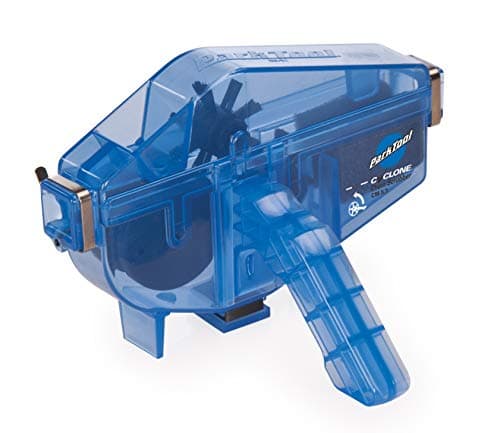
Park Tool CM-5.3 Cyclone
The chain scrubber Park Tool's own procedure names. Fill with solvent for the first pass, then empty it and refill with soapy water for the second.
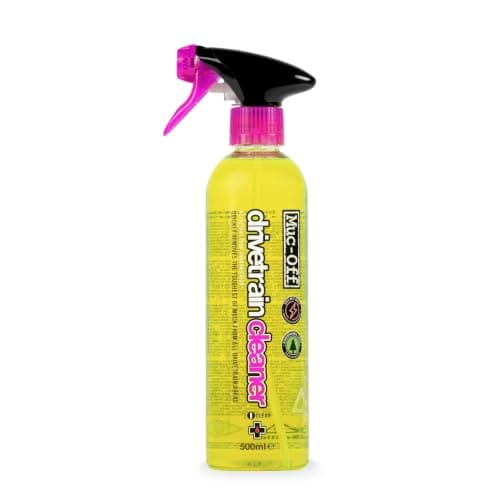
Muc-Off Drivetrain Cleaner
A 25.3 fl oz drivetrain cleaner for the pulley wheels, cage and chainrings the scrubber cannot reach. Wheel out or rotor masked before it is used.
$25.00 · View on Amazon$27.54 −9%
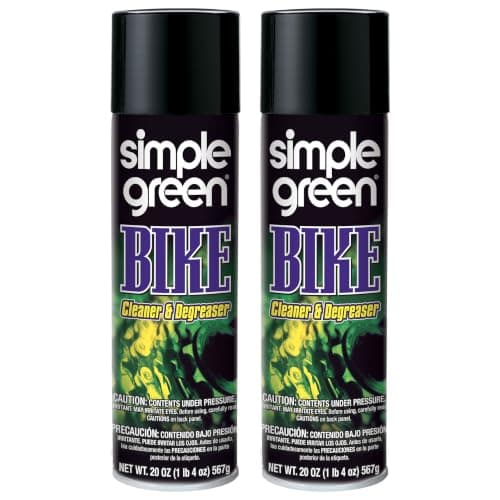
Simple Green Bike Cleaner and Degreaser
An aerosol cleaner and degreaser, sold as a 2-pack, for the greasy areas around the bottom bracket and stays. The hardest format to keep away from a rotor, so be deliberate.
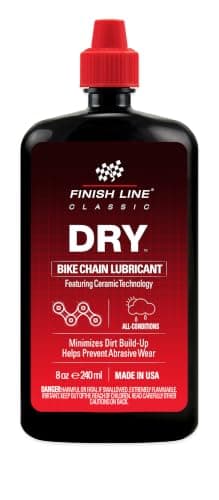
Finish Line Dry Teflon Lube
The last step, not an optional extra: Park Tool's procedure ends with the chain dried on a rag and re-lubricated, one drop per link. A washed chain left unlubricated rusts.
We haven’t tested any of these — they’re the parts the job above calls for, listed so you don’t have to go hunting. Prices are live from Amazon and we earn a commission if you buy. Prices as of October 18, 2026. #ad
Step 2: frame and components
A large soft-bristle brush and soapy water on the tubes; a tapered detail brush for the tight spots — behind the bottom bracket, around the derailleur, under the saddle. Park Tool is blunt about quantity: “Don’t be shy with the soapy water.”
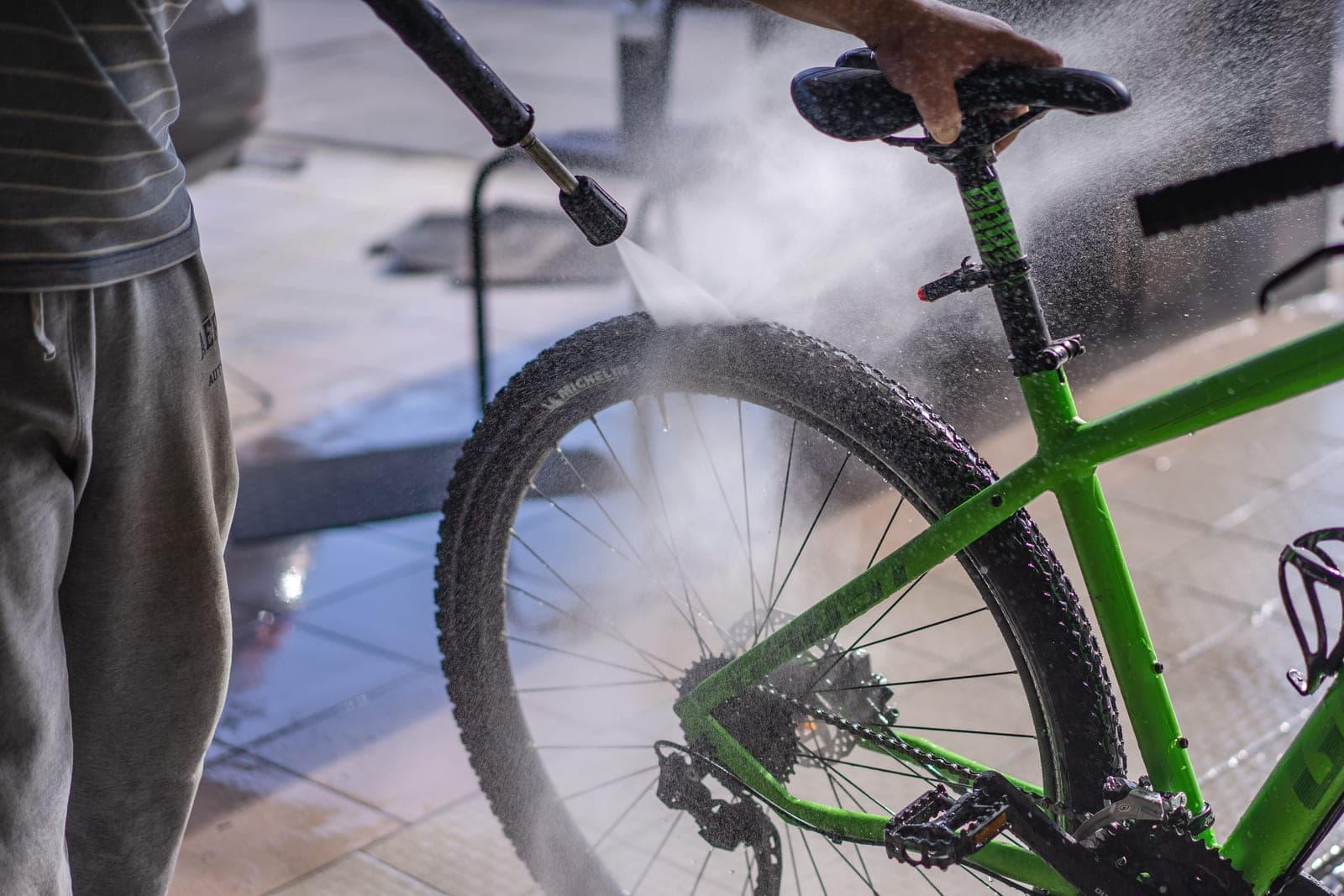
Rinse from the top down, and if you use a hose, “use only low pressure with a wide spray”. That single instruction is the difference between washing a bike and rebuilding its bearings. A pressure washer aimed at a hub, bottom bracket or headset drives water past seals that were designed to keep out rain, not a jet.
Step 3: wheels and cassette
Scrape the larger debris out from between the sprockets — grass, dirt, compacted grime — then clean the cogs with a gear brush and solvent. Park Tool adds a detail worth copying: lean the wheel so the cogs face the ground, which stops solvent running down into the hub bearing. Then wash the whole wheel with brushes and soapy water and rinse.
Step 4: dry, then re-lubricate
Let the bike drip, then dry it by hand with a towel. Park Tool makes the practical case for hand-drying rather than air-drying: it catches soap that was not rinsed off, and it walks your eyes over the whole frame and every component, which is when you find the cut tire or the loose bolt.
If you have compressed air, do not blast it directly at bearings. And then the step that is not optional: “The chain must be re-lubricated.” Run the chain through a clean dry rag first so it is dry, then apply one drop of lubricant per link. Park Tool also lists the pulley wheels, cables and pivot points as places for a light lubricant.
Which lubricant is a separate decision with a real answer — our wet vs dry comparison sorts it by climate, and the chain lube roundup prices the category per millilitre. If you run a waxed chain, washing changes the routine entirely: the waxing guide is the page to follow instead.
How often?
Nobody publishes an interval and we are not going to invent one, because it depends entirely on where you ride. What is publishable is the trigger: the drivetrain wants cleaning when it is visibly dirty or noisy, and the frame wants it when it is salty or muddy rather than on a schedule. A winter road bike ridden through grit needs attention weekly; a dry-weather summer bike can go a long time.
The one case that is not optional is after riding in salt, whether that is winter road treatment or a coastal ride. Salt keeps working long after the bike is dry.
That “nobody publishes an interval” problem is not unique to washing, and it is worth seeing the whole picture: the bike maintenance schedule collects every published wear limitwe can attribute — Park Tool’s chain elongation percentages, its 1 mm pad minimum, its rotor thickness figures, Schwalbe’s tire limits — and marks the three rows, this one included, where no manufacturer publishes a figure at all.
Cleaning a bike in an apartment
One of the most common variants of this query, and it changes the method rather than the order. Without a hose or a drain, do the drivetrain over a tray or a sheet of cardboard with a chain scrubber — the scrubber exists partly because it contains the mess — and do the frame with a damp cloth and a bucket rather than a rinse. Park Tool’s sequence still holds: dirtiest first, wheels off if you can, chain dried and re-lubricated at the end.
Storage matters more in a small space than washing does, and our bike storage guide covers what a bike needs when it lives indoors.
Finish by cleaning the tools
Park Tool ends its own procedure with this and it is worth repeating: rinse the brushes and clean the repair stand when the bike is done. A gear brush left full of solvent and grit is the thing that puts the grit back on next time, which is the same reason the two buckets were separate in the first place.
Common questions
What order should I clean a bike in?
Dirtiest first. Park Tool’s order is drivetrain, then frame and components, then wheels, then dry and re-lubricate. Cleaning the frame before the chain means the dirty water off the drivetrain runs over the part you just finished.
Can I use a pressure washer on a bike?
Park Tool’s instruction is that if you use a hose, “use only low pressure with a wide spray”. High-pressure water drives past the seals in hubs, bottom brackets and headsets that were designed to keep out rain, not a jet.
What soap can I use to wash a bike?
Park Tool lists a quality biodegradable dishwashing liquid as acceptable, mixed into hot water. Hot water cleans better than cold, for the same reason it does on dishes.
Will degreaser damage my disc brakes?
Contaminating a pad or rotor with degreaser, chain lube or overspray ruins the pad. Shimano’s manual says to clean the brake system with soapy water and a dry cloth and not to use commercially available brake cleansers. Remove the wheel or mask the rotor before spraying anything.
Do I have to re-lubricate the chain after washing?
Yes. Park Tool’s procedure states “The chain must be re-lubricated” and says to run it through a clean dry rag first, then apply one drop per link. A washed, unlubricated chain is a rusting chain.
How often should I clean my bike?
No maker publishes an interval and it depends on where you ride. Clean the drivetrain when it is visibly dirty or noisy, and the whole bike after any ride in salt or heavy mud. A winter road bike often wants weekly attention; a dry-weather bike far less.
Sources
- Park Tool — Wash a Bicycle (“Begin by cleaning the dirtiest items first, which is typically the chain and drivetrain”; at least two buckets and hot water because “warm water cleans better”; “a quality dish washing soap is acceptable”; scrub the clamping area before clamping; refill the chain scrubber with soapy water for a second pass because using a degreaser and a soap “is very effective at cleaning the chain and removing grit”; “Don't be shy with the soapy water”; “Rinse bike from top down” and “if you are using a hose, use only low pressure with a wide spray”; do not blast bearings directly with compressed air; lean the wheel so the cogs face the ground to keep solvent out of the bearing; “The chain must be re-lubricated”, dried on a rag first, “one drop of lubricant per chain link”; rinse the brushes and clean the stand afterwards) — retrieved 18 September 2026
- Shimano — dealer's manual for hydraulic disc brakes DM-MDBR001 (clean the brake system with soapy water and a dry cloth; do not use commercially available brake cleansers or silencing agents, which can damage seals; oil or grease on the rotor or pads may prevent the brakes from working) — retrieved 18 August 2026
- Published product claims for the four items above — each product's own live Amazon listing via the Amazon Creators API, as recorded on /workshop/best-bike-degreasers and /workshop/best-bike-chain-lube — retrieved 17 July to 18 August 2026
- Google Autocomplete — “how to clean a bike” returns a whole-bike cluster (frame, drivetrain, cassette, after rain, in an apartment) alongside the chain family our chain guide already covers — retrieved 18 September 2026
Read next
- Bike maintenance schedule
Every published wear limit as a calendar, with the unpublished rows marked.
- How to clean a bike chain
The shorter job, done far more often than the whole-bike wash.
- The best bike degreasers
Six cleaners compared, and where each one must not be pointed.
- The best bike chain lube
For the final step, priced per millilitre from the live feed.
- How to fix squealing disc brakes
What to do if something did reach the rotor.
- The best bike repair stands
What holds the bike while you do all of this.
- How to store a bike
Where a clean bike should live, especially indoors.
We haven’t ridden or tested any of the products on this page, and we don’t pretend otherwise. Read how we research — or tell us we’re wrong and we’ll log the correction.