Skip to content
ChainringClub

Stan's vs Orange Seal

The two names everyone recommends publish the same puncture ceiling. Only one of them tells you how much to put in and when to check it — and that is the whole difference.

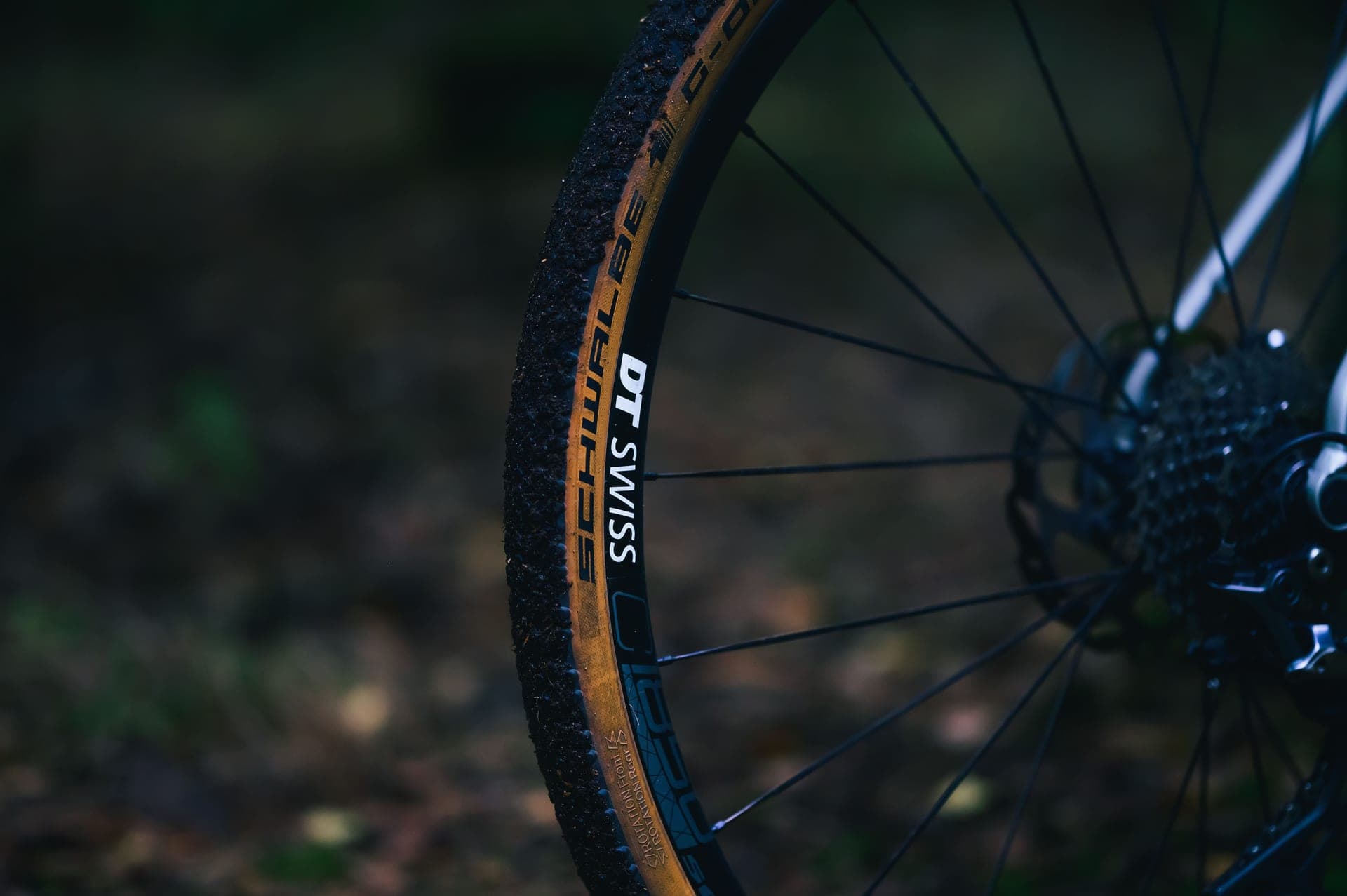
A tubeless bicycle wheel and tire on a workshop bench.
By Stephen V.Published October 11, 2026How we research

Heads up: we earn a commission if you buy through the links on this page, at no extra cost to you. It never decides what makes the list — here’s how that works.

Quick picks

Tap any row for the full write-up. Specs are the manufacturer's own published claims, read on 25 September 2026 for the three roundup picks, 12 September 2026 for Stan's Race.

#ProductBest forPrice
1
Stan's NoTubes Tire Sealant
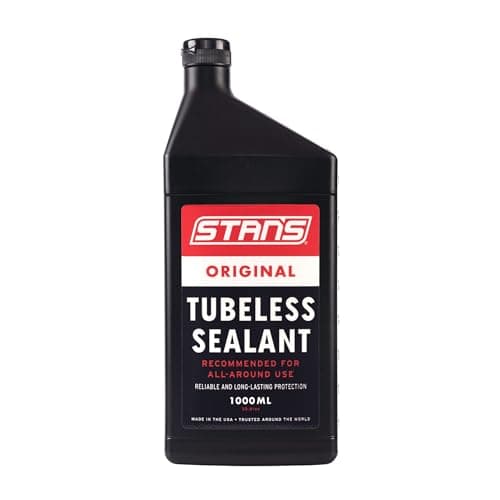
Stan's NoTubes Tire Sealant

The one to buy, and not because it seals better — because it is the only one of the four that tells you how much to use and how long it lasts.

Top pick
Anyone who wants a number rather than an adjective
2
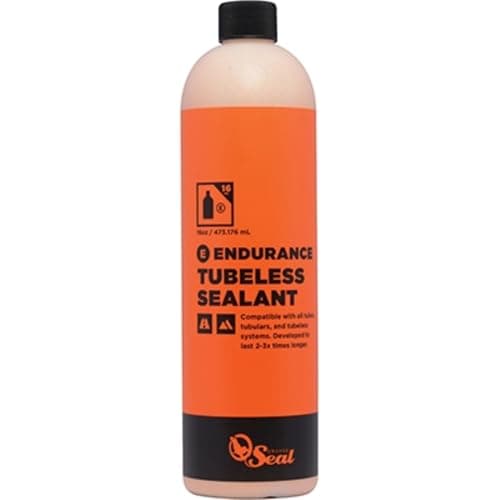
Orange Seal Endurance Sealant

Orange Seal Endurance Sealant

The best-known long-life sealant in cycling, and the one with the thinnest published numbers of the four — the claim is a multiplier with no stated comparator.

Riders who want the longest service claim in the category
3
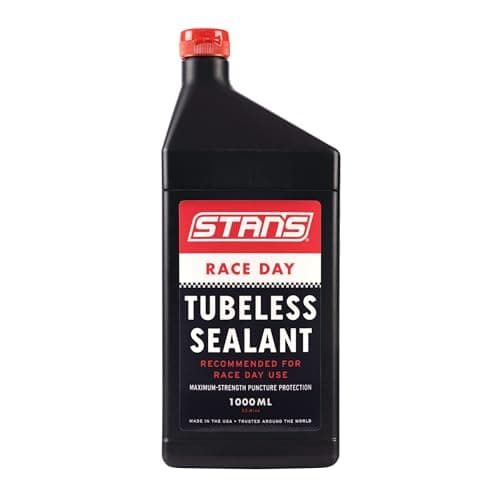
Stan's NoTubes Race Sealant

Stan's NoTubes Race Sealant

The formula whose published inspection interval — 2 to 3 weeks — is the most honest sentence either brand prints, and the reason this one is not for normal riding.

Race wheels inspected on a short cycle
4
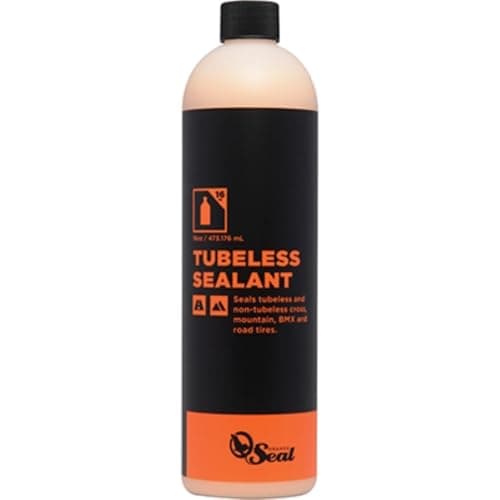
Orange Seal Regular Sealant

Orange Seal Regular Sealant

The same publishing gaps as the Endurance formula, with the trade framed by the maker as faster sealing rather than longer life.

Orange Seal's faster-sealing side of its own trade-off

Buy Stan’s. Not because it seals better — nobody has published evidence that it does — but because Stan’s publishes a dose per tire size, a 2 to 7 month liquid life, a yield of up to 16 tires per liter, a −20°F freeze claim and a 2 to 3 week inspection interval for its Race formula, and Orange Seal publishes a puncture ceiling and three adjectives. If you are a rider who tops up by eye and never checks, the Orange Seal Endurance claim of lasting “two to three times longer” is the one aimed at you — just know that the comparator in that sentence is not named.

Here is the thing that makes this comparison easy and slightly boring: both makers publish the same puncture ceiling.Stan’s says 6.5 mm (1/4in). Orange Seal says up to 1/4in, on both formulas. Four products, two companies, one number — so the question “which one seals bigger holes” has a published answer and the answer is “the same”. Everything people argue about online sits downstream of that.

What nobody publishes, and why we will not fill it in

Neither company publishes a sealing test. There is no published hole-size distribution, no published seal-success rate, no published pressure at which the seal holds, and no published time-to-seal. That is not a gap in our research; it is the state of the category, and it is the reason our sealant roundup refuses to rank on how big a hole each one seals. A page that told you Stan’s seals 4 mm cuts and Orange Seal seals 5 mm would be inventing both numbers.

We also have no basis for a chemistry verdict. Stan’s is latex-based; Orange Seal does not publish its base chemistry in the listings we read specs from. Riders will tell you confidently which is better in a tire left over winter, and none of them is quoting a published figure either.

The four formulas, side by side, on published claims only

Everything in this table is quoted from the maker’s own published claim or the live Amazon listing title, on the dates recorded at the bottom of the page. Blank means unpublished.

Published claims, Stan’s against Orange Seal

Four rows. One column where both brands agree exactly, and four columns where only one brand publishes anything at all.

FormulaPuncture ceilingDose per tireService / inspectionTemperatureYield
Stan's Original6.5 mm (1/4in)Published per tire widthLiquid 2–7 monthsAnti-freeze to −20°FUp to 16 tires / liter
Stan's Race1/4inPublished per tire widthInspect every 2–3 weeksNot publishedUp to 16 tires / liter
Orange Seal Endurance1/4inNot published“2–3× longer” (no comparator)“Varying temperatures”Not published
Orange Seal Regular1/4inNot publishedNot published“Varying temperatures”Not published

Figures in the Stan’s rows are the maker’s own published guidance as recorded on our sealant roundup and gravel gift guide; the Orange Seal rows are that maker’s own published claims and listing text. Bold marks a published figure; grey marks an adjective or an absence. Neither maker publishes a sealing test, a seal-success rate or a time-to-seal.

The picks, in detail

1

Stan's NoTubes Tire Sealant

Top pick
Stan's NoTubes Tire Sealant
$36.00 · View on Amazon

Price as of October 17, 2026. #ad

Best for: Anyone who wants a number rather than an adjective

The one to buy, and not because it seals better — because it is the only one of the four that tells you how much to use and how long it lasts.

  • Maker: seals punctures up to 6.5 mm (1/4in)
  • Maker: remains liquid inside tires for 2-7 months
  • Maker: anti-freezing agents for use down to -20°F
  • Maker: one liter can seal up to 16 tires
  • Listing: 1000 ml

On the category roundup this ranks first for the same reason it wins this head-to-head: it is the only sealant in the whole field that publishes a dose per millimeter of tire width. That is not a performance claim and we are not treating it as one. It is the difference between a product that tells you how to use it correctly and one that does not, and on a consumable you pour into a sealed tire and cannot inspect, that is the most useful thing a maker can publish.

Good

  • Stan's publishes a dose per tire width, which means you can get the amount right instead of guessing — no Orange Seal formula publishes one
  • A 2 to 7 month liquid-life claim is a service interval you can diary; the competing claim is “two to three times longer” than something unnamed
  • Published anti-freezing agents for use down to -20F — an actual temperature, against “varying temperatures”
  • A published yield of up to 16 tires per liter, which is the only figure in this comparison that lets you work out cost per wheel

Less good

  • A liter is more than a one-bike household gets through inside the published liquid life, and there is no published shelf-life figure for the unopened bottle
  • The 2 to 7 month range is wide enough to be a shrug at its edges — Stan's does not say what moves it within that range
  • Latex-based, which means it does not love being left in a tire that then sits for a winter
  • No published sealing test of any kind, from either maker — see below

Skip it if: You have one bike, one set of wheels and you ride occasionally. A liter will outlive its own published liquid life sitting in your garage, and Stan's sells smaller bottles precisely for that case.

2

Orange Seal Endurance Sealant

Orange Seal Endurance Sealant
$23.09 · View on Amazon

Price as of October 17, 2026. #ad

Best for: Riders who want the longest service claim in the category

The best-known long-life sealant in cycling, and the one with the thinnest published numbers of the four — the claim is a multiplier with no stated comparator.

  • Maker: proven to seal large punctures up to 1/4in
  • Maker: proven ability to last up to two to three times longer
  • Maker: performs under varying temperatures and altitudes
  • Listing: 16 oz refill
  • Listing: for MTB, road, CX and gravel tires

Good

  • “Proven ability to last up to two to three times longer” is the longest service claim either maker makes, and service life is the thing that actually fails a tubeless rider
  • Published as sealing large punctures up to 1/4in — the same ceiling Stan's publishes, from a different chemistry
  • The 16 oz refill is a more realistic quantity than a liter for a single-bike household
  • Published for MTB, road, CX and gravel, which is the whole range of tire pressures this site covers

Less good

  • “Two to three times longer” than WHAT is not published. There is no named comparator, no baseline interval and no test behind it
  • No published dose per tire size at all, so the single most important instruction for using it is missing
  • “Performs under varying temperatures and altitudes” replaces the temperature figure Stan's prints
  • No published inspection interval, which for a long-life product is the odd gap: a product you are told to check rarely needs to tell you how rarely

Skip it if: You are trying to get the dose right, or you want to put a date in your calendar. This is the product most likely to be recommended to you by another rider and the least likely to tell you how much of it to use.

3

Stan's NoTubes Race Sealant

Stan's NoTubes Race Sealant
$46.00 · View on Amazon

Price as of October 17, 2026. #ad

Best for: Race wheels inspected on a short cycle

The formula whose published inspection interval — 2 to 3 weeks — is the most honest sentence either brand prints, and the reason this one is not for normal riding.

  • Listing: Stan's NoTubes Tire Sealant, 1000 ml, Race
  • Listing: seals up to 1/4 inch punctures (seller's claim)
  • Stan's: 1 liter is enough for up to 16 tires (maker's guidance)
  • Stan's: inspect Race sealant every 2 to 3 weeks (maker's guidance)

This pick is in a two-brand comparison because it is the clearest evidence for the whole argument. Stan’s sells two formulas and publishes different service guidance for each— 2 to 7 months of liquid life for the Original, inspection every 2 to 3 weeks for Race. Orange Seal also sells two formulas and publishes no interval for either. Whatever you think of the chemistry, only one of these companies is telling you how to operate the product.

Good

  • Stan's publishes an inspection interval of every 2 to 3 weeks for Race, which is a real maintenance instruction rather than a reassurance
  • Same published 1/4 inch puncture ceiling as the rest of the field, so the trade is service life rather than sealing
  • Same published liter-to-16-tires yield as the Original, which keeps the cost arithmetic comparable
  • The existence of a separate Race formula is itself informative: it tells you the Original is the one built to sit in a tire

Less good

  • A 2 to 3 week inspection interval is a commitment most riders will not keep, and the product is no better than its upkeep
  • A liter of a formula intended for short service cycles is a mismatch of quantity to purpose for most buyers
  • Nothing published distinguishes Race from Original on sealing performance — only on service cycle
  • Latex-based like the Original, with the same winter-layup problem

Skip it if: You are not going to open your tires every few weeks. That is not a criticism of the product; it is what Stan's own published guidance asks of it, and buying it without doing that gets you the short-life formula with none of the attention.

4

Orange Seal Regular Sealant

Orange Seal Regular Sealant
$21.99 · View on Amazon

Price as of October 17, 2026. #ad

Best for: Orange Seal's faster-sealing side of its own trade-off

The same publishing gaps as the Endurance formula, with the trade framed by the maker as faster sealing rather than longer life.

  • Maker: seals large punctures up to 1/4in
  • Maker: proven ability to seal faster and bigger punctures
  • Maker: performs under varying temperatures and altitudes
  • Listing: 16 oz refill
  • Listing: fast sealing, up to 1/4in puncture

Good

  • “Proven ability to seal faster and bigger punctures” is the one claim in this comparison framed around speed of sealing rather than duration
  • Published 1/4in ceiling, matching every other product here
  • 16 oz is the sensible quantity for one or two bikes
  • The two-formula structure mirrors Stan's, so the brands are genuinely comparable at the product-line level

Less good

  • “Faster” and “bigger” are comparatives with no stated baseline, exactly like the Endurance claim
  • No published dose, no published interval, no published temperature figure
  • Orange Seal's own framing puts this on the short-life side of its range while publishing no life figure for either side
  • Of the four formulas here, this one publishes the least that you can act on

Skip it if: You service your tires rarely. The maker's own framing is that the other formula is the long-life one, so buying the fast-sealing formula and then leaving it for a season gets you the worse half of both claims.

What actually decides this purchase

The decision in three lines

If you want to do this properly:Stan’s Original. You get a dose you can measure to your tire width and a liquid-life window you can put in a calendar, and those two things are what separate a tubeless setup that works from one that is a liter of dried latex and a surprise on a Sunday.

If you know you will not check it: Orange Seal Endurance, with your eyes open. The longest service claim in the category is aimed exactly at that rider. It is just not a figure.

If you race and open your tires often:Stan’s Race, and keep to the published 2 to 3 week inspection. If that sentence sounds like too much, the Original is the answer, which is what the two-formula split is telling you.

The dose is the part people get wrong, and only one brand helps

Under-dose and the sealant cannot reach a cut on the shoulder of the tire. Over-dose and you are carrying weight that slumps to the bottom of the wheel and still dries out. Stan’s publishes the dose against tire width; Orange Seal does not publish one at all, for either formula. If you buy Orange Seal, you are going to be following a figure from a forum, and you should know that is what you are doing. Our tubeless setup guide uses the published Stan’s table for exactly this reason.

Service life is the failure mode, not sealing

A tubeless tire almost never fails because the sealant could not seal a hole it was rated for. It fails because there was no liquid sealant left in there. That is why the published numbers that matter are the boring ones — liquid life and inspection interval — and why our tubeless flat repair guide starts with what to carry for the day the sealant has already dried.

One thing that is true of both, and of every sealant

Neither product will save a sidewall cut, a torn bead or a hole larger than its published quarter-inch ceiling. Both makers say so in their own claim, and the rounduphas a section on what sealant will not do at any dose. Carry a plug and a tube regardless of which bottle you buy — and if you run tubes instead, the tubeless versus tubes comparison is the page you actually want.

Common questions

Is Stan's or Orange Seal better?

On published data, Stan’s — because it publishes a dose per tire width, a 2 to 7 month liquid life, a yield of up to 16 tires per liter and a −20°F freeze claim, while Orange Seal publishes a puncture ceiling and comparative adjectives. On sealing performance, neither is better, because neither company publishes a sealing test. Anyone telling you one seals bigger holes is not quoting a published figure: both state the same quarter-inch ceiling.

Does Orange Seal last longer than Stan's?

Orange Seal claims its Endurance formula has a “proven ability to last up to two to three times longer”, and does not say longer than what. Stan’s publishes an actual figure for its Original — remaining liquid inside tires for 2 to 7 months. One of those is checkable and the other is a multiplier without a baseline, so the honest answer is that the claim cannot be compared to the figure.

How much sealant should I put in my tire?

If you are using Stan’s, follow their published dose for your tire width — they are the only maker in this comparison who prints one, and our setup guide uses that table. If you are using Orange Seal, there is no published dose from the maker, and we are not going to invent one. That absence is itself an argument for the other bottle.

Can you mix Stan's and Orange Seal?

Neither maker publishes guidance on mixing their sealant with a competitor’s, so we have nothing to cite and will not guess at the chemistry. The practical version: when you top up, you are adding to whatever is already in there and you cannot see it. If you are changing brands, the clean answer is to do it when the tire is off and the old sealant comes out with it.

What's the difference between Orange Seal Regular and Endurance?

Orange Seal’s own framing: Endurance is the long-life formula, Regular is the faster- sealing one. Both publish the same 1/4in ceiling. Neither publishes a dose, a service interval or a temperature figure, so the trade-off is described by the maker and quantified by nobody.

What's the difference between Stan's Original and Race?

Published service cycle. Stan’s gives the Original a 2 to 7 month liquid life, and asks for Race to be inspected every 2 to 3 weeks. Both share the published 1/4in ceiling and the 16-tire-per-liter yield. Nothing published distinguishes them on sealing — only on how often you are expected to look inside the tire.

Sources

  • Stan's NoTubes — published maker guidance as recorded on /workshop/best-tubeless-sealant: seals punctures up to 6.5 mm (1/4in); remains liquid inside tires for 2–7 months; anti-freezing agents for use down to −20°F; one liter can seal up to 16 tires; dose published per tire width — retrieved 25 September 2026
  • Stan's NoTubes Race — published maker guidance as recorded on /gifts/best-gifts-for-gravel-riders: inspect Race sealant every 2 to 3 weeks; 1 liter enough for up to 16 tires; listing states 1000 ml and 1/4 inch punctures — retrieved 12 September 2026
  • Orange Seal — published maker claims as recorded on /workshop/best-tubeless-sealant. Endurance: “proven to seal large punctures up to 1/4in”, “proven ability to last up to two to three times longer”, “performs under varying temperatures and altitudes”. Regular: “proven ability to seal faster and bigger punctures”. No dose, service interval, temperature figure or yield is published for either formula — retrieved 25 September 2026
  • Live Amazon listing titles for all four formulas, stored as amazonTitle in content/catalogue.json — Stan's 1000 ml and 1000 ml Race, Orange Seal Endurance and Regular 16 oz refills, all four stating a 1/4in puncture figure or “for MTB, road, CX and gravel” — retrieved 25 September 2026
  • Neither maker publishes a sealing test, a seal-success rate, a time-to-seal or a hole-size distribution. This page therefore makes no sealing-performance comparison, and says so rather than ranking on an invented axis
  • Google Autocomplete — “stans vs” returns “stans vs orange seal” first, then “stans vs orange sealant”, “stans vs muc off sealant”, “stans vs orange seal endurance”, “stans vs silca sealant” and “stans vs slime” — retrieved 11 October 2026

We haven’t ridden or tested any of the products on this page, and we don’t pretend otherwise. Read how we research — or tell us we’re wrong and we’ll log the correction.