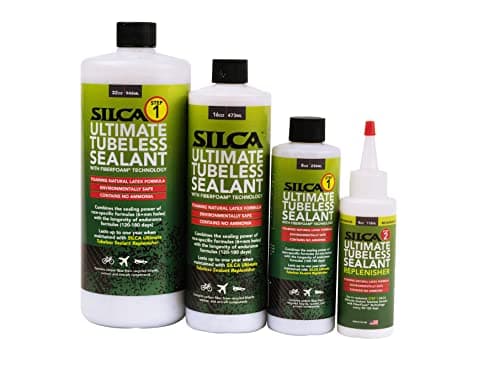
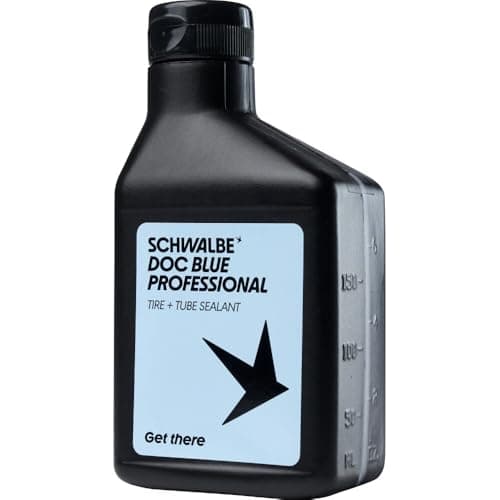
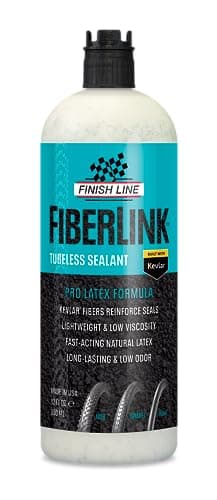
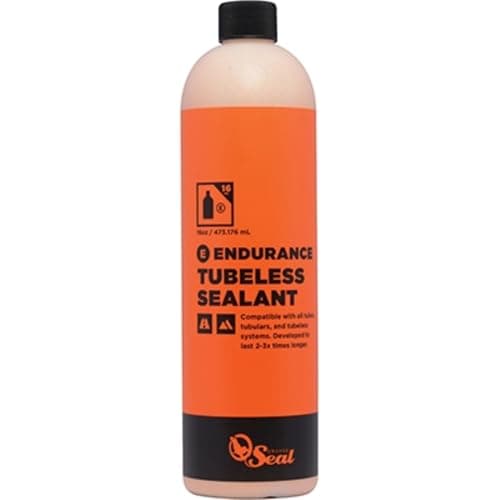
The only number in this category that reliably decides whether sealant works is how much of it is in the tire. Too little and there is nothing to be dragged into the hole; the right amount and a thorn seals while you keep pedaling. That number is published by the people who make the stuff, it varies by a factor of two across the tire widths this site covers, and it is the first thing most buying guides skip in favor of arguing about brands.
So this page ranks sealants on the dose and service guidance each maker is willing to print, not on sealing performance. That is a deliberate refusal, and it is worth explaining before you read a single pick.
Why we do not rank these on how big a hole they seal
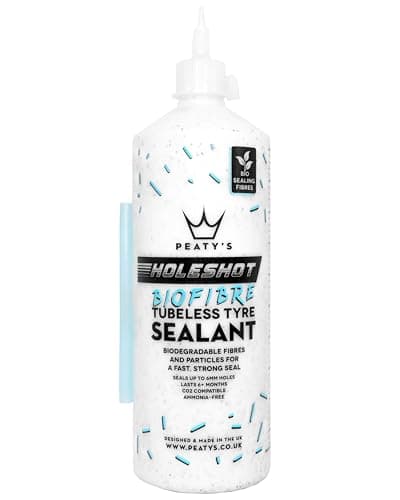
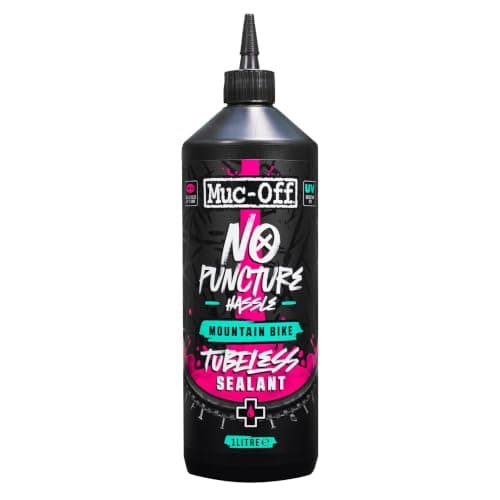
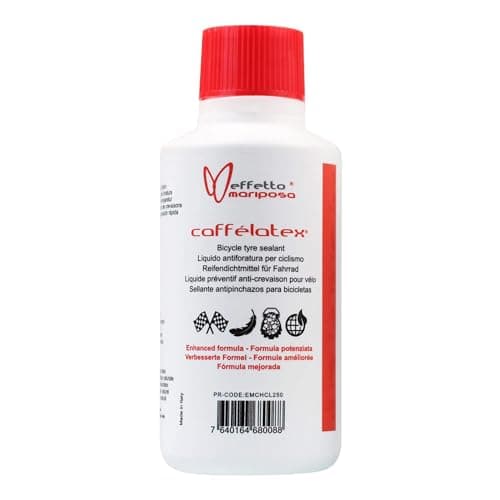
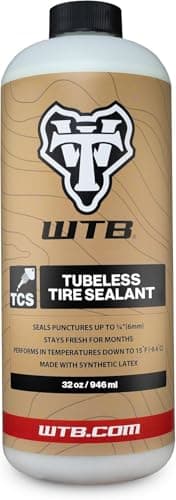
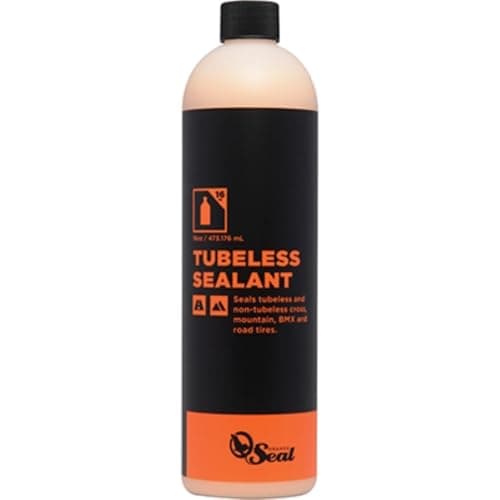
Every product here carries a headline sealing claim, and they are all differently shaped: 6 mm from Peaty’s, Muc-Off and WTB; a quarter of an inch from Stan’s and both Orange Seals; 6.5 mm from Stan’s own product page; 7.5 mm from Silca; and 5 mm off-road with 3 mm on the road from Effetto Mariposa. Put them in a column and the ranking looks obvious.
It is not, because none of these makers publishes the test. There is no standard for puncturing a bicycle tire — no agreed hole geometry, no stated pressure, no stated tire, no stated temperature, no stated number of attempts. A 7.5 mm claim measured one way and a 3 mm claim measured another are not two points on the same scale, and lining them up as if they were is the single most common piece of fabrication in this category. We have not tested any of it either, so we are not going to launder somebody’s marketing claim into a ranking and call it research.
What we can do is show you the claims side by side, labeled with whose claim each one is, and rank on the part of the sheet that is actually comparable.
The dose, from the makers themselves
Here is the range of published dosing for a drop-bar bike, and it is wider than you would expect from products that all do the same job:
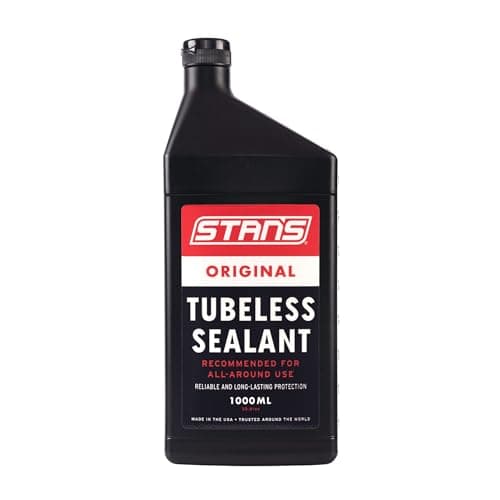
- Stan’s publishes per width. 50 ml at 700c x 28 mm, 55 ml at 32 mm, 60 ml at 40 mm, 80 ml at 45 mm, 95 ml at 50 mm. That is the only chart in this group fine enough to distinguish a road tire from a gravel tire from a big gravel tire.
- Peaty’s publishes two bands— 30–45 ml for road, 60–75 ml for cyclocross — which at least separates the two disciplines.
- Muc-Off’s smallest band is a cross tireat 60–75 ml, with no road figure below it.
- WTB publishes one band in ounces: 2–4 oz for anything road or gravel under 50 mm.
- Schwalbe publishes one band for 23–60 mmat 60–90 ml per tire — the same dose for a narrow road tire and a 60 mm gravel tire.
- Effetto Mariposa gives two examples rather than a chart: about 30 ml for a 700 x 25c road tire, about 60 ml for a 29 x 2.10 mountain tire.
- Orange Seal and Finish Line publish no dose at all on the pages we read. The per-size numbers circulating for Orange Seal come from retailers, not from Orange Seal.
Read that list again with one tire in mind and the problem is obvious. For a 28 mm road tire, the published guidance across this group runs from 30 ml to 90 ml — a three-fold spread for the same tire. The low end risks a tire that seals nothing; the high end is liquid weight going round with your wheel for no benefit. If you take one thing from this page, take the dose off the bottle you actually bought, and if that bottle does not publish one, use the nearest published number for your tire width from a maker that does.
Service life is the number that actually fails you
Sealant does not usually fail by being the wrong brand. It fails by not being there. Latex cures, water evaporates, and the tire that protected you in April is a hollow shell in September — with no tube in it either, which is strictly worse than the tube you took out. Here is every service-life figure published by the makers on this page:
- Schwalbe: effective for up to 7 months.
- Silca:6–9 months depending on humidity, with a separate Replenisher product recommended every 90–120 days.
- Muc-Off: up to 6+ months in temperate climates. Peaty’s: up to 6 months in temperate climates.
- Stan’s:remains liquid inside tires for 2–7 months — the only figure here given as a range rather than a ceiling.
- Effetto Mariposa:1–4 months in a tubeless-ready tire, 2–6 in UST, 1–3 in a tube-type tire — the only maker that splits the figure by what the sealant is sitting inside.
- WTB, Finish Line, Orange Seal Endurance and Orange Seal Regular: no month figure published at all.
Notice the shape of that list. The makers publishing the shortest service lives are the ones being most specific, and the ones publishing nothing are free to let you assume the best. Our tubeless versus tubes page takes the same position from the other direction: the honest cost of tubeless is not the sealant, it is the schedule.
Chemistry, rims and CO2 — who says anything
Three makers here publish a chemistry statement worth acting on. Muc-Offpublishes ammonia-free and water-soluble. WTB publishes ammonia-free synthetic latex. Effetto Mariposapublishes no ammonia and synthetic rather than natural latex, plus a particle size — silicate under 2 microns. Finish Line publishes natural latex with Kevlar fiber. Stan’s, Schwalbe, Peaty’s and both Orange Seals publish nothing about ammonia on the product pages we read; that is a gap in the published record, not evidence of what is in the bottle.
On CO2, the record is thinner still. Muc-Off is the only maker here that states plainly that its sealant is CO2 compatible.Silca publishes a procedure instead: use CO2 on the road if you must, then deflate it and re-inflate with a pump when you get home. Everyone else is silent. If your repair kit is an inflator rather than a mini pump — see what to carry on a bike ride— that silence is worth weighting.
The pressure ceiling road riders should check first
Two makers publish a working pressure range and they do not agree. Peaty’s publishes 15 to 120 psi; Muc-Off publishes 15 psi–80 psi. Everyone else publishes nothing. On a gravel bike at 35 psi this is academic. On a 25 mm road tire, which our tire pressure guide commonly puts above 80 psi for a heavier rider, one of those two products is outside its own published window and the other is not. It is the clearest example on this page of why the published sheet matters more than the review.
What sealant will not do, at any dose
Sealant handles small holes. Park Tool’s published tubeless guidance is blunt about the rest — it tells you to check the label for the recommended amount and warns that sealing “may take hours, and in some cases, days” outside UST systems, rather than in the single wheel revolution the advertising implies. For a cut past the published claim, the answer is a plug or a tube, which is what how to fix a tubeless flat is for, and it is why you still carry a tube on a tubeless bike.
What we could not check
We have not punctured a tire, measured a seal, weighed dried latex or compared two sealants against each other. Every figure above is the maker’s own published claim, read from the maker’s own page on 25 September 2026, with every “Listing:” line quoted from the live Amazon listing for the exact product linked on the same day. Where a maker publishes nothing, the comparison table says “Not published” rather than filling the cell. Those blanks are the most useful part of the table.
Take the dose from a maker that publishes one, then buy whatever bottle you like. Sealant volume is a function of your tire, not of the brand in the bottle. If your sealant publishes a per-width chart, use it. If it publishes a band that spans 23 mm to 60 mm, use the nearest published per-width figure from a maker that is more specific and treat the band as a sanity check.
Buy the bottle size that matches your service interval, not the best value per milliliter. A liter is the cheapest way to buy sealant and a bad way to own it if you have one bike: every maker here that publishes a service life publishes one shorter than a year, so the bottle outlives several fills. Two wheelsets and up, the big bottle earns itself.
Check the published pressure window before anything else if you ride narrow road tires. One product here stops at 80 psi and another goes to 120. Most publish nothing. That is the fastest way to rule a sealant in or out for a road bike, and it takes ten seconds.
If you inflate with CO2, choose a maker that says something about it. One does, one publishes a work-around procedure, and the rest are silent. Silence is not a compatibility claim, and a roadside repair is a bad place to discover the difference.
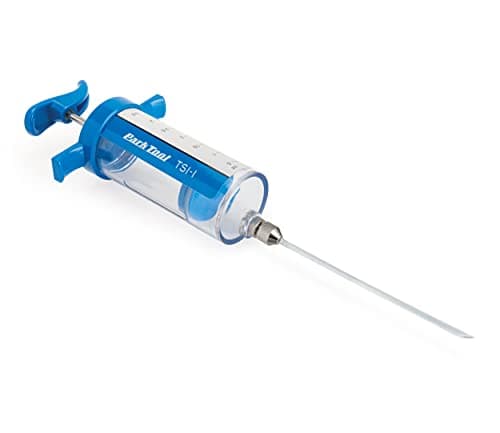
Budget for the injector, and check your valve stems.A marked syringe is what turns a published dose into an actual dose, and topping up through the valve core is the only version of this chore anyone repeats. Park Tool notes some tubeless stems have an opening narrower than the tube, so confirm yours before you rely on it — and note that one sealant here is not injector compatible at all.
Do not mix brands in one tire. Not one maker on this page publishes a cross-brand compatibility statement, which means anyone telling you it is fine is guessing. If you are changing sealant, clean the tire out and refill with one product.
Keep carrying a tube.Every sealing claim here is a small-hole claim, and Park Tool’s published position is that punctures in tubeless tires generally cannot be repaired. Sealant removes most of the occasions you need a tube. It does not remove the tube.
Two of these eleven are the names you will actually be offered, and they now have their own head-to-head: Stan’s versus Orange Seal sets the four formulas side by side and finds the same published puncture ceiling on both brands and a published dose on only one.