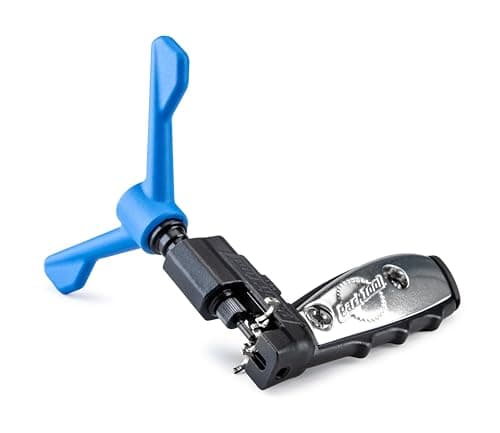
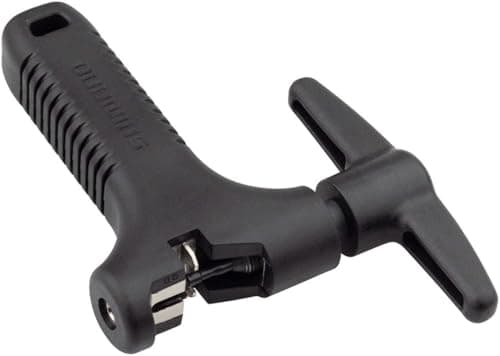
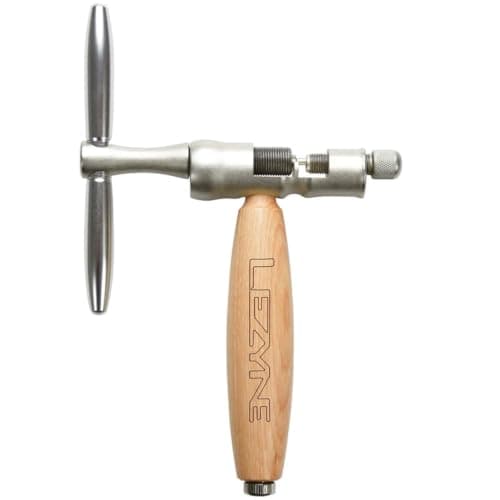
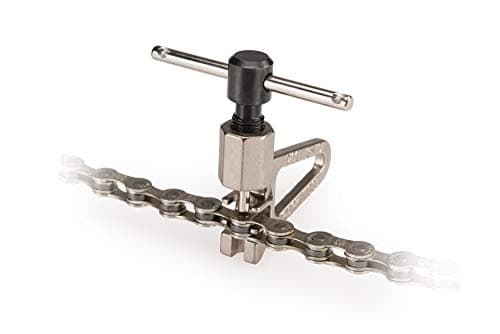
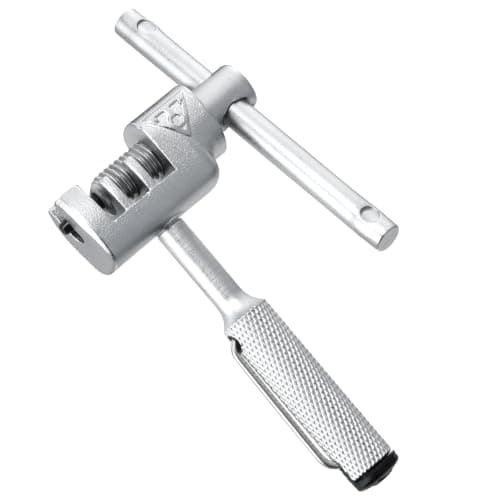
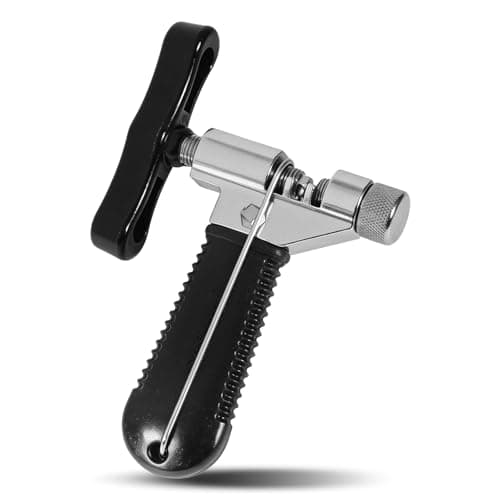
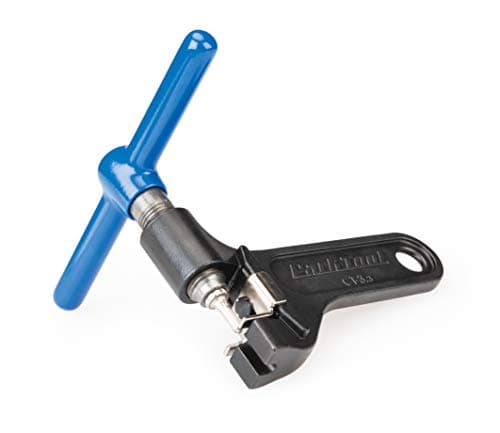
A chain tool does one mechanical thing: it drives a rivet out of a bicycle chain, and sometimes back in again. Everything that makes one tool right and another wrong comes down to how wide that chain is. Which is why this page ranks on published compatibility, and why the tool that names the most standards is not the tool most people should buy.
We have not used any of these tools. Every specification below is the maker’s or the seller’s published claim, read from the live listing on 18 September 2026 and attributed as such, and the arguments about what matters are built on figures Park Tool publishes in public.
The number that decides everything: chain width
Every bicycle chain built in the last century uses the same half-inch pitch — rivet to rivet is nominally 0.5 inches, and sprocket teeth are cut to match. What changed, every time the industry added a sprocket to the back wheel, is how wide the chain is, because the cogs had to move closer together.
Park Tool publishes the nominal widths measured across the rivet, and the spread is the whole story of this product category:
12 rear cogs — 5.3 mm. 11 cogs — 5.5 mm. 10 cogs — 6 mm. 9 cogs — 6.5 to 7 mm. 6, 7 and 8 cogs — 7 mm. A one-speed 1/8-inch chain, by contrast, measures approximately 9 mm across the rivet. So the widest chain a home mechanic is likely to meet is nearly twice the width of the narrowest, and a tool has to hold all of them square while a hardened pin pushes through.
That is why every listing on this page leads with a speed range, and why the ranges differ. It is also why a tool bought in 2010 may simply not fit the chain on a bike bought this year.
And the standard that breaks generic tools: SRAM Flattop
There is one specific modern chain that deserves naming, because it is the most common way a perfectly good chain tool turns out to be the wrong one. Park Tool describes SRAM’s 12-speed Flattop chains as having “a distinctive side plate design as well as rollers that are larger than typical bike chain”, and states plainly that they are proprietary and not cross-compatible with other 12-speed components.
Exactly one listing on this page names Flattop. That is the CT-15, and it also names SRAM T-Type, Shimano 12-speed XTR and Campagnolo 13-speed Ekar. Every other maker here publishes a speed number and leaves the standards question to you. That is not proof the others fail — it is a statement about what you can verify before spending, which is the only thing we can honestly rank.
Half of you need pliers, not a breaker
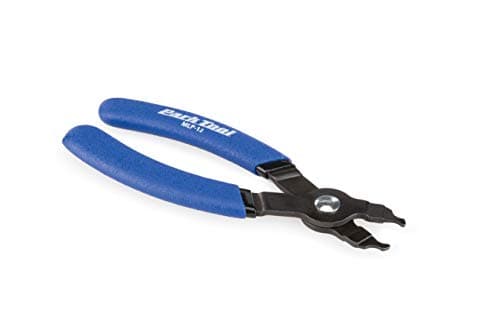
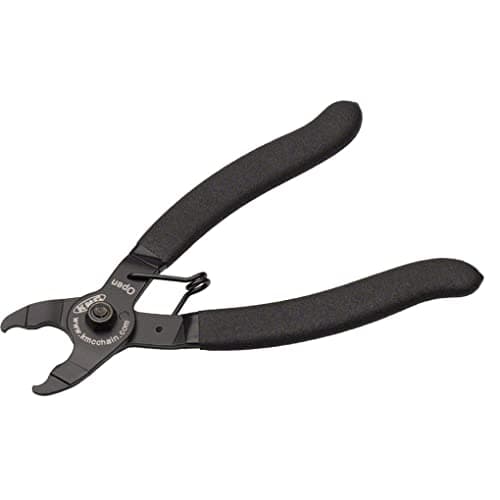
This is the most useful thing on the page and almost no roundup says it. Park Tool’s own chain replacement procedure lists two tools: a chain tool, and master link pliers “for chains with master links”.
If your chain is joined by a master link — a quick link, a MissingLink, a PowerLock — you can take the chain off and put it back on without ever pushing a rivet. Park Tool describes master links as “a pair of unique side plates that are sometimes a different color”. Go and look at your chain now: turn the cranks slowly and watch for one link that does not match the others. If it is there, the tool you will use fifty times is the pliers, and the tool you will use twice in a decade is the breaker.
If your chain is joined by a connecting rivet — visually different from the other rivets, and what Shimano largely uses — you need a chain tool and the pliers will do nothing for you. Park Tool notes one useful exception: if the chain is worn out anyway, you can ignore the master link entirely and simply cut the chain with a chain tool some links away from it.
The four criteria, in the order they decide the purchase
1. Which chain are you cutting? Read the speed count off your cassette and match it to the published range. If you have a SRAM AXS drivetrain, you need a tool that names Flattop. If you have a single-speed or a 3/16-inch freestyle chain, you need a tool that names those, because the standard derailleur-only tools do not.
2. Bench or bag? A T-handle gives leverage and does not fit in a jersey pocket. A 77-gram pocket tool fits anywhere and makes you work for the rivet. These are different products and most riders eventually own one of each. Our multitool roundup covers the third option, which is a chain breaker built into a tool you already carry.
3. Is the pin replaceable? The driving pin is the part that breaks, usually on the tightest rivet at the worst moment. Park Tool publishes a part number for the CT-5’s pin (CTP) and describes the CT-15 as fully rebuildable; Lezyne puts a spare pin in the box. A tool with no published spare is disposable, whatever it cost.
4. Does it hold a stiff link? Pressing a rivet back through inner plates leaves the link tight, and a tight link skips under load until it frees up. Park Tool calls the fix a locating shelf and publishes it on both the CT-3.3 and the CT-5. If a tool does not have one, the traditional alternative is flexing the chain sideways with your thumbs.
What we did not rank on
Durability, because nobody publishes a cycle count, a hardness figure or a warranty term we could compare. Feel, because we have not turned any of these handles. And price tier as a proxy for quality, because the most expensive tool here is priced as shop equipment for daily professional use and that is a different product from a tool you will use twice a year. The live prices in the table above are the current ones; everything in the prose is deliberately relative.
Before you cut anything
Two jobs come first, and both are free. Measure the old chain — Park Tool publishes that a worn chain can cause excessive wear to the rear cogs, which decides whether you are buying a chain or a chain and a cassette. Our chain wear guide covers the 0.5% and 0.75% thresholds.
Then work out how long the new chain should be before the tool touches it, because cutting is the one step you cannot undo. How to size a bike chain sets out both of Park Tool’s published methods, including the 1x exception that needs four rivets instead of two. And if you have not chosen the chain yet, our chain roundup states the speed count for every pick — which is the same number that decides which tool on this page will fit it.
With the tool and the chain chosen, how to replace a bike chain is the job itself, quoted from Park Tool’s own published method — including the line that decides whether you need the pliers at all: if the chain is worn out you can “simply ignore the master link and break the chain using the chain tool some links away from” it.