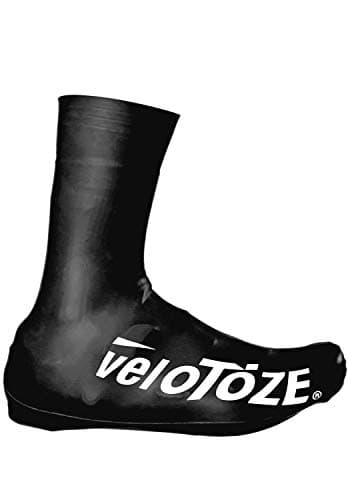
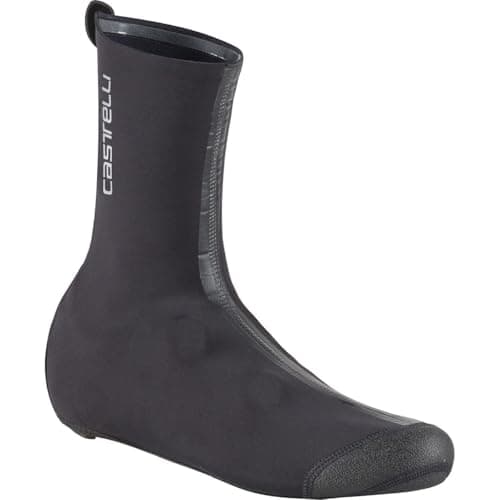
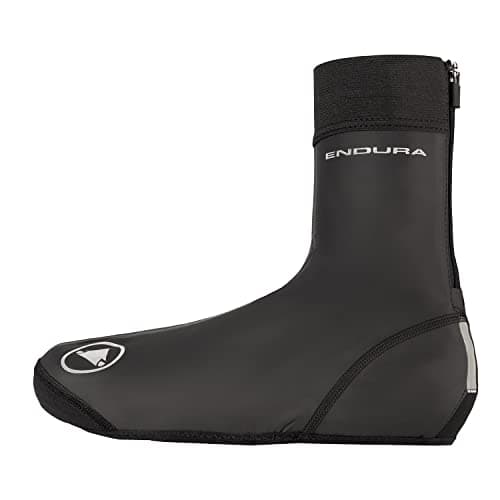
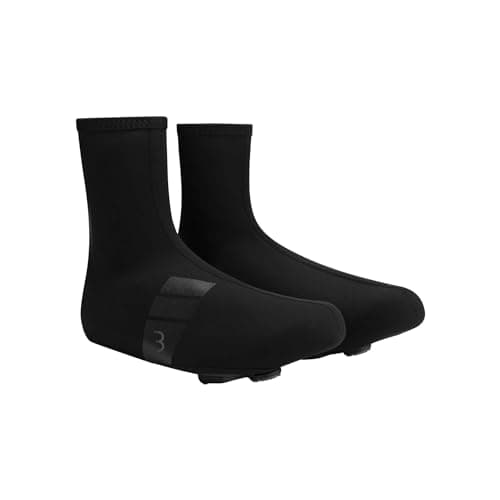
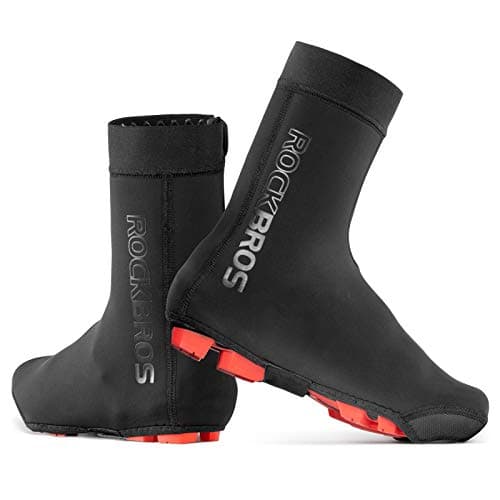
An overshoe fails in two places, and neither of them is the fabric
Everyone shops for overshoes as though the question is waterproofing. It is not, for the same reason it was not the question on cycling jackets: the word is an unregulated adjective on an apparel listing, and here only two of ten listings use it at all. The real question is whether the cover survives the winter, and overshoes die in two specific places.
The first is fit. An overshoe is a stretch skin pulled over a rigid, oddly shaped object. Too small and it will not go on, or it goes on under so much tension that the first cold morning splits it. Too large and it flaps, catches the crank, and the sole openings creep out of position until the cleat is sitting on fabric.
The second is the sole. Every cycling overshoe has two holes cut in the bottom: one for the cleat, one at the heel. Those cut edges take every scuff of every foot-down at every traffic light, plus the grit thrown up off the road, plus the abrasion of clipping in and out a few hundred times a ride. That is where an overshoe tears, and once it tears it is finished.
So this page ranks on what each listing publishes about those two things. The result is unflattering for the category and useful for you: six of ten publish a size, and they do it in four systems that do not convert into one another; one publishes US shoe sizes for men and women; one publishes a coverage height; one names the sole material; and two publish nothing at all beyond their own product names.
Four sizing systems, one foot
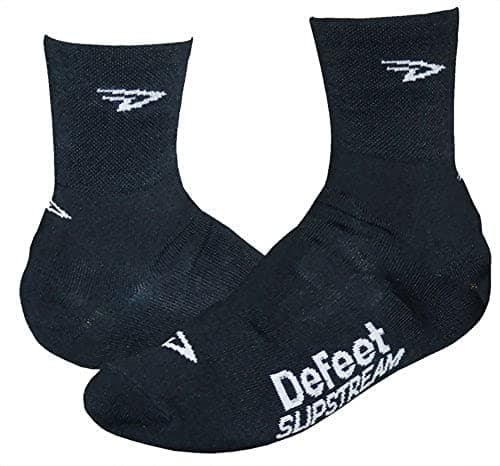
This is the finding that decides the ranking. The same pair of feet is sold an XL by one brand, a 47/48 EU by another, an S/M by a third and a plain Large by a fourth — and four brands publish no size in the listing at all.
Only one listing in the category closes the loop and states the range in US shoe sizes, for men and for women, so you can walk to your hallway and check. That is why it is the top pick here. It is not the warmest cover on this page and it is explicitly not waterproof; it is the one you can be confident will actually go over your shoe, and on a stretch-fit product bought online that is worth more than any adjective in the field.
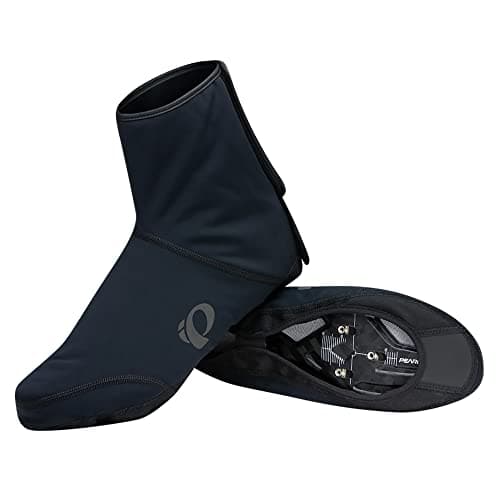
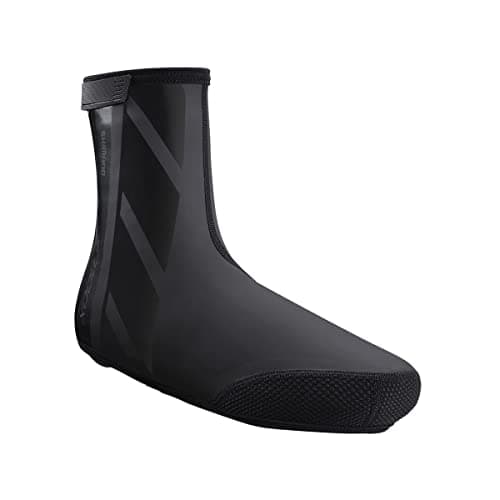
If you are buying one of the lettered or unsized covers, the only real defense is to buy from a brand whose apparel you already own and whose sizing you already know. That is a legitimate reason to buy the Pearl Izumi or the Shimano cover despite their four- and five-word listings — and no reason at all if this is your first item from either.
Waterproof, water-resistant, water-repellent: three claims, three meanings
Across these ten listings the water claims break down as follows. One says Water-Proof. One says Water Resistant. One says Water-Repellent. Two names imply water protection without claiming it (“H2o” and “AmFIB”). The remaining five make no water claim of any kind.
The ordering of those words is not arbitrary, even though no listing here publishes a hydrostatic head figure to prove it. Waterproof means the material does not let water through. Resistant and repellent both mean water beads and runs off until it stops doing that. On a winter ride measured in hours, the distinction tends to arrive somewhere in the second hour.
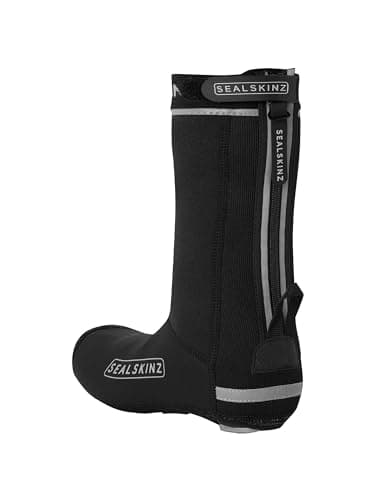
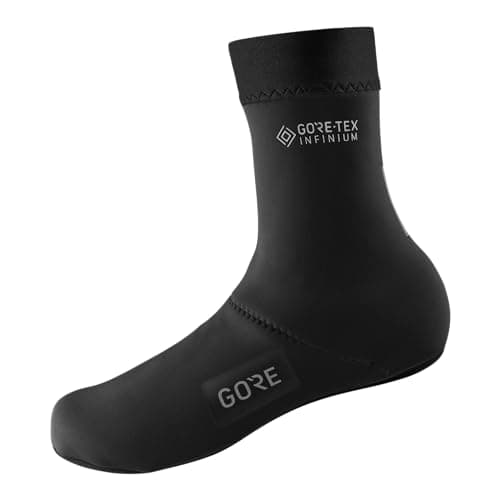
The most interesting case is the one brand on this page whose entire reputation is waterproof socks, and whose overshoe listing says water-repellent. That is not a brand being careless with language; it is a brand that publishes a waterproofing taxonomy choosing not to apply the top tier here. Believe it.
Worth knowing before you spend on waterproofing at all: water does not only arrive from above. It comes up through the cleat holes in the sole, in off your tights, and in through the cover’s own opening at the ankle. Our rain-kit guide makes the same point about rain jackets, and it holds doubly at ground level. An overshoe delays wet feet. Nothing short of a waterproof sock prevents them.
Neoprene, latex, knit: what the material actually changes
Exactly one listing here names its material. That is a shame, because material is the property that determines what the cover is for, and the three constructions in circulation behave completely differently.
Latex or rubber covers are thin, seamless, genuinely waterproof and almost completely uninsulating. They pull on like a swim cap, there is nothing to zip, and because there are no seams there is nothing to leak through. They also tear easily, and they are the hardest of the three to get on and off.
Neoprene is the wetsuit material, and it does the thing nothing else on this page does: it insulates while wet. That makes it the right answer for cold rain specifically, which is the worst condition a cyclist’s feet encounter. It is also the bulkiest, the most expensive, and the hardest to fit under the cuff of a thermal tight.
Knit and softshell covers are wind shields. They block the airflow that is doing most of the cooling on a dry 45-degree morning, add almost no bulk, and wet through quickly. The cheapest useful tool in the category for shoulder season, and the wrong tool in February.
Not a ranking. A toe cover is a partial overshoe: it covers the vented front of the shoe and nothing else, it takes seconds to fit, and it lives in a jersey pocket. These are the two that resolved for this page, plus the merino sock that does more for cold feet than either.
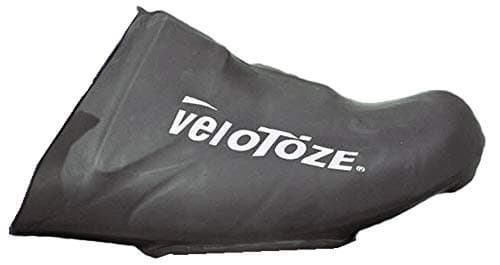
The minimum intervention. The listing publishes "Windproof Latex", one size, and that it is lightweight and aerodynamic — a windproof skin over the vents at the front of the shoe, which is where most of the cold air enters. The right thing for 50-degree mornings that warm up, because it packs down to nothing.
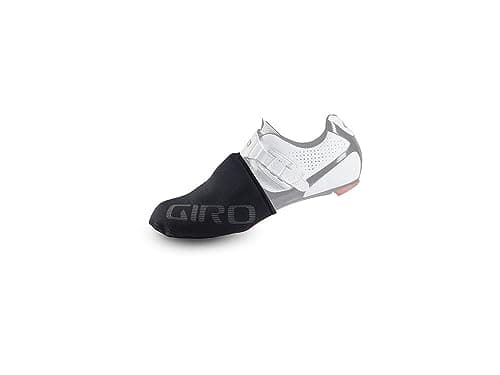
The sized toe cover. Giro publishes Large/X-Large and a model year (2023), which makes it the only toe cover here with a published size. Use it the same way: fitted before a cold start, pulled off and pocketed when the sun arrives.
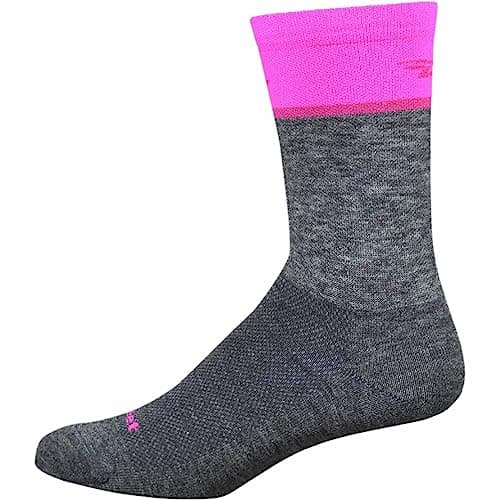
The layer underneath. Merino holds warmth when damp, which is exactly the condition your foot is in once water has come through the cleat holes. Our sock roundup ranks that field properly; it is here because a cover over a thin summer sock is half a solution.
No buyable offer right now — the link still shows the current listing.
We haven’t tested any of these — they’re the parts the job above calls for, listed so you don’t have to go hunting. Prices are live from Amazon and we earn a commission if you buy. Prices as of November 16, 2026. #ad
Where the cover sits relative to everything else
Cold feet are a system problem, and the overshoe is one component in it. In rough order of how much each one buys you per dollar: a merino sock, then a windproof cover over the vents, then a full overshoe, then a winter-specific shoe. Our cold-weather layering guide makes the general version of this argument — that windproofing beats insulation on a bike, because the bike supplies the wind.
Two mistakes are worth naming. The first is buying a thicker sock instead of a cover: a thicker sock inside a shoe sized for a thinner one compresses, reduces blood flow and makes your feet colder, which our sock roundup explains in more detail. The second is putting the overshoe under the cuff of a tight, which routes every drop of water running down your leg directly into the cover. The cuff goes over the cover.
Cleats, and the hole the cover has to line up with
The sole openings only work if they line up with your cleats, and that depends on which pedal system you ride. A three-bolt road cleat sits forward and proud; a two-bolt off-road cleat sits recessed in a lugged sole. Exactly one listing on this page states it is cut for both.
If you ride off-road shoes with a walkable tread, expect any cover to sit less precisely and wear faster at the heel. If your cleats are badly positioned to begin with, the cover will make it obvious — our guide to setting up cycling cleats is the place to fix that before you add a layer on top of it.
What we could not check
Nothing on this page has been worn, soaked, weighed or temperature-tested. Every “Listing:” line above is the live Amazon listing text for the exact ASIN linked, read on 26 October 2026. No manufacturer page is cited, and no third-party review figure is used.
Two specific gaps cost products a position, and both are worth stating plainly. The Shimano cover has H2o in its model name and no water claim in its listing, so this page does not credit it with one. The Pearl Izumi cover carries the AmFIB line name, which is the brand’s cold and wet designation everywhere except in the listing you are buying from. In both cases the reputation is real and the published specification is absent, and on this site the published specification is what the ranking runs on.
One more thing we cannot tell you: how long any of these last. Overshoes are a consumable in a way that almost nothing else in a rider’s kit is, and no listing here publishes a durability figure, a warranty term or a sole-material spec — except one, which is the one at the top of the page.