What to Wear Cycling in the Rain
Accept that you will be damp and dress to stay warm anyway. Wool or synthetic next to the skin, and a shell whose maker publishes a number rather than an adjective.
Heads up: we earn a commission if you buy through the links on this page, at no extra cost to you. It never decides what makes the list — here’s how that works.
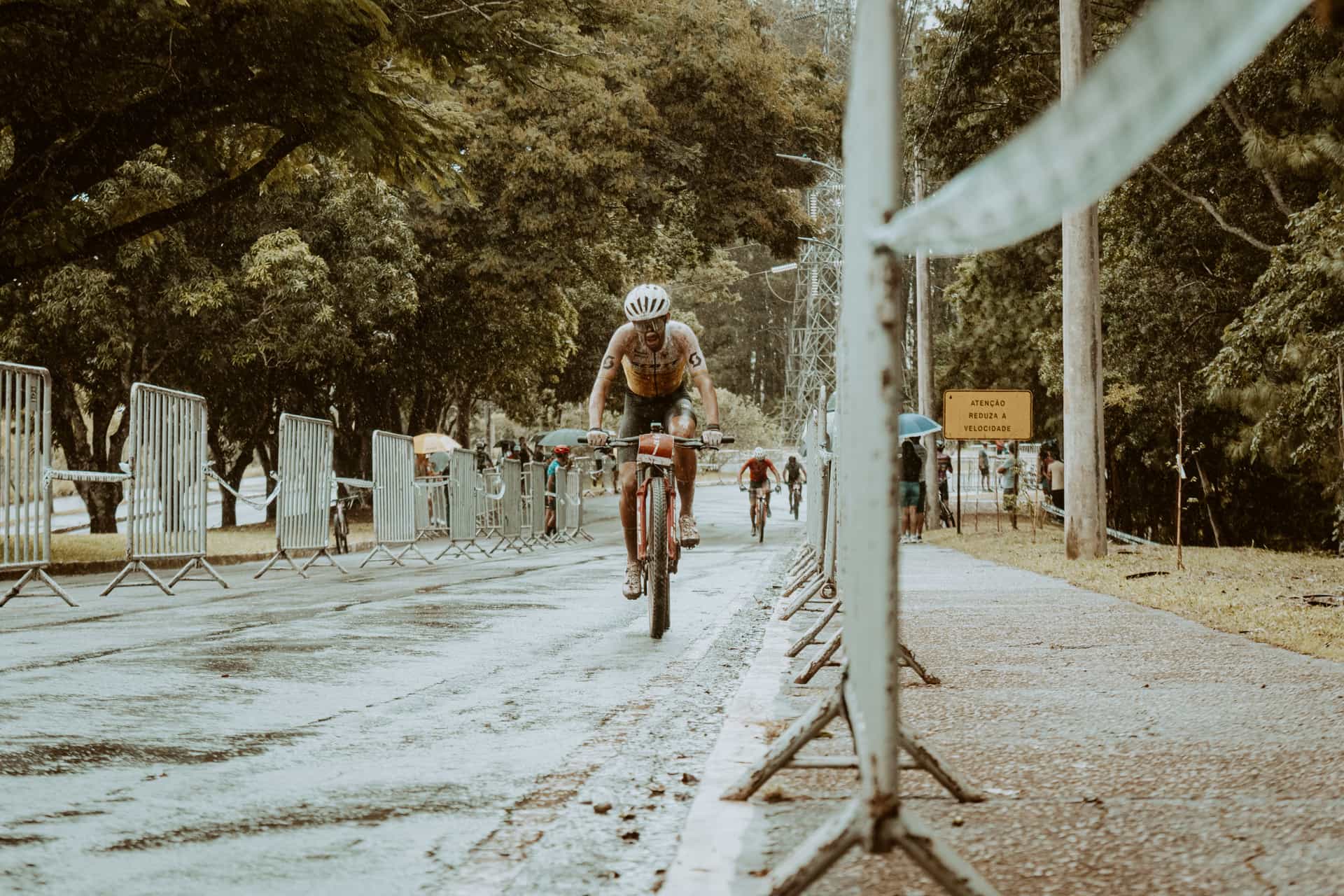
Dress as though you will be wet, because you will be: a merino or synthetic base layer, your normal bib shorts or tights, a shell whose maker publishes a waterproof rating or names a membrane, long-finger gloves and wool socks. The one real mistake is cotton anywhere in the system.
That is the whole outfit. The reason this page is longer than those two sentences is that the jacket layer is where money gets wasted, and the way it gets wasted is a word.
The premise: you are not going to stay dry
On a bike, in sustained rain, over an hour or more, you get wet. Water comes in at the cuffs, the collar and the hem; it comes up off the road at your back and your feet; and what the rain does not do, your own sweat does from the inside, because a cycling effort generates more moisture than any membrane can pass in a downpour.
So the goal is not dryness. The goal is staying warm while damp, and that reframing is what makes the right choices obvious. Fabrics that insulate when wet are good. Fabrics that hold cold water against your skin are bad. Everything else is detail.
This is also why rain is a different problem from cold, and why our cold-weather layering guide is not the answer to it. In the cold you are managing heat loss with still air. In the rain the still air gets filled with water and stops insulating, which is why a thick fleece under a leaky shell is a worse choice than a thin merino layer under a good one.
Next to the skin: merino or synthetic, never cotton
A base layer earns its place in the rain more than in any other condition, because its job changes from wicking to insulating while wet.
Merino wool keeps a usable amount of warmth when damp and does not develop a smell over a wet week of commuting. A synthetic mesh or light synthetic long-sleeve dries faster and costs less. Both work. Our base layer roundupranks seven of them on published fabric weight and fiber content, which is the spec that matters here — and names the four listings that publish neither.
Cotton is the one genuine error on this page. A cotton t-shirt under a cycling jersey holds cold water against your chest for the whole ride and keeps holding it after you stop. This is not a preference or a brand argument; it is the difference between uncomfortable and genuinely cold.
Legs: whatever you normally wear, plus the honest answer about rain trousers
Bare legs in the rain are fine above about 15°C and unpleasant below it. Your normal bibs or thermal tightsare the answer, and the chamois does not mind being wet — our chamois guide covers why the pad is the one garment you should not add a layer over.
Waterproof over-trousers exist and most road and gravel riders do not use them: they flap, they are hot, and legs generate enough heat to stay comfortable wet. The exception is commuting in work clothes, where the point is arriving dry rather than riding comfortably.
What does matter on the legs is spray from your own rear wheel, and the fix is not a garment. A mudguard keeps a continuous stripe of road water off your back and your drivetrain, and our gravel commuting guide rates it as the single highest-value change for anyone riding through a wet season.
What to look for in the shell: a number, not an adjective
This is the part worth reading before spending money, and it is the finding our jacket roundup was built on: “waterproof” is an unregulated word on an apparel listing.
Two things separate a real rain shell from a water-resistant windbreaker, and both are checkable before you buy:
1. A published hydrostatic head figure.This is a millimetre number describing how much water pressure the fabric resists. Showers Pass publishes “30,000 mm” waterproof and “20,000 (gsm/24hr)” breathable for its Elite III; Pearl Izumi publishes “10k waterproof and 10k breathability” for the Attack WxB. Those are specifications. By contrast the ROCKBROS jacket on our roundup publishes no waterproof rating, no breathability rating and names no membrane — its listing says “waterproof-coated polyester”, which is a construction description rather than a performance figure.
2. A named membrane with a published guarantee.GORE-TEX is the clearest example: a jacket carrying the GORE-TEX name carries what GORE calls its “GUARANTEED TO KEEP YOU DRY promise”. And GORE is unusually honest about the boundary — its own published explainer on whether all GORE-TEX products are waterproof sets out a taxonomy under which two of the GOREWEAR jackets on our roundup are classified as not waterproof. A brand drawing that line in public is more useful than a brand that prints the word on everything.
3. Seams, and this one is not optional.A waterproof fabric with unsealed seams leaks along every stitch line. “Fully seam taped” or “fully seam sealed” is published language and you should insist on it. Showers Pass’s own guide to choosing a waterproof cycling jacket is worth reading on this and on the cut.
4. Cycling-specific cut.A dropped tail, adjustable cuffs and hem, and a collar that works in a riding position. GOREWEAR publishes “dropped tail shields against road spray”; a hiking shell has none of that and will ride up and funnel water onto your shorts.
And one trade-off to make deliberately: the more waterproof a shell is, the less it breathes, and in warm rain a highly waterproof jacket makes you wet from the inside. That is what vents are for — the Elite III publishes “XL core vents and back vent” and a two-way zip that lets you ventilate from the bottom is worth more in warm rain than another 10,000 mm of rating.
The rain layers, from the skin out
Not a ranking — one item for each layer the sections above establish, chosen because each one's maker publishes the figure that layer is judged on. Check the published rating and the seam language on any shell you consider, not just these.
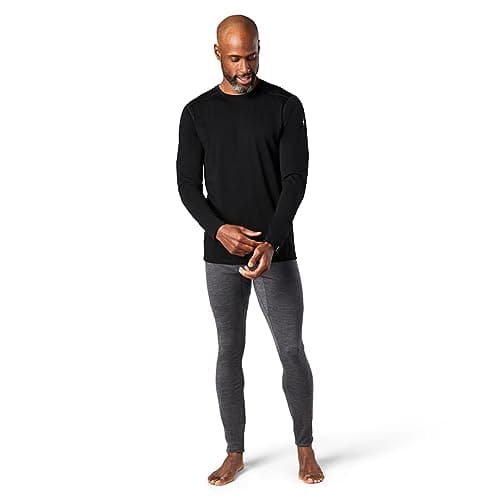
Smartwool Men's Classic All-Season Merino Base Layer Long Sleeve
Merino next to the skin, which is the layer that keeps working when it is damp. The base layer roundup ranks it on published fiber content and fabric weight.
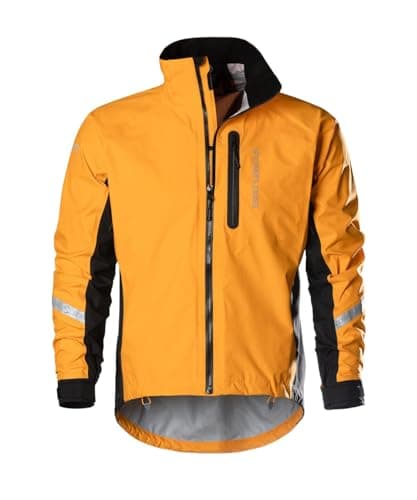
Showers Pass Men's Elite III Cycling Rain Jacket
The shell with the highest published figures on our roundup: 30,000 mm waterproof, 20,000 breathable, three-layer and fully seam taped, with published core and back vents for warm rain.
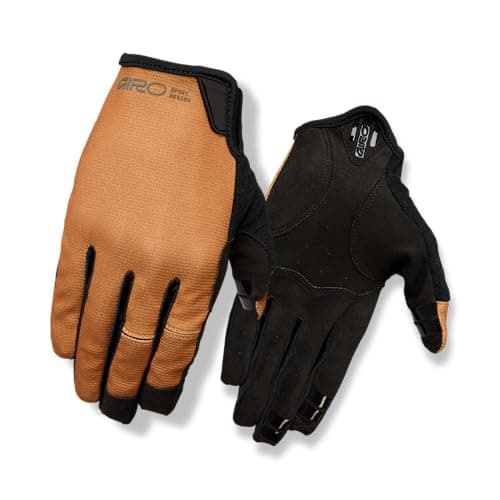
Giro DND
Long-finger gloves, because wet hands lose dexterity before they lose warmth and braking is the thing that suffers. The gloves roundup covers what each listing publishes about grip.
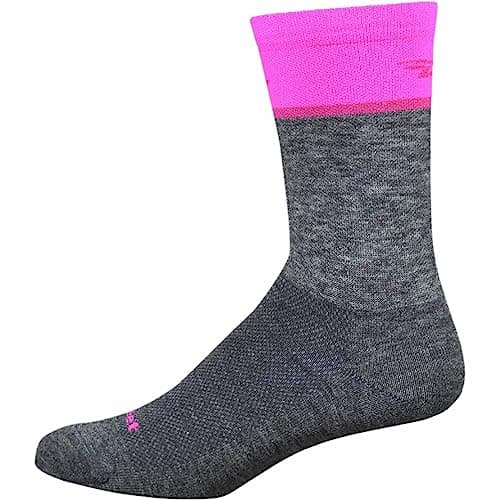
DeFeet Wooleator
A wool-blend sock for the layer that gets wet first and stays wet. Wool is the fiber that still insulates once your shoes have given up.
We haven’t tested any of these — they’re the parts the job above calls for, listed so you don’t have to go hunting. Prices are live from Amazon and we earn a commission if you buy. Prices as of October 18, 2026. #ad
Hands and feet, which is where rain rides go wrong
Your core is easy. Your extremities are the reason people stop enjoying wet rides.
Hands. Long-finger gloves, and accept that in sustained rain they will wet through. The reason to care is control rather than comfort: cold wet hands lose grip strength and fine motor control, and braking and shifting are the two things you need both for. Our glove guide and glove roundup cover what makers publish, which is less than you would hope.
Feet. Nothing keeps feet dry on a bike in real rain. Water runs down your legs into your shoes, and road spray comes up at them. Wool socks are the answer because they insulate wet; overshoes delay the inevitable and are genuinely worth it in cold rain. A spare pair of socks in your bag is worth more than either.
Eyes.Clear or low-light lenses, not dark ones — rain comes with grey skies and a dark lens in grey rain is worse than no lens. Our lens tint explainer covers which published tints are meant for which light. Glasses also keep road grit out of your eyes, which in wet weather is a real hazard rather than a comfort issue.
The two things that are not clothing
Lights. Rain means poor visibility in both directions, often in daylight. Our lights roundup covers what the published ingress ratings mean, which is the spec that matters for a light that is about to spend an hour in water.
Tire pressure. Running a little lower than your dry-road pressure increases the contact patch and is the free change most riders never make. Our pressure guide covers the method.
Afterwards
Hang everything up rather than leaving it in a bag — and do not put a waterproof shell in the tumble dryer or wash it with fabric softener, both of which degrade the water-repellent finish. Our kit washing guide covers the published care instructions and why a technical shell needs a different wash from a jersey.
And deal with the bike before you sit down, because that is the part most people skip. Road water is an abrasive slurry and it is now inside your drivetrain. A rinse and a re-lubrication after a wet ride is the difference between a chain lasting a season and lasting half of one — chain cleaning and the wet-versus-dry lube choice are the two pages for that.
The rain outfit, layer by layer
What each layer is actually for once you accept you will be wet, and the published specification to judge it on. The right-hand column is what to avoid, and only one row has a hard rule in it.
| Layer | Its job in rain | Judge it on | Avoid |
|---|---|---|---|
| Base layer | Insulate while wet | Published fiber content and fabric weight | Cotton — the one real mistake here |
| Jersey | Carry pockets, add a little warmth | Whatever you already own | Nothing — this layer is not the problem |
| Shell | Block the rain and the wind chill | A published mm rating or a named membrane, plus taped seams | "Waterproof" with no figure and no membrane |
| Shorts or tights | Nothing new — the chamois is fine wet | Published inseam and pad name | A layer over the chamois |
| Gloves | Preserve grip and brake control | Full-finger coverage | Short-finger gloves below ~15°C |
| Socks | Insulate once wet, which they will be | Wool content | Cotton, again |
| Eyewear | Keep grit and spray out of your eyes | Published lens tint for low light | A dark lens in grey rain |
Only the shell row needs a number. Every other layer is a fiber choice you can make from a listing in ten seconds. The shell is the one where the word on the label and the specification behind it can be completely unrelated — which is why our jacket roundup ranks on whether a rating is published at all.
Common questions
What should I wear cycling in the rain?
A merino or synthetic base layer, your usual jersey, a seam-sealed waterproof shell with a published rating, your normal bibs or thermal tights, long-finger gloves, wool socks and clear or low-light glasses. Avoid cotton anywhere in the system — it holds cold water against your skin for the whole ride.
Is it bad to cycle in the rain?
Not for you, provided you dress to stay warm while damp rather than trying to stay dry. It is harder on the bike: road water is an abrasive slurry that gets into the drivetrain, so a rinse and re-lubrication afterwards matters more than anything you wear. Braking distances are longer and painted lines and manhole covers are slick, so ride accordingly.
What's the difference between waterproof and water-resistant cycling jackets?
On a listing, often nothing — the words are unregulated. What distinguishes them is published evidence: a hydrostatic head figure in millimetres (Showers Pass publishes 30,000 mm; Pearl Izumi publishes 10k), a named membrane with a published guarantee, and fully taped seams. GORE publishes a taxonomy under which two of its own cycling jackets are classified as not waterproof, which tells you how much the word alone is worth.
Do I need waterproof trousers for cycling in the rain?
Most road and gravel riders do not. Legs generate plenty of heat and stay comfortable wet, and over-trousers are hot and flap. The exception is commuting in clothes you need to arrive dry in. A mudguard does more for your legs and your drivetrain than any garment.
How do I keep my feet dry cycling in the rain?
You do not. Water runs down your legs into your shoes and road spray comes up at them. Overshoes delay it and are worth it in cold rain; wool socks are the real answer, because they still insulate once wet. Carry a spare pair for the other end of a commute.
Sources
- GORE-TEX — "Are all GORE-TEX products waterproof?". Source for the GUARANTEED TO KEEP YOU DRY promise attaching to the GORE-TEX name, and for the published taxonomy under which two GOREWEAR cycling jackets are classified as not waterproof — retrieved 2026-10-17
- Showers Pass — how to choose the best waterproof cycling jacket. The maker's own published guidance on waterproof ratings, breathability figures, seam sealing and cycling-specific cut — retrieved 2026-10-17
- Amazon listings and maker product pages for the Showers Pass Elite III ("30,000 mm" waterproof, "20,000 (gsm/24hr)" breathable, three-layer, fully seam taped, XL core and back vents), Pearl Izumi Attack WxB ("10k waterproof and 10k breathability", fully seam sealed), GOREWEAR Glidewheel (GORE-TEX ePE membrane, dropped tail) and ROCKBROS rain jacket (no published waterproof rating, no breathability rating, no named membrane), as recorded on /kit/best-cycling-jackets
Read next
- The best cycling jackets
Twelve shells ranked on whether a waterproof rating is published at all.
- The best cycling base layers
The layer that does the work once you are wet.
- How to layer for cold-weather cycling
The cold problem, which is a different problem.
- How to wash cycling kit
How not to destroy a shell's water repellency in one wash.
We haven’t ridden or tested any of the products on this page, and we don’t pretend otherwise. Read how we research — or tell us we’re wrong and we’ll log the correction.