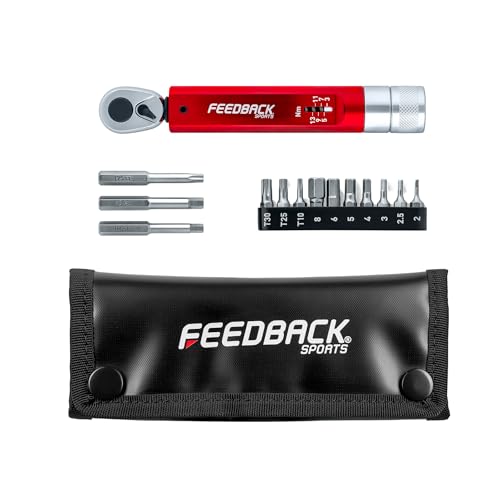
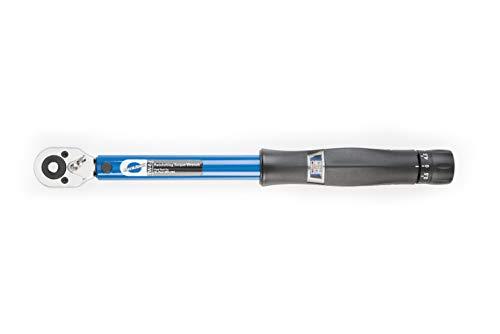
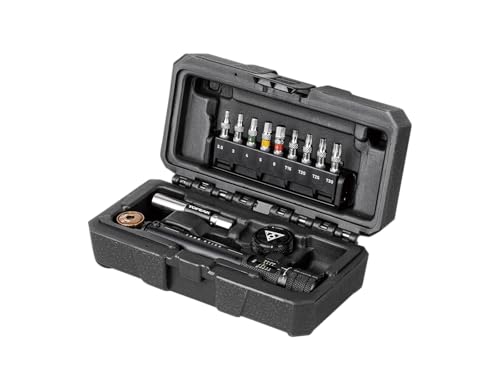
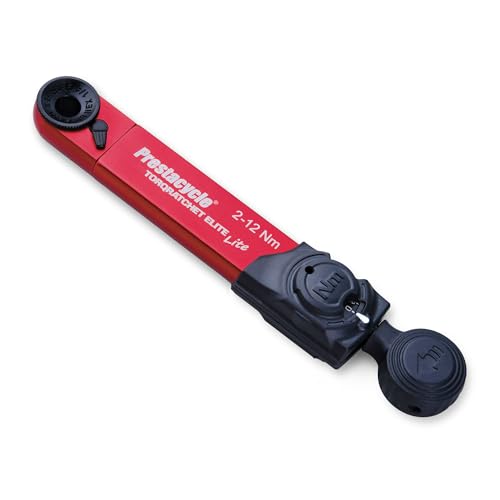
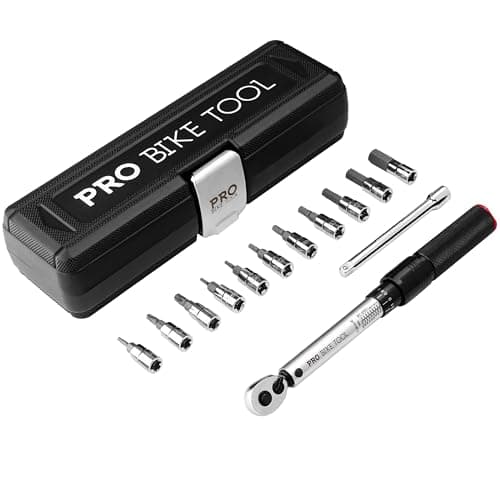
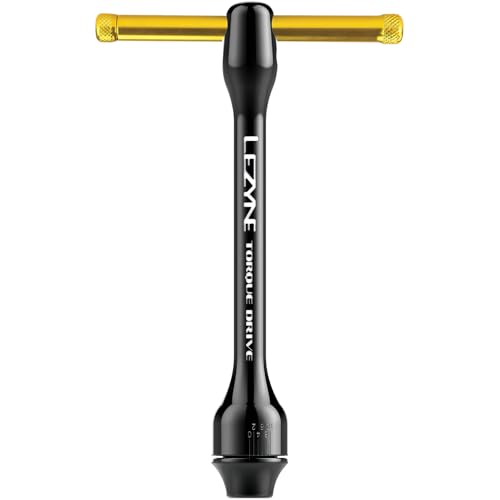
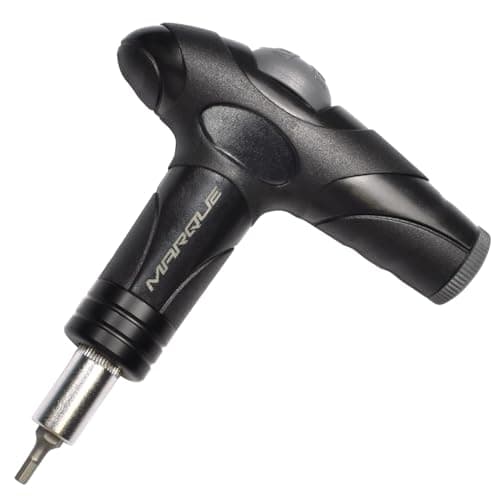
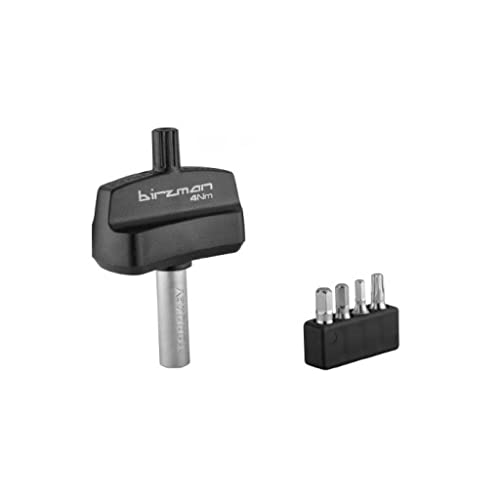
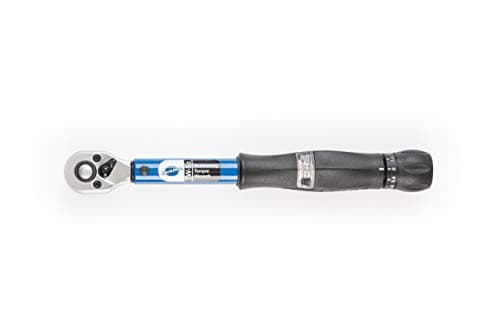
A torque wrench is the only tool on this site whose deciding specification is published on both sides of the comparison. The tool publishes a range in newton-meters. The component makers publish the figure the bolt wants. So “which torque wrench” is not a matter of taste — it is an interval test, and you can run it yourself with the table on this page and our bolt torque guide open beside it.
Run that test across the whole field and one result dominates everything else: no tool in this category covers a whole bicycle.Eight of the nine tools here stop at or below 16.9 N·m, which reaches none of the drivetrain figures. The ninth starts at 10 N·m, which cannot touch a stem faceplate. That is not a flaw in any of them; it is the shape of the category, and no amount of ranking makes a single purchase cover the bike.
The three numbers a torque wrench should publish, and how often they do
A click-type wrench is a spring, a cam and a scale. Three published figures tell you whether it is any use to you:
- The range. All nine publish one. This is the only specification the whole category agrees to disclose.
- The increment.Two publish one: 0.2 N·m and 1 N·m. It matters because the published stem faceplate figures are 5.4, 6, 6.2, 8 and 8.8 N·m — a tool that steps in whole numbers cannot be set to three of them.
- The accuracy. One of nine publishes a tolerance, and it is the Park Tool TW-5.2 at +/- 4%. Every other tool on this page asks you to buy a measuring instrument that declines to say how well it measures.
We have not verified anybody’s tolerance with a calibrated transducer and no publisher without a test lab has. What this page does is count who publishes what, and rank the field on the published range against the published bolt figures.
The pair that actually covers a bike
If you intend to torque everything the manufacturers publish a figure for, the honest answer is two tools: a 2-14 or 2-16.9 N·m wrench for the front of the bike, and a 10-60 N·m wrench for the drivetrain. The first does stems, seatposts, derailleurs, calipers and rotor bolts; the second does cassette lockrings at a published 29.4-49 N·m, crank bolts at 34-44, pedals from 35 and rotor lockrings at 40.
If you only want one, buy the small one. The jobs in the 2-14 N·m band are the ones you do monthly, the ones involving carbon, and the ones where over-tightening destroys the part rather than just annoying you. The drivetrain figures are annual jobs and a shop will do them for the price of a coffee.
Technique, which decides more than the brand does
Park Tool publishes the rules for living with a click wrench in its torque wrench use and care guide, and they are the difference between a tool that stays honest and one that quietly stops being:
- Wind it down after use— to the lowest value on the scale, not to zero. A wrench stored at 14 N·m is a compressed spring with a drifting calibration.
- Never loosen a bolt with it.Park Tool: it is “not advisable to use click-type torque wrenches as common ratchet handles to remove fasteners”. Undo with something else.
- Stop at the click. One smooth pull, nothing after the noise. A second pull adds torque the tool is no longer measuring.
- Recalibrate.Park Tool suggests every 5000 clicks, or annually for a wrench in frequent use. A home wrench will not hit 5000 clicks in years — and will still age.
- A damaged thread cannot be torqued.“A cross-threaded bolt will not properly tighten even with a torque wrench.” If it feels wrong going in, stop; the click you eventually get is friction, not preload.
And the rule that outranks this entire page: if a figure is printed on your component, that figure wins.Park Tool prints the same caveat on its own table — “Numbers provided for reference only… Contact the manufacturer for the most up to date specifications.”
Two tools we resolved and did not feature
Eleven torque tools sit in this site’s catalog and nine are ranked above. The Park Tool ATD-1.2, an adjustable 4-6 N·m driver, resolved to a real listing with no live offer, and the Venzo 2-22 N·m click set — which has the widest published range of anything we found and is named on our torque guide — had no live price when this page was built either. Neither is featured, because a product you cannot buy today is not a recommendation, and we check that against the live price layer rather than assuming. If either returns, it joins the table on the next rebuild.
The range column is the maker’s own published figure. The last column is not an opinion either: it is that range tested against Park Tool’s published torque table — a Thomson stem faceplate at 5.4 N·m, a Campagnolo seatpost binder at 4-6.8, a Shimano rotor M5 bolt at 2-4, a Shimano stem binder at 19.6-29.4, a Shimano cassette lockring at 29.4-49, Shimano crank bolts at 34-44 and a Shimano pedal at 35 minimum. An interval test, not a verdict.
Prices are live from Amazon as of November 16, 2026. One of these nine tools publishes an accuracy tolerance, and two publish an increment. Park Tool’s own caveat on its table applies to every figure in the paragraph above it: “Numbers provided for reference only… Contact the manufacturer for the most up to date specifications.” Anything etched on your own component beats all of it.
Look up your bolt before you buy the tool. The figure decides the tool, not the other way round, and the figure is usually etched next to the bolt on a modern stem or seatpost clamp. Where nothing is printed, the bolt torque guide collects the published figures by component and names the brand that published each one.
Buy for the band you will use weekly.That band is 4-10 N·m for almost everyone: stem faceplate, stem steerer, seatpost clamp, bottle cage, derailleur, caliper, rotor bolts. Every tool on this page except the TW-6.2 covers most of it, and the cheap dial drivers cover the middle of it exactly.
If any part of your bike is carbon, this stops being optional.The failure mode for over-tightening carbon is a crack that shows up later, under load, far from where you made the mistake. A published figure and a tool that reaches it is the cheapest insurance in the workshop — and so is carbon assembly paste, which lets a clamp hold at a lower torque instead of a higher one.
Click, beam or preset is a real choice. A click wrench is set and then trusted. A beam shows the reading as you pull, so it cannot be left set wrongly, but it has to be visible while you work. A preset dial has nothing to set at all and nothing in between its settings. None of those is better in general; they are different failure modes.
Then put it with the other tools you will actually need. A torque wrench does not fit a cassette, a chain or a bottom bracket: the home workshop tools roundup is the order to buy things in, the chain tool roundup covers the one job a torque wrench cannot help with, and the maintenance schedule is what turns a drawer of tools into a bike that works.