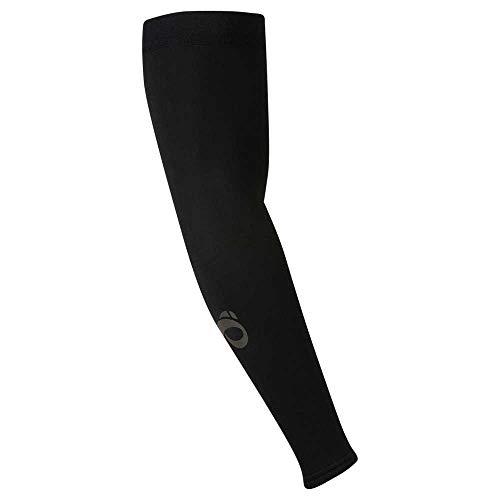
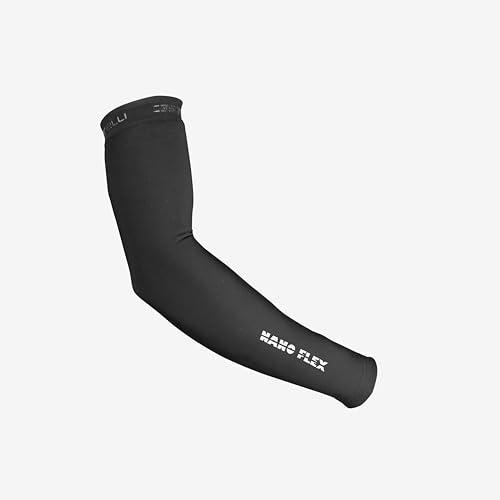
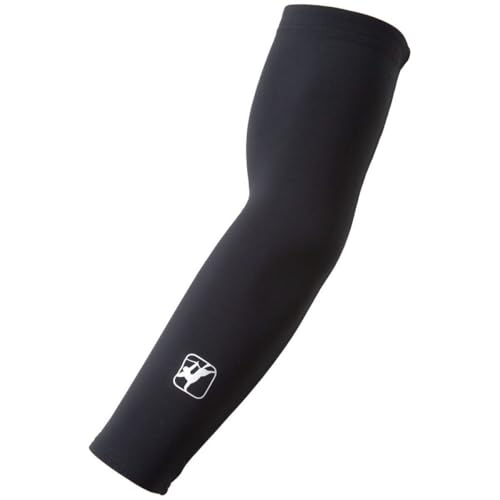
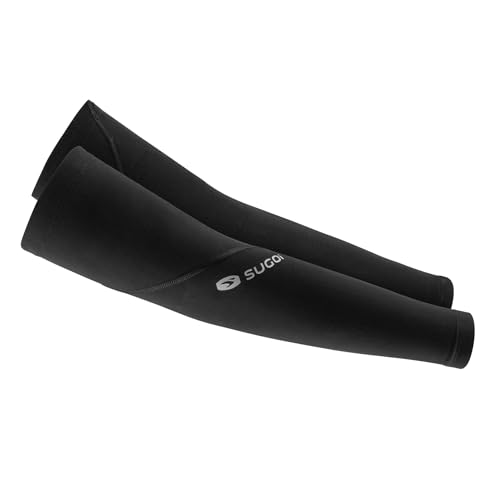
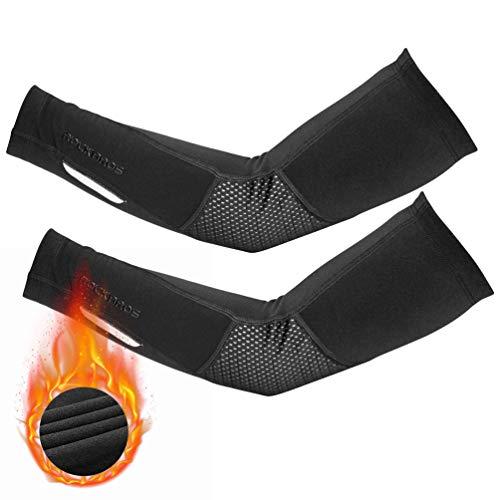
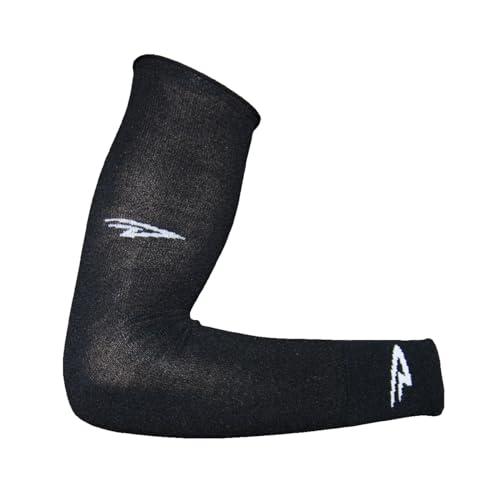
An arm warmer is the cheapest piece of cycling kit that changes the most days. It turns one jersey into three seasons of jersey, it rolls into a pocket when the sun arrives, and it costs less than a tire. It is also the garment people buy wrong most often, in two specific ways: they buy the wrong product entirely, and they buy a size that will not stay up.
So that is what this page ranks on — whether the listing tells you when to wear them, and whether it tells you how they fit. Both are things a seller can publish. Neither is our measurement, because we have not worn any of these and we are not going to pretend we have.
The first mistake: warmers and sun sleeves are not the same product
Search for arm warmers and the suggestions split in two. Half are about keeping warm; the other half — UV sleeves, sun sleeves, cooling sleeves — are about keeping the sun off in July. They look nearly identical in a product photo and they do opposite jobs: one traps a layer of warm air against the skin, the other is a thin, light-colored, often UPF-rated sleeve designed to move heat away.
Every product on this page is a cold-weather warmer.Each one says so in its own listing — “thermal”, “insulated”, “winter fleece”, “Thermal Guard”, “Super Roubaix”, “MidZero” — and we have not mixed a sun sleeve in to pad the list. If what you actually want is sun protection, none of these is it, and a listing that does not publish a UPF number is not a sun sleeve no matter how thin it looks.
The second mistake: a letter is not a size
Here is the audit, and it is the same gap this site keeps finding in apparel: zero of six listings publish an arm circumference.Five publish a letter — S, M, L, M/L — and the sixth publishes no size at all. Compare that with the one measurement that decides whether an arm warmer works: the circumference of your bicep, because that is where the top band has to grip.
It is the identical pattern our shoe cover roundup found (sizes given in shoe-size letters, almost never in a measurement) and the one the heart rate strap roundup found (six of fourteen publish a size label, zero publish a chest measurement). Cycling apparel listings publish the letter and withhold the number.
What to do about it, practically: measure your bicep with a tape, buy from the brand whose other kit you already own in a known size, and treat a warmer that slides as a sizing error rather than a product failure. A gripper only works against skin or a sleeve it can hold.
The one listing that tells you the temperature
One of six publishes a temperature range: 35 to 55°F.That is the DeFeet Armskin, and it is why it wins a ranking on published facts despite being the second-cheapest thing here. Everything else in the field describes its weather in adjectives — “cool weather”, “winter”, “thermal” — or does not describe it at all.
That matters because the useful window for an arm warmer is narrow and specific. Above roughly 60°F most riders take them off within twenty minutes. Below about 40°F a knit sleeve on its own stops being enough and the question becomes a jacket. A published range tells you which of those two conversations you are in; an adjective does not.
What none of these listings publish
- A weight or a fabric weight in grams per square meter.Three name a fabric or a fabric family — Nano Flex 3G, Super Roubaix, MidZero — which is an identifiable material but not a measurable one.
- A gripper specification. Not one of the six titles describes the silicone band at the top, which is the component that decides whether the warmer stays put.
- Wind or water performance, except once.Pearl Izumi claims “water resistant” with no rating attached; everyone else claims nothing.
- Reflectivity. On a garment worn in the dark half of the year, no listing here publishes a reflective detail.
Not a ranking. Arm warmers work because they are removable; the same logic applies to the other three places a rider gets cold first. Each of these is already researched on this site under its own roundup.
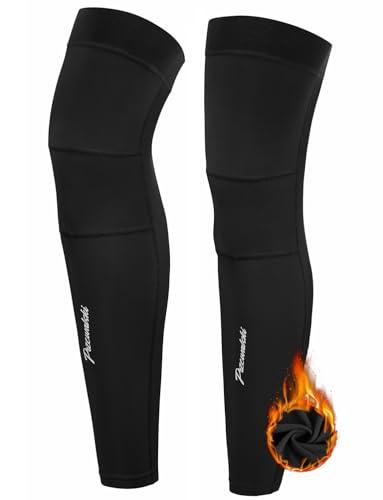
The legs, which get cold on the same mornings the arms do. This listing publishes thermal fleece, breathable stretch and silicone grips — more about how it stays up than any arm warmer listing in the roundup above manages.
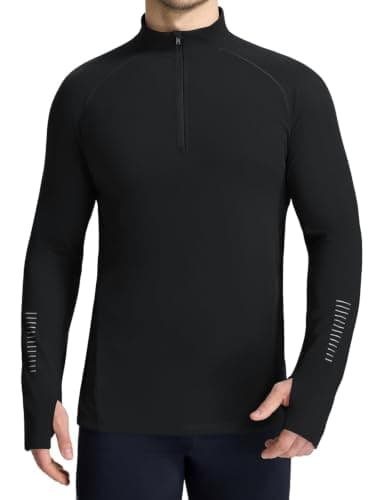
The layer under the jersey. Arm warmers cover the arms and do nothing for the core; a thermal long-sleeve base layer is the cheapest way to extend the same jersey further into the cold. Ranked in our base layer roundup.
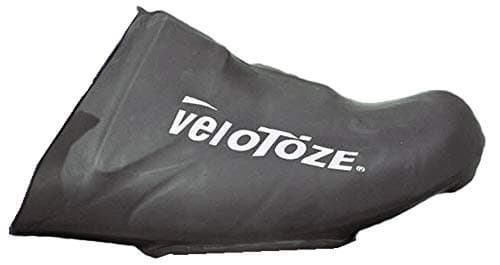
The toes, which go numb before anything else and are the cheapest thing on a bike to fix. A toe cover is the minimum version of our shoe cover roundup's whole argument.
We haven’t tested any of these — they’re the parts the job above calls for, listed so you don’t have to go hunting. Prices are live from Amazon and we earn a commission if you buy. Prices as of November 16, 2026. #ad
How a warmer actually earns its place
The case for arm warmers over a long-sleeve jersey is that the weather changes during the ride and you do not. A 45°F start that becomes a 60°F finish is a long-sleeve jersey you are carrying on your back, or it is a short-sleeve jersey and two sleeves rolled into a pocket at the first climb. That is the whole argument, and it is why the kit lasts: the pair you buy this year still works with next year's jersey.
It is also why they are the first thing to buy when the clocks change, ahead of a jacket. Our cold-weather layering guide works through the order the layers go on and which ones are worth the money first, and the jersey roundup covers the garment these attach to.
What this page cannot tell you
We have not worn, washed, stretched or weighed any of these. Every specification above is the seller’s own published claim, read off the live Amazon listing on 16 November 2026, and where a listing publishes nothing we have written that rather than filling it in. The prices are live and move constantly.
What nobody publishes — and what would actually settle this category — is how far the top band stretches before it stops gripping, and how many washes a brushed fleece keeps its loft for. No maker prints either figure, and no publisher without a lab has measured them.